
A free virtual Visa tied to your own wallet, with real costs hiding in the fees table
 Available in US
The Tangem Pay card is a Visa you spend from a crypto balance rather than from a current account. The free Basic tier gives you a virtual card number, cashback at 1% up to $100 a month, and daily spending up to $10,000. It does not touch the keys to the underlying USDC, which sit in a smart contract you control. In exchange you get a card issued by Third National, a programme run by Rain, service delivered by Paera LLC, and identity checks run by Sumsub — while Tangem itself states plainly that it is not regulated as a financial services provider. It suits people who already hold a Tangem Wallet and want a free virtual Visa, and people who cannot open an ordinary bank card. It does not suit anyone who needs cash from ATMs, a metal card, or multi-currency balances. My score is 6.9 out of 10.
Conditions are current as of October 28, 2026.
Verdict: 6.9 out of 10, and the middle of the market
Tangem Pay lands almost exactly where the crypto card market lands in this cycle: several tiers that look generous on paper, a free entry point that is genuinely free, and a long list of things that are either “coming soon” or not stated anywhere. Nothing here is a scam, and the non-custodial structure is a real point of difference against most competitors. But it is a young product in a young category, and you can feel the seams.
| Criterion | Mark | Why |
|---|---|---|
| Who can get it | 7 / 10 | Available in the US and selected countries in LATAM, APAC, MEA and Africa; the country list is not published, and the UK and EU are planned for 2026 |
| Cost | 7 / 10 | Basic $0 per month, Plus $29.99 per month; $0 transaction fee, FX at Visa exchange rate plus 1.5%, ATM 4% on Basic, plastic delivery $14.53 to $82.10 |
| Top-up options | 6 / 10 | Native USDC on Polygon from any wallet or a swap in the app, bank top-up by ACH/FedWire in some regions |
| Reliability and complaints | 7 / 10 | Issued by Third National, programme managed by Rain, service run by Paera LLC; Tangem is not regulated as a financial services provider; complaints about declines at fuel stations and KYC lockouts |
| Everyday use | 7 / 10 | Basic is virtual, Plus is plastic, Apple Pay and Google Pay via card details; ATM 4% on Basic and 2% on Plus; unofficial reports say withdrawals are not yet available and physical cards are not broadly issued |
Total: 6.9 / 10.
Who this suits: you already keep a self-custody wallet, you mostly spend online or on contactless, and you want a card number that does not require a bank account. The 1% cashback on Basic costs nothing to hold.
Who it does not suit: you live in the UK or EU and want the card now; you need a bank branch relationship; you plan to live on ATM withdrawals, where Basic charges 4%; you want a physical card in your hand in the next few months; or you hold a large balance and want deposit-guarantee protection you can point to.
Who will they give you the card to
Yes — but eligibility is decided by where you live, and the card does not publish the list. The readable public pages say only that the card works at “Visa-accepting merchants in over 150 countries”, and do not print a single eligibility country. The app itself shows eligibility during onboarding, based on your “country and region of residence”.
That distinction matters more than it sounds. Residence, not citizenship, is what the page names — and residence is also what the wider KYC world checks hardest, because proof-of-address documents are the usual way to establish it. The card is described as available in the United States (not all states) and in selected countries in Latin America, Asia-Pacific, the Middle East and Africa. The UK and the EU were announced for 2026.
Third-party card directories, which are not the card’s own statement and which I could not confirm against Tangem, list Argentina, Australia, the Bahamas, Barbados, Belize, Bolivia, Brazil, Chile, Colombia, Costa Rica, the Dominican Republic, Ecuador, El Salvador, Guatemala, Guyana, Honduras, Hong Kong, Jamaica, Japan, Mexico, New Zealand, Nicaragua, Panama, Paraguay, Peru, the Philippines, Singapore, South Africa, Trinidad and Tobago, the UAE and Uruguay as available, and the UK, Andorra and EU states as restricted. Treat that as a starting point for your own search, not as an answer.
Physical-card shipping is a separate question from eligibility. Tangem says it covers nearly 200 countries except about 20, including China, Russia, North Korea and Palestine — a figure reported through press coverage of a Tangem statement, with the date not confirmed. So you can be eligible for the virtual card and ineligible for the plastic one at the same time.
How to get it
You apply inside the Tangem app, and the route is the same as buying anything else in a crypto app: open the app, find Tangem Pay, confirm your country, verify your identity, choose a tier.
Identity verification by Sumsub covers a government ID and face check. What documents qualify, whether proof of address is required, and what the minimum age is: the public pages do not say. I would not assume a passport is enough or that a driving licence will do; bring whatever is most likely to be accepted where you live, and expect to be asked twice.
One thing the card is unusually clear about: the KYC applies to the Pay account only, not to your Tangem Wallet. Your existing self-custodied assets are not part of what the check touches.
Your limits are not fixed by tier alone. The card says transaction limits depend on your “risk profile, verification level, and account history”, and it does not name the levels. So a $10,000 daily limit is a ceiling, not a promise.
| Tier | Card | Form factor | Cashback | ATM fee |
|---|---|---|---|---|
| Basic | Visa Platinum | Virtual (plastic listed in comparison) | 1%, cap $100/month | 4% |
| Plus | Visa Signature | Plastic | 2%, cap $300/month | 2% |
| Prestige | Visa Infinite | Virtual, plastic, metal | 4%, cap $1,000/month | 1% |
The card currency is USD. The welcome bonus “up to $75” and the 2 free lounge visits a year on Plus are both marked coming soon, and Prestige itself is marked coming soon.
Fees: what it really costs
Here is the honest version. The Basic tier costs $0 a month and there is no fee per transaction, which is genuinely rare in this category. Everything else is where money goes.
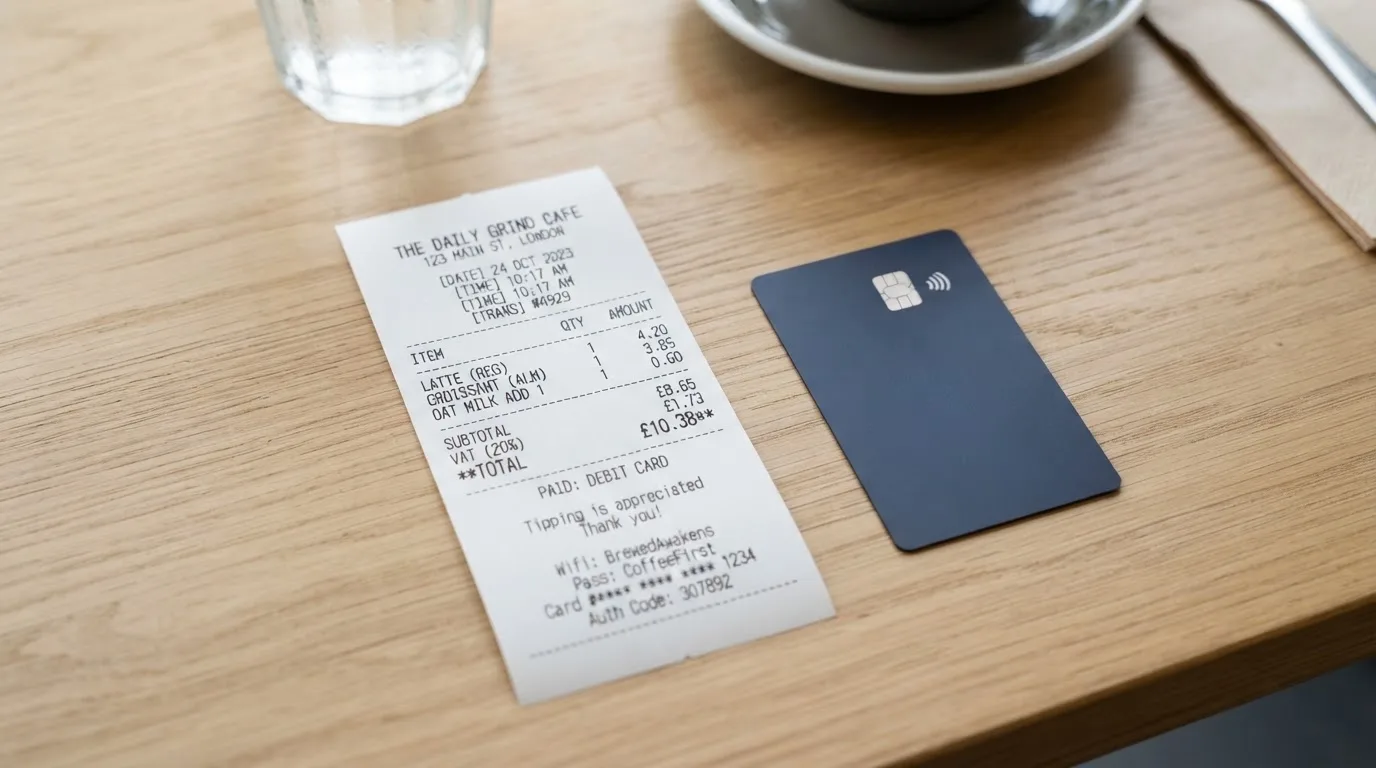
| Fee or limit | Basic | Plus | Prestige |
|---|---|---|---|
| Plan fee | $0 | $29.99/month | $999/year (shown as one payment; $83/month equivalent) |
| First physical card issuing fee | $0 | $0 for the first card | not stated |
| Additional virtual card | $5 | $5 | not stated |
| Replacement card | $1 | $1 | not stated |
| Physical delivery | $14.53 to $82.10 by address | $14.53 to $82.10 | $14.53 to $82.10 |
| Transaction fee | $0 | $0 | $0 |
| Foreign exchange (non-USD) | Visa exchange rate + 1.5% | Visa exchange rate + 1.5% | Visa exchange rate + 1.5% |
| Crypto conversion | USDC converted 1:1 to USD | same | same |
| On-chain withdrawal | $0 | $0 | $0 |
| Bank top-up (ACH) | $1 | $0 | not stated |
| Bank top-up (FedWire) | $11 | $0 | not stated |
| Bank payout (ACH) | $1 | $1 | not stated |
| Bank payout (FedWire) | $11 | $11 | not stated |
| ATM fee | 4% | 2% | 1% |
| Dispute fee | $30 | $30 | $30 |
| Daily POS spend limit | $10,000 | $50,000 | $100,000 |
| Cards per user | 3 | 5 | 10 |
A few things to notice in that table. The card-issuance fee for a first plastic card is $0, but delivery is not, and delivery scales with the address — so a distant address costs more. A dispute costs $30 regardless of tier, which means a chargeback is not a casual process. And the annual POS limit per card is listed at $10,000,000, with 100 spending transactions a day and 1,000 a month; those caps may differ per cardholder by risk profile and verification level.
The fees PDF is dated as applicable from September 25, 2026, though the document title reads Aug_25_2026 — a small inconsistency worth keeping in mind if you are comparing numbers against another tariff you have seen.
Now three everyday payments, so the fee table becomes concrete.
Buying a $30 book on an online store in USD. The transaction fee is $0 and the conversion is USDC to USD at 1:1. If the balance was already loaded as USDC, you pay $30 and nothing more. This is the case the product is designed for.
Buying a $60 meal in a city where you hold euros, on Basic. Visa sets the exchange rate, and Tangem adds 1.5%. So a $60 item costs $60 plus 0.9 — $60.90 in total, converted at whatever rate Visa applies that day. The 1.5% is charged on the foreign side, not on the dollar amount, so the larger the foreign purchase, the more it matters.
Paying at a fuel pump for $40 of fuel, on Basic. The transaction fee is still $0 in principle, but this is where user reports of declines cluster, and the reported symptom is a pre-authorisation hold — a temporary freeze of roughly $175 on the balance rather than the amount of the fuel. If you are filling a car, the practical risk is that the card is refused at the pump while the balance stays locked for days. The same reports describe declines at hotels and restaurants.
I have covered top-up mechanics separately below, because the cheapest way to load the card is usually cheaper than the cheapest way to unload it. A FedWire payout on Basic costs $11 whether the balance is $50 or $5,000, so small withdrawals are expensive and large ones are not.
Top up the card
Two routes, and the first is clearly the intended one.
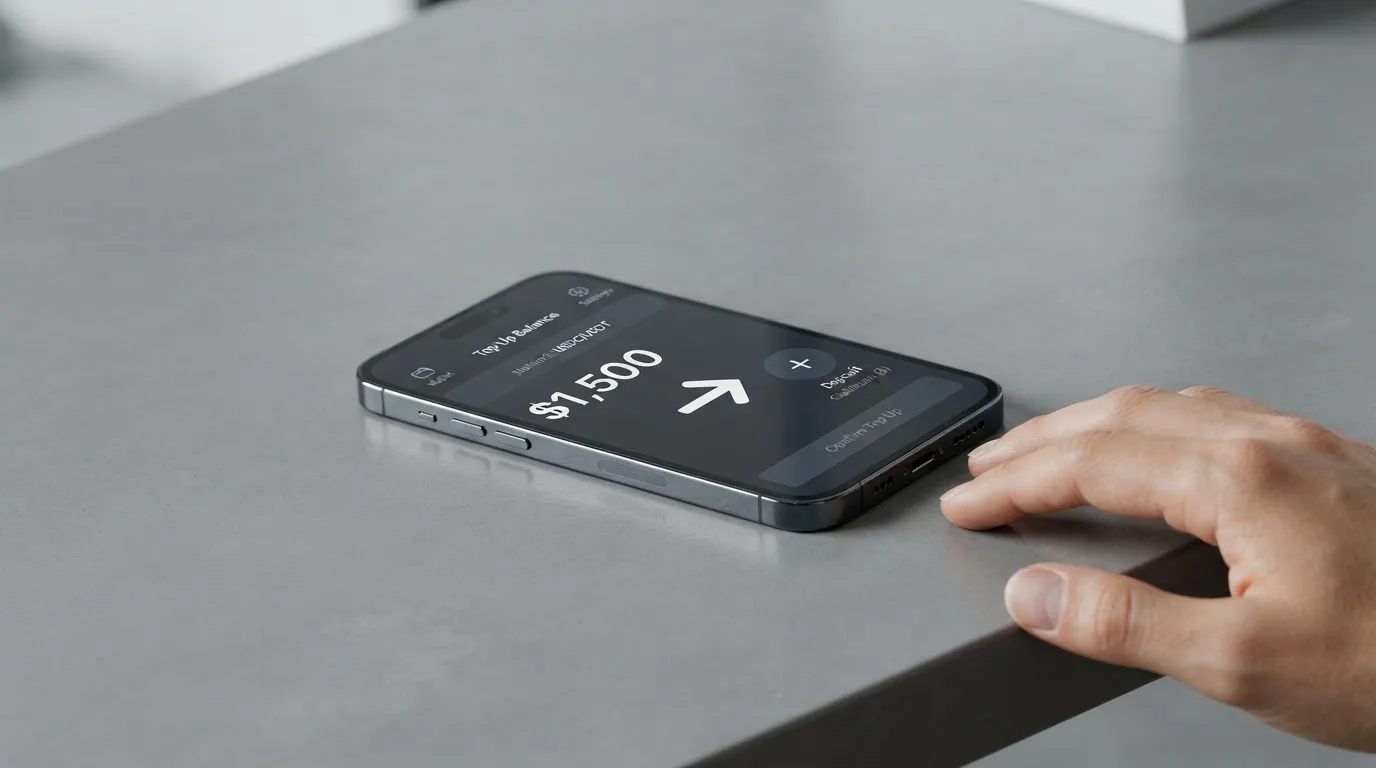
Native USDC on Polygon. You send USDC from any wallet that supports it to the address the app gives you, or you swap inside the app. The fees PDF lists on-chain withdrawal at $0 and transaction fees at $0. The one cost you do pay is Polygon gas, paid to the network by you, not by Tangem. The minimum top-up is not stated anywhere on the page.
From a bank account. Where the jurisdiction allows it, ACH costs $1 on Basic and $0 on Plus; FedWire costs $11 on Basic and $0 on Plus. Availability varies by jurisdiction, which is another way of saying: do not plan around it until the app shows it for your country.
Getting money back out is where the asymmetry bites. On-chain withdrawal is $0. A bank payout costs $1 by ACH and $11 by FedWire from Basic, and $1/$11 from Plus. The closing procedure for an account is not stated.
One detail worth internalising before your first transfer: blockchain transfers are irreversible. Send to the wrong network or a mismatched address and the money can be gone or stuck in manual support recovery, with no guarantee. Check the network and the address twice. If you are coming from Tron, note that Circle stopped supporting USDC there in February 2024, so “USDC over TRC20” is not a native option here.
Paying with it every day
Everyday use is the strongest part of the offer, with two asterisks.
The app is the Tangem app for iOS 16.4 and later and for Android, and Tangem Pay needs version 5.35 or later. The App Store listing shows “Tangem – Crypto Wallet” at 4.9 out of 5 from 25K ratings — read on October 20, 2026, and covering the whole wallet app rather than Pay in particular. So that rating is a signal about Tangem the company, not a score for the card.
Apple Pay and Google Pay work by adding the card details from the app; the card is not pushed into the wallet automatically, so you enter the number yourself. Some merchant categories are blocked — gambling and online casinos are named among them, along with liquor stores and others, with the full list not published. That is a policy choice by the issuer, not a legal rule, and the blocked list varies between issuers.
Cashback is the quiet upside. Ongoing cashback is 1% on Basic, 2% on Plus and 4% on Prestige, capped at $100, $300 and $1,000 a month. Boosted rates of 5%, 10% and 15% on the first $500 are marked coming soon, and the currency the cashback is paid in is not stated — assume it is not USD until you see it.
The first asterisk is ATM. The advertised fee is 4% on Basic and 2% on Plus, with a maximum of 3 withdrawals per 24 hours and $250 per withdrawal, and no free allowance stated. But third-party reporting, which the card does not confirm, says ATM withdrawals are “not available” on Basic in practice and that higher tiers advertise ATM pricing that is not live. Treat the ATM fee as a published price rather than a working feature until the app shows you a working ATM.
The second asterisk is plastic. Official pages describe a comparison table with plastic on Basic and a physical card on Plus, with delivery from $14.53 to $82.10. Unofficial reporting says the live format is a virtual Visa only, that most cards issue within five minutes with manual review taking up to 48 hours, and that Tangem’s press coverage put the first physical batch at a cap of 5,000 cards. The account structure is also worth naming explicitly: Third National issues the Visa card, Rain manages the programme, Paera LLC is the operator responsible for onboarding, KYC and AML, and Tangem AG is the non-custodial wallet maker behind the app.
What can go wrong
These are the failure modes I would put in front of anyone deciding, in rough order of how likely they are to bite you.
Declines at petrol stations and hotels. The most consistent complaint pattern is pre-authorisation holds. A declined authorisation can leave a hold that stays for days — typically up to seven. If your balance is tight, a hold can block the very spending you saved for.
KYC lockouts after the card already exists. Users report being locked out after the card was issued, and reports of activation problems where support asked for video proof. The card’s own design explains why this is possible: limits depend on risk profile and verification level, and the levels are not named, so an account can be re-assessed at any time.
Tangem is not a regulated financial services provider. The footer says Tangem “does not hold, custody, or control users’ assets” and “is not regulated as a financial services provider”. That is a genuine strength for your crypto and a genuine gap for your money. A payment account sitting on a smart contract you control is not the same as a bank deposit, and no deposit guarantee scheme covers it. Whether your balance is insured: not stated.
Programme risk. Visa and Mastercard do not issue crypto cards to consumers; they license issuers and can suspend a programme. The record is not theoretical — Visa terminated its global agreements with FTX on November 13, 2022 and the FTX US debit card was wound down; WaveCrest, a Visa issuer that supplied crypto card brands, was suspended by Visa in Europe in 2018 and all WaveCrest-issued Visa programmes closed. Closures typically mean a notice period, then loading stops, then spending stops, then you are asked to withdraw.
Name screening. Nationality is recorded and screened separately from residence, because sanctions screening applies to citizenship and country of birth as well as address. Tether also states that it disables tokens in wallets on the OFAC sanctions list and has frozen funds tied to illicit activity, so stablecoins are not censorship-proof in either direction.
Support reach. Online support is advertised as 24 hours a day, 7 days a week, with a help centre, Reddit, Telegram and Discord. Site languages include English, German, French, Spanish, Portuguese, Turkish, Chinese, Korean, Japanese and Ukrainian — Russian is not in the language list. Paera handles Pay account questions, per third-party reporting.
Merchant-side declines you cannot control. A merchant can look up the BIN and see which institution and country issued the card, and may apply extra scrutiny if that country differs from your billing address. Address Verification Service compares the numeric parts of your billing address with issuer records, is mainly offered in the US, Canada and UK, and is generally unavailable for foreign-issued cards — which causes declines. Some merchants decline prepaid or foreign BINs by policy. None of this is Tangem’s fault and all of it can happen to you.
A dispute costs $30. And prepaid-card chargeback coverage varies and should not be assumed. US debit reversal rights come from Regulation E and credit card rights from Regulation Z; which applies to a crypto card is exactly the kind of detail worth raising with support before you have a $300 problem, not after.
Taxes are yours. Digital assets are property for tax purposes, so exchanging them for goods, services or dollars generally produces a taxable gain or loss. Gain is measured in local fiat currency at fair market value on the date of the transaction, so each card payment funded from crypto may be a separate disposal. I am not going to advise you on your position — but I will tell you that a card payment is a disposal, not an ordinary purchase, in most frameworks.
On the other side of the ledger: KYC by Sumsub with Tangem stating it does not see the identity data, Elliptic transaction monitoring, instant freeze, spending limits and tokenised mobile wallets are all real. And freezing the card disconnects it from Visa without touching the on-chain balance — a genuinely good property that few competitors can promise.
Alternatives worth comparing
If the reason you are here is that an ordinary bank card is hard to get, MetaMask scores slightly higher (7.1/10) and is open in 45 listed countries. It issues a Mastercard, virtual first and instant, with metal pre-orderable in the app after approval, one card per user, no annual fee, and 1% cashback in mUSD on the virtual card — 3% on the first $10,000 spent on metal, then 1%. Proof of residency is required, and ineligibility limits sign-ups rather than spending, though US and UK sign-ups were temporarily closed per its FAQ.
KAST (6.1/10) is the opposite bet: memberships from Standard at $0 up to Private at 10,000 USD a year, with Virtual and physical cards up to 10 per user, Visa Platinum through Visa Infinite metal and gold, cashback from 1.5% on the first 2,000 USD a month upward, and a stated FX fee of 0.5%–1.75% depending on residence, transaction country and card programme. Its eligibility logic is unusually explicit for this category: if you live in a supported country but hold an ID from a restricted region, you may still fail KYC; a VPN does not bypass it. Countries are not published, so you cannot pre-check.
Zeal (6.1/10) spends in 150+ countries, is a Visa, is virtual and addable to Apple Pay, holds EUR, USD and GBP stablecoin accounts, and adds no FX fee of its own — conversion happens at the Visa wholesale rate. Up to 4% cashback paid in GNO, but GNO must be held in the card Safe to qualify. No fee schedule is published on the app or App Store, which is a real drawback when you are trying to compare costs.
One structural note that helps you read all of them: the card network routes messages and sets rules, the issuer holds the card programme, and the crypto brand is often only a programme manager or front-end. Tangem Pay is the clearest example of that here — Rain and Third National are the regulated-side names, Paera LLC the operator, Tangem the interface.
Who I would recommend it to
I would recommend the Basic tier, free, to three kinds of people.
You already keep a self-custody Tangem Wallet and want a card number that costs nothing and gives 1% back on spending you would do anyway. The non-custodial design means the USDC sits in a smart contract you control and freezing the card does not touch it. That is the strongest version of this product and it is genuinely good.
You are in one of the listed regions, you cannot get an ordinary bank card for reasons of residence or documentation, and you need to pay ordinary merchants. The $10,000 daily cap is more than most people spend in a day, $0 transactions mean no monthly bleed, and the card works at Visa merchants in over 150 countries.
You want to see whether a stablecoin-backed card fits your life before committing money. Basic is $0, so the cost of finding out is a few minutes of identity verification.
I would not recommend it — and I would not recommend any equivalent — if you need cash regularly, if you plan to hold a large balance and care about deposit-guarantee protection, if you are in the UK or EU and want the card now, or if you want a physical card in hand. The ATM fees are high even where the function works, and the physical-card path is described by unofficial sources as not broadly live.
And one thing to do before you commit: open the app, check that your country appears, and read the fees PDF rather than the summary. Everything above is drawn from what the card publishes; the summary is the part that leaves out the $11 wire-out and the $30 dispute fee, and those are the numbers that show up in your life.
Frequently asked questions
What is the Tangem Pay card?
It is a Visa payment card you spend from a crypto balance rather than from a current account. The free Basic tier gives a virtual card, 1% cashback capped at $100 a month, and $10,000 daily spending. The balance is stablecoin-based, USDC, converted 1:1 to USD. It is not a bank account and Tangem states it is not regulated as a financial services provider.
How does Tangem Pay actually work?
You load a balance, either by sending native USDC on the Polygon network or by paying in from a bank account where available. The card then spends only that loaded balance, so it cannot overdraw. Purchases convert 1:1 to USD, and non-USD purchases take Visa’s exchange rate plus 1.5%. The USDC sits in a smart contract you control.
Is Tangem Pay a bank?
No. The Visa is issued by Third National, the programme is managed by Rain, described as a Visa Principal Member, and the service is delivered by Paera LLC, which handles onboarding, KYC and AML. Tangem AG is the non-custodial wallet maker behind the app. Tangem’s own footer says it does not hold, custody or control user assets.
Who can get a Tangem Pay card?
Eligibility is based on your country and region of residence, shown in the app during onboarding. It is available in the US, not all states, and in selected countries across Latin America, Asia-Pacific, the Middle East and Africa. The full list is not published. Third-party listings name 31 available countries, but those are unofficial. The UK and EU are planned for 2026.
Does Tangem Pay require KYC?
Yes. Identity verification by Sumsub covers a government ID and face check, and applies to the Pay account only, not to your wallet. Which documents qualify, whether proof of address is needed, and the minimum age are not stated on the public pages. Your transaction limits depend on risk profile, verification level and account history.
How much does Tangem Pay cost?
Basic is free with a $0 transaction fee and 1% cashback. Plus is $29.99 a month. Foreign exchange costs Visa’s rate plus 1.5% on non-USD purchases. ATM is 4% on Basic and 2% on Plus. Physical delivery is $14.53 to $82.10. A dispute costs $30, and a bank payout costs $1 by ACH or $11 by FedWire from Basic.
How do I top up the Tangem Pay card?
Send native USDC on the Polygon network from any supporting wallet, or swap inside the app. On-chain withdrawal and transaction fees are both $0; you pay Polygon gas yourself. Where the jurisdiction permits, you can also load by bank transfer: ACH $1 on Basic and $0 on Plus, FedWire $11 on Basic and $0 on Plus. The minimum top-up is not stated.
Can I add Tangem Pay to Apple Pay?
Yes, by entering the card details from the Tangem app — the card is not pushed into the wallet for you. The same route works for Google Pay. Apple Pay stores a device-specific number in the Secure Element rather than your actual card number, and each payment uses a one-time code. Some merchant categories are blocked, including gambling and online casinos.
Is Tangem Pay safe to use?
The account design is a real strength: the USDC sits in a smart contract you control, Tangem does not see your identity data, and freezing the card does not touch the on-chain balance. Counterpoints: Tangem is not regulated as a financial services provider, funds on a smart contract are not bank deposits, insurance of funds is not stated, and the issuer can suspend the programme — as happened with FTX in 2022 and WaveCrest in 2018.
Why is my Tangem Pay card declined?
The most reported pattern is pre-authorisation holds, especially at fuel pumps, hotels and restaurants, and a hold can stay for days. Address Verification Service is generally unavailable for foreign-issued cards, and some merchants decline prepaid or foreign BINs by policy. KYC lockouts after issuance are also reported. If a decline leaves a hold, it may remain for several days before releasing.
Wallet cards – cryptocardsearch.com
Content created by the «cryptocardsearch.com» team