
HexaCard: quick access, thin paperwork, heavy complaints
 Available in US
I have been through the HexaCard public pages, the card agreement and the user agreement, and then through the review platforms where the people who actually hold the card talk about it. Here is what I found, written for the person who is holding their ordinary bank card out of reach and is wondering whether this is a way out.

The short version: HexaCard is a small prepaid crypto card programme with two products, a virtual and a physical card, sold in a handful of countries, with published entry prices and almost nothing published about the running costs. The price of getting in is clear; the price of using it is not. And the complaint record is short, ugly and specific. My score out of 10 is 4.6.
The conditions described here are current as of October 28, 2026.
Verdict: 4.6 out of 10
The score is not a rounding of a marketing impression. It comes from six criteria, and the weak ones are the ones that decide whether a card is useful to you.
| Criterion | Mark | Why |
|---|---|---|
| Who can get it | 4 / 10 | The official FAQ names six countries — Georgia (spelled “Gerogia” on the page), Canada, Germany, United Kingdom, Turkey, United States — and claims “over 25 BINs in various GEOs” |
| Cost | 5 / 10 | Virtual $14.99 + $10 first top-up; physical $29.99 + $10. Top-up fees are “various and low” with no amounts published; user reports mention $15 or $25 for a replacement card |
| Top-up options | 7 / 10 | USDT, ETH, BTC, LTC, SOL and more, plus fiat through Apple Pay, Google Pay, Visa, Mastercard — though no networks are named |
| Reliability and complaints | 2 / 10 | No company or issuer named on the pages; Trustpilot TrustScore 2.0 from 17 reviews, 82% one-star — closed cards, balances showing zero, silent support, links to Papara and Turkey |
| Everyday use | 6 / 10 | Virtual and physical cards, ATM withdrawal on the physical one, Apple Pay and Google Pay mentioned as top-up routes; provisioning to wallets is not described |
| Total | 4.6 / 10 |
The strongest part of the card is funding: seven out of ten, because you can genuinely load it with crypto or with an ordinary payment card depending on where you are. Everything else is thinner. Eligibility is four out of ten because six named countries is a short list, and the card is for people who need something fast, which tells you which situations it was built for — residents of Georgia, Turkey and Canada who need a working card quickly, often because the ordinary route is slow or blocked.
Reliability at two out of ten is what drags the total down, and it is not an abstract score. The complaints describe a specific failure mode: cards closed, balances shown as 0.00, and support going quiet. If you are reading this because a bank has already refused you a card, that failure mode is the one thing you cannot afford to meet again. Everything else on the card — the price, the crypto list, the cashback — is secondary to whether your money is still there in three months.
I would not recommend this card as a first card, or as a place to keep money you cannot afford to lose, or as your only route to spending. I might recommend it, cautiously, as a spare card for a specific, time-limited need, if you are in one of the named countries and you accept that you could lose what you put in.
Will they give you the card?
Short answer: only in the countries the card names, and only to people it decides it wants.
The official FAQ lists these GEOs: Georgia (spelled “Gerogia” on the page), Canada, Germany, United Kingdom, Turkey, United States, and adds that “We have over 25 BINs in various GEOs”. That last phrase is worth pausing on. A BIN — the issuer identification number at the front of a card number — is what a shop’s terminal uses to look up who issued a card and where. Twenty-five of them suggests the programme issues cards under several issuing arrangements in several places. That is a fact about the plumbing, not a promise that you, in your country, will be served.
There is no published country list beyond those six. There is no published statement about citizenship versus residence, no statement about minimum age, and no statement about what happens if you live somewhere else and only visit. If you are outside those six, the honest position is that you cannot tell from the public pages whether you would be approved.
The Card Agreement does say what identity information it asks for: name, street address, date of birth and other identifying information, and it may request a driver’s licence or other ID documents. There are no named KYC tiers, no published processing time and no published list of reasons for rejection. How long you wait, and why you might be turned down, you will only find out by applying.
One thing to understand before you apply anywhere, in this category generally: KYC rules exist because regulated businesses must verify customers and assess risk under anti-money-laundering law. In the EU, that due diligence covers name, address, date of birth, nationality and identity documents, a sanctions check, the purpose of the relationship, and whether you are a politically exposed person. In the US, the customer identification programme requires name, date of birth, address and an identification number, with electronic systems also validating proof-of-address documents. Nationality is screened separately from residence, because sanctions screening and issuer risk policy often apply to citizenship and country of birth as well as to your address. And if due diligence cannot be completed, the institution is expected to decline the transaction or relationship — which is exactly why accounts close when a document goes missing. Age is another gate: prepaid and debit cards are generally available to adults 18 and over, and some issuers set higher limits.
How to get it
There are two products and no tier ladder — you pick one, you pay, you load it, you use it.
- Virtual card: $14.99, plus a required $10 initial top-up.
- Physical card: $29.99, plus the same $10 initial top-up. The physical card adds ATM withdrawals and cashback.
Both run on “Visa and MasterCard or American Express networks”. Both claim multi-currency support, though the pages are inconsistent about this: one place says “28 currencies”, another “+28”, another “32 different currency units”. Nobody states which currency the card itself is denominated in.
On the identity side, what is public is what I described above: name, street address, date of birth and other identifying information, with the possibility of being asked for a driver’s licence or other ID documents. The Card Agreement gives no processing time and no rejection criteria, so there is no published expectation to plan against.
On delivery, the public pages are quiet. Countries served, delivery time, delivery cost and replacement cost are not stated for the physical card — only the card price itself is given. You will find out at the point of ordering.
Fees and what it really costs
This is where I have to be blunt: the entry price is published and the running cost is not. A card you cannot cost is a card you cannot plan around.
| Item | Value |
|---|---|
| Virtual card issuance | $14.99 |
| Physical card issuance | $29.99 |
| Required first top-up | $10 (virtual total $24.99; physical total $39.99) |
| Monthly fee | not stated |
| Crypto top-up fees | “various and low fees for charging” — amounts not stated |
| Conversion fee | not stated |
| FX fee | not stated |
| ATM fee / allowance | physical cards withdraw at ATMs worldwide; fee and allowance not stated |
| Daily and monthly limits | not stated |
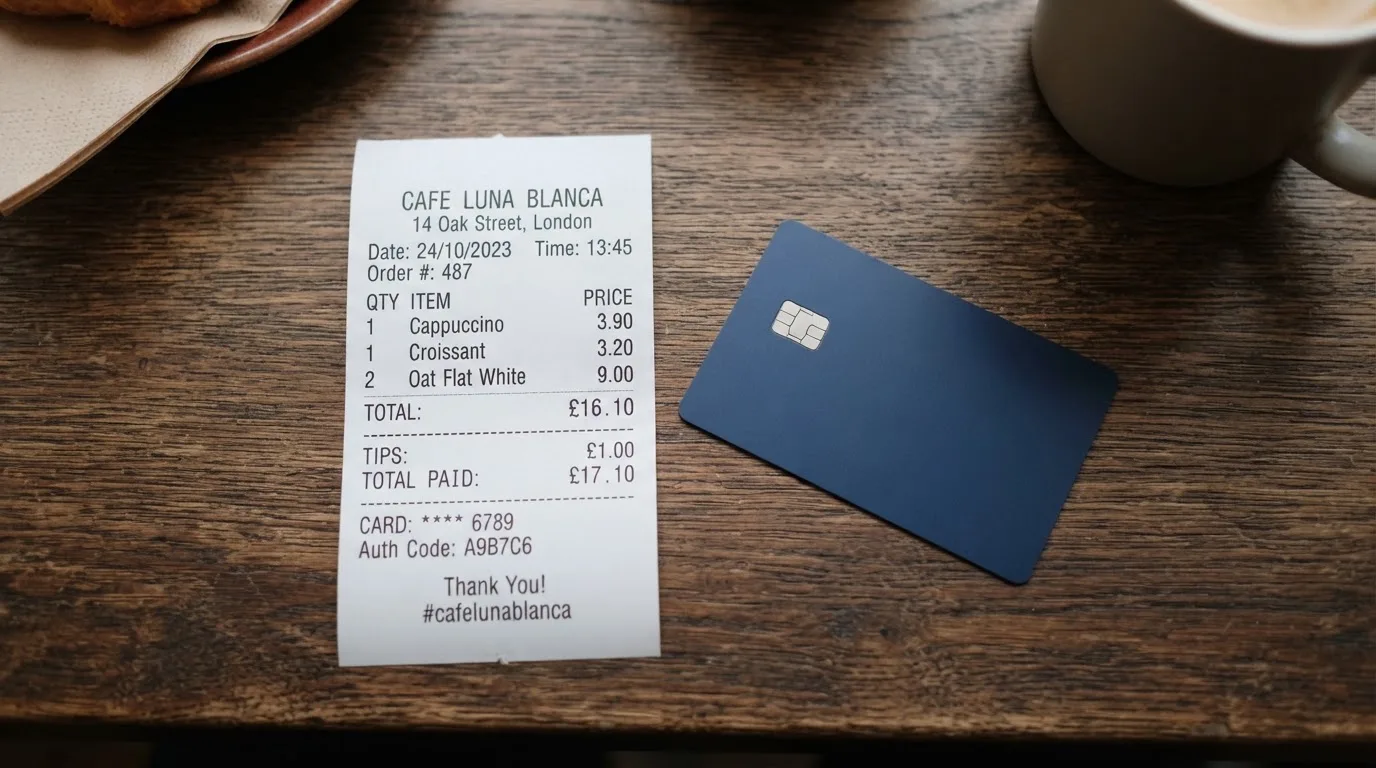
| Replacement card | $15 or $25 according to user reports |
Two of those lines deserve comment. First, the minimum top-up is stated twice on official pages and the two values disagree: the home page says “10$ initial top-up required”, while the FAQ says “The minimum amount to top up your balance is $20”. That is not a rounding difference, it is a contradiction between two official pages, and it is the kind of contradiction that ends with your deposit sitting in a support queue.
Second, the Card Agreement says limits are set by the account holder’s administrator or by Hexacard itself, with no amounts. So your daily and monthly ceilings are not a property you can look up in advance; they are a variable somebody else controls.
Let me walk through three ordinary payments and what actually applies to each.
Buying something in your own currency with money already on the card. The balance you loaded is spent. What you cannot tell from the public pages is whether converting crypto into that balance cost you a spread or a flat fee — “various and low fees” is all you get. Nor can you tell whether paying a local-currency bill triggers a currency conversion charge. On a card where the denomination is not even published, assume there is a cost and be disappointed if there isn’t.
Spending in a country other than the one your money came from. Here the category rules matter more than this card’s silence. A merchant category code is a four-digit number classifying a business, and plenty of issuers block specific ones by policy rather than by law — gambling, MCC 7995, is the usual example. Some merchants decline prepaid or foreign-issued cards outright, because the BIN lookup reveals the card type and the issuer country, and a shop may apply extra scrutiny when that country differs from the billing address. Address Verification Service, which compares the numeric parts of a typed billing address against issuer records, is offered mainly in the US, Canada and the UK and is generally unavailable for foreign-issued cards, which can itself cause declines. And a declined authorisation can leave a hold on your funds for several days, typically up to seven. So the everyday cost of using this card abroad is not only the unstated FX fee; it is the friction of the transaction being refused and money being held.
Taking cash out of an ATM. Only the physical card does this, and it works worldwide. The fee, the daily allowance and the per-withdrawal cap are all unstated, so you are spending blind. Note too what the Card Agreement says about failure: cards are automatically cancelled after three consecutive failed withdrawals. Two mis-taps in a row, or a machine that keeps declining, and the card can be cancelled out from under you.
How to Top up the card
The funding options are the best part of the offer, and the instructions are where the risk sits.
Crypto: “USDT, ETH, BTC, LTC, SOL and more”. Fiat: Apple Pay, Google Pay, Visa, Mastercard. Deposit methods listed in the FAQ are bank cards, direct transfer, wire transfer and cryptocurrency, “depending on region”. Fee amounts are again “various and low” — unstated. So are the networks, which is the single most important missing fact on this page.
Why networks matter so much: sending on the wrong chain is one of the common ways money is lost with stablecoins, and it is not recoverable by reflex. Blockchain transfers are irreversible, so a deposit sent on a network the provider does not support, or to an address belonging to a different network, can be lost, or need manual support recovery with no guarantee. USDT has been issued on networks including Ethereum, Tron, Solana, Polygon, Avalanche and others. Circle lists USDC as natively supported on 38 networks as of 16 September 2026, including Ethereum, Solana, Base, Polygon PoS, Avalanche, Arbitrum and Stellar — and it stopped supporting USDC on Tron in February 2024, so “USDC over TRC20” is not a native option. There are chain-specific gotchas too: ERC-20 gas is paid only in ETH, so a wallet holding USDT with no ETH cannot send; Tron’s network prices fees through bandwidth and energy, often burning TRX. And Tether says it disables tokens in wallets on the OFAC sanctions list and has frozen funds tied to illicit activity — stablecoins are not censorship-proof, in either direction.
So the practical rule for this card: confirm the exact network and the exact deposit address with support, in writing, before you send anything irreversible, and keep the transaction hash. Neither the card’s pages nor its agreement tells you who pays network fees.
One more thing about getting your money out. Withdrawing a balance back to crypto or a bank account is not stated on the public pages. What the Card Agreement does say is blunt: “The card fee cannot be refunded after purchase”. Hexacard may cancel or restrict a card at any time, some cancellations “automatic and irreversible”, and cards are auto-cancelled after six consecutive failed transactions or three consecutive failed withdrawals. What happens to your balance if the card is closed is not explained. That is the question I would put to support in writing before I ever loaded it.
Paying with it every day
Card in hand, the everyday mechanics are fine and the extras are thin.
- Virtual card for online payments, and physical card for everything the virtual one cannot do.
- ATM withdrawals on the physical card, worldwide.
- Cashback on the physical card only, for Spotify, Steam and Google Play Store. The rate is not stated — three named merchants is a narrow programme, and you cannot tell whether it is worth anything.
- Apple Pay and Google Pay appear only as top-up methods. Whether the card can be provisioned into those wallets is not stated, and blocked merchant categories are not stated either.
- Apps for iOS and Android are linked from the site.
On that app, one unofficial data point, not confirmed by the card: the App Store listing shows 3.6 out of 5 from 17 ratings, version 1.2.7, first released 13 December 2023. And an unofficial seller name — the App Store seller is shown as TransferEasy Limited, per a third-party source read on 20 October 2026. Neither of those is the card’s own claim, and I would not build a decision on either.
Security features the site does describe: transactions monitored “24/7”, and 3-D Secure codes delivered via the app or by SIM. A testimonial says a card can be deactivated in the app. Holds reduce the card limit until released, per the Card Agreement. Whether funds are custodial or self-custody is not stated, and no insurance or safeguarding arrangement is stated. 3-D Secure, for context, adds an identity step to online payments where the issuer assesses risk and either approves frictionlessly or challenges you with a one-time code or biometric — Visa’s brand is Visa Secure, Mastercard’s is Identity Check — and under it, liability for fraudulent online payments can shift from merchant to your bank, or per critics, to you.
If a dispute goes wrong, the User Agreement (last updated 4 January 2024) sends it to informal resolution with a 30-day window, then to binding individual arbitration under AAA rules in New York, with no class actions and an opt-out available within 30 days of acceptance. During third-party provider disruptions, “refunds cannot be processed”. Chargeback time frames are not stated. Arbitrating a $60 problem individually in New York is not a realistic remedy for a small balance, so in practice the realistic paths are the provider’s own good behaviour and your bank’s chargeback right — and US debit-card reversal rights come from Regulation E, credit-card rights from Regulation Z, while prepaid-card coverage varies and should not be assumed.
What can go wrong
The category’s known failure modes, and then this card’s own record.
Structurally, a crypto card has more parties than a normal bank card. The card network routes messages and sets the rules; the issuer — a bank or e-money institution licensed to issue under that network’s licence — holds the card programme; the crypto brand is often only a programme manager or a front end. That middle layer is where things break. Visa and Mastercard do not issue crypto cards to consumers themselves; they license issuers and can suspend a programme. Visa said in November 2022 it had “terminated our global agreements with FTX” and the FTX US debit card programme was being wound down by its issuer. WaveCrest, a Visa issuer that supplied crypto card brands, was suspended by Visa in Europe in 2018, closing all WaveCrest-issued Visa programmes. Closures tend to follow a pattern: a notice period, then loading and spending stop, then users are asked to withdraw remaining balances.
Now HexaCard itself.
Nobody is named. The card’s own pages state no company name, no issuer and no licences. The User Agreement names “Hexacard Business Corporation” under New York law and refers for issuer data to the “Celtic Bank Privacy Policy” without naming the issuer directly; the contact address is in Manchester, UK. So the legal entity in the agreement and the entity that actually issues your card are two different names, and neither is fully spelled out on the pages.
The complaints are specific. On Trustpilot, read 20 October 2026: TrustScore 2.0 from 17 reviews, 82% one-star and 18% five-star. (An earlier count on a regional page showed 2.8 from 12 reviews, so the picture got worse as it grew.) Five recurring themes:
- Cards or balances blocked or closed, top-ups failing, reported November 2025 – July 2026.
- Support silent for weeks, November 2025 – July 2026.
- Funds tied to a Turkish issuer and a Papara dispute, November 2025 – October 2026, with reported losses of about $60–100.
- $15 or $25 charged for a replacement card, November 2025 and June 2026.
- A suspected burst of five-star reviews posted within hours, November 2025 — one reviewer saying they believe they were fake.
The company replies to 61% of negative reviews. Its position, on Trustpilot (a third-party site, so this is the company’s statement rather than a confirmed fact): on 2 November 2025 services were “fully active” and the restrictions were compliance updates; on 26 February 2026 the Turkey/Papara disruption was on the provider’s side, with restoration dependent on that provider; on 3 July 2026 some top-up methods may be limited depending on region. One earlier reviewer quoted a company reply saying the Turkish situation was “not directly controlled by us” and blamed decisions by Turkish authorities — unverified. No regulator warning or news coverage was found. No Reddit threads were retrieved, so the complaints picture is one platform, not many.
A note on the trust rating itself. A 2.0 from 17 reviews is a small sample. It is not proof of anything on its own, and I am not treating it as proof. But the combination is what concerns me: a short sample, a consistently bad shape (82% one-star), five recurring mechanisms rather than one-off grumbles, and a corporate structure where the named company is not obviously the issuer.
And a category-level risk you carry regardless. If a provider holds your crypto, control belongs to them: the private key sits with them and you must trust them completely. With a self-custody-linked card the funds stay in your own wallet until the moment of payment, but you carry the risk of key loss, phishing, and clipboard-hijacking malware that silently swaps a copied address. Transfers are typically irreversible and a stolen key has no built-in recovery — the network cannot freeze or return funds. Custodial platforms have a real record: Mt. Gox (about US$350 million reported stolen, 2011–2014), Coincheck (about US$400 million, 2018) and Ronin Network (US$625 million, 2022).
What to take instead
I want to be fair here. On the score HexaCard sits below all three of these, and none of them is a clean answer either. The category is thin.
Bitrefill — 6.8 / 10. The strongest of the three. Virtual and physical Visa, described as free through the app, though issuance and monthly fee amounts are not stated and an inactivity fee applies after 12 months without spending or cash-out. Crypto deposits carry a spread on conversion to euro, percentage unstated; SEPA pay-in is 1.99%; spending picks up spreads from payment processors and ATM operators; FX fee not stated. Country list not stated — the terms say access is “subject to eligibility criteria” with further requirements “established and verified by our partners”. Funding breadth is the draw: Bitcoin, Lightning, Ethereum, USDC, USDT, Solana, BASE, Polygon, Li.Finance, Apple Pay, Google Pay, Visa, Mastercard, plus SEPA transfer. Rewards are the best in this group: 2% total cashback, “no cap”, split 1% on each crypto deposit and 1% on each purchase.
UPay — 6.1 / 10. Virtual and physical options, personal and business, network not named, payments converting to USD, EUR, AED and others. Top-up with BTC, ETH or USDT, USDC also listed, networks unstated. No cashback on the card page. Country handling is the part to watch: no list, a page saying it does not serve residents of certain countries and that the list may change with regulatory or issuer policies, a claim of support in 180+ countries, and a KYC partner that accepts only ID documents issued by the same country as yours — a real problem if you live in one country and hold citizenship in another.
Kemy — 6.0 / 10. The most expensive. Unlimited virtual cards (Visa shown on mockups) and one physical Mastercard, contactless, one card per user. Virtual: $15 issuance valid 3 years, $2/month. Physical: $250 issuance with DHL Express included, $10/month. Transaction fee 3.5% + $1 and failed transaction $0.80 are published, which is more honesty than HexaCard offers; top-up is $1.5 under $100 or 1.25% from $100 with a $5 minimum, raised to a $10 minimum for the physical card. Its own pricing page contradicts itself on the main-account deposit fee — 8% in the summary, 5% in the section. Funding is USDT and USDC “on the main networks” plus BTC, ETH, SOL, and fiat via mobile money and virtual bank accounts. “190+ countries”, “a few restrictions apply”, eligibility checked at sign-up. No cashback mentioned.
Honest comparison:
| HexaCard | Bitrefill | UPay | Kemy | |
|---|---|---|---|---|
| Score | 4.6 | 6.8 | 6.1 | 6.0 |
| Entry cost | $14.99 virtual / $29.99 physical | free through the app | not stated | $15 virtual / $250 physical |
| Monthly fee | not stated | not stated | not stated | $2 / $10 |
| Crypto funding | USDT, ETH, BTC, LTC, SOL and more | BTC, Lightning, ETH, USDC, USDT, SOL, BASE, Polygon, Li.Finance | BTC, ETH, USDT, USDC | USDT, USDC on main networks, BTC, ETH, SOL |
| Fiat funding | Apple Pay, Google Pay, Visa, Mastercard | Apple Pay, Google Pay, Visa, Mastercard, SEPA | not stated on card page | mobile money, virtual bank accounts |
| Cashback | physical only, Spotify/Steam/Google Play, rate not stated | 2% total, no cap | none stated | none mentioned |
| Fees published | none beyond “various and low” | SEPA pay-in 1.99%, spreads unquantified | none | 3.5% + $1 transaction; $0.80 failed |
| Review score | Trustpilot 2.0 / 17 reviews | not assessed here | not assessed here | not assessed here |
If you want the most transparent fee schedule in this group, Kemy publishes its transaction fee; if you want the best rewards, Bitrefill; if you want the widest stated country reach, Kemy. If you want a cheap card today with the least paperwork, HexaCard still competes — it is just the one I would trust least with money I cannot lose.
Who I would recommend it to
- Someone in Georgia, Turkey or Canada who needs a spendable card this week and has no ordinary banking route. That is the case the card was built for, and the low entry price helps.
- A user who treats it as a disposable tool. Load a small amount, use it, accept that the balance can be frozen by a compliance decision you will never see, and do not treat it as a place to hold money between incomes.
- Someone who already knows the crypto side — who can pick the right network without being told, hold a little ETH for gas, and check a deposit address on a block explorer before sending. The card’s silence on networks is manageable only if you are not new to this.
And who I would not:
- Anyone whose financial survival depends on the balance staying put. The complaint pattern — closed cards, balances at 0.00, support gone quiet, losses of $60–100 — is exactly the scenario you are trying to escape.
- Anyone holding citizenship in one country and residence in another. Nationality is screened separately from residence, and UPay’s same-country ID rule shows how sharply this can bite. HexaCard publishes nothing about either.
- Anyone who has never sent crypto before. With no published networks and an irreversible transfer, this is the wrong place to learn.
- Anyone planning to hold a balance for months, or to plan around cashback, ATM allowances or spending caps. Those numbers are not public, so you would be budgeting from guesses.
Frequently asked questions
What is HexaCard?
HexaCard is a prepaid card programme that lets you spend a balance you load with cryptocurrency or, in some regions, with ordinary payment methods. It sells two products: a virtual card at $14.99 and a physical card at $29.99, each requiring a $10 initial top-up. Both run on Visa, Mastercard or American Express networks. The pages claim multi-currency support, variously “28 currencies” or “32 different currency units”.
How does HexaCard work?
You buy a virtual or physical card, load a balance — crypto such as USDT, ETH, BTC, LTC or SOL, or fiat through Apple Pay, Google Pay, Visa and Mastercard depending on region — and spend that balance. Like most cards in this category it behaves as a prepaid card rather than a debit card linked to a bank account, so it cannot overdraw. What is not published is what the loading and conversion actually cost you.
Is HexaCard a bank?
Not on anything it publishes. The pages name no issuer and no licences. The User Agreement names “Hexacard Business Corporation” under New York law and refers to the “Celtic Bank Privacy Policy” for issuer data without naming the issuer directly; the contact address is in Manchester, UK. A card like this normally depends on two licences — one for the crypto side and one for the payment side — and you cannot see either here.
Who owns HexaCard?
The card does not say on its own pages. The agreement names Hexacard Business Corporation as a New York entity. One unofficial detail, not confirmed by the card: the App Store seller is shown as TransferEasy Limited. Beyond that, the company behind the brand is not identified on the pages I read.
Which countries is HexaCard available in?
The official FAQ names six: Georgia, Canada, Germany, United Kingdom, Turkey and United States, and claims “over 25 BINs in various GEOs”. There is no fuller list, nothing about citizenship versus residence, and no statement about minimum age. If you are not in those six, the public pages cannot tell you whether you would be approved.
Does HexaCard require KYC, and what documents?
Yes, at least by name, address, date of birth and other identifying information, and the Card Agreement says it may ask for a driver’s licence or other ID documents. No KYC tiers, no processing time and no rejection reasons are published. Assume your nationality is screened as well as your address, and assume an incomplete file means a closed account rather than a warning.
What does it cost, and is the card free?
Neither version is free. The virtual card is $14.99 and the physical $29.99, each with a $10 initial top-up, so $24.99 or $39.99 to start. Monthly fee, conversion fee, FX fee, top-up fees, ATM fee and spending limits are all unstated — top-up fees are only described as “various and low”. User reports mention $15 or $25 for a replacement card.
How do I top up, and which network should I use?
Crypto deposits accept USDT, ETH, BTC, LTC, SOL and more, with no networks named — so there is no correct answer I can give you from public sources. Confirm the network and address with support before sending, keep the transaction hash, and note that wrong-chain deposits are irreversible. Fiat top-up uses Apple Pay, Google Pay, Visa, Mastercard, bank transfer or wire depending on region.
Is HexaCard safe to use?
Hard to answer, because the safety information is thin. The site says transactions are monitored 24/7 and 3-D Secure codes arrive via app or SIM, but it does not say whether funds are custodial, and no insurance or safeguarding arrangement is published. The User Agreement allows cancellation at any time, some of it “automatic and irreversible”, with balances unexplained on closure, and disputes go to individual arbitration rather than court.
Can I withdraw money from HexaCard?
Cash at ATMs worldwide with the physical card, with the fee and allowance unstated. Withdrawing a card balance back to crypto or a bank account is not described on the public pages, the card fee is non-refundable after purchase, and three consecutive failed withdrawals can auto-cancel the card. Ask support in writing what happens to your balance on closure before you load it.
What should I do if my card is blocked?
Move fast and keep records. Note the date, screenshot any error, and send a written claim through the support form — departments include Business, Personal and Support — and keep the replies. Then ask the bank that funded your top-up whether a chargeback is available, since US reversal rights come from Regulation E and prepaid-card coverage varies. On this card’s record, expect silence for weeks and expect the balance to be the thing you may not recover.
Virtual cards – cryptocardsearch.com
Content created by the «cryptocardsearch.com» team