
The crypto card that pays you to hold stablecoins on Solana — and what the pages don't agree on
 Available in US
The Solayer card is a prepaid Visa you fill from a stablecoin balance, aimed at people who already hold crypto on Solana and want to spend it at ordinary shops. That is the good version. The version I actually found, reading the card’s own pages against each other, is a product with a $20 annual membership, a physical card that costs $24.99 or $59.99 to post you, a top-up fee stated three different ways by three official pages, and an eligibility list that excludes most of the people who would want it. I gave it 6.2 out of 10.
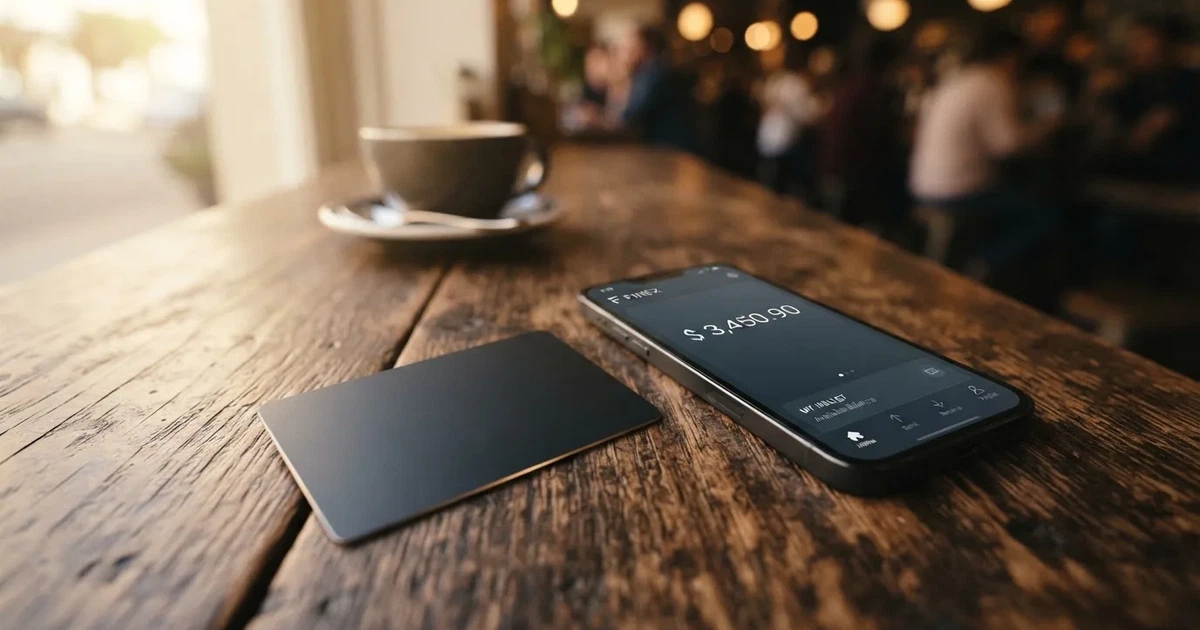
It is not a scam, as far as I can tell from public material — there is no complaint pattern to point at, and the app has been shipped and updated. But it is a young product with young documentation, and several of the things you would need in order to decide whether it is worth your money are simply not written down anywhere I could find.
The conditions described here are current as of October 28, 2026.
Verdict: 6.2 out of 10, and the reasons
Here is the whole score in one table, criterion by criterion, with the mark I gave and why.
| Criterion | Mark | Reason |
|---|---|---|
| Who can get it | 7 / 10 | Residents and citizens of listed countries are turned away, including Russia, Belarus, most of the EU, the UK, Switzerland, Turkey, the UAE, India and China. An unofficial count puts it at 120 available and 94 restricted countries. |
| Cost | 5 / 10 | $20 a year for membership, $24.99 or $59.99 to have a physical card delivered, $0.10 plus 1.5% on non-dollar spending, a cross-border fee of up to 3%, and a top-up fee quoted as 1%, 0.5% or $0.10 depending on which page you read. |
| Top-up options | 5 / 10 | Stablecoins only, and the specific coins are never named. Solana is the stated network; other networks arrive at the issuer’s discretion. |
| Reliability and complaints | 6 / 10 | The issuer is named as Third National. The legal entity behind Solayer and its licences are not disclosed. No complaints found, but the custody description and the “non-custodial” marketing contradict each other. |
| Everyday use | 8 / 10 | Virtual and physical Visa, Apple Pay and Google Pay, and cash withdrawals on the physical card up to $250 each. The pages disagree about whether the physical card and ATM access exist at all. |
| Total | 6.2 / 10 | A usable card for a narrow and specific person, sold on incomplete information. |
The strongest part is everyday use. If you hold stablecoins on Solana, a Visa that works in shops and in Apple Pay is exactly what a lot of people in that position want, because moving crypto into a normal bank account is slow and expensive. The weakest part is cost, and not because the prices are high but because nobody has published the price list properly. Three different figures for the same top-up fee is not a rounding difference.
Who this suits: someone who already sits on stablecoins, already uses Solana, lives in a country on the allowed list, and wants a spending card this week rather than a bank account next month. Who it does not suit: anyone who needs to know their exact fee before signing up, anyone in a restricted country reading this hoping for a workaround, and anyone whose main concern is keeping crypto under their own keys — the marketing says non-custodial, the documentation describes the opposite.
Will they give you the card?
Not to everyone. Eligibility here is not about where you live today; it is about citizenship as well as residence, and the list of excluded countries is long.
The card’s own wording is that residents or citizens of listed countries are “not eligible to sign up for the Solayer Card, regardless of their current place of residence”. That sentence matters more than it first appears: you can move to an allowed country and it does not help if the citizenship on your documents is on the list.
Among the excluded are Russia, Belarus, Georgia, Turkey, Serbia, the United Arab Emirates, Ukraine, Moldova, Montenegro, most EU states, the UK and Switzerland. In the United States, whole states are excluded: Arizona, Delaware, Georgia, Idaho, Louisiana, Maryland, Montana, Nevada, New Mexico, North Dakota, Ohio, Oregon, Rhode Island, South Dakota, Vermont, Washington, Wisconsin. The card terms separately ask you to confirm you are not a US citizen, describing the card as “intended for those outside of the United States” — so the two official documents describe the US differently, and I would not rely on either without asking support directly.
One useful detail for anyone scanning the list: Armenia, Kazakhstan, Azerbaijan, Uzbekistan and Kyrgyzstan are not on the exclusion list. That is not the same as being eligible. The page states plainly that it does not list eligible countries, only the ones that are refused.
An unofficial third-party count puts the numbers at 120 countries available and 94 restricted. Treat that as orientation, not as a list you can plan around.
If your country is on the excluded side, the answer is no, and there is no application to try. I am not going to explain how to get around a country rule, and neither should anyone selling you a “method”.
How to get it
The application is short on paperwork and vague about detail. You need to be 18 or older and pass identity verification. The card’s own pages do not say which documents are required beyond the check itself, and do not say whether a separate proof of address is needed or what grounds a rejection.
The verification runs through Sumsub and asks for quite a lot: your country of residence, address, occupation, annual salary, an email code, a photo ID — passport, driving licence or Aadhaar card, both sides, as JPG, PNG, HEIC, WEBP or PDF up to 50MB — and a face liveness check. Review and approval is stated as three to five business days after that check. Approval tiers and rejection reasons are not stated.
If you want the plastic:
| Card | Cost | Delivery |
|---|---|---|
| US Express shipping | $24.99 | 2–5 business days, tracked |
| International Express shipping | $59.99 | 5–11 business days, tracked, includes production |
| Membership | $20 for the first year, new users | Covers card access and maintenance for 12 months |
Shipping is the only charge for the card itself, and your address cannot be changed after you order. If the card is lost or stolen you freeze it in the app and order a replacement; the replacement fee is not stated.
Two practical warnings. The documentation says in one place that cards are digital only with the physical version “coming soon”, while a separate page describes ordering the physical card in detail — so check at signup that the ordering flow is actually live. And the card is a Visa “issued by the Issuer under license from Visa”, with your balance in USD; spending in another currency is converted.
What it really costs
This is the section where I found the most friction, so I have put the numbers in a table first and then walked through three ordinary payments against them.
| Fee or limit | Value |
|---|---|
| Membership | $20 per year |
| Physical card | Free, apart from shipping ($24.99 US / $59.99 international) |
| One-time account activation | $20 for new users, covering the virtual card for the first year |
| Card issuance or monthly fee | Not stated |
| USD transaction | $0.15 |
| Non-USD transaction | $0.10 + 1.5% on the fee page; $0.10 + 1.75% in the FAQ |
| Cross-border fee | Up to 3% (terms) |
| Crypto conversion fee | Not stated |
| Top-up | 1% on the fee page, 0.5% in the FAQ, $0.10 per transaction in the tutorial |
| Cash advance | Not available (terms); ATM described separately — pages disagree |
| ATM | Physical card only, up to $250 per withdrawal including surcharges, three attempts per rolling 24 hours |
| Late payment | Up to $40 |
| Returned payment | Up to $29 |
| APR | 0% (may be introduced later) |
| Spending limits | “Dynamic and may be modified at any time” — no figures published |
| Cards per account | 10 in total, including cancelled |
Three everyday payments:
- A $30 subscription in dollars. $0.15 on the transaction, and the cross-border fee if one applies to your route. This is the cheapest shape of payment the card offers.
- A €40 dinner somewhere in Europe. Here the pages disagree: $0.10 + 1.5% or $0.10 + 1.75%, converted at the card-network rate, plus a cross-border fee of up to 3% on top. Which of those figures applies depends on which page you read, and nobody has reconciled them.
- $200 in cash from an ATM. Up to $250 per withdrawal is allowed on the physical card, including surcharges, but standard ATM and network fees may apply, and the terms elsewhere say cash advances are not available. That contradiction is unresolved.
One number you will see quoted — $10,000 daily and $30,000 monthly spending, $500 at the ATM — comes from an undated Chinese-language listing on a third-party card directory and may predate the current structure. The official position is only that limits are dynamic and can change at any time.
There are no tiers. It is a single product with the $20 membership; points come from spending and referrals and unlock perks, but there is no tier ladder to climb.
How to top it up
Topping up means moving stablecoins into the card balance, and the direction of travel matters more than the amount.
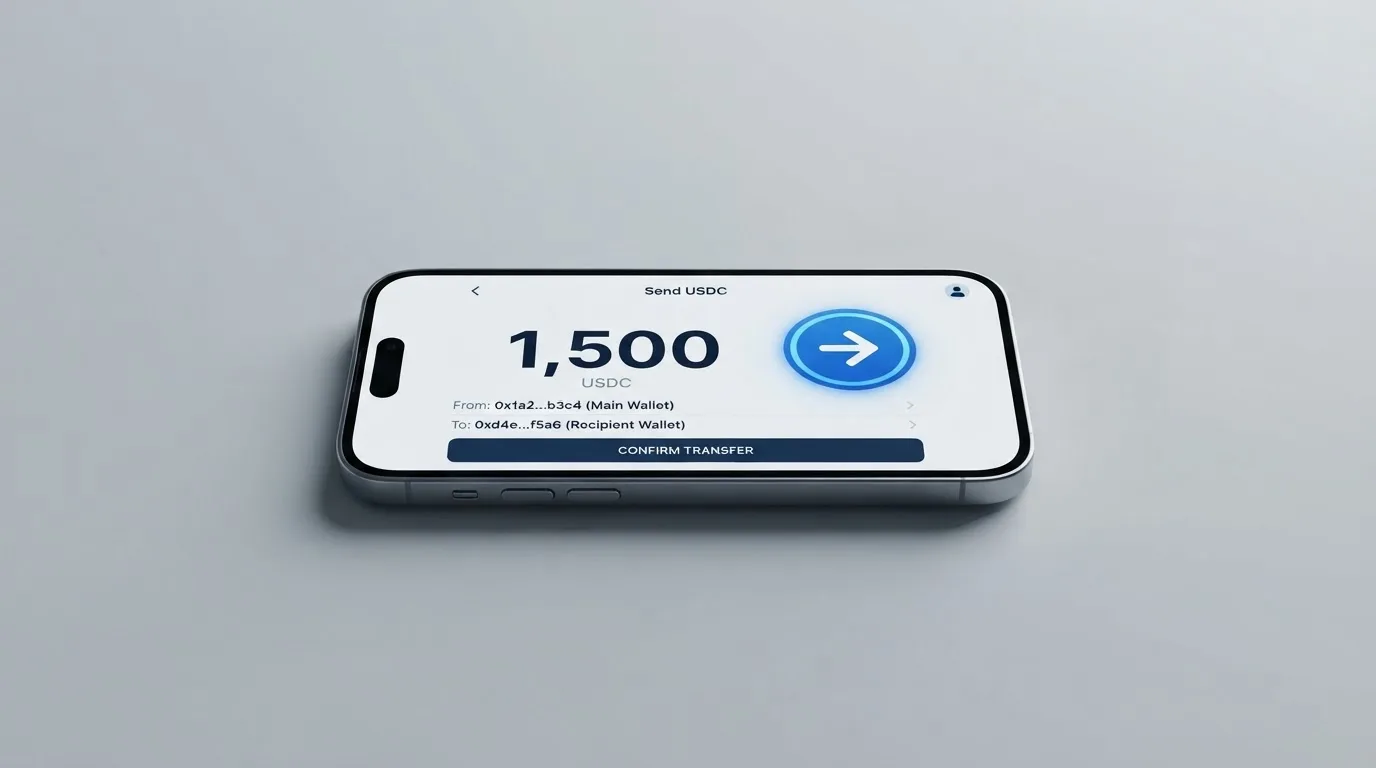
The stablecoin side is thinly specified. Stablecoins are supported; which specific coins is not named. Solana is the stated chain, and the issuer says other networks may be added at its discretion. That is a one-line commitment with no list behind it, so before you send anything, confirm in the app that the token you hold and the network you are on are the ones it will actually accept. Blockchain transfers are irreversible; a deposit on a network the provider does not support, or sent to an address of another network, can be lost or need manual recovery with no guarantee attached.
The fee is the real problem. Three official pages give three answers: 1% per top-up on the fee page, 0.5% in the FAQ, and $0.10 per top-up transaction in the tutorial. Nothing says which one is current. Ask support, and keep the answer.
The steps themselves are simple: in the app, open the Card tab, choose Deposit, and approve the transaction in your wallet. The minimum top-up and any option to buy with a bank card or from a fiat balance are not stated.
Two things people forget. Your cards deactivate after six months of inactivity, and bringing them back needs a new card issuance — which is a fee and a wait, not a button. And how to withdraw your card balance back to your wallet is not covered anywhere I could find, on the top-up page or in the terms. The terms do say the balance can be repaid at any time without penalty, that a chargeback you win is credited to the Solayer Account, and that on termination you must surrender the card.
Paying with it every day
This is the part Solayer does best, and if your spending profile matches it, the day-to-day experience is good.
You get a virtual card straight away and a physical one if you order it. Both work in Apple Pay and Google Pay for contactless, which is how most people will actually use a crypto card — the phone, not the plastic. Contactless and online payments work the way any Visa works, including 3-D Secure-style step-up checks when the issuer wants them.
Restrictions to know before you are surprised at a till. Gambling-related payments are blocked, and so are cash-like transactions: travellers cheques, foreign currency, money orders, wire transfers, and anything that reads as a cryptocurrency transaction. If you buy crypto directly with the card, that is the one thing that will not go through.
Rewards are real but vague. No cashback rate is published. The card points you earn from spending and referrals, ecosystem perks, and yield on eligible balances — none of which is quantified in a way you can plan a budget around. A widely quoted 1% cashback and 10% first-purchase offer is reported as a 2025 campaign; I would treat it as expired unless you see it in your own account.
The app is the Solayer Pay app on the Apple App Store and Google Play. Third-party reporting on store listings is thin and inconsistent: one directory recorded an App Store US rating of 5.0 from just two ratings and Google Play at 500+ downloads in August 2026, while another report in March 2026 showed a rating of 0.0. Neither was read from the stores directly. Tiny numbers mean a single bad experience can move the score, in either direction.
If a payment goes wrong, the process is the standard one. Try the merchant first. If that fails or the charge was not yours, open a chargeback through the Solayer Account. Report within no more than 60 days of the charge posting on your periodic statement. The network may ask for extra documents, and the disputed amount stays due while the dispute runs. Money you recover is credited to the Solayer Account.
What can go wrong
The risks here are mostly structural, not dramatic. Here they are in rough order of how likely they are to matter to you.
The paperwork does not agree with itself. The physical card, the ATM, the non-USD fee, the top-up fee, the United States — five separate places where two official documents say different things. This is the single biggest practical risk, because you cannot budget against a fee that has three values.
You cannot find out who you are banking with. The issuer is named as Third National in the card terms. The Solayer legal entity and its licences are not stated. A card can work perfectly for years and then stop, and when that day comes you want to know which regulated entity is responsible.
Custody. The documentation describes provider-operated hybrid custody: hot wallets holding a small operational balance, cold wallets holding most of it, offline and multi-signature, with “circuit breakers that freeze suspicious activity”. The marketing calls the card non-custodial and fully on-chain. Both cannot be true. Read the custody section, not the headline. Two-factor authentication, spending controls and any insurance are not stated.
Programme closure. Card programmes end. Visa terminated its global agreements with FTX on 13 November 2022 and the FTX US debit card was wound down. WaveCrest, a Visa issuer that supplied several crypto card brands, was suspended by Visa in Europe in 2018 and all its Visa programmes closed. That is the shape of the risk: a notice period, spending and loading stop, and you are asked to withdraw what is left. I found no closure announced for Solayer, and no complaints — no Trustpilot page, no Reddit or forum thread I could find — but neither of those is a guarantee.
Deposits on the wrong network. Covered above, and irreversible if you get it wrong.
Sanctions and frozen funds. Tether says it disables tokens in wallets on the OFAC sanctions list and has frozen funds tied to illicit activity. Stablecoins are not censorship-proof, and neither is any card that touches them.
Declines and holds. Address Verification Service compares the numeric parts of the billing address a shop types against issuer records; it is mainly available in the US, Canada and the UK and is generally unavailable for foreign-issued cards, which causes declines at some merchants. Some shops simply refuse prepaid or foreign-issued cards, because the BIN lookup shows the card type and issuer country. A declined authorisation can leave a hold on your funds for several days, typically up to seven.
Tax. I am not giving tax advice, but you should know the shape of it: the IRS treats digital assets as property, so exchanging them for goods, services or dollars generally produces a taxable gain or loss, measured in local fiat currency at fair market value on the date of the transaction. Each card payment funded from crypto may therefore be a separate disposal. Ask a professional in your own jurisdiction.
Getting help. Support runs through the Solayer Discord, plus [email protected] and a phone number, +1 (734) 510 1402. Discord is where the answers will be, and Discord is also where they can evaporate.
What to take instead
If you want to compare rather than commit, here are the three I would put next to Solayer. Scores are from the same ten-point scale.
| Option | Score | Card | Annual cost | Non-USD fee | Top-up fee |
|---|---|---|---|---|---|
| Solayer | 6.2 / 10 | Visa, virtual and physical | $20 membership, card free | $0.10 + 1.5% or 1.75%, plus up to 3% cross-border | 1%, 0.5% or $0.10 — unpublished which |
| MetaMask | 7.1 / 10 | Mastercard, virtual, metal optional | Free; metal $199/year | No additional MetaMask fee, Mastercard rate | Spends from the connected wallet |
| KAST | 6.1 / 10 | Visa, virtual and physical | $0 / $1,000 / $10,000 by tier | 0.5%–1.75% by country; 0.10 under $25 | 0% on stablecoin top-up |
| Zeal | 6.1 / 10 | Visa, virtual | Not stated | No additional FX fee, Visa wholesale rate | Not stated |
MetaMask scores higher here, and the reason is transparency rather than magic. Sign-up is open in 45 listed countries and territories — Andorra, Argentina, Brazil, Canada, Mexico, Germany, France, Spain, Uruguay among them — with other regions on a waitlist, and US and UK sign-ups temporarily closed per its FAQ. Proof of residency is required, but “ineligible regions limit sign-ups, not spending”, and citizenship is not stated. The virtual card is free with no annual or maintenance fee; the metal one is $199 a year. It spends from a connected wallet across Linea, Base, Monad and Solana, using named tokens including mUSD, wETH, EURe, GBPe, USDC and USDT. Cashback is 1% on the virtual card; the metal headline 3% has a footnote limiting it to the first $10,000 spent, then 1%. One caveat: Solana-only wallets cannot withdraw the credit.
KAST is the fee-transparent option, and if your objection to Solayer is the three different top-up numbers, this is the direct answer. Stablecoin top-up 0%, USD spend 0%, Apple and Google Pay 0%, with non-USD FX of 0.5%–1.75% depending on your residence and card programme. Tiers are published plainly: Standard free, Premium $1,000 a year, Private $10,000 a year, billed annually upfront. Cashback is 1.5% on the first $2,000 a month, 2% on the first $10,000, or 3% on the first $40,000 by tier. It supports USDT, USDC, PYUSD and RLUSD across several chains, no bank account needed, and up to 10 cards. Against it: the country list is not published, and if your country is missing, KAST is not available there. Holding an ID from a restricted region can make you ineligible even while living in a supported country.
Zeal is the quiet one. No additional FX fee, conversion at the Visa wholesale rate, spending in 150+ countries, and up to 4% cashback paid in GNO if you hold it in the card Safe — with an App Store advert of up to 5% variable APY on EUR and USD balances. Accounts in EUR, USD and GBP. What it does not publish is a fee schedule at all, which is its own kind of problem.
Who I would recommend it to
If you are already holding stablecoins on Solana, in a country that is not on the exclusion list, and you want to spend that balance this week at shops that accept Visa — you will probably like this card, and 8 out of 10 on everyday use is the number that says so.
I would hold off if any of these are true of you: you need a published fee schedule before committing; you are in a restricted country or hold a restricted citizenship; you are choosing a card specifically so your keys stay yours; you plan to use it heavily outside the dollar, where the fee page and the FAQ disagree and a cross-border fee of up to 3% may sit on top; or you travel and need cash, where the ATM terms contradict the cash-advance terms.
Before you sign up, do three things. Ask support which top-up fee is live and which non-USD percentage applies to you, in writing. Ask which legal entity is your issuer and where it is licensed. And check in the app that your network and your token are accepted before you send a single dollar of stablecoins. If the answers are vague, that is your answer.
Frequently asked questions
What is the Solayer card?
It is a prepaid Visa you spend from a stablecoin balance rather than from a bank account. You load funds into the Solayer account and the card draws on that stored balance, like a gift card that accepts crypto. It comes in virtual and physical form, works in Apple Pay and Google Pay, and is built mainly for people holding stablecoins on Solana. It is not a bank account and it does not replace one.
How does the Solayer card work?
You sign up, pass identity verification, and get a virtual Visa you can add to your phone immediately. You then transfer stablecoins to the card balance — Solana is the stated network — and spend. Non-dollar spending is converted to USD at the card-network rate. It behaves like a prepaid card, so the balance is what you can spend and the card cannot overdraw it.
Is Solayer a bank, and who owns it?
Not a bank. The card terms name the issuer as Third National, which issues the Visa under licence. The Solayer legal entity itself and its licences are not stated on the pages I could find, so you are trusting a programme whose corporate structure is not publicly described. That is worth asking about before you fund it.
Who can get the Solayer card?
Anyone aged 18 or over who passes KYC and is not a resident or citizen of an excluded country. That list includes Russia, Belarus, most EU states, the UK, Switzerland, Turkey, the UAE, India, China and Ukraine, plus a set of individual US states. The rule applies to citizenship as well as residence, so relocating does not help. Armenia, Kazakhstan, Azerbaijan, Uzbekistan and Kyrgyzstan are not excluded, though not being excluded is not the same as eligible.
How much does the Solayer card cost?
$20 a year for membership, and shipping if you want the physical card: $24.99 in the US or $59.99 internationally. New users pay a one-time $20 activation fee covering the virtual card for the first year. Spending costs $0.15 in dollars or $0.10 plus 1.5% elsewhere, with a cross-border fee of up to 3%. The top-up fee is quoted as 1%, 0.5% or $0.10 on different official pages.
How do I top up the Solayer card?
You transfer stablecoins, using the app: open the Card tab, choose Deposit, and approve the transaction in your wallet. Solana is supported and the issuer says other networks may be added later, but the specific coins accepted are never named — confirm yours in the app before sending, because transfers on a wrong network can be lost. The minimum amount and any fiat purchase option are not stated.
Can I use Solayer at ATMs and abroad?
On the physical card, yes, where Visa ATMs are available: up to $250 per withdrawal including surcharges, three attempts in any rolling 24 hours, and standard ATM fees may apply. The terms separately say cash advances are not available, so the pages conflict and it is worth confirming. Abroad, non-dollar spending costs $0.10 plus 1.5% or 1.75% depending on the page, plus a cross-border fee of up to 3%.
Is the Solayer card safe, and is it non-custodial?
The documentation describes provider-operated hybrid custody, with hot wallets holding a small operating balance, cold wallets offline and multi-signature, and circuit breakers that freeze suspicious activity. The marketing calls it non-custodial and fully on-chain. Those descriptions conflict, so treat it as custodial until told otherwise in writing. You can freeze a lost card instantly in the app; two-factor authentication, spending controls and insurance are not stated.
What are Solayer’s fees on a foreign purchase?
A non-dollar transaction costs $0.10 plus 1.5% on the fee page, or $0.10 plus 1.75% in the FAQ, converted at the card-network rate, with the terms adding a cross-border fee of up to 3%. Nobody has published which figure is current. A $30 dollar subscription costs $0.15. Crypto conversion fees and spending limits are not stated, though limits are described as dynamic and changeable at any time.
Is the Solayer card worth it?
For someone holding stablecoins on Solana in an allowed country who wants to spend now, probably yes — free card access, a $20 membership, and solid everyday use with Apple Pay and Google Pay. For anyone who needs a clear fee schedule, holds a restricted citizenship, or is outside the dollar, the unpublished numbers and the three contradicting official pages make it hard to justify. Ask which top-up fee and which non-USD rate apply to you before funding anything.
Wallet cards – cryptocardsearch.com
Content created by the «cryptocardsearch.com» team