
Worldwide card review: cheap entry, thin answers
 Available in US
There are cards you take out at a supermarket till, and there are cards that live in a phone. Worldwide is very much the second kind: a virtual Mastercard, ordered and topped up through a Russian-language Telegram mini-app, with crypto deposits offered through a separate app in the App Store. The pitch is straightforward and, in its own way, useful — you load money, you spend it where Mastercard is accepted. But when I went through what the card actually publishes about itself, a lot of the practical details are simply absent: who issues the card, which countries qualify, what the conversion markup is, what happens to your balance if the account closes. The fees that are published look attractive. The disclosure behind them does not.
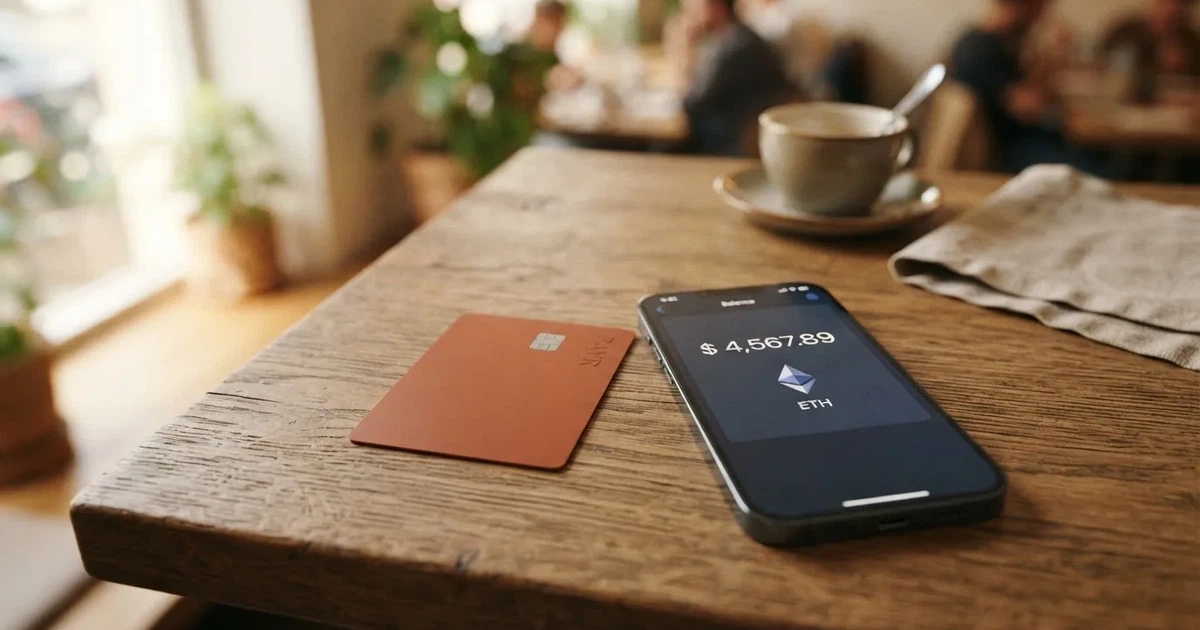
If you have a bank account or card, and ordinary cards have become awkward — declined abroad, blocked at a merchant, or simply unavailable to you — then Worldwide solves a specific problem. It lets you pay from a balance you control from Telegram, without visiting an office. If instead you want a card with a physical piece of plastic, a real ATM, a named issuer you can look up in a register, or published spending limits, this is not that card, and the alternatives below fit better.
The conditions described on this page are current as of October 28, 2026.
Verdict: 4.2 out of 10
The score is not a verdict on whether virtual cards are a good idea. It is a verdict on how much this particular card tells you, and how much it does not. Worldwide is cheap to enter, cheap to operate on paper, and genuinely convenient for one narrow group of people. It is also thin on the facts that decide whether a card is safe to trust with your money over years: the issuer is unnamed, the eligibility rules are unstated, and the app in the App Store has a single rating of 1.0 out of 5.
| Criterion | Mark | Why |
|---|---|---|
| Who can get it | 5 / 10 | Issuance rules and countries are not described; the app appears in many App Store storefronts, but where the card itself is issued is never said |
| Cost | 5 / 10 | Standard from 2,900 RUB a year, Premium from 3,900 RUB a year, Promo 2,390 RUB for issue and 0 RUB maintenance in the first year; operations at 0.00 USD and top-up at 0%, but the conversion markup is not disclosed |
| Top-up options | 3 / 10 | The site offers SBP only and says crypto is not offered; the App Store app shows USDT on TRC-20 |
| Reliability and complaints | 3 / 10 | The issuer is described only as a licensed foreign issuer and not named; the app developer is URUS – FZCO; there are essentially no reviews, and one App Store rating of 1.0 out of 5 that has not been verified |
| Everyday use | 4 / 10 | Virtual Mastercard only; Apple Pay and Google Pay on the Premium and Promo tiers; no physical card and no ATM |
Total: 4.2 / 10.
Who this suits: someone who needs a virtual Mastercard for online subscriptions and small everyday purchases, who can top up by Russian bank transfer, and who treats the balance as spend-it-and-leave-it money rather than savings. Who it does not suit: anyone who needs a physical card, an ATM, published spending limits, a named and searchable issuer, or an answer to the question “what happens to my balance if this company disappears?”
Will they give you the card
The short answer is: probably, if you have a Russian bank account — but the card never says so. The site presents a Russian-language Telegram mini-app where the card can be ordered and topped up “from Russia without a VPN”. Eligibility rules are not described anywhere. Citizenship versus residence is not stated. The marketing says the card works “where Russian cards are not accepted” and in “150+ countries”, but a marketing claim about acceptance is not the same as a statement about who can hold the card.
There is also an app in the App Store called “Worldwide: Wallet USDT Card”, listed in many storefronts including the US, Canada, the UK and Turkey. Its listing says nothing about where the card is issued. So you can download it in London or Toronto and still not learn whether you qualify. That gap matters, because in this category the issuer country decides a great deal: how a merchant’s risk system reads the card, whether a payment is treated as domestic or cross-border, and what your legal recourse is if something goes wrong.
What the card does say about itself is a matter of emphasis rather than information. “No visits, no paperwork, no passport” is marketing wording; the site does not describe a verification process, the levels involved, or the reasons an application might be refused. I would not read the absence of a passport requirement as freedom from checks, and I would not treat it as a claim that none exist. It simply is not said.
How to get it
Everything happens inside the Telegram mini-app. The site says activation takes fully online, with “no queues or courier meetings”. There is no application form to fill in on a web page, no branch to visit, and no courier to meet. If you have used Telegram banking mini-apps before, the shape will feel familiar: you open the app, go through whatever steps it presents, and a virtual card appears in your account.
On the card itself: the site FAQ describes a virtual card on the Mastercard network. Four tiers exist — Standard, Premium, Promo and Business — and the Promo tier runs on a USD account. The App Store app describes a “virtual card” for top-up purposes but does not name the network. Note the inconsistency with the site’s own blog, which refers to the card network as “Mastercard or Visa”. If the network matters to you for any reason, that inconsistency is worth asking about rather than assuming.
What is not described: which documents, if any, are required; what the verification steps are; what happens if you are turned down; how long a review can take when it does not go through instantly. The App Store app does advertise a biometric unlock. That is a device-level convenience, not a description of the account’s verification regime.
Fees and the real cost of a purchase
The published fees are the strongest part of this card’s case. A Standard subscription starts at 2,900 RUB a year and Premium at 3,900 RUB. The Promo tier charges 2,390 RUB to issue and 0 RUB maintenance in the first year. Business starts at 12,900 RUB a year. Operations are listed at 0.00 USD, and an SBP top-up carries no transfer fee. That is a genuinely cheap card to hold.
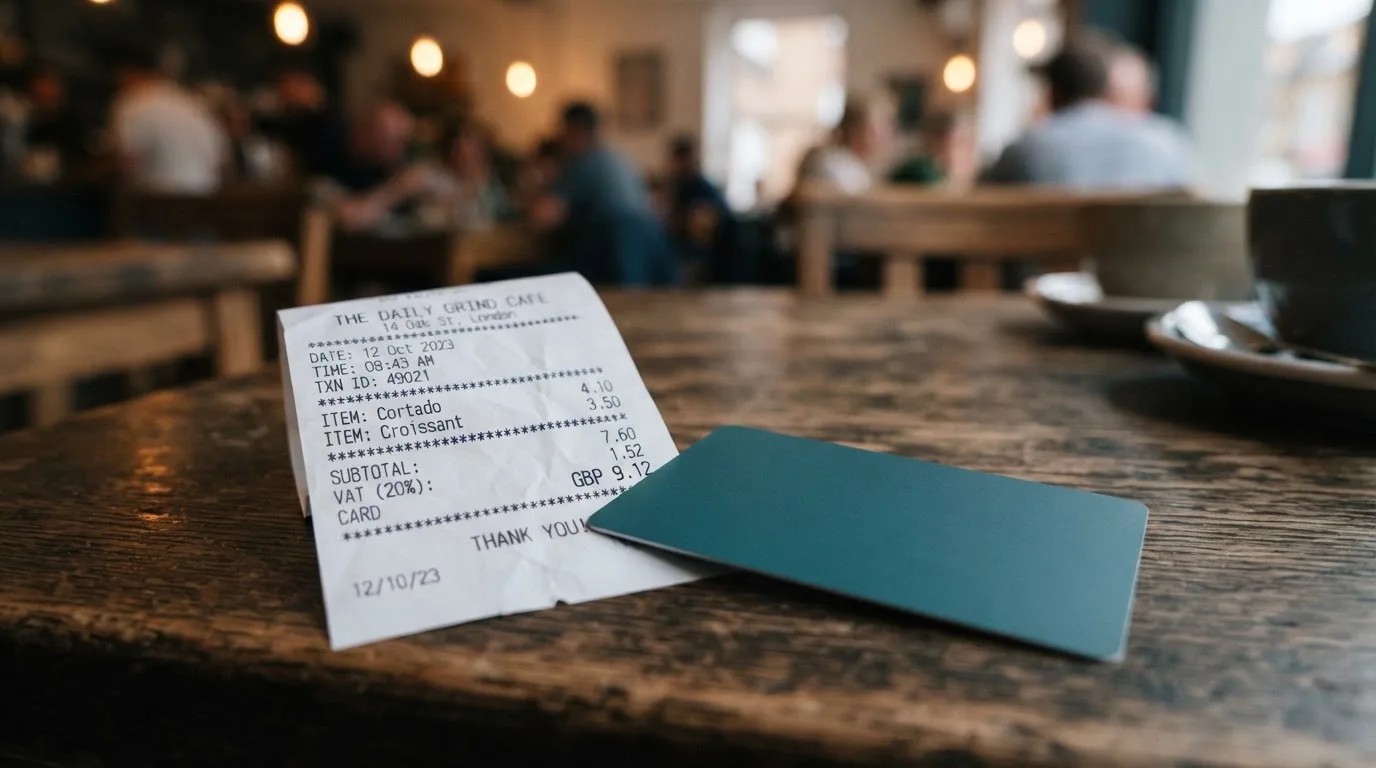
The catch is that the number most relevant to your spending is the one not given: the markup added to the currency conversion. The card says conversion happens at the Central Bank rate plus a markup, and the blog describes the top-up commission as “minimal or absent”, but the percentage is never published. The rate is shown to you before you confirm a top-up, which is a real safeguard — you can see what you are getting — but seeing a rate is not the same as knowing the steady-state cost.
| Fee or limit | What the card publishes |
|---|---|
| Standard subscription | from 2,900 RUB/year |
| Premium subscription | from 3,900 RUB/year |
| Promo issuance | 2,390 RUB |
| Promo maintenance, first year | 0 RUB |
| Promo top-up fee | 0% |
| Business subscription | from 12,900 RUB/year |
| Card operation | 0.00 USD |
| SBP transfer | no transfer fee |
| Conversion | Central Bank rate plus a markup; the markup is not stated |
| ATM | not stated |
| Per-top-up limits | 500 RUB minimum, 200,000 RUB maximum per SBP transfer |
| Daily and monthly spending limits | no numeric limits published |
| Metal card | not stated |
Now three everyday payments, and which fees apply to each.
Paying 500 RUB for an online subscription with the Standard card. The subscription fee is already sunk. The payment itself costs 0.00 USD. But if your balance is in rubles and the merchant charges in euros, the conversion happens at the Central Bank rate plus an undisclosed markup, so your real cost is above the sticker price. Premium and Promo advertise a “better rate” than Standard without giving figures.
Paying for groceries abroad from a USD balance. Again 0.00 USD for the operation, and the currency conversion is where the cost lives. The site’s own blog warns that a foreign-currency charge may come out slightly higher than the ruble amount you expected, and suggests keeping a buffer. No fee is stated for spending in a third currency.
Taking money out at an ATM. There is no ATM function described anywhere, and the card is virtual. If you were planning to handle cash with this card, that plan ends here.
One more thing about limits, because it is easy to read “purchases without restrictions” as “no limits”. That phrase appears as marketing wording on the Premium tier, and “unlimited turnover” appears on Business. No numeric daily or monthly spending limits are published. In this category, unlimited-turnover claims usually mean the limit is high rather than absent, and the actual figure lives in your account rather than on the site. Check it there before you rely on it.
Top up: two different products with two different answers
This is the single most confusing part of the card, and the confusion is structural rather than accidental. The website and the app describe different ways of funding the same brand, and neither mentions the other’s method.
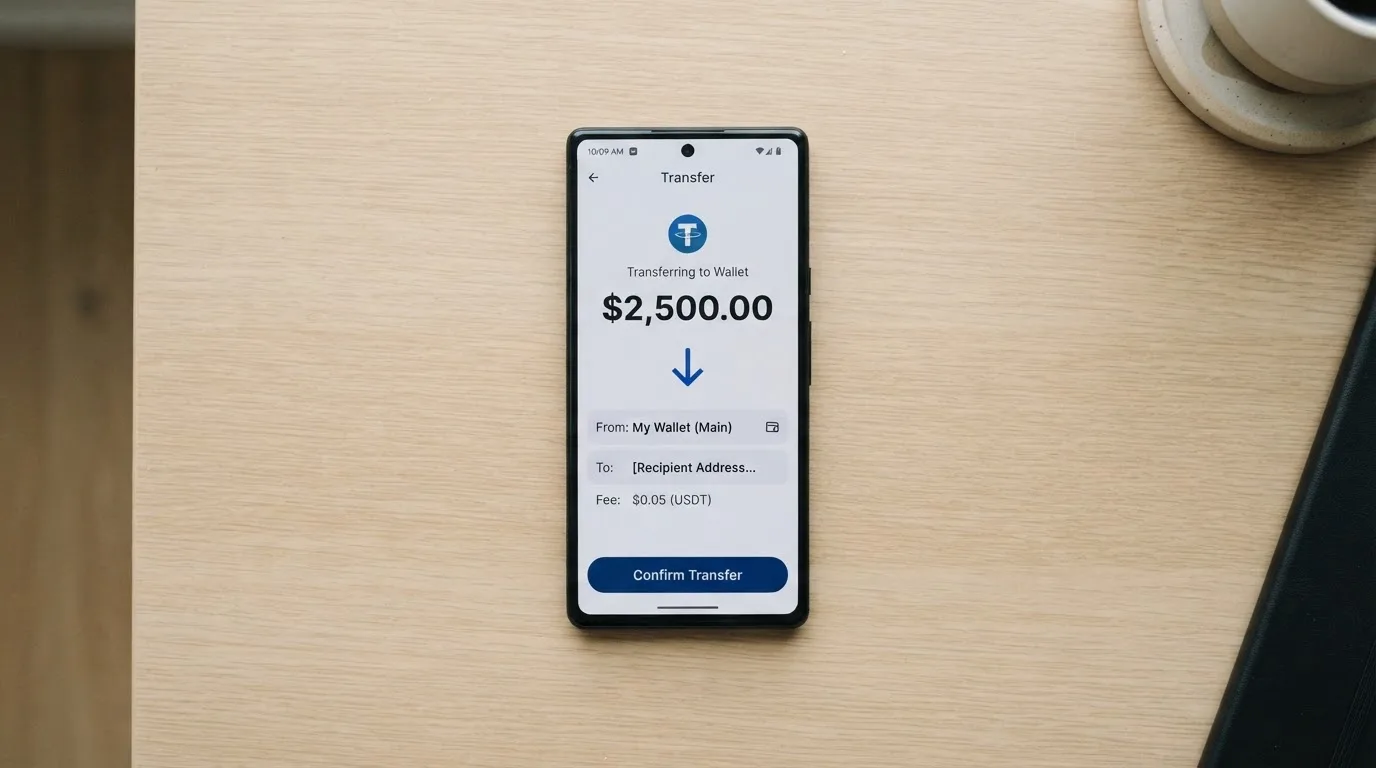
On the website, top-up is by SBP — Russia’s Fast Payment System — from any Russian card or account, by QR code or by payment details entered in your banking app. The card says the money is credited in 1 to 3 minutes, sometimes up to 15. The minimum is 500 RUB and the maximum is 200,000 RUB per transfer, which the card attributes to the Central Bank’s SBP limit. On this page, crypto top-up is “not offered” — stated flatly on the top-up page itself.
In the App Store app, the picture is different: USDT on TRC-20 deposits, plus top-ups from an internal account balance. The app’s own deposit screens show the fee terms. USDT withdrawals over TRC-20 are supported there too.
So: if you want to fund the card from a Russian bank account, you use SBP and you cannot use crypto through the site. If you want to fund it with USDT, the app is where that happens. Whether a balance topped up one way can be spent or withdrawn through the other channel is not stated, and neither is what happens to a remaining balance if you close the account. Those two gaps are the ones I would want answered before committing anything meaningful.
A practical warning about TRC-20 deposits, which applies to this card and to the category generally: blockchain transfers are irreversible. Sending on a network the provider does not support, or to an address belonging to a different network, can lose the funds or require manual recovery with no guarantee attached. Check the network and the address character by character before you confirm.
Paying with it every day
Day-to-day, Worldwide is a virtual Mastercard that you spend from a stored balance. That has one big advantage and one big limitation. The advantage is that a pre-loaded balance cannot overdraw — the card simply stops when it is empty, and you have no debt. The limitation is that you are spending a pot you have already filled, so the card is only as good as the last top-up.
Wallet support is where the tiers separate. Apple Pay and Google Pay are listed for the Premium and Promo tiers. Standard and Business are not listed as supporting them. The blog describes working with Apple Pay and Google Pay generally, and the app mentions setting up Apple Pay on the card screen. If your priority is tapping a phone at a terminal rather than typing numbers into a web form, you are looking at Premium or Promo.
What is not described anywhere: which merchants or merchant categories are blocked. A merchant category code is the four-digit number that classifies a business, and issuers commonly block whole categories — gambling under 7995 being the classic one — by their own policy rather than by law. Whether this card blocks anything is unknown. Nor is the card’s policy on declined payments spelled out beyond the basics below.
When a payment fails, the card says funds return to the card balance automatically. If the problem is on the service’s side, Telegram support can help and can return funds via SBP. A formal chargeback procedure is not described. That gap is worth weighing: chargeback is the formal mechanism by which an issuer orders a refund from a merchant in a dispute, with reason codes for fraud, duplicate billing or goods not received. “Support will sort it out” is friendlier than a policy and is not the same protection.
On the app itself: it is a Telegram mini-app with no separate app link on the site. The App Store app runs on iPhone and iPad, requires iOS 16.0 or later, is free and 18.3 MB, and lists nine languages including Russian. Version history runs from 1.0 on 30 June to 1.3.12 on 1 October. It is not on Google Play as far as I could find.
What can go wrong
The issuer is described on the site only as a licensed foreign issuer, and it is not named. The app’s developer is listed in the App Store as URUS – FZCO, a UAE free-zone company form. The site does not name the operator, and no licences are stated. This is the central risk of the whole arrangement, and it is not a small one: in this category the crypto brand is often just the front end, while a licensed bank or e-money institution actually holds the card programme. If that institution is unnamed, you cannot look it up.
Unnamed issuer means unnamed recourse. Visa and Mastercard do not issue crypto cards to consumers themselves; they license issuers, and they can suspend a programme. Programme closures follow a pattern: a notice period, then spending and loading stop, then users are asked to withdraw remaining balances. So the risk you are actually carrying is not that the app disappears overnight — it is that the licensed institution behind it winds the programme down and your balance becomes a claim rather than money.
On complaints: there is essentially nothing. Trustpilot, Reddit and Otzovik produced nothing for this product. A search turned up an unrelated old Worldwallet complaint page and some Kazakh CardB news, neither of which belongs to this card. What exists is one App Store rating of 1.0 out of 5 from a single rater, describing the app as “not safe and probably a scam” and mentioning a 20 USDT card fee; that is unverified and I am not treating it as fact. Equally, the absence of complaints is not evidence of safety — a young product with almost no users generates almost no reviews either way.
Security details are partial. The card mentions 3D Secure and “modern encryption”. Custody model, card freeze and spending controls are not described. The app has biometric unlock, one account per user, and is explicit that its “Assets” positions are internal products and that the company is “not an exchange, broker or investment adviser” — a useful clarification, and also a reminder that what looks like an investment balance is an internal ledger entry.
Support runs through Telegram, described as 24/7 with live staff: chat support on Standard, priority on Premium, a personal manager on Business. If a transfer does not arrive, support checks the receipt and credits manually. Languages: the site is Russian; the app lists Russian among nine.
The last dated item I found on the site is a blog post dated 19 September 2026. The app’s first version is dated 30 June, with no year shown. These are the only date markers available, and they are not much of a track record.
What to take instead
If your reason for wanting Worldwide is that ordinary Russian cards are being declined, you have three other options worth comparing, and each answers at least one question Worldwide leaves open.
| MaxSwap | Karta | Tegro | |
|---|---|---|---|
| Score | 5.2 / 10 | 7.9 / 10 | 4.7 / 10 |
| Card | Virtual, Mastercard | Visa Signature, virtual and physical | Virtual, Visa |
| Card cost | 50 USD, 25 USD first deposit required, 77.125 USD total issuance | Virtual activation 5.00 USDT (FAQ shows 30 USDT struck through to 5 USDT); physical from 100.00 USDT | 13 USD one-time; minimum card amount 50 USD, where a 50 USD card costs 65 USD total |
| Monthly fee | not stated | none listed | none, no subscriptions |
| Top-up fee | 4.5% + $1 | crypto top-up free | deposit fee 4% of the amount |
| Payment fee | 0.25 USD + 0.4% | 1.5% on card payments | not stated |
| Crypto networks | many, including BTC, ETH, USDT, USDC, TON, TRX and others, list not given | USDT and USDC on Tron, Ethereum, BNB Smart Chain, Polygon, Arbitrum, Optimism, Base and Solana | USDT on Tron (TRC-20) only |
| Fiat rails | not stated | SEPA, SWIFT, ACH, PIX, SPEI and others by country | not stated |
| Rewards | not stated | cashback claimed, rate not stated; referral in KARAT points at 1 KARAT = 0.01 USDT | not stated |
MaxSwap is the closest in spirit to Worldwide: virtual only, crypto-funded, and it claims no geographical restrictions. It is also more expensive per transaction and tells you nothing about which countries qualify either, so it trades one silence for another.
Karta is the strongest of the three on the evidence. It works “in 200+ countries and territories where Visa is accepted”, subject to local regulations and partner coverage. It offers a physical Visa Signature card, not just a virtual one, which is the single biggest practical difference. Its fees are higher — 1.5% on card payments — but the card network is named, the funding options are the widest of any of these, and it states plainly that bank withdrawals are “coming soon” rather than leaving you to guess.
Tegro is the simplest: a one-time 13 USD fee, no subscription, a 4% deposit fee, and USDT on Tron only. If you want one card, one network, and no ongoing cost, it is coherent. Its eligibility is also unstated.
Who I would recommend it to
I would recommend Worldwide to a user who wants a virtual Mastercard for online subscriptions and small purchases, who is comfortable topping up in small amounts, and who will treat the balance as money to be spent rather than money to be stored. For that person, the price is genuinely low: 2,900 RUB a year for Standard, or 2,390 RUB with the first year free on Promo, and zero per operation.
I would not recommend it as a primary card, as a place to hold a larger balance, or as a long-term arrangement. Three specific things would have to change for me to say otherwise: the issuer named and verifiable in a public register, the conversion markup published as a percentage, and numeric spending limits stated rather than implied. None of those is impossible to fix. All three are just disclosure, and disclosure is cheap.
If you want a physical card, or you need an ATM, or you want to see an issuer you can find in a register, or you are outside the Russian banking system entirely, choose one of the alternatives above instead — and in particular look at Karta, which is the only one of the four that gives you plastic.
Frequently asked questions
What is the Worldwide card?
Worldwide is a virtual Mastercard that you order and top up through a Russian-language Telegram mini-app. A separate app in the Apple App Store, called Worldwide: Wallet USDT Card, also offers USDT deposits on TRC-20. The site markets the card as working in “150+ countries” and where Russian cards are not accepted. The issuing institution is described only as a licensed foreign issuer and is not named anywhere on the public pages.
Is Worldwide a bank?
No — it does not present itself as one, and no banking licence is stated. The site’s operator is not named. The App Store lists the developer as URUS – FZCO, a UAE free-zone company type. The card describes itself as issued by a licensed foreign issuer, unnamed. In this category the brand is often only the front end while a licensed bank or e-money institution holds the programme, and here you cannot see which one it is.
Who can get the card?
The card does not say. Eligibility rules and issuing countries are not described, and the App Store listing appears in many storefronts — US, Canada, UK, Turkey among them — without saying where the card is issued. Citizenship versus residence is also unstated. The site says the card can be ordered and topped up “from Russia without a VPN”, which suggests a Russian bank account is the practical route, but that is inference on my part, not a published rule.
Does Worldwide require KYC?
The public pages do not describe one. The site says no visits, paperwork or passport are needed, which is marketing wording rather than a description of the process. No verification steps, document requirements, review levels or refusal reasons are published. The App Store app advertises biometric unlock, which is a device feature and not the same thing as identity verification at the account level.
How much does Worldwide cost?
Standard starts at 2,900 RUB a year and Premium at 3,900 RUB. Promo charges 2,390 RUB to issue with 0 RUB maintenance in the first year and 0% top-up. Business starts at 12,900 RUB a year. Operations are listed at 0.00 USD and an SBP transfer carries no fee. The figure that matters most is missing: conversion is at the Central Bank rate plus a markup whose percentage is not published.
How do I top up the card?
Through the website, by SBP from any Russian card or account, by QR code or by entering the payment details in your banking app. The minimum is 500 RUB and the maximum is 200,000 RUB per transfer, credited in 1 to 3 minutes and sometimes up to 15. That same page states crypto top-up is not offered. In the App Store app, deposits are USDT on TRC-20 instead, with fee terms shown on the deposit screens.
Can I use Worldwide with Apple Pay?
On the Premium and Promo tiers, yes — Apple Pay and Google Pay are listed for those two. Standard and Business are not listed as supporting them. The card’s blog says the card works with both wallets generally, and the app mentions Apple Pay setup on the card screen. If mobile payment is your main use, choose Premium or Promo rather than Standard.
Where can I use Worldwide, and will it always work?
The marketing claims “150+ countries” and acceptance wherever Russian cards are not accepted, but that is a claim about acceptance, not a guarantee. Because the issuing institution is not named, you cannot check whether its BIN is treated as domestic or foreign by a merchant’s risk system — and foreign-issued BINs are declined more often. No blocked merchant categories are published either, so gambling or other restricted categories may or may not work.
What happens if I lose access or the company disappears?
Nobody knows, because the balance on closure is not stated. In practice, programme closures in this category follow a pattern: a notice period, then spending and loading stop, then users are asked to withdraw remaining balances. Since the issuer is unnamed, you cannot find out who would be responsible for paying you, or whether that entity is in a jurisdiction with workable recourse for you.
Is Worldwide card safe to use?
I would not call it unsafe, and I would not call it safe — the evidence is too thin in both directions. In its favour: 3D Secure is mentioned, the app has biometric unlock and one account per user, and support is described as running 24/7 on Telegram. Against it: no named issuer, no stated licences, no custody model, no freeze or spending controls described, and a single unverified App Store rating of 1.0 out of 5 calling it a probable scam. Verify everything before you rely on it.
Virtual cards – cryptocardsearch.com
Content created by the «cryptocardsearch.com» team