
A USD virtual card you can top up with stablecoins, weighed against the waitlist, the missing ATM access and the paperwork behind it
 Available in US
The Trustee Plus card is a virtual Visa Prepaid you fill with stablecoins and then spend like an ordinary USD card, in shops, online and through Apple Pay or Google Pay. On paper it is one of the cheapest crypto-to-card routes around: 0% on payments, 0 USD a month, 10 USD to open the virtual card, and a wallet that accepts 30+ coins across networks including TRC20, ERC20, SOL and NEAR. That is why I keep coming back to it, and also why I am careful: the physical card sits on a waitlist, the ATM function is “currently unavailable”, and the pages I read leave more blanks than I would like — the list of supported countries is not published, proof of address is not mentioned, and the amount of money you can move per transaction is not stated.
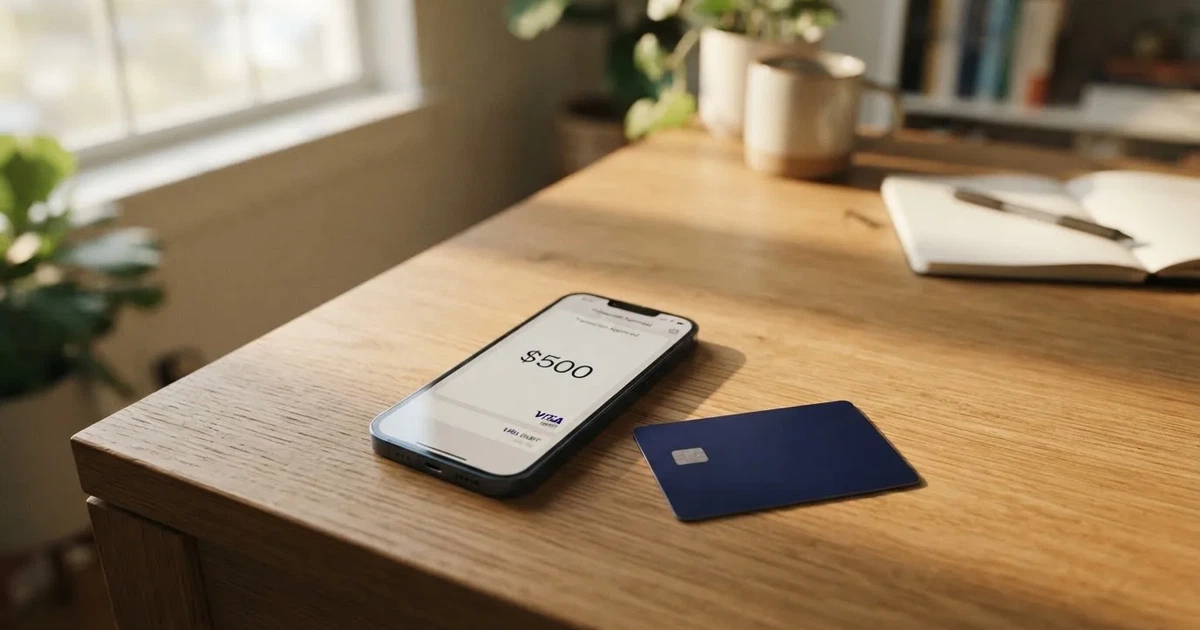
My overall mark is 5.7 / 10. That is not a mark of a bad product. It is a mark of a product whose cheap, clean numbers sit on top of a stack of things the public pages do not tell you, at a moment when the National Bank of Ukraine has stopped the operator registering new clients in its own market. If you are a Ukrainian topping up a virtual USD card with stablecoins, the value here is real and the price is low. If you need a physical card, cash, or a clear answer about your eligibility before you spend an hour in an app, this is the wrong tool.
The conditions described below are current as of October 28, 2026.
Verdict: 5.7 out of 10, and the split matters more than the total
The score is an average of six marks, and the spread between them is the story. Top-up options and cost are excellent. Eligibility, reliability, everyday use and access are not. Read the table rather than the number.
| Criterion | Mark | Why |
|---|---|---|
| Who can get it | 3 / 10 | Ukrainians can get it regardless of country of residence, but the Terms require residence in a supported country and that list is not published; registration in Ukraine was halted |
| Cost | 8 / 10 | Virtual card opening 10 USD, maintenance 0 USD, payments 0%, card top-up 0.5%; the conversion rate is Visa’s and any markup is not disclosed; the wallet charges 20 USDT a month of inactivity after a year |
| Top-up options | 9 / 10 | Wallet in USDC and USDT, 30+ coins and networks including TRC20, ERC20, SOL and NEAR; fiat through Smart P2P and a personal IBAN |
| Reliability and complaints | 5 / 10 | Issued by Wirex Limited in England, operated by MIKEPAY INC. in Panama; a September 2025 restriction by the National Bank of Ukraine, plus user reports of funds frozen after source-of-funds checks |
| Everyday use | 4 / 10 | Apple Pay and Google Pay are supported, but the physical card is on a waitlist and the ATM is unavailable |
| Total | 5.7 / 10 | Strong on money in, weak on money out and on certainty |
Who it suits, plainly: someone who already holds stablecoins, already uses a custodial exchange account, wants a spending balance in dollars rather than in crypto, and is comfortable doing identity checks inside an app. If you spend from Apple Pay or Google Pay at online merchants and do not care about a piece of plastic in your wallet, the proposition is genuinely good — 0% on spending and 0 USD a month is very hard to argue with.
Who it does not suit: anyone who needs cash from an ATM, anyone who wants a physical card, anyone in a country whose residents are on a sanctions list, and anyone planning to hold a large balance on the assumption that it behaves like a bank account. It is not a bank account. The service provider named in the Terms is registered in Panama and the card programme sits with an English company; customer funds under an electronic money licence are safeguarded, not deposited, and they do not carry deposit-guarantee protection. I would not park a month’s income on it, and I would not treat it as the only card I own.
Will they give you the card?
Yes, if you are Ukrainian — and here the card’s own rules are broader than the law around them, which is an unusual thing to write in a review. The Ukrainian-language FAQ says that Ukrainians can get the card regardless of country of residence, and that there is no list of issuing or excluded countries. That is the good news.
The catch is that the Terms say something narrower. You must reside or be incorporated “in countries and territories We support”, and you must not be a citizen or resident of a country on sanctions lists — the rule covers citizenship and residence both, so a citizenship that is sanctioned can disqualify you even when you live somewhere innocent. Residents of sanctioned countries are not allowed. The problem is that the “countries We support” list could not be found on the pages I read. So the Terms point to a list that is not there, and I cannot tell you which countries are in it.
What that does to you in practice: the Ukrainian statement and the Terms statement overlap only if the world is entirely supported, or if the Terms list is stale. You will find out by trying, not by reading. And if your country is not supported and you are not Ukrainian, you may pass the identity check and be refused later, with a balance already loaded.
Three further wrinkles sit on top of that:
- The Ukrainian regulatory situation. In September 2025 the National Bank of Ukraine barred the Lithuanian operator from offering payment services in Ukraine. The operator’s director said existing clients were unaffected, and new registrations in Ukraine were halted from May 22. In August 2026 reporting, availability for residents of Ukraine was described as “still being checked”. So the audience most clearly invited in by the card’s own FAQ is the audience whose eligibility is least settled.
- An unofficial third-party claim. At least one review site (cryptocardhub.com, updated February 2026) says the card is offered to residents of the EEA. That is not on the card’s own pages, and it contradicts the Ukrainian FAQ’s wider statement. Treat it as unofficial and unconfirmed by Trustee Plus.
- Sanctions are not a grey area. The Terms are explicit that citizens and residents of sanctioned countries are excluded, and stablecoins are not censorship-proof either — Tether states that it disables tokens in wallets on the OFAC sanctions list and has frozen funds tied to illicit activity. There is no route around this and I am not going to invent one.
The practical takeaway for eligibility: check your own citizenship and your own residence against the Terms, then assume the app is the only authority that will give you a final answer.
How to get it
The path is short and the checks are all in the app. It runs in this order:
- Download the Trustee Plus app.
- Complete identity verification. KYC happens before the card is ordered, through a partner called Kycaid. A Trustee guide describes a photo of a passport or ID card plus a selfie.
- The virtual card is issued inside the app.
- Top it up (covered further down).
On the verification itself, the public pages are thin and I would rather say so than dress it up. There is one KYC step, through Kycaid. The card page does not state the processing time, the verification levels, or the reasons a check might be rejected. Proof of address is not stated as a requirement. Age is 18 or whatever the legal age is under the Terms — the general pattern for prepaid cards is that they go to adults only, and some issuers set higher limits.
The physical card is a separate story: it is not available and there is a waitlist. Delivery countries, delivery time, delivery cost and replacement terms are all not stated, because there is no card to ship. The virtual card is what you get on day one, in the app.
One thing to know if you are wary of app stores: the app is also distributed as an APK from the company’s own site. That is normal for cards in this category and it is not a warning sign by itself, but it does mean you should take the file from the company’s site rather than from a search result. On ratings, I could not find the Trustee Plus app in the stores I checked — the listing that came back was the separate Trustee Wallet app, at 2.86 from 36 ratings, updated 2026-03-19. That is a different product and I am not treating it as a verdict on this card; it is simply the only rating I could actually read.
Fees: what it really costs
The headline numbers are the best in this category. Opening the virtual card is 10 USD, the monthly maintenance fee is 0 USD, payments cost 0%, and moving money from your wallet onto the card balance costs 0.5%. The one recurring charge to watch is in the Terms rather than the price list: an inactivity fee on the wallet of 20 USDT equivalent per month, applied after a year with no transactions. Keep the wallet active or the fee starts. The Terms also say the Payment Card service “may be subject to fees” — a phrase that is not a number, and it is the kind of phrase that later becomes one.

| Fee or limit | What the card says |
|---|---|
| Virtual card opening | 10 USD |
| Monthly fee | 0 USD |
| Payments | 0% fees |
| Card balance top-up | 0.5% |
| Local-currency payments | Converted automatically at the Visa rate; any markup beyond it is not stated |
| Cash withdrawal / ATM | “Currently unavailable”; fee and allowance not stated |
| Monthly limit | 30,000 USD per month in the table; the FAQ says a monthly operations limit of 30,000 USDC |
| Per-transaction and daily limits | Not stated |
| Wallet inactivity | 20 USDT equivalent per month, after one year without transactions |
| Physical card | Price not shown; card itself unavailable |
| Tiers | Single tier: one virtual card, no tiered limits, no cashback |
Two limits worth noticing. First, the monthly limit is given twice in two currencies — 30,000 USD on the table, 30,000 USDC in the FAQ. On a card whose whole purpose is holding dollars and spending dollars, that inconsistency is more than cosmetic; it leaves room for the balance in one currency to exceed what you may actually transact. Second, there are no per-transaction or daily limits published at all. That cuts both ways: a large payment might be declined without warning, and a compromised account might not hit a small daily ceiling.
There is only one tier. No premium card, no cashback on the card page, no higher-limit version for a fee. What separate loyalty and referral programmes exist is a separate matter and not part of the card’s economics.
Three everyday payments, and which fees actually bite
The three examples below use only the card’s own figures, worked through at face value, so you can see where the real cost sits.
- A 40 USD subscription in euros. You pay 0% on the transaction. The euro amount is converted automatically at the Visa rate. Whether Visa’s rate includes a markup is not stated, so the honest answer is that your cost here is 40 USD plus or minus whatever the conversion spread turns out to be — invisible, and the one number in this table nobody will quote you.
- A 200 USD shop purchase from a balance you topped up with 200 USD of stablecoins. You pay 0% on the payment and 0.5% on the top-up, so the top-up fee is 1 USD. This is the arithmetic that makes the card cheap: at this size the fee is under a dollar.
- A 5 USD corner-shop purchase after the balance has sat still for a year. The payment itself is 0% and the top-up was 0.5%, but if the wallet goes twelve months without a transaction the Terms let the provider charge 20 USDT equivalent per month in inactivity fees. Four idle months of that would exceed the value of everything you spent.
The pattern: transaction fees are genuinely zero, the one real percentage is on moving money in, and the one real risk is not a fee at all — it is the conversion rate and the inactivity clause.
Top up: where the money comes from
This is where the card is at its best, and the 9 out of 10 in the table reflects that. There are two balances and the distinction matters: you top up the Trustee Plus wallet first, then move the money from the wallet onto the card balance inside the app. The card spends only the card balance, so if you load the wallet and forget the second step, nothing is spendable.
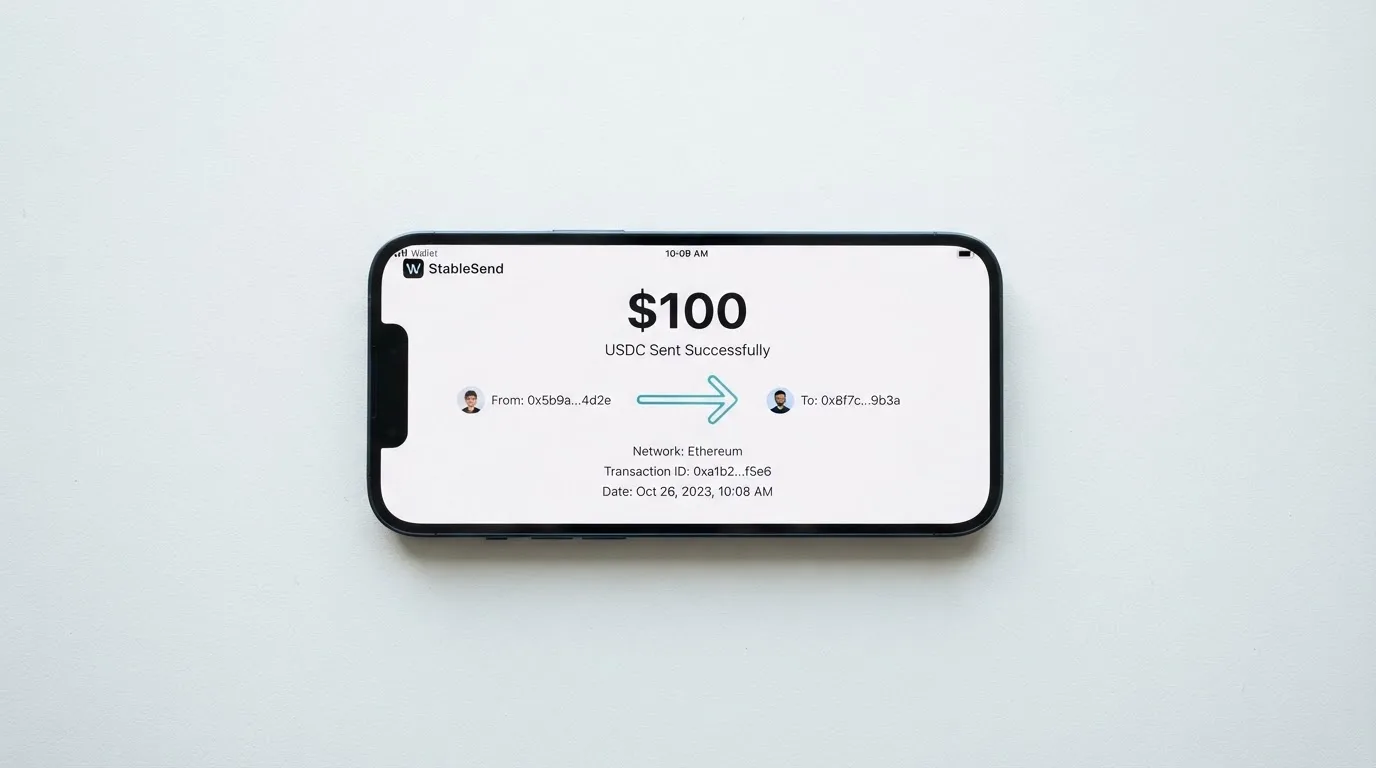
The crypto routes:
- Top up the wallet in USDC. The English guide names USDT as well, and the Ukrainian page names USDC and USDT.
- The wallet supports 30+ coins and networks, including TRC20, ERC20, SOL and NEAR. That is the practical difference between a card that only takes Ethereum and one that lets you pay a few dollars in fees instead of ten.
The fiat routes:
- Smart P2P, which lets you buy from another user using a bank card.
- A personal IBAN for SEPA transfers.
What is not stated, and I would want to know before I rely on it: who pays the network fee for a deposit, what the minimum deposit is, and what it costs or whether it is possible to move the card balance back out to crypto or to a bank account. That last one matters more than it first appears. A card you can fill but not easily empty is a worse tool than it looks, and the public pages are quiet on it.
Network fees themselves are charged by the blockchain, not by the card provider — so a TRC20 transfer will cost you Tron resources, often burning TRX, while an ERC20 transfer costs gas in ETH. This produces one of the classic beginner traps: a wallet holding USDT with no ETH in it cannot send on Ethereum at all, because gas must be paid in ETH. Sending on the wrong network is irreversible. USDC is not natively available over TRC20 either — Circle stopped supporting USDC on Tron in February 2024 — so if you see “USDC-TRC20” offered somewhere, it is being bridged, and bridged assets carry their own risk. Before your first deposit, compare the network shown in the app against the network your exchange supports for that asset. A deposit sent on an unsupported network, or to an address of another network, can be lost entirely, and support recovery comes with no guarantee.
Paying with it every day
Where it works: Apple Pay and Google Pay, online payments and subscriptions, and a stated reach of more than 60 million merchants worldwide. For a card that exists only as a number in a phone, adding it to a mobile wallet is the whole point — and the reason the missing plastic hurts less than it first appears. Apple Pay replaces the card number with a device-specific number kept in the phone’s Secure Element, never on Apple’s servers, and every payment carries a fresh one-time code, so the tokenised version is the most protected version of the card you have.
Where you will feel it:
- No cash. Withdrawals are listed as a physical-card benefit, but the physical card is unavailable, so cash withdrawal is simply “currently unavailable”. Fee and allowance are not stated because there is nothing to quote. If cash is part of your week, this is disqualifying.
- Some merchants will not take it. Merchants can look up the issuing country from the first six or eight digits of the card number, and if that country differs from your billing address they may apply extra scrutiny or decline. This card is “issued in Great Britain”, so in some shops it looks like a foreign card, and some merchants decline prepaid or foreign-issued cards on sight.
- Declines can leave a hold. A declined authorisation may leave a hold on your money for several days, typically up to seven. If your balance is small, that is most of it.
- Gambling blocks are policy, not law. A merchant category code of 7995 covers casinos, betting and lotteries; issuers often block it on specific cards. Whether this card blocks it is not stated, so assume nothing and check in the app.
- Address verification mostly will not help you. The service that compares your typed billing address with issuer records is mainly offered in the US, Canada and the UK, and is generally unavailable for foreign-issued cards — which means a decline that looks like a typo may not be one.
- No cashback, and a dispute route that is not stated. No card cashback appears on the card page. What happens if a payment goes wrong — who you claim to, in what order — is not stated on the pages I read, and I am not going to guess at it.
What can go wrong
I grouped the risk here into four, from most likely to least.
Regulatory and eligibility risk. This is the live one. The National Bank of Ukraine barred the operator from payment services in Ukraine in September 2025; the director said existing clients were unaffected; new registrations in Ukraine were halted from May 22. The Terms of Use were last updated on 25 May 2026, so they are reasonably current, but a Terms document is not a licence. No licence or regulator registration is mentioned on the pages I read. The service provider is MIKEPAY INC., registered in Panama, and the card service sits with WIREX LIMITED in England, company number 09334596, 9th Floor, 107 Cheapside, London EC2V 6DN. That split is legal and common — an e-money institution can issue the card while a programme manager runs the app — but it means your contractual counterparty and your regulator are not the people whose name is on the app icon.
Freeze risk after a source-of-funds check. This is the one that costs readers real money. User reports describe funds frozen after checks on the source of funds. The mechanism is ordinary and legal: anti-money-laundering rules require ongoing monitoring and suspicious-activity reporting, and where due diligence cannot be completed the institution must refrain from the transaction and, where necessary, end the relationship. That is why accounts close or freeze pending documents — it is not usually a judgement about you. What makes it painful here is the combination with the unstated withdrawal terms. Ask, before you need it: what is the notice, what do you have to send, how long does it take, and what happens to a balance that is still there at the end. Note also that Tether disables tokens in wallets on the OFAC sanctions list and has frozen funds tied to illicit activity, so a stablecoin you control is not beyond anyone’s reach.
Complaints and platform-merge risk. A single June 2026 review on Trustpilot cites slow USDT transfers, an unclear AML review process, an unclear complaint procedure, and confusing information about which company is which. Other reviews describe cards moving to a merged platform, failures to withdraw or to pay, and funds frozen after source-of-funds checks. The company’s own position is that no incidents are stated. Trustpilot’s rating for the Trustee Global page was shown as unavailable at the time I looked, for a guideline breach. Read that list as complaints, not as verified facts, and read the “no incidents stated” as silence rather than as a clean record. In this category, programme consolidation is not hypothetical: WaveCrest, a Visa issuer that supplied crypto card brands, was suspended by Visa in Europe in 2018, closing every WaveCrest-issued Visa programme it backed, and Visa terminated its global agreements with FTX on 13 November 2022, winding down the FTX US debit card. Closures follow a pattern: notice, then loading and spending stop, then a request to withdraw what is left.
Security posture — better than average, not bank-grade. On the positive side: 2FA, Face ID, an AML Check, a bug bounty on HackenProof, and Hacken audits of the apps from February 2025. The app is custodial, which is the honest trade-off: the provider holds the credentials, so you trust it completely, and a stolen key has no recovery because the network cannot freeze or return funds. The separate non-custodial Trustee Wallet is a different product with different risk, and the fact that it exists does not make the card’s own wallet non-custodial. What is not stated: card freeze and insurance. Not “no insurance exists” — not stated. Same for the security of the custodial balance itself.
One structural point that helps you sleep: with a card like this, and with crypto cards generally, the provider is not obliged to shut you out of your card balance because of something that happened in crypto markets. The card is funded by an e-money balance, and Visa and Mastercard do not issue crypto cards themselves — they license issuers and can suspend a programme. So the risk that ends your card is regulatory or commercial, not a market crash.
Alternatives to consider instead
If the physical card, the cash access or the clarity of the eligibility rules is what is stopping you, the market has better-covered options. Here is how the main alternatives line up, with their own published scores.
| Card | Score | Who can get it | Cost | What to know |
|---|---|---|---|---|
| Trustee Plus | 5.7 / 10 | Ukrainians regardless of residence per its FAQ; Terms require residence in an unpublished supported list | 10 USD virtual opening, 0 USD monthly, 0% payments, 0.5% card top-up | Virtual only in practice; physical on waitlist, ATM unavailable |
| RedotPay | 6.9 / 10 | Two official lists worded differently; one is by citizenship and bans KYC for listed countries, the other (dated August 28, 2026, 47 places) blocks residents of added areas including India, Indonesia, Morocco, Nepal, Singapore and Turkey | Virtual card 10.00 USD, physical 100.00 USD and non-refundable, virtual replacement 5.00 USD then 10.00 USD; no monthly or inactivity fee; paid Pro tier 12.90 USD monthly or 129.00 USD annual | Virtual and physical; USD and HKD card currencies; 1.00% transaction fee, 1.20% non-default currency |
| Wirex | 6.7 / 10 | “Depends on your region”; fee sheets published for the UK, EEA, APAC, SG, AU and “Other”; Singapore terms bar cash withdrawals in Singapore | Card issuance free in the UK, EEA, APAC, SG, AU and “Other”; metal card 45 GBP on the UK page with free DHL Express, “only 45 EUR” delivery elsewhere; 30 GBP one-off administrative fee | Virtual and physical, one of each at a time; cryptoback in WXT from 0.5% Standard to up to 8% Elite |
| Bitpanda | 6.5 / 10 | Verified account and residence in a euro-area country; users verified via “Bankident” cannot order | Account opening and monthly cost not charged; first shipment free; reissue EUR 5.90 (FAQ: EUR 9.90 for lost or stolen); each extra physical card EUR 10 | Physical Visa debit, EUR only, one active card; spends from a chosen main asset; 1% cashback on crypto spending per the body text, “up to 2%” in the page summary |
A few patterns worth pulling out of that table. RedotPay and Wirex both cost more per transaction — 1.00% and a variable exchange fee respectively — but both will actually give you plastic, and RedotPay’s physical card is purchasable today at 100.00 USD rather than waitlisted. Wirex is free to issue and pays cryptoback, but its coverage is explicitly regional and its Singapore terms forbid cash withdrawals entirely, which is the sort of clause worth reading before you assume anything. Bitpanda is the plainest of the four: a euro-area, euro-denominated physical Visa debit with no stated monthly fee, limited to residents of euro-area countries and excluding anyone verified through Bankident.
If your problem is specifically that an ordinary bank card is hard to get where you are, then eligibility is the axis to compare on, and RedotPay’s two lists are the most explicit of the four — even though they disagree with each other. Russia, Belarus, Ukraine, Serbia and Croatia appear on the citizenship list; India, Indonesia, Morocco, Nepal, Singapore and Turkey appear only on the card-issuance list, and residents of those areas cannot use the cards or use them as a billing address. Georgia, Armenia, Kazakhstan and the UAE appear on neither.
Who I would recommend it to
- A Ukrainian abroad, or in Ukraine, who already holds stablecoins and wants a dollar balance to spend from, is comfortable with checks inside an app, and does not need cash or a physical card. Here the 0% spending rate and the 0.5% top-up are the best on this page, and the audience note is exactly this person.
- Anyone comfortable with a custodial balance who accepts that this is a spending tool, not a savings account, and who would move the money out again rather than leave it.
- Not to someone who needs a physical card, an ATM, or a published list of countries. On all three counts you will hit a blank.
What I would do before loading more than a small amount: confirm what happens to a balance if you stop using it, because withdrawal terms and the inactivity fee point in opposite directions; and expect one routine source-of-funds check, because that is where frozen balances in this category come from, not from anything you did wrong.
Frequently asked questions
What is the Trustee Plus card?
The Trustee Plus card is a Visa Prepaid in US dollars, issued as a virtual card inside an app and funded from a crypto wallet. You load stablecoins into the wallet, move the money onto a separate card balance, and spend that balance in shops, online and through Apple Pay or Google Pay. The card is valid for three years. It behaves like a prepaid card rather than a debit card: it spends only what you have loaded, so it cannot overdraw.
How does Trustee Plus card work?
You top up the wallet, open the card section, use “Top up” to move funds onto the card balance, and then pay. There are two balances, and the card only sees the second one. Payments cost nothing, and payments in euros, zloty or pounds are converted automatically at the Visa rate. Because crypto is converted and loaded as fiat balance, this is a spending card in front of a crypto balance, not a card reading crypto prices at the till.
Is Trustee Plus a bank?
No. The service provider named in the Terms is MIKEPAY INC., registered in Panama, and the card service is provided by WIREX LIMITED in England, company number 09334596 — with the card described as issued in Great Britain. No licence or regulator registration is mentioned on the pages I read. An e-money institution’s safeguarded customer funds are not bank deposits and do not carry deposit-guarantee protection, so treat this as a payment tool rather than anywhere to keep savings.
Who owns Trustee Plus?
The card page and the Terms point to a partnership rather than a single owner: MIKEPAY INC. as service provider and Wirex Limited as the card issuer, with the app as the interface. Partners named on the pages include Kycaid for identity checks, HackenProof for its bug bounty, and Binance, Kraken, MoonPay and WhiteBIT. The non-custodial Trustee Wallet is a separate product from the custodial wallet behind the card.
Is Trustee Plus card available in my country?
That depends on which rule applies, and the card’s own pages do not line up. The Ukrainian FAQ says Ukrainians can get it regardless of country of residence. The Terms require residence or incorporation “in countries and territories We support”, and not being a citizen or resident of any sanctioned country — but the supported-country list is not published. An unofficial third-party site claims EEA residents are eligible; that is not confirmed by the card. The app is the only authority that will give you an answer.
Can I use Trustee Plus card in my country?
You can spend it wherever cards are accepted online and in shops — more than 60 million merchants are claimed — but acceptance is not the same as smoothness. Merchants can see the issuing country in the first six or eight digits of the card number, and some decline prepaid or foreign-issued cards, particularly where the issuing country differs from your billing address. Address verification is mostly unavailable for foreign-issued cards, so a decline may not be fixable. Cash is not an option at all: withdrawals are currently unavailable.
How do I get Trustee Plus card?
Four steps: install the Trustee Plus app, complete KYC with a passport or ID photo plus a selfie through the partner Kycaid, receive the virtual card in the app, and top it up. Age is 18 or the legal age under the Terms. The app is also offered as an APK from the company’s own site, so take it from there. The physical card exists on paper only — it is unavailable and there is a waitlist.
Does Trustee Plus card require KYC?
Yes — identity verification happens in the app before you order the card, through a single step via Kycaid. What the public pages do not state is the processing time, the verification levels, the reasons a check might be refused, or whether proof of address is required. Standard anti-money-laundering practice means ongoing monitoring after signup too, and a source-of-funds check on a crypto deposit is the step where balances most often get held.
How do I top up Trustee Plus card?
Top up the wallet first, then move the balance onto the card. Crypto: the wallet takes USDC and USDT across 30+ coins and networks, including TRC20, ERC20, SOL and NEAR, and the card top-up fee is 0.5%. Fiat: Smart P2P lets you buy from another user with a bank card, and there is a personal IBAN for SEPA. Minimum amounts and who pays the network fee are not stated, and blockchain fees are charged by the network, not by the card.
Is Trustee Plus card safe?
There are real safeguards: 2FA, Face ID, an AML Check, a bug bounty on HackenProof, and Hacken audits of the apps from February 2025. The balance is custodial, so the provider holds your credentials — the same risk profile as a crypto exchange account, and the subject of a long history of failures across the industry. Card freeze and insurance are not stated. The realistic risks are regulatory (new registrations in Ukraine were halted in 2025) and a freeze after a source-of-funds check, not theft of the card number.
How do I withdraw money from Trustee Plus?
The card’s public pages do not state how to move the card balance back to crypto or to a bank, and they do not state what happens to a remaining balance if you close the account. That is the question I would put to support in writing before loading a large balance, because it is the one gap that could turn a convenient tool into a locked one. What is documented is the other direction: the wallet charges 20 USDT equivalent per month in inactivity fees after a year without transactions.
App and neobank cards – cryptocardsearch.com
Content created by the «cryptocardsearch.com» team