
The Xapo Bank card, measured against your wallet
 Available in US
Xapo Bank sells itself as a “Bitcoin bank,” and its debit card is the practical face of that pitch: a metal, standard or virtual Visa that draws on a multi-currency account holding USD, GBP, EUR and Bitcoin. The membership is not cheap, the country rules are oddly quiet, and the day-to-day experience is straightforward once you have cleared the bank’s compliance checks. I went through the terms, the fees page and what real users are saying, and the picture that emerges is of a card built for a very specific kind of customer.
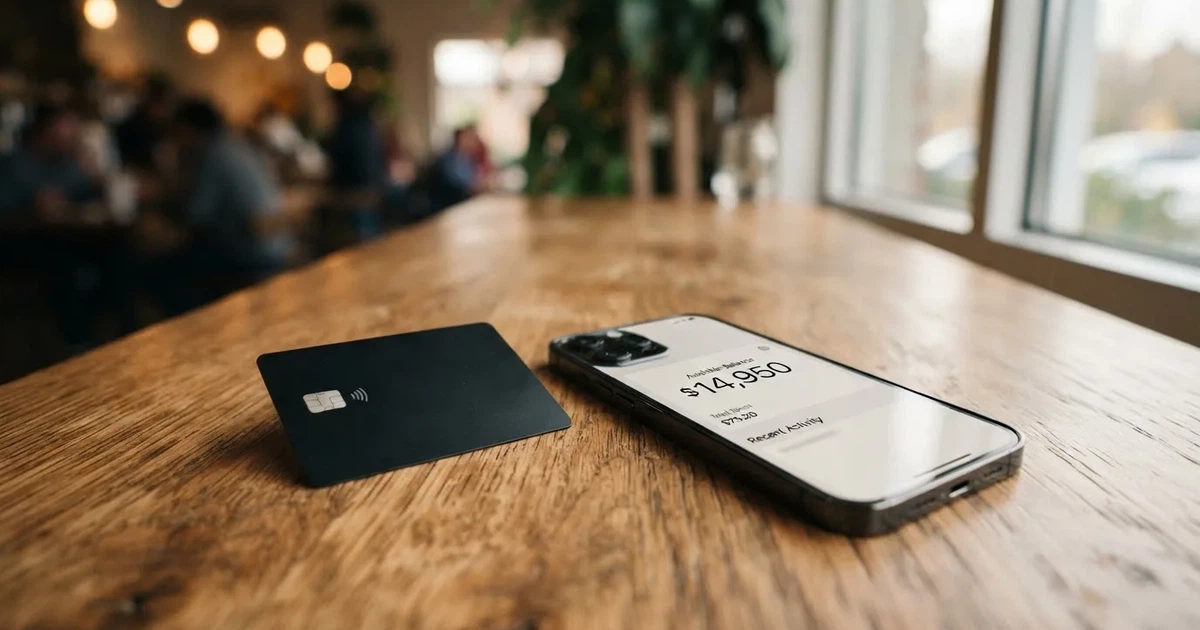
The conditions I describe are current as of October 28, 2026. Where the card’s own pages do not state a number, I say so plainly. Third-party numbers are flagged as unofficial.
Verdict
Xapo Bank’s card earns 5.8 out of 10 in this review. That is a middling score, and it is worth pausing on what is behind it before the cost discussion further down.
The split looks like this:
| Criterion | Mark | Short reason |
|---|---|---|
| Who can get it | 7 / 10 | No official country list; unofficial sources point to 50 served, 28 restricted, US excluded |
| Cost | 2 / 10 | $1,000 yearly membership; metal card itself free; 2% on ATM withdrawals over $100/month |
| Top-up options | 6 / 10 | Stablecoins auto-converted, plus SWIFT, ACH, SEPA, Faster Payments and Bitcoin on Lightning |
| Reliability and complaints | 7 / 10 | Gibraltar bank under FSC; USD deposits covered up to £120,000; Trustpilot 3.9/5 with notable freeze complaints |
| Everyday use | 8 / 10 | Metal, standard and virtual cards; ATM access in 100+ countries; mobile wallets not confirmed |
If you are a premium banking client who keeps USD or EUR cash and Bitcoin in one place and wants a metal card to spend them, Xapo is built for you. If you are an ordinary cardholder looking for a cheap way to pay from a crypto balance, the $1,000 annual fee and the unsettled country rules are reasons to look at alternatives such as Wirex, RedotPay or Bitpanda instead.
Who they will give the card to
The first thing to understand is that the card is only one product of a full Xapo Bank account. The card sits on top of an account, and the account decides who gets in.
Xapo does not publish a definitive country list on the pages its terms link to. The card terms are titled “Cards Issued Outside Europe Region,” and the eligibility section simply says Xapo may refuse a card at its discretion, and that users who have had a previous Xapo account suspended cannot order. Citizenship and residence are not spelled out. That silence is unusual: most crypto card providers publish at least an “unsupported countries” table.
Unofficial reporting paints a partial picture. One source, dated 11 August 2026, lists 50 countries where the card is available, with the UK, Canada, Germany, Japan and Singapore among them, and 28 restricted jurisdictions including the United States, Russia and Ukraine. Another source claims the service reaches more than 100 countries, but excludes US residents and US passport holders specifically. Treat these as unofficial and unconfirmed by the card itself. If your country is not on the published list of accepted ones, you cannot assume you are eligible, and you cannot assume you are excluded either, and that ambiguity is the first thing to check with Xapo’s support before you spend time on KYC.
You must be at least 18 to order a card. KYC documents and proof-of-address requirements are not spelled out in the card terms, so the practical flow is whatever Xapo’s onboarding app asks for: a valid passport or national ID, personal details that confirm your identity and residence, and a real-time photo or short video taken inside the app. Beyond that, tiers of verification, processing time and the bank’s specific rejection reasons are not stated.
How to get it
The signup path runs through a Xapo Account, not directly through the card. You open the account first, the bank runs its checks, and only then does the card become an option inside the app.
The cards you can choose from are a metal card, a standard card and a virtual card, all debit, and all included with membership. The Visa network applies to non-European cards; the network on the Transact page is not named, but the non-European terms explicitly reference Visa, which is what you should expect the physical card to run on. Spending draws on the USD balance in your Xapo account by default; Bitcoin spending is also available.
Physical cards are posted only to the verified address on your account. If you want a card delivered somewhere else, you can ask, but the bank says it is at your own risk and not guaranteed. Country coverage, delivery time and shipping cost are not stated. If you lose a card or damage it, the first replacement in a calendar year is free; further replacements cost $25 each, and other lost, stolen or damaged re-issue fees “may apply,” with the specific amounts in a separate Fees Information Sheet that the published pages do not display. Unofficial coverage suggests physical card delivery varies by region, with an emergency replacement at $100 plus address-dependent shipping on top of the annual $25.
What it really costs: Fees
The honest way to think about Xapo’s cost is in two layers. There is the membership, and there is the per-transaction cost. They behave very differently.
The membership is a single tier: $1,000 per year, with a 30-day full-refund window. There are no named tiers beyond that. The metal card is described as complimentary, free to order; the standard and virtual cards are included. That $1,000 is the largest single number on the price tag, and you should weigh it against any annual card fee the alternatives charge.
The per-transaction costs are competitive where the bank makes its marketing claim. Foreign spending carries “no FX fees and no hidden markups,” and spending Bitcoin carries “no fees and competitive spreads.” The bank actively discourages dynamic currency conversion at the terminal, where the merchant offers to charge you in your home currency at a poor rate. Decline the merchant’s DDC prompt and let your issuer do the conversion.
| Fee or limit | Amount |
|---|---|
| Issuance | Free (metal, standard and virtual) |
| Annual membership | $1,000 (30-day full refund) |
| Foreign spending | No FX fees, no hidden markups |
| Bitcoin spending | No fees, competitive spreads |
| ATM withdrawal | First $100 per month free; 2% above that |
| Additional replacement card per year | $25 |
| Monthly spending and withdrawal limits | Adjustable in app; amounts not stated |
There are three everyday situations where the fee structure either shines or stings.
Paying a restaurant in Tokyo from your USD balance. Foreign spending is marketed as having no FX fees and no hidden markups. If you decline dynamic currency conversion at the till, Xapo converts at its own rate, debits your USD balance and the merchant receives yen. The bank does not publish its spread, so “no hidden markups” is a promise you have to take on trust.
Buying something online in euros with Bitcoin. Bitcoin spending carries “no fees and competitive spreads” again, with the spread not stated. The payment is funded by selling Bitcoin from your Xapo account at the moment of payment and debiting the equivalent in euros. You take the price risk in the seconds between quote and confirmation.
Withdrawing $300 from a foreign ATM. The first $100 of ATM withdrawals per month is free. The remaining $200 is charged at 2%, which comes to $4, plus any fee the ATM operator itself adds. The bank does not list operator surcharges, so the real cost at a third-party ATM can be higher than the 2% headline.
Default monthly spending and withdrawal limits exist and are manageable in the app, but the specific amounts are not stated in the public terms. Unofficial figures cite $50,000 per day in-store and online, with ATM withdrawals capped at $2,000 per day, and temporary purchases up to $750,000 available by case-by-case approval. These are unofficial and unconfirmed by the card.
How to top it up: Top up
The card only spends the Xapo Account balance, so topping up the card is really a matter of moving money into the account. The rails on offer cover the main ways a member might want to fund.

- Stablecoins (USDC and USDT). Deposits in either stablecoin are auto-converted to USD on arrival, so the account holds dollars rather than tokens. This is the natural route for a crypto-native user.
- SWIFT and ACH for USD. Bank wires from the US and internationally settle into the USD balance. The bank also lists RTP and FedACH among the USD rails.
- Faster Payments (GBP) and SEPA (EUR). The standard UK instant rail and the European SEPA rail feed the GBP and EUR balances.
- Bitcoin on the Lightning Network. Xapo’s heritage is in Bitcoin custody, and the Lightning rail lets you move Bitcoin into the account cheaply and quickly.
Fees and minimums on deposits are not stated on the card’s pages. Withdrawals follow the same rails in reverse: SWIFT, ACH, Faster Payments, SEPA and Lightning, with amounts not stated. If you close the account, the card is cancelled as well; the card can be cancelled separately. What happens to any remaining balance on closure is not stated. Xapo can end the agreement on two months’ written notice.
Paying with it every day
In a shop, at an ATM or on a website, the experience is the experience of any premium debit card, with the usual premium caveats.
The card works in 100+ countries for ATM access, on the strength of the Visa rails. Apple Pay and Google Pay support is not stated in the card terms, which is a meaningful gap; if mobile wallet support is essential to you, you should confirm with support before you commit to a year of membership. Xapo blocks a list of merchant category codes, but the list itself is not published, which means recurring pre-authorised payments, self-service petrol pumps and certain cash-like transactions can be declined without warning.
The app is the operational centre. iOS and Android versions of a single Xapo app give you 24/7 control, instant card freeze and unfreeze, and adjustable spending limits. App Store and Google Play ratings were not retrieved as part of this review, so I cannot speak to how the latest version is received in the stores.
A new cashback programme took effect on 1 July 2026. The general everyday cashback is gone; in its place is a series of targeted campaigns, with the first being 3% cashback in Bitcoin on taxi and rideshare spending from 1 July to 31 October 2026, available to members with an active Metal Card. The fine print says “Cashback is available for selected spending only,” so do not assume a permanent cashback rate. There is no general cashback rate stated.
A separate intro offer, running for members paying between 22 September and 23 November 2026, pays 4.6% per annum on the first $100,000 in a USD Savings account for 90 days. That is a deposit-product offer rather than a card feature, but it is the kind of thing that goes into the cost calculation.
Disputes and chargebacks are an area where the published terms are unusually thin. The terms give no dispute or chargeback timeframes, and refunds “usually” take up to 10 business days. Refunds in unsupported currencies are converted at the payment-system rate, and Xapo is not liable for losses from that conversion. In practice, that means if you dispute a charge and the merchant refunds in a currency your account does not hold, you wear the FX outcome.
What can go wrong
Xapo Bank is a real bank, regulated in a real jurisdiction, which sets it apart from many crypto card programmes. The structure is solid. The user experience is where things get more textured.
The company is Xapo Bank Limited, incorporated in Gibraltar (Company No. 111928, 2 Irish Town, Gibraltar GX11 1AA), regulated by the Gibraltar Financial Services Commission as a “credit institution” under the Financial Services Act 2019 (Permission No. 23171). Xapo also operates a separate VASP, Xapo VASP Limited, registered as a DLT provider (Permission No. 26061). USD deposits are covered by the Gibraltar Deposit Guarantee Scheme up to the USD equivalent of £120,000; Bitcoin and other crypto balances are not. The bank advertises PCI DSS, SOC 2 Type II and SOC 3 certifications and “bank-grade security” with fraud monitoring. Two-factor authentication is not mentioned in the card terms specifically, so I cannot confirm it is required as part of card use; the wider Xapo app, however, is built around 2FA in practice.
Support is reachable through the Xapo app or the customersupport.xapo.com contact page. Members get a dedicated Relationship Manager, and there is a published complaint page. The question is what happens when the support queue is long.
User reports on Trustpilot, as of 20 October 2026, give Xapo Bank roughly 3.9 out of 5 from around 1,141 reviews, with 31% of those rating the bank one star. The praise centres on responsive support; the criticism clusters around a few recurring themes. Account freezes and closures are reported in November 2025, July 2026 and August 2026. Users describe being unable to withdraw or close, with at least one account (July 2026) where the $1,000 annual fee was reportedly not refunded. Compliance reviews are described as slow, one lasting seven weeks from June to August 2026. High fees are raised in reviews from June to September 2026. Support is described as templated in reviews from June and September 2026. A one-star review calls the bank fraudulent over a year of failed transactions, which is the kind of language that should be read in the context of a regulated bank that has, on the same platform, a sub-4 average.
Outside Trustpilot, a Reddit post in r/CryptoHelp from 2025 describes an unresolved ID verification problem lasting more than three years with unresponsive support. I cannot verify the underlying facts of any individual complaint, and Trustpilot reviews are a self-selected sample, but the cluster around freezes and slow compliance is a pattern worth taking seriously.
A separate news item is historical and concerns a different product: in 2014, Xapo’s earlier debit card fee schedule drew user backlash, and Xapo blamed its issuer at the time and promised reimbursement. The current card is a different programme, and the bank is now the issuer itself.
What to take instead
The Xapo card sits in an unusual spot: it is one of the few crypto cards issued by a regulated credit institution rather than an electronic money licence. That pedigree comes with a $1,000 annual fee. The three alternatives below trade some of that pedigree for a lower cost or a wider country list.
RedotPay (scored 6.9/10 in this review) is a Visa debit card issued in two flavours: a USD card and an HKD card. The account is free, but the virtual card costs $10 to apply and the physical card costs $100, non-refundable. The transaction fee is 1% on the default currency and 1.20% on a non-default currency, with first-month waivers on small authorisations and declines. Top-up is via on-chain crypto deposit or buying crypto with a credit card in the app. Country availability is published in detail: a KYC list of around 40 unsupported countries, with Russia, Belarus, Ukraine, Serbia and the United States among them, plus a separate card-issuance list of 47 places (dated 28 August 2026) that adds India, Indonesia, Morocco, Nepal, Singapore and Turkey. The headline difference from Xapo is the much lower entry cost and the explicit country table, at the price of a less prestigious regulatory structure.
Bitpanda (6.5/10) is the cleanest option if you live in the euro area. A verified Bitpanda account and residence in a euro-area country are required; users verified via “Bankident” cannot order the card. The card itself is a physical Visa debit in EUR only, with no virtual option stated, and you can hold one active card at a time. The first shipment is free, the monthly cost is zero, a reissue is €5.90 (the FAQ says €9.90 for lost or stolen) and each additional physical card is €10. The catch is that non-EUR spending carries a “VISA mark-up” rather than a stated Xapo-style zero, and the crypto conversion spread is not published. Cashback is 1% on crypto spending (the page summary says “up to 2%,” the two are unreconciled), with fiat, stocks, metals and stablecoins excluded.
Wirex (6.7/10) is a Visa or Mastercard debit card with a virtual and a physical card, and the brand position is closer to Xapo’s premium feel. The card page advertises no annual or foreign exchange fees, with fees viewable in-app. The metal card costs £45 on the UK page with free DHL Express shipping, and €45 delivery elsewhere. Cashback is in WXT: 0.5% for Standard, 3% for Premium, up to 8% for Elite, with the standard list of exclusions (ATM, cash advances, crypto purchases, gambling, refunds) and a long list of excluded MCCs. The country list is the widest of the three: the homepage claims 130+ countries, with fees published for the UK, EEA, APAC, Singapore, Australia and “Other,” and a Singapore-specific note that cash withdrawals are not permitted in Singapore. If you are in Singapore and care about ATM access, that one line matters.
| Alternative | Score | Yearly cost | Card price | Notable catch |
|---|---|---|---|---|
| Xapo Bank | 5.8 / 10 | $1,000 membership | Free | Country list not official; ATM 2% over $100/month |
| RedotPay | 6.9 / 10 | None (Pro $129/yr) | $10 virtual, $100 physical | Non-default currency fee 1.20% |
| Bitpanda | 6.5 / 10 | None | Free first, €5.90–€9.90 reissue | Euro-area residents only; FX mark-up |
| Wirex | 6.7 / 10 | None | Free standard; £45 metal | Cashback in WXT only; Singapore ATM blocked |
Who I would recommend it to
Xapo’s card is built around a specific reader: someone who already keeps meaningful balances in USD, EUR or Bitcoin at Xapo, wants a metal debit to spend those balances, and is happy to pay $1,000 a year for the privilege of having a single account, a regulated bank behind it, and a card that takes Bitcoin directly at the till. If that is you, the value proposition is real and the regulatory backdrop is stronger than most of the alternatives.
The card is a poor fit if you are an ordinary cardholder looking for a cheap way to spend crypto. The annual fee alone is more than most competitors charge in a year, and the published fee structure is missing the specific numbers a careful shopper would want: the FX spread on foreign spending, the deposit fee, the minimum top-up, the default daily and monthly limits, the Apple Pay and Google Pay support, the merchant block list, the dispute timeframe.
Before you sign up, three things are worth checking with the bank directly. First, whether your country of residence is on the accepted list, since the card does not publish one. Second, whether the card tokens into Apple Pay and Google Pay, since the terms do not confirm it. Third, the full fee schedule in the Fees Information Sheet, which the card’s pages link to without displaying, so the worst-case replacement, dispute and currency-conversion costs are not in the public materials.
If any of those three checks come back cold, the Wirex, RedotPay or Bitpanda comparison is where the real decision sits. Xapo is a premium product priced for a premium reader, and it earns its place in the market without being the right default.
Frequently asked questions
What is the Xapo Bank card?
The Xapo Bank card is a metal, standard or virtual debit card issued by Xapo Bank Limited, a Gibraltar-regulated credit institution. It draws on a Xapo Account that holds USD, GBP, EUR and Bitcoin balances, and the same card can fund a payment from USD or from Bitcoin at the till.
How does the Xapo Bank card work?
You hold a balance in your Xapo Account in USD, GBP, EUR or Bitcoin, and the card debits that balance when you pay. Foreign spending is converted at Xapo’s rate; Bitcoin payments are converted from BTC at the moment of payment. There is no overdraft, and the card cannot be used to spend more than the account holds.
Is Xapo Bank actually a bank?
Xapo Bank Limited is incorporated in Gibraltar and regulated by the Gibraltar Financial Services Commission as a “credit institution” under the Financial Services Act 2019, with permission number 23171. USD deposits are covered by the Gibraltar Deposit Guarantee Scheme up to the equivalent of £120,000; Bitcoin and other crypto balances are not covered.
Who owns Xapo Bank?
Xapo Bank Limited is a Gibraltar-registered company (Company No. 111928), regulated by the Gibraltar Financial Services Commission as a credit institution under the Financial Services Act 2019 (Permission No. 23171). For current ownership filings, the official source is the Gibraltar Companies House.
Is the Xapo Bank card available in my country?
The card’s own pages do not publish a country list. Unofficial reporting, dated August 2026, points to around 50 served countries and 28 restricted ones, with the United States, Russia and Ukraine among the restricted. Treat that as unofficial, and confirm with Xapo support before starting KYC.
How do I apply for a Xapo Bank card?
You open a Xapo Account first and complete the bank’s KYC: a valid passport or national ID, personal details that confirm your identity and residence, and a real-time photo or short video in the app. You must be at least 18. Once the account is approved, the card becomes an option inside the app.
Does the Xapo Bank card require KYC?
Yes. The card is tied to a Xapo Account, and the account is opened under the bank’s KYC process. The card terms do not list the specific documents required, so the practical answer is whatever the Xapo onboarding app requests during sign-up.
How do I top up the Xapo Bank card?
The card spends the account balance, so you top up the account. You can deposit USDC or USDT (auto-converted to USD), wire USD via SWIFT or ACH, deposit GBP via Faster Payments or EUR via SEPA, or send Bitcoin on the Lightning Network. Deposit fees and minimums are not stated on the card’s pages.
Is the Xapo Bank card free?
The metal, standard and virtual cards are free to order. The membership itself is $1,000 per year, with a 30-day full-refund window, so the first month is in effect a free trial. ATM withdrawals above $100 per month carry a 2% fee, and additional replacement cards after the first in a calendar year cost $25 each.
How do I add the Xapo Bank card to Apple Pay or Google Pay?
The card terms do not confirm Apple Pay or Google Pay support, which is a real gap. If mobile wallet support is essential, confirm with the bank before you pay the annual membership, because the published materials do not give a clear answer.
App and neobank cards – cryptocardsearch.com
Content created by the «cryptocardsearch.com» team