
The card is simple and European; the paperwork around it is thinner than you would like
 Available in US
Bitsa is a prepaid Visa card with a European IBAN that you load from crypto or from ordinary payment rails, and then spend like a normal card. On the surface it does exactly one thing, and it does it in a way that will feel familiar to anyone who has used a prepaid travel card. Underneath, the card’s own public pages say very little about who issues it, what identity checks it runs, or how long support takes when something goes wrong — and those are precisely the questions you would want answered before you put money on it. That combination is why my score lands in the middle rather than higher: a sensible tool for a specific situation, wrapped in documentation that makes you do the worrying yourself.
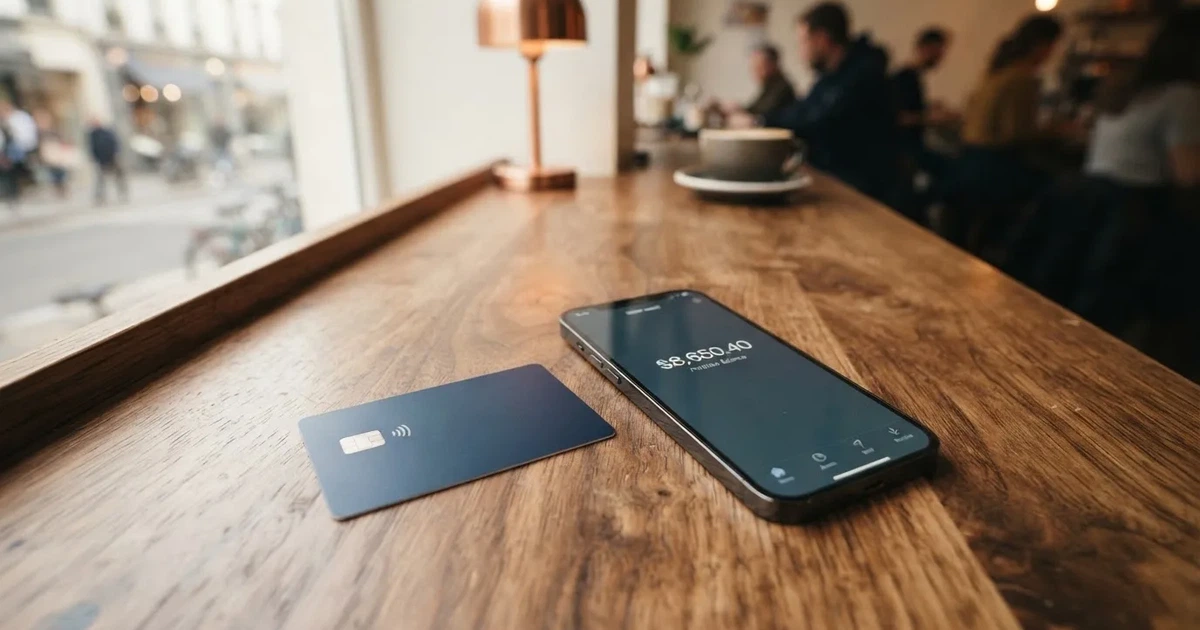
If that sounds like you — you cannot get an ordinary bank card, or you want a card that is not attached to a current account, or you want to hold and spend crypto without touching an exchange every time you buy something — keep reading. If you are looking for a card with generous rewards, high limits and a support desk you can reach, this is not it.
The conditions described here are current as of October 28, 2026.
Verdict: 5.0 out of 10
Bitsa suits a narrow but genuine group: residents of eligible European countries who want a prepaid Visa with a euro balance and an IBAN, and who treat the card as a spending tool rather than a financial relationship. It does not suit people who need credit, high spending ceilings, dependable support, or a card they can load from anywhere in the world without reading a network name first.
| Criterion | Mark | Why |
|---|---|---|
| Who can get it | 5 / 10 | The card does not publish a country list. Third-party sources describe residents of 27 EEA countries, with Bulgaria, Croatia, Latvia, the United Kingdom, the United States and Canada restricted |
| Cost | 4 / 10 | Physical card EUR 20, virtual EUR 2.50; plans at EUR 0, EUR 0.99 and EUR 9.99 a month; 1.5% to reload from an external card, 1.75% or 2% on payments outside the euro zone, ATM abroad EUR 0.55 plus 1% |
| Top-up options | 5 / 10 | Bitcoin, Ethereum and USD Coin, plus card, SEPA, wallet and voucher — but the networks are not named |
| Reliability and complaints | 3 / 10 | The issuer is not named on the pages reviewed; Trustpilot shows 1.3 out of 5 across 363 reviews, 68% of them one-star, with frozen accounts a recurring theme |
| Everyday use | 9 / 10 | Physical and virtual Visa, European IBAN, Apple Pay and Google Pay supported, ATM withdrawals abroad for a published fee |
Total: 5.0 / 10.
The everyday-use mark is the highest of the five because, as a mechanism, the card is sound. A Visa number, a euro balance, an IBAN, an app. It will work in shops, online, at terminals and in cash machines, and it will work through Apple Pay and Google Pay. The other marks are lower for a shared reason: the specifics a cardholder actually needs in the difficult moments are the ones the card does not publish.
Will they give you the card?
The honest answer is that the card’s own pages do not say. Bitsa does not publish the list of countries whose residents it accepts, and it does not publish what identity checks it runs. That is not a technicality — if you are outside Europe it means you cannot tell from the official site whether you are eligible before you download anything.
What third-party sources describe, and which the card has not confirmed on the pages I read, is that the card is aimed at residents of supported EEA countries, with a list of 27: Austria, Belgium, Cyprus, Czech Republic, Denmark, Estonia, Finland, France, Germany, Greece, Hungary, Iceland, Ireland, Italy, Liechtenstein, Lithuania, Luxembourg, Malta, Netherlands, Norway, Poland, Portugal, Romania, Slovakia, Slovenia, Spain and Sweden. The same sources describe Bulgaria, Canada, Croatia, Latvia, the United Kingdom and the United States as restricted. Treat that list as a guide, not as a rule — it comes from an aggregator, and the card itself is silent.
One thing worth understanding before you apply: with a card like this, your citizenship is not the only thing that gets screened. Nationality and country of birth are recorded separately from your address, because sanctions screening is applied to citizenship as well as residence. So a citizen of a restricted country living in an eligible one may still be refused. And the pattern I see across this whole category is that eligibility and survival are not the same thing: passing the country check gets you to the verification stage, not to a working card.
If you are in one of the 27 and have an address you can document, you are in the shape of applicant the card is built for. If you are not, do not spend an hour on the application before finding out whether your country is served at all.
How to get it
The card describes itself as a prepaid Visa crypto card, offered in physical and virtual form, with crypto converted to euros, a European IBAN, and management through an iOS or Android app. That is the whole product description. There is no stated application process on the pages reviewed — no list of documents, no stated verification steps, no stated delivery time for the physical card.
That silence is worth taking seriously, because getting a financial card is not the same as getting a shopping account. Under EU anti-money-laundering rules, a regulated firm has to establish your name, address, date of birth, nationality and identity document, run a sanctions check, understand the purpose of the relationship, and determine whether you are a politically exposed person. If it cannot complete that, the rule is that it must not proceed — and where the relationship already exists, it may have to end it. Account closures and freezes pending documents are a legal consequence of the process, not a malfunction.
The unofficial picture, from a third-party review site and not confirmed by the card, is that you will need proof of residence in an eligible country plus identity verification, that 16- and 17-year-olds can apply through a “Bitsa Young” route with a guardian authorising in the app, and that the issuer may suspend an account for failed verification, fraud or anti-money-laundering risk, or missing source-of-funds documents. The same source says delivery times and shipping details are not stated, and quotes EUR 20 for the physical card and EUR 2.50 for an additional virtual card.
That word “source-of-funds” is where people get caught out. Crypto-origin balances attract questions that a salary does not. If you are loading the card from an exchange account, have some idea in advance what your funding trail looks like, because you may be asked to show it.
The one thing I can tell you plainly: prepaid cards are generally for adults, and some issuers set higher limits rather than serving under-18s at all. Whether this card applies a different rule is not stated.
What it really costs: Fees, limits, and what a day’s spending adds up to
This is where the card is most concrete and, in places, most expensive. The headline costs are modest; the running costs are not.
The published prices: the physical card costs EUR 20 and a virtual card EUR 2.50. There are three plans — Free at EUR 0, Move at EUR 0.99 a month or EUR 8.99 a year, and Pro at EUR 9.99 a month or EUR 69.99 a year.
The fees that bite:
| Fee or limit | Free | Move | Pro |
|---|---|---|---|
| Card purchase | EUR 20 physical, EUR 2.50 virtual | same | same |
| Monthly or annual plan fee | EUR 0 | EUR 0.99/month or EUR 8.99/year | EUR 9.99/month or EUR 69.99/year |
| Reload from an external card | 1.5% | 1.5% | not charged within the allowance |
| Payments outside the euro zone | 1.75%; 2% elsewhere | same | same |
| SEPA transfer commission | EUR 1 | EUR 1 | free |
| Crypto conversion spread | not stated | not stated | not stated |
| ATM abroad | EUR 0.55 plus 1% of the amount, minimum EUR 0.75 | same | same |
Limits follow the plans:
| Limit | Free | Move | Pro |
|---|---|---|---|
| Purchase limit | EUR 1,500 | EUR 5,000 | EUR 15,000 |
| Maximum balance | EUR 2,500 | EUR 15,000 | unlimited |
| Top-up ceiling per day | EUR 500 | EUR 1,200 | unlimited |
| Top-up ceiling per month | EUR 1,000 | EUR 5,000 | unlimited |
| Top-up ceiling per year | EUR 2,500 | EUR 15,000 | unlimited |
| Crypto reload ceiling | up to EUR 20,000 a day | up to EUR 20,000 a day | up to EUR 20,000 a day |
Now three ordinary days, with the fees the card actually states.
A coffee and a sandwich abroad, about EUR 12. If you are outside the euro zone, the card adds 1.75% — around 21 cents. Somewhere further afield it is 2%, about 24 cents. Neither is painful; both are the kind of thing you stop noticing until it happens forty times.
A month of ordinary spending while travelling, an unofficial figure of EUR 900 not confirmed by the card, mostly inside the euro zone. Nothing to pay at all beyond what the shop charges — but only if the balance is already loaded. Loading EUR 900 from an external card on a free or Move plan costs 1.5%, about EUR 13.50. On Pro, reloads from an external card are not charged within the plan’s allowance, which is the single strongest financial argument for paying EUR 9.99 a month if you use the card heavily.
A cash withdrawal abroad, EUR 200. The card’s own terms: EUR 0.55 plus 1%, minimum EUR 0.75 — so EUR 2.55 for a EUR 200 withdrawal. Above that EUR 450 a day outside Spain, withdrawals stop.
Two things the card does not tell you, and you should assume they exist. The crypto conversion spread is not stated: when your bitcoin becomes euros, somebody takes a margin, and its size is one of the biggest determinants of what you actually pay. And third-party sources point out conflicting information about ATM charges inside the euro zone — one issuer document quoted at EUR 2.50, a newer guide saying only the operator’s own fee passes through. If you plan to use euro-zone cash machines heavily, that difference is worth more than every other fee on this page combined.
Third-party sources also add per-plan figures the card does not publish directly: one virtual and one physical card on Free, three virtual and two physical on Move, four and four on Pro; crypto sell fees of 2.39%, 2.14% and 1.89% across the three plans; and free SEPA Instant transfers limited to none on Free, one then EUR 1 on Move, two then EUR 1 on Pro. Two more unofficial details: ATM allowances of one withdrawal a day up to EUR 350 on Free, two on Move, and four up to EUR 900 on Pro; and in Spain the operator’s full fee passed through. Treat all of these as useful colour, not as terms.
How to top it up
Topping up is where the card is genuinely flexible, and also where a mistake is genuinely expensive. The card lists Bitcoin, Ethereum and USD Coin for crypto, and also funding by card, SEPA transfer, wallet and voucher. The networks are not stated — which is the caveat that matters.
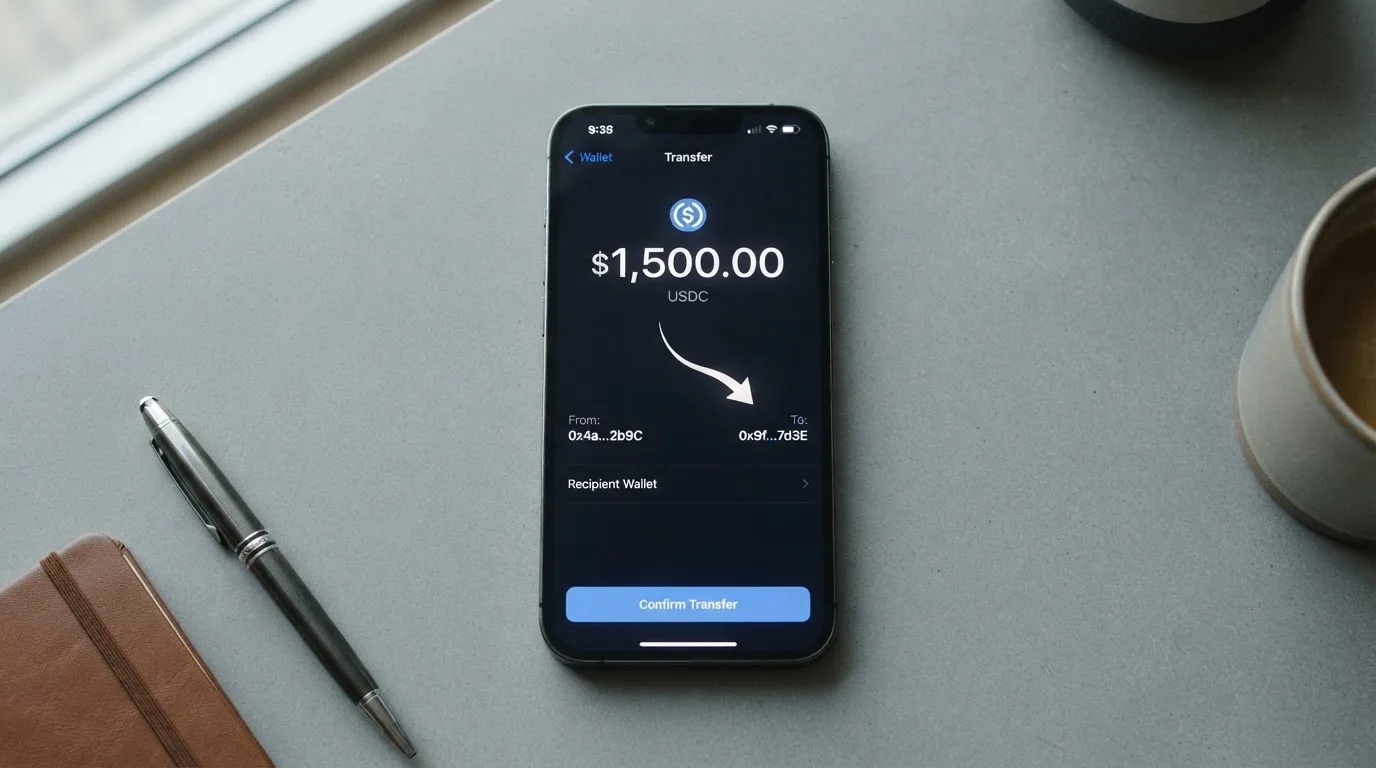
Getting a transfer wrong on a blockchain is not like mistyping a card number. Transfers are typically irreversible; the network cannot freeze or return what has left. If you send on a network the provider does not support, or to an address belonging to a different network, the money can be gone or can require a long support conversation to recover, with no guarantee. That is why the missing network list is not a small omission. It is the single most useful thing you could want and the card does not give it to you.
Third-party sources say that external-wallet top-ups explicitly include BTC, ETH and USDC, and that the app generates a new address for each deposit — a sensible design, because a reused address is a privacy habit you do not want with a payment provider. The same sources describe a 0% crypto buy fee on all plans, a 1.5% fee on external-card top-ups once the plan’s allowance is used, voucher reloads costing between 0% and 6%, and the EUR 20,000 daily crypto ceiling. None of that is confirmed by the card.
One more unofficial detail that will disappoint anyone who wants the card as a crypto wallet rather than a spending card: the in-app crypto function is described as buy and sell only, with holdings that cannot be sent to or received from external wallets. If your plan is to receive crypto directly into the card, that is not what this does. Card cancellation and balance management at expiry are described as EUR 0, while a third-party external transfer is EUR 1.50.
A practical consequence of the stablecoin choice: USD Coin is issued on many networks, and Circle listed it as natively supported on 38 networks as of 16 September 2026, including Ethereum, Solana, Base, Polygon PoS, Avalanche, Arbitrum and Stellar. Circle stopped supporting USDC on Tron in February 2024, so “USDC over TRC20” is not a native option. Stablecoins are convenient precisely because they travel on many chains, which means you must confirm the chain before sending rather than assuming the ticker is enough.
Paying with it every day
Day to day, this is the part the card does well, and 9 out of 10 reflects a card that simply works in the places cards work.
It is a Visa, physical and virtual, with a European IBAN, and the balance is in euros with crypto converted into it before you spend. Apple Pay and Google Pay are both confirmed in current help material; Samsung Pay was announced earlier, though there is no current setup guide for it. On app quality, the Google Play rating is given as 2.8 or 2.9 out of 5 — the two figures differ within the same source page, and the number of ratings is not given, so treat the number as “low”, not as a precise measurement.
The mechanics of acceptance are worth knowing, because they explain most declines. Every card number starts with an issuer identification number of 6 or 8 digits that tells the merchant who issued the card and from where. Merchants look it up, and when the issuer country differs from the billing address they may apply extra scrutiny. That is why a French-issued card can look foreign to a shop in another country. Some merchants decline prepaid or foreign-issued cards for exactly this reason.
A second, subtler one: Address Verification Service compares the numeric parts of the billing address a buyer types against issuer records. It is mainly offered in the US, Canada and the UK, and is generally unavailable for foreign-issued cards — which causes declines on their own, with no mistake on your part. If you travel to the US, Canada or the UK, expect some online checkouts to fail and prepare to pay another way.
Online payments use 3-D Secure, Visa’s version of it being Visa Secure. This adds an identity check where the issuer assesses risk and either approves without friction or challenges you. When you add the card to Apple Pay, the number is replaced by a device-specific number held in the Secure Element, never on Apple’s servers, with a fresh one-time security code on each payment. The issuer can still restrict that tokenised number — blocking it on phone or online use is possible, and you can freeze the card in the app.
The card lists cashback up to 15% among its plan services, with the Move plan mentioning cashback at favourite brands. Neither the payout asset nor the conditions are stated. Read that as marketing copy rather than as a plan you can budget around, unless you have the details in writing.
What is not stated and what you may want to ask about: which merchant categories are blocked, and what the position is on chargebacks if something goes wrong with a purchase. Those answers matter, and the card does not publish them.
What can go wrong
Two categories here: what could theoretically go wrong with any card of this type, and what people have actually reported about this one.
The general risks are well mapped across the industry, and they apply here.
On custody: control of crypto belongs to whoever holds the private key or the seed phrase. With a custodial arrangement, the provider holds the credentials and you trust them completely. A seed phrase — typically 12 to 24 words — is an unencrypted form of the private key, and anyone who obtains it can restore the wallet and spend the funds. Transfers are typically irreversible, and there is no recovery mechanism built in; the network cannot freeze or return them. Custodial platforms have a real record of failure: Mt. Gox (about US$350 million reported stolen, 2011–2014), Coincheck (about US$400 million, 2018), and the Ronin Network (US$625 million, 2022). Third-party sources describe this card as custodial after funding, with the euro balance held inside the PecunPay programme and protected by an SMS code plus a personal secret code for online purchases and sensitive changes.
On programme closure: cards in this category have been switched off before. Visa terminated its global agreements with FTX on 13 November 2022 and the FTX US debit card was wound down by its issuer. WaveCrest, a Visa issuer that supplied crypto card brands, was suspended by Visa in Europe in 2018, closing all WaveCrest-issued Visa programmes. Closures follow a pattern: a notice period, then loading and spending stop, then users are asked to withdraw remaining balances. There is no guarantee you would be treated better.
On charges: a declined authorisation can leave a hold on your funds that stays for several days, typically up to seven. An unexplained freeze therefore does not just block spending — it can trap money you were not planning to need that week.
On the regulatory side: a card is a payment service regulated separately from the crypto side, so a card like this often depends on two licences. Under MiCA — the EU’s markets-in-crypto-assets regulation, which ESMA states took legal effect in June 2023 — e-money tokens may be issued only by a credit institution or an electronic money institution, with the asset-referenced and e-money token rules applying from 30 June 2024 and the remaining provisions, including crypto-asset service provider rules, from 30 December 2024. The transitional period runs only until 1 July 2026 or until a provider receives or is refused a MiCA authorisation, whichever comes first — which means providers operating under older national licences are in a defined, closing window. ESMA maintains an interim register of authorised providers that you can check.
And funds held by an electronic money institution must be safeguarded, by segregation or insurance, but such funds are not bank deposits and may not be covered by a deposit guarantee scheme. That is a meaningful difference from a current account, and it is the single most important thing to internalise about a card like this.
On refunds: a chargeback is a refund ordered by the issuer to settle a dispute. Under 3-D Secure, liability for fraudulent online payments can shift from the merchant to your bank — or, per critics, to you. Prepaid-card coverage varies by jurisdiction and should not be assumed.
Then the specific record for Bitsa. On the company’s own pages: no incidents found. Beyond that, the picture is thin and one-sided. The card describes itself as “BITSA is a simplified joint stock company (SAS) registered in the Nice Trade and Companies Register” in France, but the card issuer and BIN sponsor are not named on the pages reviewed, and no licences are stated. Third-party sources name the issuer as Pecunia Cards EDE S.L.U. under the PecunPay programme, registered with Banco de España under number 6707, with Bitsa SAS as programme operator. I could not confirm that from the card itself.
Where the review record is concrete, it is on Trustpilot, where bitsacard.com shows 1.3 out of 5 from 363 reviews, read on 20 October 2026, with 68% one-star. The recurring themes are:
- Accounts frozen or blocked with funds withheld, in reviews stretching from September 2020 to September 2026, including several in 2026
- Support unresponsive for weeks or months, reported in July 2026
- Repeated document and verification demands, in 2025
- Crypto top-ups partly or not credited, in May and November 2025
- Login and app failures, in September 2026
- An unexplained closure, in January 2025
- No reply from the company to negative reviews, and two reviewers claiming regulator warnings that remain unverified
Set that against the absence of any official incident record and you have the shape of the risk: not a card that is documented as unsafe, but a card whose users report being unable to get to their money or their support desk when something goes wrong, and whose operator has not publicly answered those complaints. Note also that a low Trustpilot score is not proof of wrongdoing, and that frozen accounts can be lawful responses to verification failures. The point is narrower and more practical: when the card’s own pages do not publish its verification rules, its issuer’s name or its support commitments, the people who hit a problem have nowhere to go but a forum.
What to take instead
Bitsa is not alone, and the alternatives are worth measuring against it on the same axes.
| Bitsa | RedotPay | Bitpanda | Wirex | |
|---|---|---|---|---|
| Score | 5.0 / 10 | 6.9 / 10 | 6.5 / 10 | 6.7 / 10 |
| Card | Physical and virtual Visa, euro balance, European IBAN | Virtual and physical, USD and HKD cards | Physical Visa debit, EUR only, one active card | Physical and virtual; metal Visa Signature card available |
| Getting one | Country list not published by the card | Two official lists word the rule differently | Euro-area residence and a verified account; users verified via Bankident cannot order | “Depends on your region” |
| Card cost | EUR 20 physical, EUR 2.50 virtual | USD 10 virtual, USD 100 physical, non-refundable | First shipment free, reissue EUR 5.90 or EUR 9.90, extra card EUR 10 | Free in listed regions; metal card 45 GBP or EUR 45 |
| Running cost | Plans EUR 0 / 0.99 / 9.99 a month | Transaction fee 1.00%, non-default currency 1.20%; paid tier USD 12.90 a month | Non-EUR FX fee EUR 0 but Visa mark-up applies | No annual or FX fee stated on the card page |
| Crypto funding | BTC, ETH, USDC; networks not stated | On-chain deposit or in-app purchase; networks shown per asset on the Deposit page | Spends from a chosen asset, converted to EUR at payment | Cash, stablecoins and cryptocurrencies |
| Rewards | Cashback up to 15% listed; conditions not stated | USD 5 welcome reward, spending only, 30 days | 1% cashback on crypto spending per the text, “up to 2%” in the summary | Cryptoback in WXT: 0.5%, 3%, up to 8% |
RedotPay is the most explicitly documented of the three alternatives, and that is its real advantage. It publishes an unsupported-countries list for identity verification and a separate list of places ineligible for both virtual and physical cards, with the reasoning stated: restrictions apply “based on local regulations and sanction policies—not on individuals”. It publishes its fee schedule down to small-authorisation waivers (the first five per card per month, then USD 0.20) and declined-transaction charges (the first three per month, then USD 0.50), effective 1 December 2025. It names the networks for each asset on the deposit page. Against that, the physical card costs USD 100 and is not refundable once paid, and there is a long restricted list.
Bitpanda is the more conventional option for anyone in the euro area: a regulated-looking exchange with a physical Visa debit card, no monthly fee, and a residence-based eligibility rule. Its limits are obvious — one active card, EUR only, no virtual card stated — and its own cashback figures do not reconcile between the page text and the page summary.
Wirex is the broadest, claiming a worldwide service area of 130+ countries, but also the vaguest: availability “depends on your region”, card currency not stated, exchange fees shown in the app rather than published. It does publish one thing clearly and it is a useful one — free SEPA, Faster Payments, ACH and PIX fiat deposits.
If your problem is that you cannot open a bank account, notice that all four are e-money or crypto cards rather than bank cards, and all four come with the same trade-off: a Visa that works, inside a structure that is not a deposit. If your problem is something else — low fees, high limits, reliable support — RedotPay is the better-documented place to start, and Bitpanda the simpler one if you live in the euro area.
Who I would recommend it to
I would recommend this card to a resident of one of the 27 EEA countries listed by third-party sources, who has a documentable address, who wants a euro balance with a European IBAN on a prepaid Visa, and who is content to treat it as one tool among several rather than as their primary way of being paid. Someone who receives part of their income in crypto, keeps the card for a fixed monthly spend, tops it up in one or two deliberate loads rather than in small daily ones, and keeps a backup card for anything the freeze risk makes uncomfortable.
I would not recommend it as a first card to someone who has never used this category, because the documentation gaps — no country list, no stated verification process, no named issuer, no support commitments — are exactly the things a first-time user needs. Nor would I recommend it to anyone planning to withdraw cash regularly inside the euro zone, where third-party sources report conflicting ATM terms; to anyone whose income arrives in a currency other than the euro; or to anyone whose main interest is cashback, since the headline rate is published without the conditions that would let you plan around it.
The honest summary is this. Bitsa does the easy half of the job well and documents it; the hard half — who issues it, what it verifies, who answers when a deposit goes missing — is where you are left to rely on other people’s reports, and those reports are poor. If that trade still makes sense for your situation, you know exactly what you are agreeing to. If it does not, one of the alternatives above will tell you more before you hand over a document.
Frequently asked questions
What is Bitsa card?
Bitsa is a prepaid Visa card with a European IBAN. You load it from crypto or through ordinary payment rails, it holds a euro balance, and you spend that balance like an ordinary Visa, physically, virtually, or through a mobile wallet. It is a spending tool rather than a bank account: there is no credit, and the card cannot overdraw. The card describes itself as a French-registered simplified joint stock company.
Is Bitsa a bank?
No. It is a card programme from a fintech, and the card’s own pages do not name the institution that issues the card or holds the balance; third-party sources point to a Spanish issuer under the PecunPay programme, which is not confirmed by the card. Under EU rules, funds held by an electronic money institution must be safeguarded by segregation or insurance, but they are not bank deposits and may not be covered by a deposit guarantee scheme.
Who can get a Bitsa card?
The card does not publish its country list. Third-party sources describe residents of 27 EEA countries as eligible, with Bulgaria, Croatia, Latvia, the United Kingdom and the United States restricted, and Canada excluded. Citizenship is screened separately from address, so nationality can matter independently of where you live. Check your own country’s status before applying, since the official list is not published.
Does the Bitsa card require KYC?
The card’s pages do not say. EU anti-money-laundering rules require regulated firms to verify identity, run a sanctions check, understand the purpose of the relationship, and screen for politically exposed persons — and to refuse or end the relationship if that cannot be completed. Third-party sources describe proof of residence plus identity verification, and suspension for failed checks or missing source-of-funds documents. Expect questions about where your money came from.
How much does a Bitsa card cost?
The physical card is EUR 20 and a virtual card EUR 2.50. Plans are Free at EUR 0, Move at EUR 0.99 a month or EUR 8.99 a year, and Pro at EUR 9.99 a month or EUR 69.99 a year. Reloading from an external card costs 1.5% on the lower plans, payments outside the euro zone cost 1.75% or 2%, and cash withdrawals abroad cost EUR 0.55 plus 1%. The crypto conversion spread is not stated.
Which crypto can I use to top up?
Bitcoin, Ethereum and USD Coin are listed, and third-party sources name the same three for external-wallet deposits, with the app generating a fresh address each time. The networks are not stated, which is the problem: sending on an unsupported chain or to an address of another network can be lost, because blockchain transfers are typically irreversible. USDT over Tron is not a native option since Circle stopped supporting USDC there in February 2024.
Is the Bitsa card safe to use day to day?
Day-to-day spending is ordinary and unremarkable — a Visa that works in shops, online, at terminals and at compatible cash machines, with Apple Pay and Google Pay supported. The unusual risks are structural rather than technical: accounts reported frozen with funds withheld, top-ups not credited, and support going unanswered for weeks. The card’s own pages do not name the issuer or publish support commitments, so you have less recourse information than you would with a bank.
Can I add the Bitsa card to Apple Wallet?
Third-party sources indicate Apple Pay and Google Pay are both supported in current help material, and Samsung Pay was announced earlier without a current setup guide. When you add a card to Apple Pay, the number is replaced by a device-specific number stored in the Secure Element rather than on Apple’s servers, and each payment uses a fresh one-time code. The issuer can still block the tokenised number on phone or online use.
Why was my Bitsa account blocked, and can I get the money back?
Frozen accounts are the most common complaint in the Trustpilot record, where the card shows 1.3 out of 5 from 363 reviews with 68% one-star, including freeze cases through 2026. Frozen accounts are not automatically unlawful — they can follow failed verification, suspected fraud or anti-money-laundering risk, or missing source-of-funds documents. Because the card does not publish its verification rules or its issuer, and because support is reported as slow or absent, this is the scenario where the documentation gaps cost you most.
Is Bitsa worth it compared with other crypto cards?
That depends on what you need. Against RedotPay (6.9 out of 10) you gain a cheaper physical card but lose the clearest published country and fee documentation in this group. Against Bitpanda (6.5 out of 10) you get crypto funding and an IBAN but lose the simplicity of a euro-area exchange with no monthly fee. Against Wirex (6.7 out of 10) you get a euro balance and SEPA transfers but give up the widest country coverage. Bitsa scores 5.0 out of 10 mainly because of its complaint record and its thin disclosure, not because the card itself is awkward to use.
App and neobank cards – cryptocardsearch.com
Content created by the «cryptocardsearch.com» team