
A Mastercard from a European e-money issuer, with honest costs and a lot of paperwork
 Available in US
The SharPay card is a Mastercard debit card you fund with crypto or euros and spend like an ordinary payment card, issued by a licensed Lithuanian e-money institution rather than by the brand you have actually signed up with. That is the whole idea in one sentence, and it is a sound idea: it gives you Apple Pay, Google Pay, contactless payments and ATM withdrawals, which most pure-crypto cards cannot. My score for it is 5.9 out of 10. It is a competent card wrapped in an onboarding process that asks more of you than most, a cost sheet that adds up faster than the headline numbers suggest, and a set of country rules that are strict enough that a large part of the world simply cannot open an account.
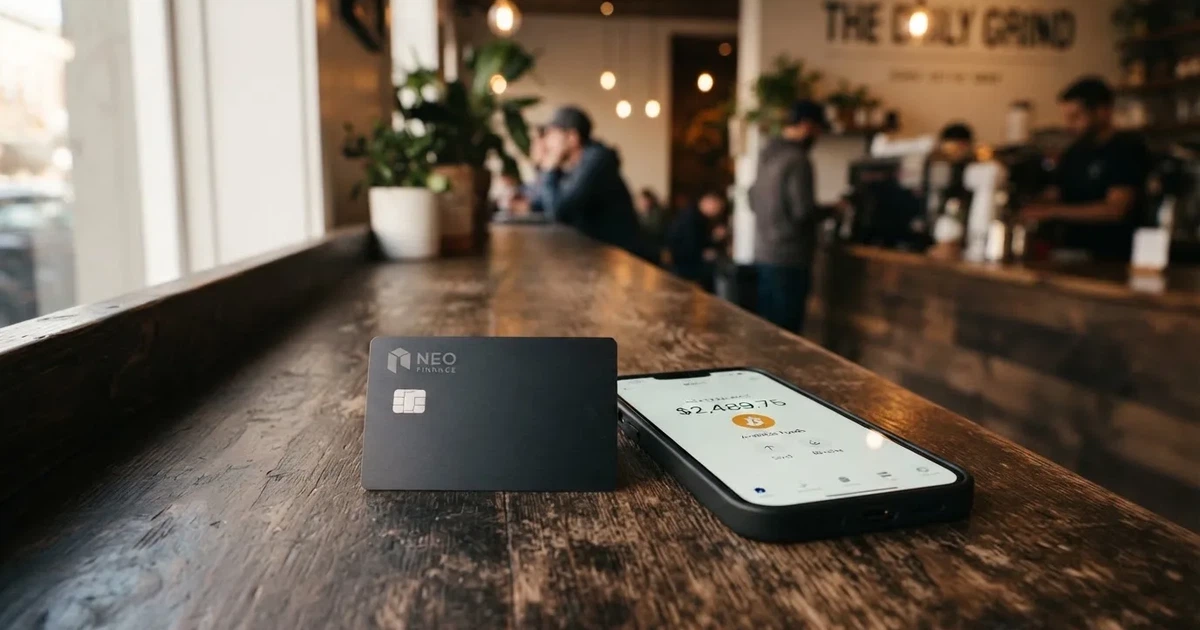
The conditions described here are current as of October 28, 2026.
Who I would point it at: a non-EU resident who already has crypto they want to spend, has no trouble with a Level 2 identity check, and wants Apple Pay on a Mastercard. Who I would point it away from: anyone who wants a card free of fixed euro charges, anyone in the EU who expects the crypto side to work, and anyone in a hurry — the fee sheet alone justifies looking elsewhere first.
Verdict: 5.9 out of 10, and the split score says more than the total
A single number hides a lot. SharPay does the card part of the job very well and the account part of the job rather poorly, and the total sits between the two. Here is the breakdown.
| Criterion | Mark | Why |
|---|---|---|
| Who can get it | 5 / 10 | The rule is by residence, restricted and prohibited countries are excluded, and the crypto services are not for EU residents; the number of countries served is not disclosed |
| Cost | 3 / 10 | Opening a payment account is 10 EUR, card issuing 1 EUR, service 3 EUR; loading the card is 2.00 EUR plus 1.99%, and the FX mark-up is 2.99% |
| Top-up options | 6 / 10 | EUR, USDT, USDC, BTC, ETH, XRP, LTC, BCH, plus DAI and TUSD on the price page; the networks are not named in the FAQ, and a USDC deposit via Mastercard or VISA costs 4% |
| Reliability and complaints | 8 / 10 | The card is issued by UAB Walletto (Lithuania, Bank of Lithuania licence no. 33) and payments run through SPEKA Payments Corp (FINTRAC MSB M22046940); no complaints or reviews were found |
| Everyday use | 9 / 10 | A virtual card available immediately after ordering, the physical card in about 15 working days, Google Pay and Apple Pay, and ATM withdrawals are possible |
The high marks are where the licensed issuer does the work. The low marks are all about getting in and paying in. If your problem is “I have no usable bank card and I hold crypto”, the 8 and the 9 dominate your experience. If your problem is “I want to spend euros cheaply”, the 3 dominates it, and SharPay is the wrong card.
Will they give you the card? Yes, unless where you live says otherwise
The rule is about residence, not citizenship, and the residence rule is the one that will decide your application. SharPay states that you must not be a resident of a restricted or prohibited country. The prohibited list published by SPEKA Payments Corp includes Russia and Belarus, and also Crimea, DNR, LNR, Kherson, Zaporizhzhia, Iran, Cuba and Syria, among others. Separately, the crypto services are stated as not being for EU residents.
That last sentence catches people out, so let me be precise about what it says and does not say: the crypto services are described as outside the EU and not to EU residents. The card itself comes from a Lithuanian e-money institution, so it is not a clean read that no EU resident may hold anything at all — but I would not build a plan on that ambiguity. If you live in the EU and want the crypto-to-card part to work, the published position is against you.
Citizens of other, non-EU countries verify with a foreign passport. EU citizens use a passport or an identity card. No separate citizenship rule is stated beyond that.
What is not stated anywhere on the public pages: the number of countries served, and the full restricted list beyond the prohibited one. That absence matters, because if you are somewhere with an awkward banking relationship and no local statements in English, you may pass every published rule and still fail the practical checks described in the next section.
How to get it: three levels, two of which need real documents
Getting the card is a three-step process — register with phone, email and password; complete Level 1 and then Level 2 verification; order the card in the app — but the verification is where the work is.
What Level 1 asks for:
- A passport, full page, good quality. Cropped copies are rejected, and so are non-passport documents.
- Bank statements in English.
- A questionnaire covering your turnover, the source of your funds, and any links to politically exposed persons or US persons.
- A video selfie.
Level 2 is the extra check, and it is the one you need: it is required for fiat accounts and for cards, and it can take up to 5 days. Document review itself is quoted as running from 1 to 72 hours. There are stated rejection triggers — a cropped copy, a non-passport document, a video selfie with poor light, a hat, glasses or filters. Small practical note: take the selfie in daylight, take off the hat, and do not wear glasses you would not wear to a bank counter.
The minimum age is not stated. If you are under 18, you are in the territory of generic card rules and you should assume you need to ask.
Once approved, you choose between two card forms. The virtual card is active immediately after ordering. The physical card is a Mastercard debit, “issued by UAB Walletto”, typically shipped within about 15 working days, with times varying by destination. Delivery countries and delivery cost are not stated. Up to five cards per account is claimed in the app store listing and on the homepage. The card opens in EUR. Replacing a virtual card costs 1.00 EUR; a physical replacement is not stated.
What it really costs: Fees
The number that should decide this for you is not the 1 EUR card issuance. It is the 2.00 EUR plus 1.99% every time you load the card, and the 3 EUR a month per card whether you use it or not. There is a 10 EUR one-off payment-account opening fee, a free crypto account, 1 EUR to issue the card, 3 EUR monthly service per card, 40 EUR to handle a chargeback, and then the load and currency charges on top. Let me lay it out.
| Fee or limit | Value |
|---|---|
| Payment account opening | 10 EUR |
| Crypto account | Free |
| Card issuing | 1.00 EUR |
| Card service | 3.00 EUR per card per month |
| Virtual card replacement | 1.00 EUR |
| Chargeback handling | 40.00 EUR |
| Card load, card to card | 2.00 EUR + 1.99% |
| FX mark-up on a personal card | 2.99% (1.00% on payments) |
| Purchase fees | Shown as “-” |
| USDC deposit via Mastercard or VISA | 4% |
| USDC withdrawal via Mastercard or VISA | 3% |
| Other coins | Network fee |
| Card POS and e-commerce daily limit | 10,000 EUR |
| Card POS and e-commerce monthly limit | 30,000 EUR |
| SEPA crypto transactions | Max 14,500 EUR per day |
| Crypto purchases by card | Monthly limits, amounts shown in the app |
| Account closure, personal | 25.00 EUR |
| Account closure, business | 100.00 EUR |
Three everyday payments, and what each one costs you
Work through your own week rather than the fee table, because the fees interact.
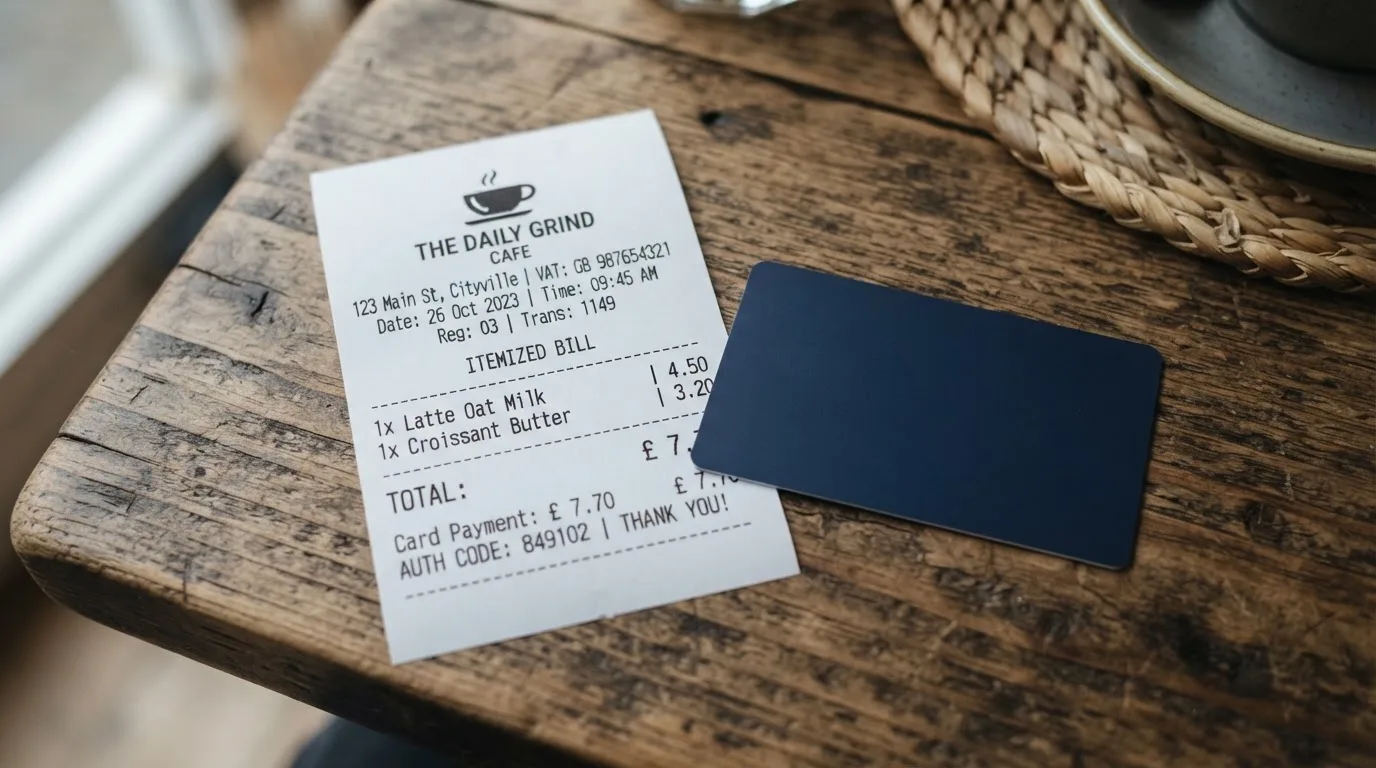
A 20 EUR coffee paid in EUR, on the card you already loaded. The purchase fee is shown as “-”, so in EUR there is no purchase charge on the card. You have already paid 3 EUR for the month of service, and the load that funded this coffee cost you its 2.00 EUR plus 1.99%. If you load once a month for 600 EUR, that load alone is 2.00 plus 11.94, or 13.94 EUR, and it bought 600 EUR of spending capacity. That is the single largest cost in the card’s life.
A 20 EUR coffee paid in dollars while you are travelling. The card adds a 2.99% FX mark-up on a personal card, with 1.00% on payments — and how those two combine is exactly the kind of thing I would ask support about before relying on it. On 20 EUR that is somewhere between 20 cents and 60 cents, depending on which reading applies, and I will not pretend to know which. What I can tell you is that the card is a EUR card, the card page says you can purchase in any currency you wish, and the spread on other-currency purchases beyond that 2.99% is not stated. So budget for the mark-up and do not budget for the exchange rate being good.
A 100 EUR purchase funded by USDC you bought with your bank card. Here you pay 4% to deposit the USDC via Mastercard or VISA and 3% to withdraw it, before any load fee, before any card service fee, before any conversion. That path is for people who already hold the stablecoin. If you do not, there is a cheaper-looking route — the crypto itself, at the network fee — but the exchange rate at which your crypto becomes euros is the provider’s “system exchange rate”, and the spread on that is not stated. This is the question I would put to support first: what exactly does the system exchange rate cost me on the day I load?
There is also no ATM fee and no ATM allowance on the fee page. ATM withdrawals are possible; the cost is not published. Treat that as an unknown rather than as free.
How to Top up: nine currencies, unnamed networks
You can fund the card in EUR, USDT, USDC, BTC, ETH, XRP, LTC and BCH, with the price page also listing DAI and TUSD — which makes this one of the broader lists in the category. What is missing is the most operationally important detail: the FAQ says to select the currency and network, and does not name the networks. That is not a small gap.
Networks are the part people get wrong. Each coin exists on several chains, and sending it on a chain the provider does not support can mean the funds never arrive. On the Ethereum standard, fees are paid in ETH, so a wallet holding USDT with no ETH cannot send it at all. On Tron, fees are paid through bandwidth and energy, often by burning TRX. Circle stopped supporting USDC on Tron in February 2024, so “USDC over TRC20” is not the obvious equivalent of USDT over TRC20. XRP needs a memo or tag, which is stated here and is the kind of field people forget until the funds are gone.
The minimum top-up is not listed; the page simply tells you to read the minimum inside the top-up amount input field. Crypto in another currency is “automatically exchanged at the system exchange rate”. A card-to-card load costs 2.00 EUR plus 1.99%, as in the cost section.
On the way out, transfers to SEPA, cards, e-wallets and crypto are processed in 1 to 60 minutes. Card transfers are only possible if the card was previously topped up. Closing a personal account costs 25.00 EUR and a business account 100.00 EUR; what happens to the balance left inside is not stated. Given that, my advice is to withdraw what you are not actively using before you close anything.
Paying with it every day: this is the part SharPay does well
Everyday use is the strongest category in my scoring, and it is not close.
- Virtual card immediately. Active the moment you order it, so a subscription signed up today does not need a parcel wait.
- Physical card in about 15 working days. Mastercard debit, shipping times varying by destination.
- Apple Pay and Google Pay. Both are supported. Tokenised mobile wallets are the practical way to use a card like this, because the device stores a token rather than your card number.
- Contactless payments. Supported.
- ATM withdrawals. Possible, though the fee is not published.
- Card blocking in the app. You can block and unblock the card yourself, without waiting for support.
- 3-D Secure 2.0. Online payments can be confirmed with a one-time passcode or biometrics.
- OTP and two-factor codes at login. Standard, and the right place to look if you suspect someone else has your number.
- Double debits refunded automatically. If your account is debited twice during a payment, the money goes back to your account automatically.
What is not there: no rewards, no cashback, no tier system. The pages name no card tiers or plans at all, pricing is listed per product, and no cashback appears anywhere. If you spend heavily and collect points, that is a gap you will feel.
Merchant categories are restricted. The prohibited-activities list behind the card covers illegal gambling services including illegal online casinos and sports betting, and adult content, among others. Blocked merchant category codes are set by issuer policy rather than by law, and they vary from issuer to issuer — so a category that works on one card may fail on this one.
One more thing worth planning around: a declined authorisation can leave a hold on your funds that stays for several days, typically up to seven. And address verification, which many merchants use to compare the billing address you typed against issuer records, is mainly available in the US, Canada and the UK and is generally unavailable for foreign-issued cards. A card issued in Lithuania can therefore look foreign to a shop elsewhere, and some merchants decline prepaid or foreign card numbers for exactly that reason. It is not fraud; it is a lookup.
The SharPay Wallet app is on Google Play and the App Store. Store ratings and the number of ratings were not shown in the text I read on 2026-10-20, which is itself worth noting — you are assessing a financial app whose public rating count I could not see. The homepage claims “15k +” users.
What can go wrong: five real risks, ranked
1. You are trusting a custodian with your money. This is the biggest one. The payment and e-money account is custodial — the provider holds it. That is normal for this category and it is also the entire structural risk: the card issuer is UAB Walletto under a Bank of Lithuania e-money licence no. 33, and payment services run through SPEKA Payments Corp under FINTRAC MSB M22046940. E-money institutions must safeguard customer funds, by segregating them in dedicated accounts or insuring them, but those funds are not the same as bank deposits and may not be covered by a deposit guarantee scheme. Whether or not this particular arrangement is safeguarded, the card’s own pages do not state it, so I will not claim it either way.
The category’s history is the reason to think carefully. Mt. Gox reported about US$350 million stolen between 2011 and 2014, Coincheck about US$400 million in 2018, and the Ronin Network US$625 million in 2022. Custody carries counterparty and hack risk, and no seed phrase of your own protects you from it. The flip side is equally real: with a self-custody-linked card you keep sole responsibility for key loss, phishing, and malware that silently swaps a copied address.
2. A wrong network can cost you the deposit. Blockchain transfers are typically irreversible. A deposit sent on an unsupported network, or to an address belonging to a different network, can be lost or need manual support recovery with no guarantee. And the FAQ here does not name the networks. This is the single most likely way to lose money with this card, and it is entirely avoidable — but only if you confirm the network in the app before sending, every time.
3. The fixed costs dominate small balances. Three euros a month per card, plus 2.00 EUR and 1.99% per load, plus 10 EUR to open the payment account. If your total monthly spending is low, the card can cost more than it delivers. There are no tiers or plans to move up into; there is one flat fee sheet.
4. There are no complaints to read, which cuts both ways. Official sources: none found. A Trustpilot search on 2026-10-20 returned only Shieldpay and b-sharpe, with no SharPay page. A dedicated search for SharPay card complaints on Reddit and Trustpilot returned only unrelated brands such as Shop Pay and OnePay. So there are no user reports and no news to weigh. A thin complaint record on a young financial app is weak evidence, not good evidence — absence of complaints is what you would also see before the first one.
5. A dispute costs 40 EUR. Chargeback handling is charged at 40 EUR. A refund policy is linked as a PDF, but the time frames are not stated. If a merchant disputes a payment and you decide to pursue it, you start from a negative position financially.
A sixth, quieter point: the crypto side runs under a Canadian registration and is described as operating outside the EU and not for EU residents. Under the EU’s MiCA regulation, which took legal effect in June 2023, e-money tokens may be issued only by a credit institution or an electronic money institution, and providers operating under national law could continue only until 1 July 2026 or until they received or were refused a MiCA authorisation, whichever came first. I found no dated events on this card’s pages. I am not making a regulatory judgement — that is not this review’s job — but it is fair to say that a card issuing from the EU and crypto services from outside it is a two-licence structure, and that is worth asking about.
If something goes wrong, support is a phone number, +357 2503-09-49, an email address (obfuscated on the page), a website support widget, and social channels on Facebook, X, Instagram and LinkedIn. The site is in English, Ukrainian and German. Support hours are not stated, which is worth knowing before you need them at a weekend hour.
What to take instead
Four cards came up in the same category. None is a clear replacement for SharPay — they are different trades. Here is how they compare on the things that decide it.
| Card | Score | Who can get it | Card form and network | What it costs |
|---|---|---|---|---|
| SharPay | 5.9 / 10 | Not residents of restricted or prohibited countries; crypto services not for EU residents; no citizenship rule stated | Virtual immediately, physical in about 15 working days, Mastercard debit | 10 EUR account opening, 1 EUR issuing, 3 EUR monthly per card, 2.00 EUR + 1.99% to load, 2.99% FX mark-up |
| RedotPay | 6.9 / 10 | Two official lists worded differently; a long list including Russia, Belarus, Ukraine, Serbia, United States, Croatia, Slovenia, and — for cards only — India, Indonesia, Morocco, Nepal, Singapore, Turkey; restrictions are on residents, and Georgia, Armenia, Kazakhstan and the UAE are on neither list | Virtual and physical, Visa debit in the Singapore terms; USD and HKD cards | 10.00 USD virtual card, 100.00 USD physical card and not refundable, no account maintenance fee, Pro tier at 12.90 USD monthly or 129.00 USD annual |
| Bitpanda | 6.5 / 10 | Verified account plus residence in a euro-area country; users verified via “Bankident” cannot order | Physical Visa debit, EUR only, one active card | Account opening and monthly cost free, first shipment free, reissue EUR 5.90 or EUR 9.90 for lost or stolen, EUR 10 per additional card |
| Wirex | 6.7 / 10 | Availability “depends on your region”; fees published for UK, EEA, APAC, SG, AU and “Other”; service area worldwide, 130+ countries; Singapore terms bar cash withdrawals | One virtual and one physical card at a time; Visa or Mastercard by region; metal Visa Signature card | Card issuance free in the published regions; metal card 45 GBP order fee with free DHL Express on the UK page, “only 45 EUR” delivery fee elsewhere |
Three comparisons worth pulling out of that table.
RedotPay has the highest score and the sharpest residency lists. Its KYC list is written around citizens while its card-issuance list is written around residents, and the wording differs between the two, so read both if you are anywhere near the boundaries. Its transaction fee is 1.00% with a 1.20% non-default-currency fee, and small authorisations and declined transactions are charged after free allowances. It has a 5 USD welcome reward usable only on spending, valid 30 days, which cannot be used toward the issuance fee. RedotPay’s edge over SharPay is the crypto conversion fee being a clean percentage; its edge the other way is the 100.00 USD physical card fee.
Bitpanda is the plainest option and the least exotic. It is a regulated exchange with a card attached, euro-area residents only, no FX fee but with Visa mark-ups applying, assets converted to EUR at the moment of payment, and a minimum payment of EUR 1. Its cashback figure is worth noting: the body text says 1% on crypto spending while a page summary says “up to 2%” — unreconciled on the page itself — and fiat, stocks, metals and stablecoins are excluded.
Wirex is the one with rewards. Cryptoback in WXT at Standard 0.5%, Premium 3% and Elite up to 8%, with the metal card at up to 8% back. Its exclusion list is long and specific: ATM withdrawals, cash advances, crypto purchases, gambling, refunds, and a set of merchant category codes. Its FX fee is not specified on the fee page; the card page says there is no foreign exchange fee, and the exchange rate is shown in the app before you confirm.
If your priority is simply spending crypto cheaply and you live outside the EU, RedotPay scores higher and states its percentage more plainly. If you want rewards on everyday spend, Wirex is the only one of the four that offers a stated cashback rate. If you want the least exotic regulated setup in the euro area, Bitpanda. And if your priority is a Mastercard you can put in Apple Pay today, with a virtual card live the moment you order it, SharPay still has something none of the others quite matches.
Who I would recommend it to
SharPay, for me, fits one person well and a lot of people badly.
I would recommend it if you live outside the EU in a country that is not on the prohibited list, you already hold crypto and would rather not sell it before spending it, you want a Mastercard with Apple Pay and a virtual card that works the same day, and you are comfortable with a custodial balance and a monthly fee. I would also want you to have bank statements in English ready, because that is part of the file, and a clear answer on screen about source of funds.
I would steer you away if any of these are true:
- You live in the EU. The crypto services are described as not being for EU residents, and that is not a small footnote.
- You live in Russia, Belarus, Iran, Cuba, Syria, or the listed regions. The prohibited list is not negotiable and there is no version of this card that works around it.
- Your spending is small enough that 3 EUR a month and 2.00 EUR plus 1.99% per load would eat the value. Use the fee table with your own numbers.
- You want cashback or points. There is no rewards programme on the pages, and no tiers to climb.
- You want to close the account without cost. Closing a personal account is 25.00 EUR, and what happens to the balance is not stated.
- You need a published ATM fee or a published spread. Neither is on the fee page.
- You want a documented track record of user reviews. There are none to read.
My own three questions, if I were applying: what exactly does the system exchange rate cost on the day I load, what networks does each supported currency accept, and what happens to the balance if I close the account. All three are things I would expect a provider of this kind to answer in one message, and all three are things you should have answered before you send the first euro.
Frequently asked questions
What is the SharPay card?
The SharPay card is a Mastercard debit card you fund with crypto or euros and then spend as an ordinary payment card, at shops, online, contactless, and at ATMs. The card is issued by UAB Walletto, a Lithuanian company holding Bank of Lithuania e-money licence no. 33, and payment services are provided by SPEKA Payments Corp. You get a virtual card immediately after ordering and a physical one in roughly 15 working days.
Who owns SharPay, and is it a bank?
GTM Exchange Ltd (Cyprus) designs and operates the sharpay website and app. The brand you sign up to is not the company that issues the card: issuing sits with UAB Walletto in Lithuania, payment processing with SPEKA Payments Corp in Canada, registered as FINTRAC MSB M22046940. So no, SharPay is not itself a bank, and your balance sits in a custodial e-money account rather than a bank deposit.
Is SharPay card safe to use?
It uses the usual safeguards: OTP and two-factor codes at login, in-app card freeze and unblock, 3-D Secure 2.0 for online payments, and optional proof-of-funds requests. The card also comes from a licensed e-money issuer rather than an unknown brand, which counts in its favour. But the balance is custodial, so you are trusting the provider, and whether customer funds are safeguarded or insured is not stated on the pages I read. Treat it as e-money, not as a bank deposit.
Which countries can use SharPay?
The rule is by residence, not citizenship: you must not be a resident of a restricted or prohibited country. The prohibited list includes Russia, Belarus, Crimea, DNR, LNR, Kherson, Zaporizhzhia, Iran, Cuba and Syria, among others. Separately, the crypto services are described as outside the EU and not for EU residents. Non-EU citizens verify with a foreign passport, EU citizens with a passport or ID card; the number of countries served is not disclosed.
Does SharPay require KYC, and how long does it take?
Yes, and the card specifically requires the deeper level. Level 1 asks for a passport full page, English bank statements, a questionnaire on turnover, source of funds and PEP or US-person links, and a video selfie. Level 2, needed for fiat accounts and cards, adds an extra check of up to 5 days; document review itself runs from 1 to 72 hours. Cropped copies, non-passport documents, or a selfie in poor light with a hat, glasses or filters are stated rejection triggers. The minimum age is not stated.
How much does the SharPay card cost to keep and use?
Opening a payment account costs 10 EUR, the crypto account is free, issuing a card is 1 EUR, and service is 3.00 EUR per card per month. Loading the card card-to-card costs 2.00 EUR plus 1.99%, the FX mark-up on a personal card is 2.99%, and handling a chargeback is 40 EUR. Closing a personal account costs 25.00 EUR. A USDC deposit via Mastercard or VISA is 4% and withdrawal 3%. ATM withdrawals are possible but no fee or allowance is published.
How do I top up the SharPay card?
You can add EUR, USDT, USDC, BTC, ETH, XRP, LTC and BCH, with the price page also listing DAI and TUSD. The FAQ tells you to select the currency and network but does not name the networks, so check the app before every transfer — an unsupported network is a common way to lose a deposit, since blockchain transfers are typically irreversible. XRP needs a memo or tag. Crypto in another currency is exchanged at the system exchange rate, and the minimum top-up is shown inside the top-up amount field rather than published as a figure.
Can I use SharPay with Apple Pay and Google Pay?
Yes, both are supported, and so is contactless payment. This is the strongest part of the card: a virtual card that is active immediately after ordering, a Mastercard for Apple Pay and Google Pay, ATM withdrawals, in-app card blocking, and 3-D Secure 2.0 online. What is missing is any rewards programme at all — no cashback, no points, and no card tiers or plans are named on the pages.
Is the SharPay card free?
No. The crypto account is free, and there is a 10 EUR payment-account opening fee, but the card itself costs 1 EUR to issue plus 3.00 EUR every month per card, with 2.00 EUR and 1.99% on each load. For a low-spend user those fixed charges can exceed the convenience. Run your own monthly spending against the fee table before you commit, because there is no cheaper tier to move down to.
Is SharPay worth it?
For a non-EU resident holding crypto who wants a Mastercard with Apple Pay and a usable virtual card straight away, I think it is worth it despite the 3 out of 10 for cost — the 8 for reliability and 9 for everyday use come from a genuinely licensed issuer. For an EU resident, for anyone wanting cashback, or for someone who spends small amounts, I would not. If you want a cheaper crypto-conversion rate, RedotPay scored higher in my testing; if you want rewards, Wirex is the one that publishes a cashback rate.
App and neobank cards – cryptocardsearch.com
Content created by the «cryptocardsearch.com» team