
Karta is a Telegram-first Visa card that spends crypto like a prepaid balance
 Available in US
Karta is a Visa payment card sold through a Telegram bot rather than a conventional banking app. You verify inside Telegram, load the card with USDT or USDC from several blockchains, and then spend the resulting balance anywhere Visa is taken, or push it to Apple Pay and Google Pay. The virtual card activates from 5.00 USDT and the physical one from 100.00 USDT, crypto top-ups are free, and card payments carry a 1.5% fee. On those numbers it scores 7.9 / 10.
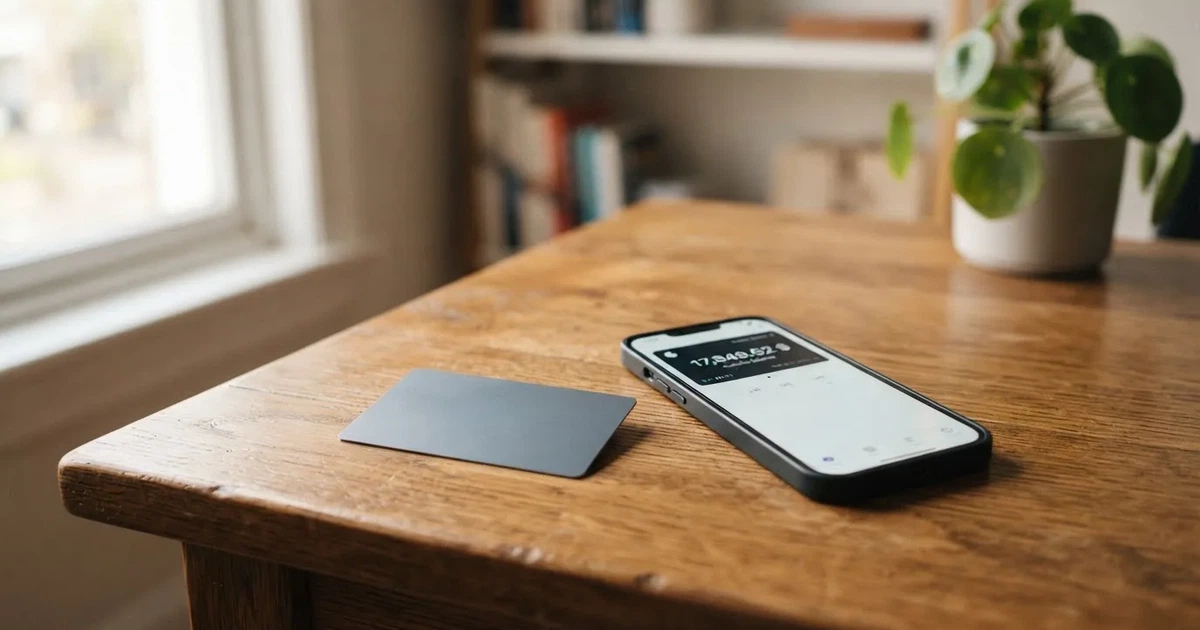
That number is worth reading with its parts attached, because the card is genuinely strong in two places and weak in one. Top-up options score a perfect 10/10 — eight networks, two stablecoins, and seven fiat rails depending on where you live. Everyday use scores 9/10 for a Visa Signature in virtual and physical form with mobile wallets. Against that, reliability and complaints comes out at 5/10, and the reason is not fussiness about minor things: the operator is a Delaware company that says outright it is not a bank, the issuing bank is not named on the public pages, and a third-party review site says the “0% commission” and “25% cashback” advertising is widely regarded as misleading. One of the two cards we compare scores 5.2 and another 4.2, so the gap is real, but so is the gap between the marketing and the terms.
Who this suits, then? Someone who already holds stablecoins on several networks and wants a Visa number that behaves like an ordinary card — paying a subscription, a hotel, a shop. The card has no monthly fee listed and its balance cannot overdraw, so it is closer to a prepaid travel card than to a bank account. Who it does not suit: anyone who wants deposit insurance, a named EU or UK issuer, a card they can load with fiat from anywhere, or a published schedule of spend limits and chargeback rights. If you are choosing a main everyday card, or you have money you cannot lose access to, this is not that.
| Criterion | Mark | Why |
|---|---|---|
| Who can get it | 9 / 10 | Works in 200+ countries and territories where Visa is accepted; availability depends on local regulations and partner coverage |
| Cost | 7 / 10 | Virtual Visa activation 5.00 USDT, physical from 100.00 USDT; crypto top-up free; card payments 1.5%; ATM 1.5% + 1 USDT |
| Top-up options | 10 / 10 | USDT or USDC on Tron (TRC-20), Ethereum, BNB Smart Chain, Polygon, Arbitrum, Optimism, Base, Solana; plus fiat via ACH, SWIFT, SEPA, PIX, SPEI |
| Reliability and complaints | 5 / 10 | Karta Finance Inc., not a bank, issuer not named; Trustpilot 3.9 from 25 reviews, complaints about high fees; unofficial: “0% commission” and “25% cashback” called misleading |
| Everyday use | 9 / 10 | Visa Signature virtual and physical, Apple Pay and Google Pay, ATMs worldwide |
| Total | 7.9 / 10 | Strong funding and everyday use, held back by an unnamed issuer and thin published detail on limits, currency and dispute handling |
The conditions described here are current as of October 28, 2026.
Will they give you the card?
Yes, broadly — Karta says it works “in 200+ countries and territories where Visa is accepted,” and its own caveat is the honest one: availability “depends on local regulations and partner coverage.” That sentence is doing a lot of work. It means the card is not blocked in a short list of countries; it also means nobody at Karta has published a list of countries where it does not work. If your situation is unusual — you live somewhere with strict currency controls, you have no local bank account, or your residence and your citizenship differ — the published pages will not tell you whether you qualify. You find out by trying.
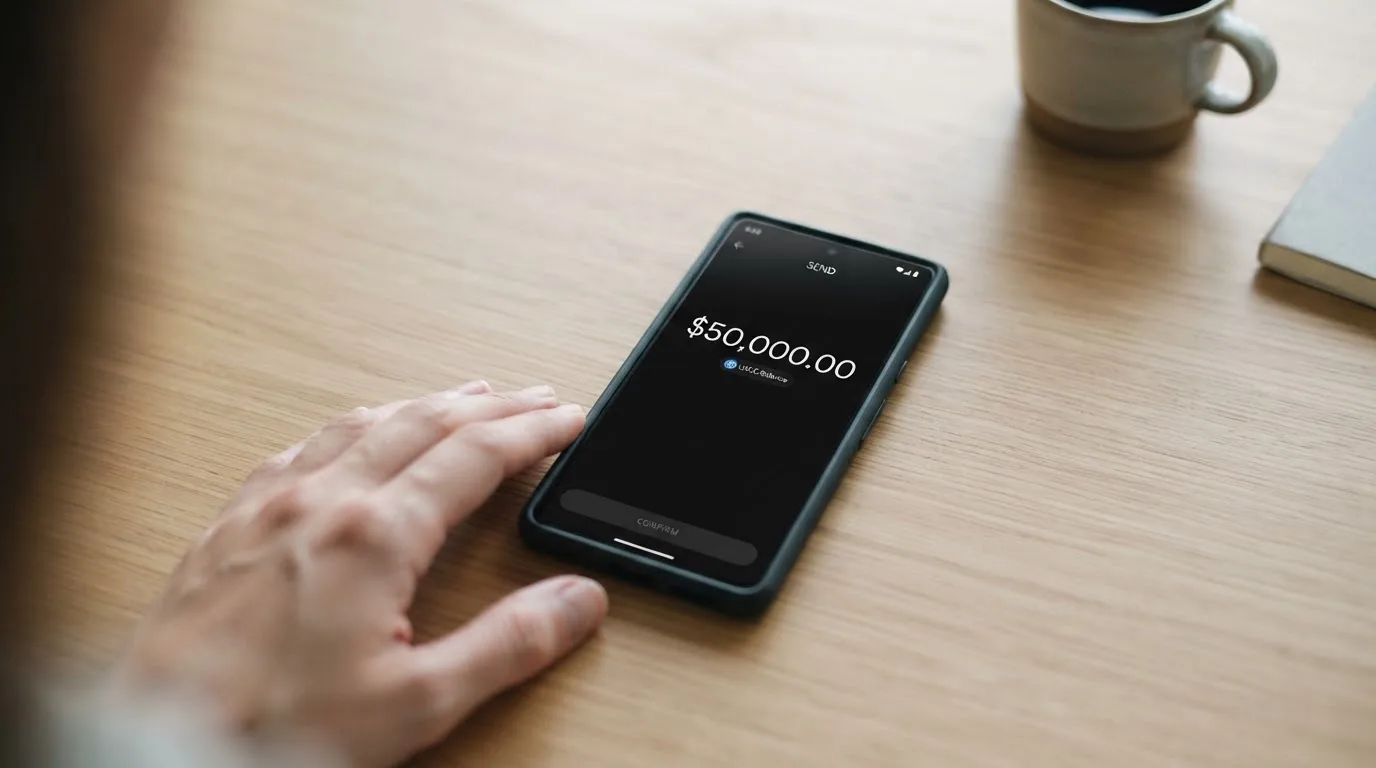
One thing the card does not state, and it is the question people ask first: citizenship versus residence. There is no published rule saying you must be a resident of the country you apply from, and no published rule saying any citizenship is excluded. Both are simply not stated. Sanctions screening, where it applies, is a matter for the partners Karta names only as “regulated financial and card-issuing partners,” and those partners are not identified.
For a card aimed at people who cannot easily open an ordinary bank card, that vagueness is the whole product in one line. You are not being declined against a nationality rule; you are being assessed against rules you cannot read. Treat “works in 200+ countries” as a statement about reach, not as a guarantee for your specific case.
How to get it
Three steps, and the first one is where the friction is. You start the Karta Telegram bot, complete a “quick verification (it takes up to 5 minutes),” and then top up to activate the virtual card. The verification happens in the app inside Telegram, and the card is delivered in the same place. There is no separate website application flow described, and no mobile app listing on the card’s own pages.
What the public pages do not state about that verification: which documents are required, what age you must be, whether there are different verification levels, what each level unlocks, or why a person might be rejected. The claim is simply that it is quick. One important caveat: “quick” describes the time it takes when it works, not the time it takes when a document is rejected and has to be resubmitted. Budget for a second round.
There is a detailed third-party description, and it is worth reading precisely because it is not from the card. An unofficial listing says “ID Verification” requires an email address, a phone number and an identity document, and that proof of address and a selfie are not required (per Crypto Cards, no date shown). That is a useful expectation-setter for the five-minute claim, but it is not confirmed by Karta, and the requirements may have changed since whoever wrote it did. Expect a document; do not plan a trip to a notary.
The card itself is Visa Signature, in two forms: virtual and physical. The card currency is not stated. Physical card activation starts at 100.00 USDT, and the pages say nothing about which countries it ships to, how long delivery takes, whether delivery is charged, or what a replacement costs if you lose it. Those are ordinary questions with no published answer, and if a lost physical card matters to you, ask support before you order one.
Fees: what it really costs
The fee schedule is short, and two of its numbers deserve a second look. Virtual Visa activation is 5.00 USDT; the FAQ renders it as “30 USDT 5 USDT”, apparently an old price struck through, so check what you are actually charged at the moment of payment. Physical starts at 100.00 USDT. Virtual accounts are free and no monthly fee is listed — but also not explicitly promised as zero, so treat it as “no fee you have heard of” rather than a guarantee.

Card payments cost 1.5%. That is the number to build your mental model around, because it is the fee you pay most often and the one that decides whether the card is worth keeping for routine spending. The crypto top-up itself is free. Sending to external crypto wallets costs the network fee only.
| Fee or limit | What the card states |
|---|---|
| Visa Virtual activation | 5.00 USDT (FAQ shows “30 USDT 5 USDT”, apparently the old price struck through) |
| Visa Physical activation | from 100.00 USDT |
| Virtual accounts | free |
| Monthly fee | none listed |
| Crypto top-up | free |
| Card payment | 1.5% |
| SEPA | 1.5% + EUR 2 |
| SWIFT (USD) | 1.4% + $2 |
| Send to crypto wallet | network fee only |
| FX fee | separate from this — not stated |
| Card currency | not stated |
| ATM | available worldwide; 1.5% + 1 USDT |
| ATM free allowance | not stated |
| Daily limit | not stated |
| Monthly limit | not stated |
| Minimum top-up | not stated |
| Tiers | none on the site; only Visa Virtual and Visa Physical |
| Restricted merchant categories | not stated |
| Withdrawal to bank | “coming soon” |
Three ordinary payments
A coffee costing 4.00 EUR. Card payments are 1.5%, so the fee is 0.06 and roughly 4.06 leaves the balance — plus, if you fund the card in a currency other than the one the merchant charges, whatever the FX cost turns out to be, which the card does not publish. You will not know from the website whether you are already being quoted in your own currency.
A monthly subscription of 20.00 USD. That is 0.30 in fees, every month, on one recurring payment. On a subscription you use daily, a 1.5% card fee is the single largest cost of this arrangement and it compounds quietly.
A 200.00 EUR hotel deposit pre-authorisation. The 1.5% fee applies, so 3.00, and a declined or held authorisation can sit on the balance for days. Holds of up to seven days are ordinary in card payments generally, and there is no published rule here saying Karta releases them faster.
The pattern across all three: the 1.5% is knowable, the FX layer is not, and that is the gap to plan around. If you spend large amounts in a currency other than your funding currency, you are paying a fee the card does not disclose.
How to top it up
This is the strongest part of the card, and it earned a 10/10 for a reason. USDT or USDC on eight networks: Tron (TRC-20), Ethereum, BNB Smart Chain, Polygon, Arbitrum, Optimism, Base and Solana. That list matters more than it looks. Holding USDT on Tron and on Solana and paying the same 1.5% either way means you can send from whichever is cheapest at the moment instead of paying to move tokens first.
Fiat rails sit alongside, varying by country: ACH, SWIFT, domestic wire in USD, SEPA in EUR, PIX in BRL, bank transfer in COP and SPEI in MXN. Which of these you can actually use depends on where you are, and the page does not map countries to rails.
The mechanics of a crypto top-up are simple — send the token, the balance appears. The mechanics of *which* token you send are where people lose money. Two constraints are worth knowing before your first transfer, and neither is Karta-specific:
- Circle stopped supporting USDC on Tron in February 2024, so “USDC over TRC-20” is not a native option. If you hold USDC on Tron, that is a wrapped or bridged asset, and sending it to an address expecting a different network can be lost or need manual recovery.
- ERC-20 transfers are paid in ETH. A wallet holding USDT with no ETH in it cannot send on Ethereum. That is a network rule, and it produces a failed transaction that looks like a Karta problem and is not.
Blockchain transfers are irreversible. A deposit sent on a network the provider does not support, or to an address belonging to a different network, can simply be gone, and recovery is a matter of manual support help with no guarantee.
Withdrawals work in one direction. You can send out to external crypto wallets at network fee only. Bank withdrawals are marked “coming soon”, so at the time of writing the practical exit is a crypto wallet. What happens to a remaining balance if you close the account is not stated — one user query is literally “how to delete Karta account”, and the answer on the page is not published. Ask before you close anything.
Paying with it every day
In the shops, Karta behaves like an ordinary Visa: “Compatible with Apple Pay, Google Pay,” and ATMs with “global ATM cash access.” Physical card plus virtual card plus both mobile wallets covers the normal range of situations — a virtual card for subscriptions, a physical one for anything that needs to be handed over, phone pay for a queue.
Two nice details that matter quietly. Apple Pay replaces the card number with a device-specific number stored in the phone’s Secure Element, not on Apple’s servers, and each payment carries a one-time code — so using the phone pay path is meaningfully different from handing over a number. And the issuer can restrict a tokenised number to specific channels, such as blocking it on magnetic stripe, phone or website use.
What you will not find: any restricted merchant categories. Gambling is the usual one — MCC 7995 covers casinos, betting and lotteries, and many issuers block it on specific cards by policy rather than by law, with the list differing per issuer. Karta does not say whether it does. So do not use this card for that, and do not assume it will decline. Related: some merchants apply extra scrutiny or decline prepaid and foreign-issued cards, because a lookup of the card’s first six or eight digits reveals the issuer and its country. Address verification, which compares the street number and postcode you type at checkout with the issuer’s records, is mainly offered in the US, Canada and the UK and is generally unavailable for foreign-issued cards. That is the most likely reason for a decline you did not expect, and it is a property of the payment network, not a fault in the card.
Cashback is claimed, with the slogan that “the more they spend, the more they earn.” The rate is not stated and neither is the currency it is paid in. Referral rewards come as KARAT points at 1 KARAT = 0.01 USDT. Treat the cashback as unquantified until you have seen a statement showing it; a third-party site goes further and says the cashback is paid in an illiquid token, which is another reason not to build a plan on it.
Disputes are the quiet gap. If a payment goes wrong — goods never arrived, charged twice, a charge you do not recognise — nothing on the public pages explains how to raise it, what evidence is needed, or how long it takes. A chargeback is a refund ordered by the issuer, with reason codes such as fraud, duplicate billing or goods not received, so the machinery exists at network level; whether Karta’s unnamed issuer will use it for you is simply not published. If you spend large sums, that is worth asking about before you spend large sums.
What can go wrong
Start with the company, because this is where the 5/10 comes from. The operator is Karta Finance Inc., 221 W 10th St, 4th Floor, Wilmington, DE 19801, USA. It says itself that it is “not a bank,” and it is not FDIC insured. The issuing institution is not named — the pages refer only to “regulated financial and card-issuing partners.” Licences are not stated.
Read that combination carefully, because it is the single most important thing on this page. A Visa number exists only because a licensed issuer put its programme behind it, and that issuer’s country, licence and safeguarding rules determine what happens to your balance if the operator has a bad quarter. Karta will not tell you who that is. Safeguarding of funds — segregated accounts, insurance — is not stated. The listed security measures are real but modest: a self-custody wallet, 3-D Secure, encrypted transactions and PIN protection. Two things you would expect on a mainstream card are not mentioned anywhere: two-factor authentication on the account, and an instant card freeze. If your card is stolen, the freeze button is the feature you miss most.
The complaint record is thin, and thin is itself information. Trustpilot shows 3.9 out of 5 from 25 reviews — a small sample, where one review can move the figure a long way. The themes reported are high fees, and too little information before registration. That second one connects to everything above: the limits are not stated, the currency is not stated, the FX fee is not stated, the cashback rate is not stated, and the dispute process is not stated.
On the advertising specifically, treat it as a claim rather than a term. A third-party aggregator (cryptocards.so, unverified) scores Karta Virtual Visa 4.0 out of 10 and says the “0% commission” marketing is flagged as deceptive. Another listing (Crypto Cards, no date shown) says the “0% commission” and “25% cashback” claims are widely seen as misleading, that cashback is paid in an illiquid token, that non-US users face extra fees, and raises privacy concerns. Against the published schedule — 1.5% on card payments — a “0% commission” line is not describing anything in the fee table. This is not me accusing Karta of lying; it is me telling you to read the fee table and ignore the banner, because only one of the two is a term.
Two more things a third party reported, both undated and unconfirmed: an Android app rating of 3.0 stars, and daily and monthly spending described as unlimited on Karta Virtual Visa with a $25,000 daily limit on a “Personal Visa Signature”. The same listing claims ATM withdrawals are free and unlimited, which directly contradicts the official 1.5% + 1 USDT. When a secondary source contradicts the card’s own page, believe the card’s page — and note that the official page still does not state your limits.
Bigger-picture risk worth naming: even if you choose well, crypto cards as a category can be switched off. Visa terminated its global agreements with FTX on 13 November 2022 and the FTX US debit card was wound down by its issuer. WaveCrest, a Visa issuer that supplied crypto card brands, was suspended by Visa in Europe in 2018, closing all WaveCrest-issued programmes. Closures follow a pattern — notice, then spending and loading stop, then you are asked to withdraw remaining balances. Treat any balance here as money you can access today, not money parked for next year.
Support is in-app chat, email at [email protected], a Help Center and Telegram. For a card issued by an unnamed partner through an unnamed issuer, “does support actually answer” is a reasonable thing to test in week one with a small question, before you rely on it.
And the balance question: a card funded from crypto sits in a self-custody wallet until you spend. That is better than leaving funds with a custodian, where you depend entirely on the provider — the sector’s record includes Mt. Gox (about US$350 million reported stolen 2011-2014), Coincheck (about US$400 million, 2018) and Ronin Network (US$625 million, 2022). But self-custody moves the risk onto you: a lost seed phrase, typically 12 to 24 words, and anyone holding it can restore the wallet and spend everything; transfers are irreversible; and phishing or clipboard-hijacking malware that swaps a copied address takes your deposit with no built-in recovery. On a self-custody card you keep the keys, so you also keep the loss.
What to take instead
Three alternatives came up in the same category, all rated lower, but each fails in a different place — and one of them fails in a way that might suit you better.
MaxSwap, 5.2 / 10. Virtual Mastercard only. The card costs 50 USD and needs a 25 USD first deposit, with total issuance listed at 77.125 USD. Top-up is 4.5% + $1 — far worse than Karta’s free crypto top-up — and transactions are 0.25 USD + 0.4%, which can be cheaper for small everyday payments than Karta’s flat 1.5%. It accepts a long list of coins (ADA, ALGO, AVAX, BCH, BNB, BTC, DOT, ETH, HBAR, HT, KRRX, LINK, LTC, MATIC, NEAR, SHIB, SUSHI, TON, TRX, UNI, USDC, USDT, XLM, XRP) but no network list, which is the practical gap: on Karta you choose the network; here you do not know what you are choosing. No cashback mentioned. The site claims no geographical restrictions, but who qualifies is not stated.
Tegro, 4.7 / 10. Virtual Visa, one-time 13 USD issue fee, no subscriptions or monthly fee. Minimum card amount 50 USD — the site’s own example: a 50 USD card costs 65 USD in total. Deposit fee is 4% of the amount. Funding is USDT on Tron (TRC-20) only, so anything on another network must be converted to TRC-20 first, at the cost of that conversion. That single fact rules it out for anyone holding on Solana, Base or Arbitrum, and for anyone who wants to choose networks by cost. No cashback mentioned. It works “wherever Visa is accepted”; who qualifies is not stated.
Worldwide, 4.2 / 10. A Russian-language Telegram mini-app, and the interesting one because it solves a problem Karta does not. It is ordered and topped up “from Russia without a VPN,” with top-up by SBP (Russia’s Fast Payment System) from any Russian card or account, credited in 1-3 minutes, and no transfer fee. That is a genuinely different funding route from Karta’s crypto-only free top-up. The card is virtual Mastercard, with tiers Standard (from 2,900 RUB/year), Premium (from 3,900), Promo (2,390 RUB issue, 0 RUB maintenance in the first year, 0% top-up fee) and Business (from 12,900). Operations cost 0.00 USD per card operation and FX is “close to exchange/central bank rate” with the rate shown before top-up and no percentage given. Its weaknesses: it is built around one country’s rails, the pricing is annual rather than per-transaction, and its App Store app lists no amounts — one user review there claims a 20 USDT card fee, unverified.
| Karta | MaxSwap | Tegro | Worldwide | |
|---|---|---|---|---|
| Score | 7.9 / 10 | 5.2 / 10 | 4.7 / 10 | 4.2 / 10 |
| Card | Visa Signature, virtual + physical | Mastercard, virtual only | Visa, virtual only | Mastercard, virtual |
| Issuance | 5.00 USDT virtual; physical from 100.00 USDT | 50 USD with 25 USD first deposit; 77.125 USD total | 13 USD one-time | from 2,390 RUB (Promo) |
| Monthly fee | none listed | not stated | none (“no subscriptions”) | Promo 0 RUB first year |
| Crypto top-up | free | 4.5% + $1 | 4% of amount | Promo 0% (SBP) |
| Card payment | 1.5% | 0.25 USD + 0.4% | not stated | 0.00 USD per operation |
| FX | not stated separately | no separate rate; conversion costs apply | not stated | close to exchange/central bank rate |
| Networks | 8 networks, USDT and USDC | long coin list, no network list | Tron (TRC-20) only | USDT TRC-20; SBP for Russia |
| Cashback | claimed, rate not stated | not stated | not stated | not stated |
The honest summary: none of the three beats Karta on the combination of funding routes and published everyday costs, and Karta’s 1.5% is not unusually bad for the category. But Tegro may be cleaner if your whole balance sits on Tron and you want a simpler, cheaper fee list; MaxSwap may win if you make many small payments; and Worldwide is the only one of the four that solves the fiat-top-up-from-a-domestic-bank problem, if that is the problem you have.
Who I would recommend it to
I would recommend Karta to someone who already has stablecoins and wants to spend them at ordinary places without converting through an exchange first. That person gets a Visa Signature, virtual and physical, mobile wallets, free crypto top-ups from eight networks, a 1.5% payment fee, no monthly fee listed, and an ATM in most of the world. For spending a stablecoin balance already sitting on Tron, Karta is the most direct tool in this comparison.
I would not recommend it as your primary card. The reasons are all the same three, and they do not go away with careful reading: the issuer is not named, the operator is not a bank and is not FDIC insured, and there is no published schedule of limits, FX fees, cashback rates or dispute handling. Add a 3.9-from-25 Trustpilot score and an aggregator calling the “0% commission” claim deceptive, and you have a card fine for subscriptions and travel and travel-adjacent spending, and not fine for salary, savings or anything you would be upset to lose access to.
Two specific profiles. If you live in a country with a functioning banking system and can open an ordinary card, this adds friction rather than removing it. If you are somewhere a bank card is hard to get — this is the intended case — then Karta’s real risk is not the 1.5%, it is that your money sits with a Delaware company whose issuer you cannot name, and you should size your balance accordingly.
For anyone who needs top-ups via SBP from Russian cards, Worldwide remains an alternative to consider, offering a funding route Karta does not support.
Frequently asked questions
What is Karta card?
Karta is a Visa payment card sold through a Telegram bot rather than a banking app. You verify in Telegram, fund the card with USDT or USDC from one of eight blockchains, and spend the resulting balance anywhere Visa is accepted, or push it into Apple Pay and Google Pay. It comes as a virtual card and a physical Visa Signature, and there is no monthly fee listed on its pages. The operator is Karta Finance Inc. in Wilmington, Delaware, which states it is not a bank.
Is Karta a bank, and who owns it?
No — Karta says so itself. The operator is Karta Finance Inc., 221 W 10th St, 4th Floor, Wilmington, DE 19801, USA, and the card states it is not FDIC insured. The bank that actually issues the Visa card is not named; the pages refer only to “regulated financial and card-issuing partners.” Licences are not stated. So you know who runs the service, but not who stands behind the card number.
Who can get a Karta card?
The card says it works in 200+ countries and territories where Visa is accepted, and that availability “depends on local regulations and partner coverage.” Citizenship versus residence is not stated, and no country list is published. There are no stated tiers or different verification levels, only a single “quick verification (it takes up to 5 minutes)”. Prepaid cards are generally for adults 18 and over.
How much does a Karta card cost?
Virtual Visa activation is 5.00 USDT — the FAQ shows “30 USDT 5 USDT”, apparently an old price struck through — and the physical card from 100.00 USDT. No monthly fee is listed and virtual accounts are free. Crypto top-up is free; card payments cost 1.5%; SEPA is 1.5% + EUR 2; SWIFT in USD is 1.4% + $2; ATM withdrawals are 1.5% + 1 USDT. Any separate FX fee is not stated.
Can I top up Karta with crypto, and on which networks?
Yes, and this is the card’s best feature. USDT or USDC on Tron (TRC-20), Ethereum, BNB Smart Chain, Polygon, Arbitrum, Optimism, Base and Solana, at no charge to Karta. Fiat top-ups are also offered where available: ACH, SWIFT, domestic USD wire, SEPA in EUR, PIX in BRL, COP bank transfer and SPEI in MXN. Check the network before sending — transfers are irreversible and a wrong-network deposit can be lost.
Is Karta card safe?
Honest answer: the security features listed are modest. Karta lists a self-custody wallet, 3-D Secure, encrypted transactions and PIN protection, but does not mention two-factor authentication or an instant card freeze. The operator is not a bank and is not FDIC insured, the issuing bank is not named, and fund safeguarding is not stated. Support is in-app chat, email and Telegram, so a quick test of how fast it answers is worthwhile early on.
Does Karta offer cashback, and is the “0% commission” claim real?
Treat both as advertising rather than terms. Cashback is claimed with “the more they spend, the more you earn”, but no rate or payout currency is stated; referral rewards come as KARAT points at 1 KARAT = 0.01 USDT. Against the published 1.5% card payment fee, a “0% commission” line describes nothing in the fee table, and third-party review sites call those claims misleading. Read the fee table, ignore the banner.
What are Karta’s limits?
Not stated, and this is a real gap. The card’s own pages publish no daily or monthly spend limits, no minimum top-up, no card currency, no separate FX fee, no restricted merchant categories and no ATM free allowance. An unofficial listing describes unlimited spend on Karta Virtual Visa and a $25,000 daily limit on a “Personal Visa Signature”, and claims free unlimited ATM withdrawals — which contradicts the official 1.5% + 1 USDT. Assume nothing is unlimited and ask support.
How do I withdraw money or close my Karta account?
You can withdraw to an external crypto wallet at network fee only, which is the practical exit today; bank withdrawals are listed as “coming soon”. What happens to a leftover balance if you close the account is not stated anywhere on the public pages. If you hold funds there, ask support directly before closing anything, and transfer the balance out to a wallet you control.
Which countries can use Karta, and does it work in the US?
Karta claims 200+ countries and territories where Visa is accepted, with availability depending on local rules and partner coverage — no country list is published. Because the issuer is not named, there is no way to check which licence your card actually runs under. One unofficial review mentions extra fees for non-US users, so assume any US-facing benefit is not available to you. Test with a small top-up before relying on it.
Virtual cards – cryptocardsearch.com
Content created by the «cryptocardsearch.com» team