
A stablecoin card with a narrow door: Japan only, and a fee table you have to ask for
 Available in US
Slash is a Visa payment card funded with USDC, and on paper it is a neat idea: load a dollar-pegged stablecoin in an app, then spend it at ordinary shops as yen. The problem is not the idea. The problem is how small and how specific the door is. The card is issued to residents of Japan aged 18 or over, physical cards are delivered inside Japan only, and a good deal of what you would want to know before opening an account — the conversion fee, the foreign-exchange fee, the ATM cost, the daily and monthly spending limits — is simply not published on the card’s own pages. I have read what is there, and what is not there is part of this review.
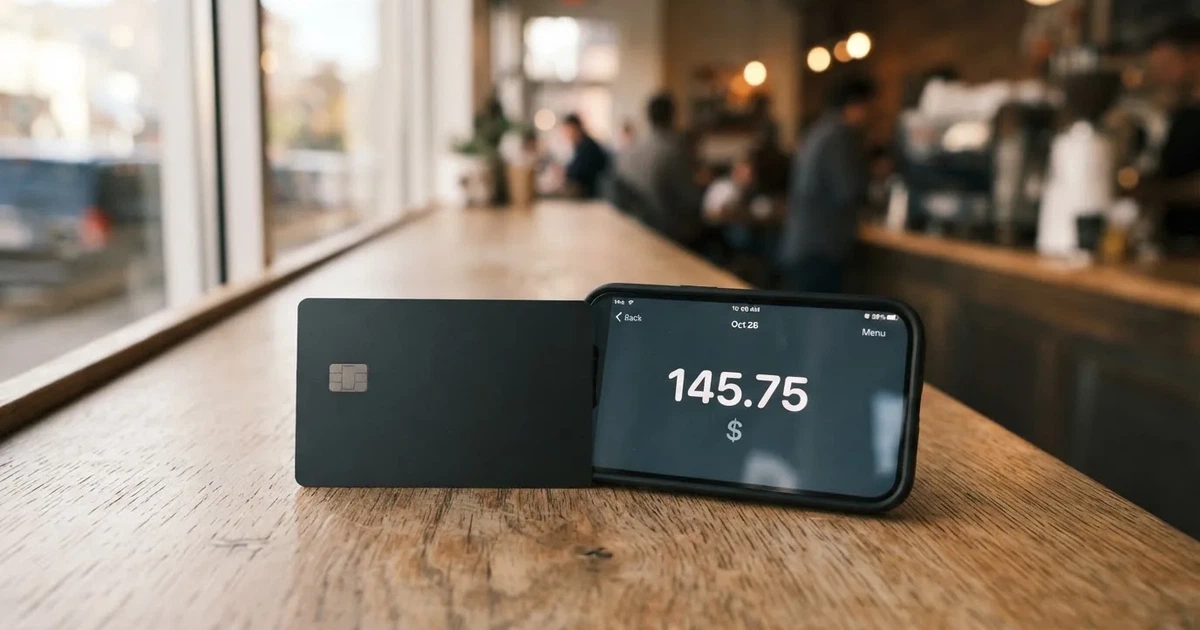
Conditions are current as of October 28, 2026.
The timing matters too. The programme was announced in February 2025, slipped from an earlier 2025 target to 20 April 2026, and then opened more widely later in the year. A card that has been public for a matter of months, run by a Singapore entity and issued through a partner called Iquitous with Orico on the BIN, has not yet built a public track record of complaints — nor of answers. News coverage is largely press-release material.
The verdict: 4.6 out of 10
The score out of ten is 4.6. That is not a rounding of something better; it is what the card earns when eligibility, cost transparency, top-up options, reliability and everyday use are weighed together. It is a card built for one job, done competently, aimed at a very specific person: someone living in Japan who holds USDC and wants to spend it in yen without converting it themselves first. If that is you, the picture brightens. If you are anywhere else, or you want to know exactly what a purchase will cost you in fees before you make it, this is the wrong card.
| Criterion | Mark | Why |
|---|---|---|
| Who can get it | 2 / 10 | Only residents of Japan aged 18+, and physical cards ship within Japan |
| Cost | 3 / 10 | Opening is free, a physical card is 70 USDC, a virtual one 20 USDC, but the conversion fee is not disclosed |
| Top-up options | 6 / 10 | USDC in the app on Solana and Ethereum; Base, Arbitrum and HyperEVM are marked “coming soon” |
| Reliability and complaints | 7 / 10 | No independent complaints found, but the launch moved twice and most coverage is press-release based |
| Everyday use | 7 / 10 | Instant virtual card, physical card available, contactless payments in stores; Apple Pay, Google Pay and ATM costs not disclosed |
| Total | 4.6 / 10 | A narrow, largely undocumented product for Japan residents |
Two numbers decide this score before anything else. Eligibility is 2 out of 10 because it is a residence-based door with no other door. Cost is 3 out of 10 not because the card is expensive but because it is half-described: you can see what you pay to open the account and to get a card in your hand, and you cannot see what you pay when the money actually moves. A stablecoin card lives or dies on that second number, because that is where the crypto meets the banking system and where the money disappears if the issuer takes a margin.
Will they give you the card?
Residents of Japan aged 18 or over, and only them. Physical cards are shipped within Japan. The rule is residence-based, not citizenship-based, which means the test is where you live rather than what passport you hold. That distinction matters if you are, say, a foreign national living in Tokyo with a Japanese address — you are inside the door. It also means that if you are a Japanese citizen living in London or Bangkok, you are outside it.
There is one identity step, described on the card’s own material as the Japanese personal-identity confirmation, honnin kakunin. News coverage of the launch mentions a driver’s licence and biometric authentication as routes into that step. What the card’s public pages do not say is how proof of address is handled, and there are no verification tiers — one check, one outcome. If your documents are refused or you cannot complete the check, there is no second tier to fall into; the account simply does not open.
Two things are worth keeping in view as background. Cards of this kind generally go to adults, and some issuers set higher minimum ages, but 18 is the floor here. And in the United States and the United Kingdom, programmes like this have had to shut sign-ups temporarily at times; residency rules in one market do not guarantee anything about your own. The question “is Slash available in my country” has, for now, exactly one answer.
How to get it
The route runs through the Slash App on iOS or Android. You create an account, complete identity verification in the app, and then either receive a virtual card instantly or wait for the physical one. The virtual card is the fast path, which matters if you want to start spending before a parcel arrives; the physical card is the one for shops that want to see plastic.
The card is a Visa. You may hold more than one virtual card and more than one physical card. The card’s own site calls it Japan’s first credit card usable with stablecoins, which is a marketing sentence rather than a banking category: what you hold, in practice, is a prepaid-style balance that draws on the USDC you have loaded. Merchants are paid in yen, per news coverage, even though you never hold yen yourself.
Two practical gaps sit alongside the route. Delivery timing and shipping cost for the physical card are not stated, so you cannot tell whether it arrives in three days or three weeks, or whether the 70 USDC is the whole cost. Replacement of a lost or stolen card is also not stated. And on identity, the card moved recently: CoinPost reports that the card opened to the general public on 15 October 2026 with a driver’s licence accepted as ID, which suggests the accepted documents were being widened as the year went on.
Fees and what a payment really costs
Here is where I would ask the most questions before opening an account. The card publishes what it charges for having it and does not publish what it charges for using it.

| Fee or limit | What the card states |
|---|---|
| Account opening | Free |
| Physical card | 70 USDC, or 35 USDC under a launch promotion |
| Virtual card | 20 USDC |
| Annual fee | Free in year 1, 20 USDC from year 2 |
| Conversion fee | Not stated |
| Foreign-exchange fee | Not stated |
| ATM fee | Not stated |
| Daily limit | Not stated |
| Monthly limit | Not stated |
| Apple Pay / Google Pay | Not stated |
| Blocked merchant categories | Not stated |
| Member tiers | “Coming soon”; perks unspecified |
The logic of the product is that you hold USDC and merchants are paid in yen, and the cardholder does not convert the stablecoin per purchase — the balance sits there and the network takes care of it. But somewhere between “you hold USDC” and “the shop is paid in yen” there has to be a conversion, and a rate, and possibly a margin. The card’s card currency and its foreign-spend fee are not stated either. For a Japanese resident spending in yen on a dollar-pegged balance, that missing number is not a detail. It is the difference between a fair exchange and a quietly expensive one.
Because the fee is unpublished, the honest way to price a payment is to assume there is one and treat it as unknown, not as zero. “Not stated” means the card’s public pages do not say; it does not mean the fee does not exist.
To show what an ordinary day looks like when the numbers are missing, here are three payments, and what you can and cannot say about what they cost. No figures are invented here — the point is the shape of the uncertainty.
| Everyday payment | What is known | What is not known |
|---|---|---|
| A store touch payment | Touch payment works in stores; you are charged against your loaded USDC balance | The conversion rate and any conversion fee taken from the purchase |
| An online subscription | A Visa card number can be used online; merchants are paid in yen | Whether the issuer declines a foreign-issued or prepaid BIN at the checkout, and whether 3-D Secure will challenge you |
| A purchase abroad on the physical card | The physical card ships within Japan; nothing about overseas use is promised | Any foreign-exchange fee, the card currency, and whether the merchant will look twice at the BIN |
Two more costs hide in plain sight. On-chain network fees — the gas or bandwidth your blockchain charges to receive your USDC — are paid by you at the point of deposit, not by the card, and they are separate from the card’s own fees. And a declined payment is not always cost-free: an authorisation that is refused can leave a hold on your funds that lingers for days before it falls away.
How to Top up
Top-up runs through the app, in USDC, on Solana and Ethereum. Base, Arbitrum and HyperEVM are listed as coming soon, which is a normal thing for a card to say in its first year and a real limit on which network you can use today.
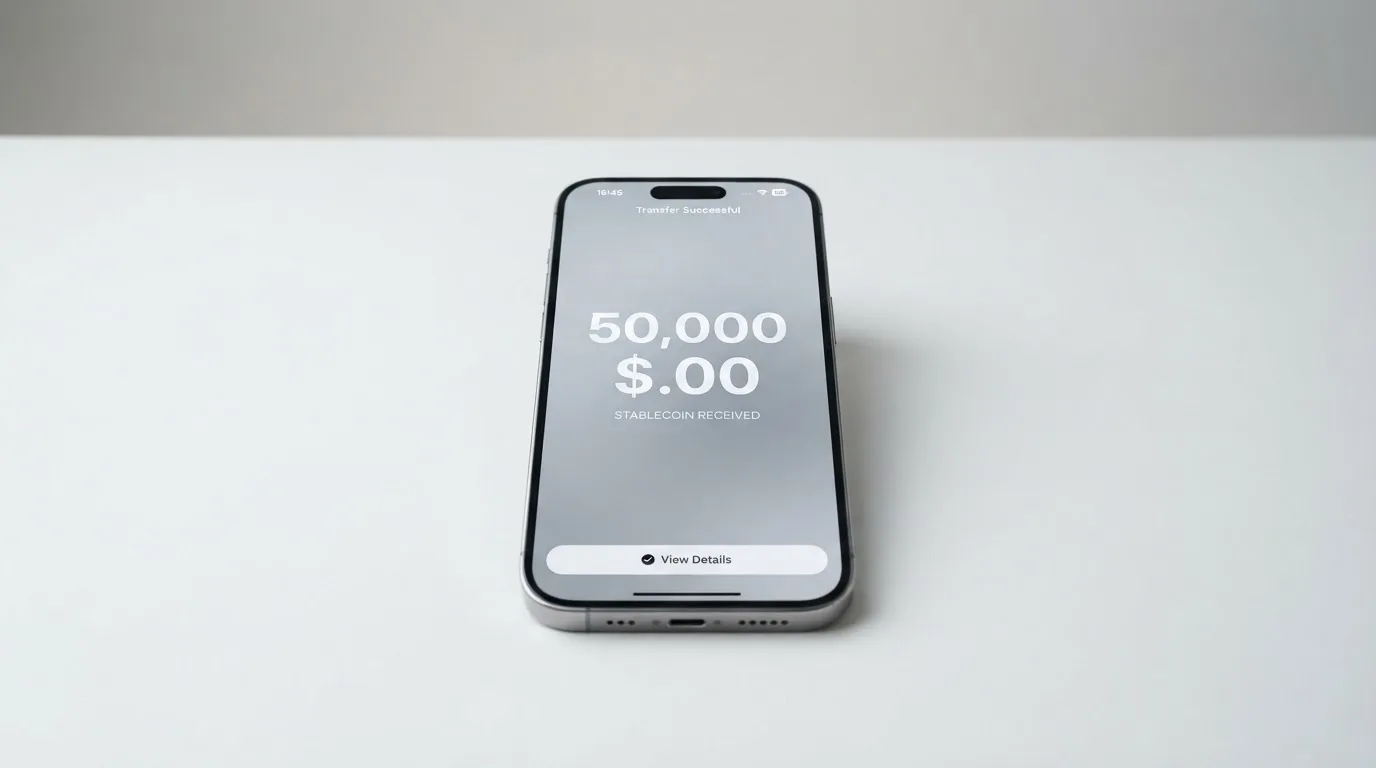
Getting the USDC to the right place is the part that punishes carelessness. Blockchain transfers are irreversible. If you send funds on a network the card provider does not support, or to an address belonging to a different network, the money can be gone or can need manual recovery by support with no guarantee attached. You also need the network’s own token for the fee: on Ethereum, gas is paid in ETH, so a wallet holding USDT or USDC with no ETH cannot send at all. On Tron, fees are paid through bandwidth and energy and often burn TRX. Check the network before you confirm, every time.
Beyond the two live networks, the card says nothing else about funding: no minimum top-up, no top-up fee, no way to buy USDC with yen inside the app, and nothing at all about withdrawing money back out. That last silence is the one I would want answered before I relied on this card for anything important. A card you can load but not clearly unload is a one-way instrument.
The choice of USDC matters less than you might expect, and more than you might hope. Circle describes USDC as backed by cash and cash equivalents, mostly in a government money market fund, with monthly reserve attestations; the BIS in July 2025 put roughly 90% of stablecoin market capitalisation into USDC and USDT together. But a stablecoin is a promise, and promises break: USDC briefly lost its dollar peg in March 2023 during the US banking crisis. You are accepting the issuer’s credit and the reserve’s quality every time you hold the balance.
Paying with it every day
Day to day, the card does the basic things. You can pay in stores by touch. The virtual card arrives instantly and the physical card exists. You can freeze the card in the app the moment it is lost or stolen, and the card’s own press material speaks of transaction monitoring and compliance with Japanese anti-money-laundering legislation. That is a genuine safety feature and it is the one most worth having.
What is not established is how well it fits a normal wallet. Apple Pay and Google Pay are not mentioned, and neither is any list of blocked merchant categories — a small thing that matters if you travel or bet, since card issuers block gambling categories by policy rather than by law and the blocked list varies by issuer. The app’s ratings in the iOS and App Store listings are not stated, which for a first-year app is itself information: there is no long history of user experience to lean on. And the help centre’s dispute and chargeback articles were not part of what the card publishes openly; only its categories — issuance guide, usage guide, terms and policies — are visible, in Japanese.
Then there are the rewards, and they are where you should be most careful about what counts as promise. No cashback is stated by the card. There is a referral reward when a friend issues a card and makes a first payment. Member tiers are “coming soon”, with the site saying only that they will be ranked by service usage. Unofficial reporting, which the card does not confirm, describes planned tiers of Virtual, Normal and Premium, with Premium cashback of up to 1.5%, and a referral worth about the equivalent of ten US dollars per friend after their first payment. Treat all of that as a rumour with a decimal point in it. Nothing in your budget should depend on it.
What can go wrong
The honest list here is longer than the card’s marketing suggests.
- You are not eligible. If you do not live in Japan, this is closed to you. There is no waitlist and no second route.
- The fee you never saw. The conversion and FX fees are not published, so the true cost of a purchase is unknown before you make it.
- A wrong network costs you the money. An unsupported network or a mismatched address is irreversible, and support recovery is not guaranteed.
- The launch history is not reassuring. The target moved from 2025 to 20 April 2026, then wider opening came around October 2026. Programmes slip, and a slipping programme is a programme with staffing and partner arrangements still in motion.
- Who is who is blurred. The issuer is Iquitous (iKitas) Inc.; the programme manager and brand owner is Slash Vision Pte. Ltd. in Singapore; Orico sponsors the BIN and supports the international brand. The card’s site does not state its issuing bank or licences. When money sits with one company, is spent through another and rides on a third, you should know which of them answers when something goes wrong.
- Holding risk. Who holds the funds behind your balance is not stated. If the answer is a custodian, you are trusting them, and the category has a history: Mt. Gox, Coincheck, Ronin. If the answer is a self-custody arrangement, the risk is yours alone — a seed phrase of twelve to twenty-four words that anyone who obtains can use, and no network-level recovery.
- Programme closure. Card programmes do close. Visa ended its global agreements with FTX in November 2022 and WaveCrest’s European programmes were shut in 2018. Closures typically mean a notice period, then loading stops, then spending stops, then you are asked to withdraw. Your balance’s fate during that window is worth thinking about now.
- Censorship is real even in stablecoins. Tether says it disables tokens on sanctions-listed wallets and has frozen funds tied to illicit activity. A “censorship-proof” claim about any stablecoin is not true.
- No public complaint history, in either direction. I found no independent reviews and no complaints, and no Trustpilot or Reddit discussion either. That is not a clean bill of health; it is a card too young to have a reputation.
- Tax is yours to work out. Spending a stablecoin is, in most frameworks, a disposal of an asset, measured at the value on the date of the transaction. I am not going to advise you on what you owe, but I would not treat each coffee as costless either.
Support itself is Japanese-language and email-based, with a Zendesk help centre, and its hours and other languages are not stated.
What to take instead
If you are in Japan, there is no real alternative in the same category here, which is itself the finding. If you are elsewhere, the comparison is between Slash and three other cards, none of which will admit you either — but all of which publish more. Let me walk you through the three side by side, because the differences are almost entirely about disclosure.
| Slash | MetaMask | KAST | Zeal | |
|---|---|---|---|---|
| Score | 4.6 / 10 | 7.1 / 10 | 6.1 / 10 | 6.1 / 10 |
| Who can get it | Residents of Japan, 18+ | Sign-up open in 45 listed countries; proof of residency; citizenship rule not stated | Residence-based country list shown at KYC; ID nationality can override residence | Spend in 150+ countries; issuance depends on eligibility |
| Card network | Visa | Mastercard | Visa (Standard, Platinum, Infinite) | Visa |
| Cost | 20 USDC virtual, 70 USDC physical | Virtual free; Metal $199/year | Standard $0, Premium $1,000/yr, Private $10,000/yr | Not published |
| Rewards | None confirmed | Cashback 1% virtual, up to 3% Metal; $FLY bonus | Up to 1.5–3% cashback by tier, points too | Up to 4% cashback in GNO |
MetaMask is the strongest of the three on my reading, at 7.1. It gives the virtual card away, charges “a minimal fee for each transaction” without publishing the amount on the pages I read, and lets you spend straight from a connected wallet on Linea, Base, Monad or Solana. What I like about it is not the crypto; it is that the terms are legible. Whether you are eligible, what it costs, what it pays back — the answers are on the page.
KAST is the most transparent on price and the most tangled on eligibility. Its membership tiers run from free to ten thousand dollars a year, its cashback up to three per cent, and it lists its fees in a way other cards do not: zero for stablecoin top-up, zero for spending in dollars, half a percent to one and three-quarter percent for non-dollar spending depending on where you live and which card programme you hold. On eligibility it asks you to look at a list at the verification step, and warns that living in a supported country is not enough if your identity document comes from a restricted region. That warning is a good sign. Most cards hide that reasoning; KAST prints it.
Zeal is the least forthcoming of the three — no fee schedule at all — but it earns its place by being simple: a Visa, no added FX fee, conversion at Visa’s wholesale rate, accounts in euros, dollars or pounds, and up to four per cent cashback paid in GNO. If you value a clean rate over a rich reward, it is the most honest of the three on currency.
Against all three, Slash’s problem is not that it is worse. It is that it is quieter. It asks for seventy USDC for a card and tells you nothing about what the card will cost you to use.
Who I would recommend it to
I would recommend Slash to exactly one reader. You live in Japan, you are over 18, you already hold USDC and would rather not sell it for yen before spending it, and you are comfortable with a card whose conversion fee you have not been told. For that person, a Visa that pays a Tokyo shop in yen, with an instant virtual card to start on and a freeze button if the plastic is lost, is a reasonable tool.
I would not recommend it to you if you live anywhere else, and I would not recommend it if your main question is what it costs. The card publishes its price for having it and is silent on the price of using it, and in this category that silence is the answer. The mark of a card you can trust with a balance is not that it charges nothing; it is that it tells you.
Frequently asked questions
What is Slash?
Slash is a Visa payment card that you fund with USDC rather than with a bank balance. You top up in the app on Solana or Ethereum, and stores are paid in yen. The issuer is Iquitous, the Singapore-based programme manager is Slash Vision Pte. Ltd., and Orico sponsors the BIN. It is a new product: issued from 20 April 2026, wider opening around October 2026.
How does Slash card work?
You create an account in the app, complete identity verification, and receive a virtual card instantly or a physical card by delivery in Japan. You load USDC onto the card and spend it by touch in stores or online. The conversion from your stablecoin balance to the yen a merchant receives happens behind the scenes; the cardholder is not converting per purchase.
Who can get the Slash card?
Residents of Japan aged 18 or over. The rule is based on where you live, not your passport, and physical cards are delivered only within Japan. There is no waitlist for other countries and no other route. Citizens of other countries living in Japan may qualify; Japanese citizens living abroad will not.
Does Slash require KYC?
Yes. Account creation and identity verification happen in the Slash App, in the Japanese honnin kakunin process, with news mentioning a driver’s licence and biometric authentication. How proof of address is handled is not stated, and there are no verification tiers, so one check is all there is.
What does the Slash card cost?
Opening the account is free. A virtual card is 20 USDC and a physical card 70 USDC, or 35 USDC under a launch promotion. The annual fee is free in year one and 20 USDC from year two. The conversion fee, foreign-exchange fee and ATM fee are not disclosed, and neither are daily or monthly limits.
How do I top up the Slash card?
You add USDC in the app, on the Solana or Ethereum networks; Base, Arbitrum and HyperEVM are marked “coming soon”. Minimums, top-up fees and buying USDC with yen are not stated. Send on the wrong network and the funds can be lost, since blockchain transfers are irreversible.
Can I use Slash card abroad?
Nothing is promised about overseas use. Merchants are paid in yen, the card currency is not stated, and no foreign-exchange fee is published, so you have no way to know what a purchase abroad costs. Some shops also decline prepaid or foreign BINs because the card lookup shows the issuer’s country.
Is Slash card safe, and is it a bank?
It is not a bank; it is a card programme with an issuing partner, and the card’s site does not state the issuing bank or licences. It offers an instant freeze in the app, transaction monitoring and compliance with Japanese anti-money-linger legislation. Who holds the funds behind your balance is not stated, so you cannot tell whether you are exposed to custodian risk or to your own key management.
Does Slash offer cashback or rewards?
No cashback is confirmed by the card. There is a referral reward when a friend issues a card and makes a first payment, and member tiers are “coming soon”. Unofficial reporting describes planned tiers with up to 1.5% cashback and a referral about USD 10 equivalent per friend after their first payment; that is not confirmed by the card and rates can change.
Is Slash worth it?
For a Japan resident who already holds USDC and wants to spend it in yen, the instant virtual card and the freeze button are worth having. For anyone who wants to know the cost of a purchase before making it, it is not: the conversion and FX fees are not published, and that is the number a card is judged on.
Wallet cards – cryptocardsearch.com
Content created by the «cryptocardsearch.com» team