
Digitap looks flexible on paper, but the missing company details and lukewarm user feedback stop it from scoring higher
 Available in US
Digitap is a crypto-to-fiat payment card that promises instant virtual issuance, a wide crypto menu and free plans to start. On paper it looks attractive if you want to spend digital assets without a bank account, especially in places where ordinary cards are hard to get. Once you dig into the costs, the support experience and the absence of named issuers or licences, the picture becomes less tidy. This review walks through what Digitap says it does, where the page leaves gaps, and who the card is realistically useful for. I am not affiliated with the company, I have not used the card myself, and everything below comes from Digitap’s own pages, official app store listings and what users have reported publicly. I will tell you where a number is firm, where it is unofficial and where the card simply does not say.

The conditions described in this article are current as of October 28, 2026.
Verdict
I give Digitap a score of 6.2 out of 10. The card is generous on the entry tier, broad on accepted countries and genuinely quick to set up, but it loses marks for not naming its issuer, hiding the licence, listing no FX or conversion percentages, and earning a poor 2.7 out of 5 on Trustpilot with repeated complaints of unanswered support tickets. The free Virtual plan is genuinely free, the conversion menu is wide, and the absence of foreign-transaction fees is unusual. The downsides are equally real: a deposit fee of 2.5% on the lower tiers, a $299 account-opening fee on Pro, a 24/7 support claim that contradicts the in-page table, an issuer the company will not name, and a token presale ($TAP) that dominates the marketing and has triggered “scam” complaints from users who confuse it with the card.

| Criterion | Score | Why |
|---|---|---|
| Who can get it | 9 / 10 | Stated as working in 180+ countries; specific countries of issuance are not named. |
| Cost | 5 / 10 | Virtual plan is free, includes 2 virtual cards; deposit fee 2.5% (Wallet, Virtual), 2.2% (Pro); Pro: $299 opening and $95/year; no foreign transaction fees. |
| Top-up options | 7 / 10 | Crypto (100+ assets) or fiat (USD, EUR, GBP); specific networks are not disclosed. |
| Reliability and complaints | 3 / 10 | Issuer and legal entity not named; Trustpilot 2.7/5, user reports of support silence and doubts over the token presale; app is in beta. |
| Everyday use | 7 / 10 | Virtual card available instantly, physical card offered, ATM withdrawals worldwide; unofficial user reports say Google Pay works, but Apple Pay does not. |
| Total | 6.2 / 10 |
The card suits you if you specifically want a free virtual card, can live with 100+ supported crypto assets at the checkout screen, do not need Apple Pay, and are comfortable funding an account with a provider that does not publish its issuer. It does not suit you if you need a transparent licence, predictable FX costs, responsive human support, or a card that works in Apple Pay on day one. If any of those matter, you will find a more honest fit among the alternatives I list further down.
Who Digitap will issue the card to
Digitap says on its home page that the service “works in 180+ countries worldwide”. It does not publish a country list anywhere I could find, and the footer adds the boilerplate that the site is “not directed at places where use would be contrary to local law”, which is not the same as naming the places it does serve. So you are told you are probably eligible, but the boundary is not drawn for you.
Age, identity documents and proof of address are not stated on the public plans page. Digitap only tells you that opening an account happens “in a few minutes” online. The plan table itself reveals the KYC ladder: the Wallet plan has no KYC, the Virtual plan needs a “light KYC”, and Pro, Premium and Business require full KYC. The exact documents, the processing time and the reasons an application might be rejected are not given, and the company does not tell you which countries can actually get a physical card versus only a virtual one. The Visa brand is mentioned, but the issuer bank is not.
Unofficial reporting from a third-party promotional article (a January 2026 piece associated with the $TAP presale and therefore not confirmed by Digitap) says the virtual card comes after a simple identity check processed in under 24 hours, and the physical card needs more verification including a passport scan and a selfie. Treat that as unofficial until the company says the same on its own pages.
The wider eligibility question matters most if you are in one of the regions that other crypto cards have explicitly excluded, such as the United States, the UK mainland, sanctioned states or parts of the Balkans. Because Digitap does not publish a list, the only way to find out is to start the sign-up and see whether the country selector accepts you. If you need certainty before you sign up, this is a gap.
How to sign up
The advertised flow is short: open a Digitap account online, pick a plan, and you receive a virtual card “instantly” or order a physical one. There is no waitlist, no invite code and no announced minimum balance. The card itself is a Visa with an EMV chip and PIN; you can get a plastic card with a custom design. Fiat accounts are denominated in USD, EUR and GBP.
Delivery countries, shipping times and the delivery cost of the first physical card are not stated on the public pages. The only figure that appears is a $40 replacement fee for a lost or damaged physical card on the Pro plan ($2.50 for a virtual one). If you are deciding between the free Virtual plan and the paid Pro plan, the unknown shipping cost is one more reason the lower tier is the safer first step.
The application sequence in practice, based on what the company and the unofficial source say, looks like this:
- Open an account at my.digitap.card or through the mobile app.
- Pick a plan: Wallet, Virtual or Pro (Premium and Business are “on request”).
- Complete the KYC level required by that plan — none for Wallet, light for Virtual, full for Pro and above.
- Receive a virtual card number immediately, or order a physical card.
- Customise the design of the plastic card and wait for delivery.
Because the company does not publish expected delivery times, plan on the realistic worst case rather than the optimistic marketing.
What the Digitap card really costs
Costs are the most important section of any card review, and this is also where Digitap is most uneven. The headline is friendly: a free Virtual plan, no foreign-transaction fees, free issuance for two virtual cards. The fine print gets harder.
| Fee or limit | Wallet | Virtual | Pro | Premium / Business |
|---|---|---|---|---|
| Account opening | $0 | $0 | $299 | On request |
| Recurring admin | $0 | $0 | $95 / year | On request |
| Virtual cards included | None | 2 free | 5 free | Unlimited (Premium) |
| Physical cards included | None | None | 3 free | Unlimited incl. metal (Premium) |
| Virtual card replacement | — | Free | $2.50 | Not stated |
| Physical card replacement | — | — | $40 | Not stated |
| Deposit fee (crypto/fiat) | 2.5% | 2.5% | 2.2% | 2.2% |
| Foreign transaction fee | None | None | None | None |
| Crypto conversion fee | Not stated | Not stated | Not stated | Not stated |
| ATM withdrawal fee | Not stated | Not stated | Not stated | Not stated |
| ATM free allowance | Not stated | Not stated | Not stated | Not stated |
| Withdraw to external wallet | 1% | 1% | 1% | 0% (Premium, Business) |
| Withdraw to external bank | N/A | 1% | 1% | 0% (Premium, Business) |
| Daily limits | “Medium Limits” | “Medium Limits” | “High Limits” | “No Limits” (Premium, Business) |
| Monthly limits | “Medium Limits” | “Medium Limits” | “High Limits” | “No Limits” (Premium, Business) |
| Support | Business hours | Business hours | Business hours | 24/7 (Premium, Business) |
There is also a toggle on the plans page offering a $15.99 monthly or $155 yearly option that is not mapped to any tier. The marketing says you can pay monthly, the tier table only shows annual figures, and the company does not explain how the two fit together. I would treat that toggle as needing clarification before you commit.
To make those numbers concrete, here are three everyday situations.
A $100 online purchase in your card’s base currency, paid from a USDT balance. The deposit to top up the card balance costs 2.5% on the Virtual plan, so $2.50 of the $100 you sent in is gone before the payment is even attempted. The marketing says there is no foreign-transaction fee, but the crypto conversion fee is not stated, so the spread between the spot rate and the rate the card applies is invisible. If that spread turns out to be 1%, you are paying $3.50 to convert and load $97.50 worth of buying power for a $100 payment, then a further unknown amount on the conversion itself.
A €40 dinner in a eurozone restaurant, paid with the card denominated in euros. No foreign-transaction fee, so the headline cost is the conversion from your crypto to euros at the time of payment. The page does not publish that rate. A real-world test in the app would show it before you confirm, but the official pages do not.
A $200 cash withdrawal from an ATM in another country. There is no foreign-transaction fee, but the ATM fee and the free allowance are not stated. If the ATM operator adds its own surcharge (common abroad) and Digitap adds its own, a withdrawal can become expensive without you noticing where the line was crossed. This is one of the clearer places where “fees not stated” matters in everyday life.
The cumulative effect is that on the free Virtual plan, you are paying a known 2.5% on every top-up, an unknown spread on every conversion, and an unknown ATM fee on every cash withdrawal. On Pro, the top-up fee drops to 2.2% and you get higher limits, but the upfront $299 plus $95 a year is only worth it if you spend enough that the lower deposit fee recovers the cost — the break-even sits somewhere around several thousand dollars of top-ups per year, depending on the conversion spread, which the company will not tell you.
Top up options
Digitap accepts crypto (100+ assets according to the home page) or fiat in USD, EUR and GBP. You pick the asset at checkout, you send it in, and it shows up on the card. That is the full description the company gives.
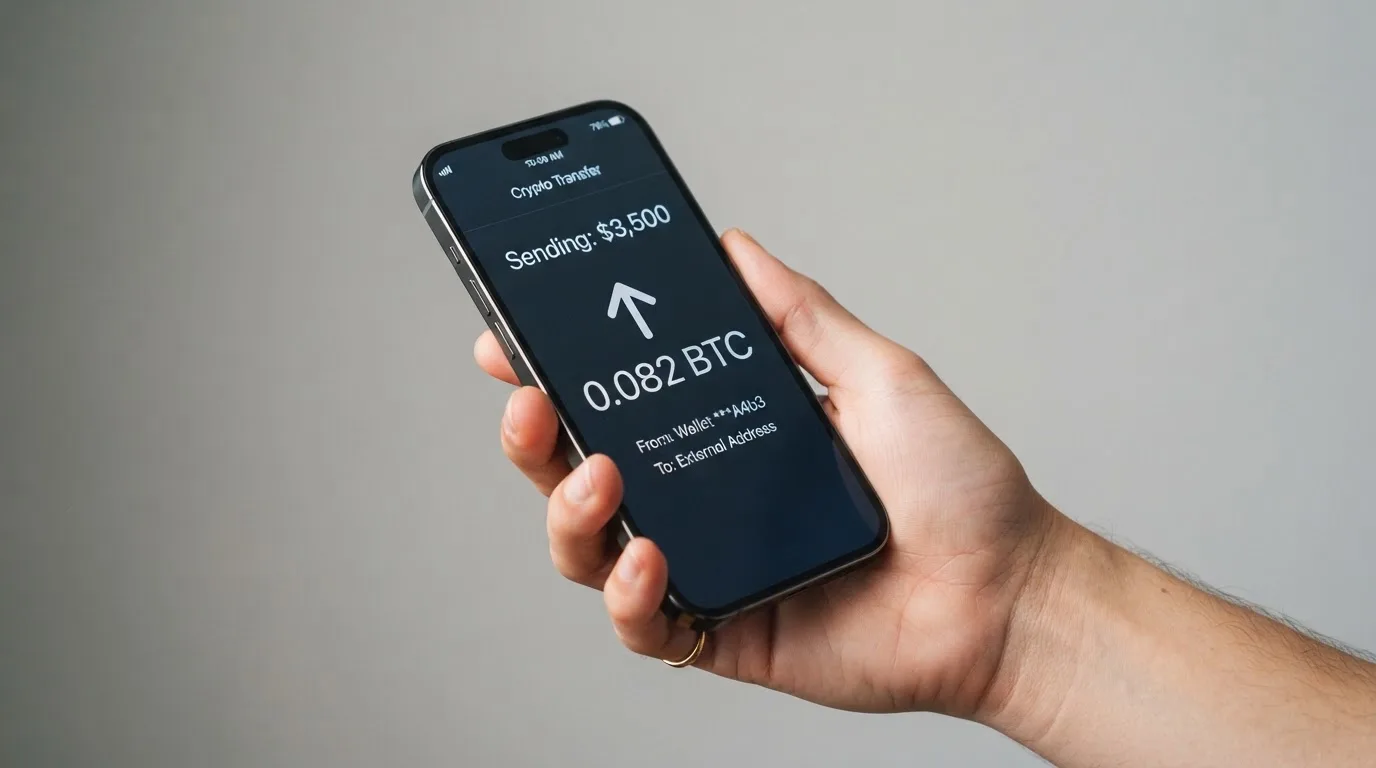
It is the part of the page I would push back on hardest before sending real money, because the networks and minimums are not stated. In a normal crypto card flow you choose an asset, you choose a network (ERC-20, TRC-20, Polygon, Solana, etc.), you copy a deposit address, and you send the funds yourself. If the address is for a network the company does not support, or you send the wrong token, the transfer is normally irreversible. The Digitap page does not tell you which networks are supported, what the minimum top-up is, who pays the network (gas) fee, or whether the fiat top-up fee beyond the 2.5%/2.2% deposit fee is anything else. You can find the supported assets and networks only by opening the app and looking at the deposit screen, not by reading the public plans page.
Fiat top-up is described in two words on the marketing site and not detailed anywhere I could find. The card holds USD, EUR and GBP accounts, so in practice you are likely funding the balance with a bank transfer or a card payment, but the fee, the cut-off time, the supported corridors and the KYC level required for fiat funding are not stated.
Withdrawal works the other way: from your Digitap account to an external crypto wallet is 1% on Wallet, Virtual and Pro and 0% on Premium and Business. To an external bank account it is 1% on Virtual and Pro, 0% on Premium and Business, and not applicable on Wallet. What happens to any leftover balance when you close the account is not stated.
If you are topping up from a stablecoin, the safest path is to start small, send a test transaction on the network shown in the deposit screen, and only then send the rest. That advice is general to crypto top-ups, not specific to Digitap, but it matters more here because the public documentation does not warn you.
Paying with the card every day
Once the card is loaded, the day-to-day experience is mostly standard Visa. You can use the virtual card for online payments the moment you receive the number; the physical card works at point of sale and at any ATM that accepts Visa worldwide, with crypto-to-fiat conversion at the time of withdrawal. The cards come with a PIN.
Mobile wallets are the first place everyday use stumbles. The official page does not say whether Apple Pay or Google Pay is supported. Unofficial reports from Trustpilot users (November 2025 and May 2026) say Apple Pay is not available, while Google Pay works (December 2025 and February 2026). Treat those as unofficial — they come from individuals reviewing the product, not from Digitap. If Apple Pay is essential to you, this is a meaningful gap, and the fact that the company has not confirmed support in over a year of public reviews is itself a sign.
Blocked merchant categories are not stated. Crypto cards often block gambling, crypto purchases, adult content or cash advances by default, and the company tells you nothing about which categories it blocks or allows.
Rewards are paid in $TAP, Digitap’s own token. The marketing describes them by plan: “basic cashback” on Wallet and Virtual, “high cashback” on Pro, and “up to double-digit %” on Premium. No percentages, monthly caps, qualifying transactions or staking requirements are given on the public pages, and the value of the reward is tied to the price of $TAP, which is also the token being sold in the presale that the marketing site heavily promotes. If you only want a card for spending, the reward rate being a single-token variable you cannot hedge is a real consideration.
The mobile app is in public beta. It is on iOS (iPhone iOS 12.0+, iPad and Mac M1) and on Android under my.digitap.card, and the official page calls it “the official beta version”. On the UK App Store storefront as of 2026-10-20 there is no rating shown — the listing says “not enough ratings or reviews” — and the Google Play rating is not readable on the page. That is not unusual for a beta, but it is worth knowing if you like to check reviews before installing.
Disputes, chargebacks and the procedure for a payment you did not authorise are not stated. You have to dig into the help centre or contact support to find out how a chargeback would work, and that is exactly the area where a card programme needs to be transparent. Here it is silent.
What can go wrong
This is where Digitap’s weakest numbers show up.
The company is described on the marketing site as “a fintech application powered by licensed financial partners”. The issuer, the registered entity and the licences themselves are not named on the public pages. That is not the same as a card that tells you, plainly, “we are issued by Bank X under EMI licence Y in country Z”. If a programme manager is the only name you can find, the only party you have a direct relationship with is that manager, and the issuing bank is one or more steps removed.
Trustpilot (read 2026-10-20) gives Digitap 2.7 out of 5 from 13 reviews over the last 12 months, with 54% of those reviews at one star. The themes are consistent and worth quoting as patterns rather than as any single user’s experience: no reply from support across several months in 2026, including after a $299 Pro upgrade; an unanswered refund request on the Pro plan; doubts about who runs the company and which regulator oversees it, sometimes phrased as “scam” claims that are tied to the $TAP presale rather than to the card itself; one user who said the website was unavailable in April 2026; reports that Apple Pay is not supported; and slow KYC. There are also positive notes, mostly about Google Pay working. There were no Digitap-specific complaints on Reddit or in the news that I could find, and the marketing site heavily promotes the $TAP presale, which is a separate product from the card — that distinction matters when reading user feedback, because complaints about the presale get mixed in with complaints about the card.
Security features are not stated on the plans page. There is no mention of two-factor authentication, card freeze, spending controls or the custody model. In a category where card programmes have been closed overnight (Visa ended its global agreements with FTX in November 2022; WaveCrest was suspended in Europe in 2018), the absence of any of these reassurances is a real risk factor. If the company cannot tell you how your account is secured, you have to assume the worst and design around it.
Support is the other weak point. The page says Digitap is “here to help 24/7 on email or submit a contact form”. The same plans page gives “Business Hours” for Wallet, Virtual and Pro, and 24/7 only for Premium and Business. Those two statements contradict each other, and the user reviews suggest that the practical answer is closer to “no answer at all” than “24/7”. The contact details on the page are [email protected], a contact form and an FAQ.
There were no dated licence announcements or programme-wide events on the official pages that I could find, and no Digitap-specific news incidents. That is not the same as “nothing has gone wrong”; it means I could not verify either direction.
The combined picture is that you are buying a card from a company that will not name its issuer, on an app that is in beta, with support that has a public track record of silence, while the same brand is selling a token presale on the same site. For some readers, that is fine. For others, it is a deal-breaker.
What to use instead
If Digitap’s gaps are the ones that bother you, three alternatives cover the same general use case (a crypto-funded payment card) with more transparency on at least one of the dimensions.
| Card | Score | Where it works | What it costs | Top-up | Rewards |
|---|---|---|---|---|---|
| RedotPay | 6.9 / 10 | Long list of unsupported countries (US, Russia, Cuba, Iran, Mainland China, plus 35 more); a separate list of 47 places where you cannot get a card (India, Indonesia, Morocco, Nepal, Singapore, Turkey) | Virtual card $10, physical $100, replacement $5–$10; RedotPay Pro $12.90/month or $129/year | On-chain crypto or buy in app with a credit card; USDT-TRC20 minimum 1 USDT; deposit to card free | 5 USDs welcome reward (spending only, 30 days) |
| Bitpanda | 6.5 / 10 | Euro-area residents with a verified Bitpanda account; Bankident users cannot order | First physical card free, each additional €10, reissue €5.90 (lost/stolen €9.90) | Spends from a chosen asset (crypto, precious metals or EUR) auto-converted to EUR; min payment €1 | 1% on crypto spending (page summary says “up to 2%”; unreconciled) |
| Wirex | 6.7 / 10 | “Worldwide (130+ countries)”; specific delivery fees for UK, EEA, Hong Kong, Singapore, Australia, New Zealand, Philippines, Taiwan; cash withdrawals not permitted in Singapore | Card issuance free in most regions; metal card order fee £45 (UK) or €45 delivery elsewhere; one-off £30 admin fee for terms violations | Spends from cash, stablecoins or crypto; SEPA / Faster Payments / ACH / PIX fiat deposit free | Cryptoback in WXT: 0.5% Standard, 3% Premium, up to 8% Elite; excludes ATM, gambling, crypto purchases, refunds, several MCCs |
RedotPay is the closest match in spirit: a Visa debit you fund with crypto, but with two transparent country lists and a published transaction fee of 1%. Bitpanda is the better fit if you live in the euro area and want a regulated European issuer; it does not work with Bankident users and there is no virtual card. Wirex is the broadest geographically and the most explicit on its rewards programme, though the fee sheet is light on FX and the “no FX fee” claim is contradicted in places.
If your main concern is a named issuer and a published licence, none of these is a perfect substitute; you would have to look at regulated European crypto card programmes such as those run by licensed e-money institutions, where the regulator is on the regulator’s own register. If your main concern is a free virtual card you can have today, Digitap’s Virtual plan remains competitive on price.
Who I would recommend this to
I would point a reader to Digitap if all of the following are true:
- You want a free virtual card, not a physical one, and you are happy to start at the Virtual tier.
- You specifically want 100+ crypto assets available at the checkout, and you are comfortable picking the network from inside the app.
- You can live with a 2.5% deposit fee on every top-up and an undisclosed conversion spread.
- You do not need Apple Pay.
- You do not need a named issuer, a published licence or 24/7 support.
- You are not investing in the $TAP token and you understand the marketing site mixes the card and the presale.
I would steer a reader away if any of the following apply:
- You are in the United States, a sanctioned country or a jurisdiction where you cannot verify the card is licensed.
- You need a clear dispute and chargeback procedure before you spend.
- You want a published conversion rate rather than a rate shown only in the app at the moment of payment.
- You need responsive support; the public track record here is poor.
- You want Apple Pay on day one.
If you fall in the first group, the Virtual plan is a reasonable way to start, and you can stop using it the moment the gaps start to cost you. If you fall in the second group, look at RedotPay, Bitpanda or Wirex for the same general use case with more transparent terms, or pick a card from a regulated EMI whose licence you can look up on the regulator’s register.
Frequently asked questions
What is the Digitap card?
Digitap is a crypto-funded Visa payment card. You load it with one of 100+ crypto assets or with fiat in USD, EUR, GBP, and you spend the balance anywhere Visa is accepted. The Virtual plan gives you an instant virtual card; the Pro plan adds a physical card and higher limits for a $299 opening fee and $95 a year.
Is Digitap a bank?
No. Digitap describes itself as “a fintech application powered by licensed financial partners” and does not name the issuer or the licence on its public pages. The card sits on top of a partner bank or e-money institution, not on Digitap itself.
Who owns Digitap?
The owner and the registered entity are not stated on the public pages I could find. The company does not publish an about page with a parent company, a regulator or a licence number.
Is the Digitap card available in my country?
Digitap says it works in 180+ countries, but it does not publish a country list. You only find out by starting the sign-up flow and seeing whether your country is accepted. The application is online, so the test is quick, but the lack of a published list is a real gap if you need certainty before you start.
How do I apply for the Digitap card?
Open an account at my.digitap.card or in the mobile app, pick a plan (Wallet, Virtual or Pro; Premium and Business are by request), complete the KYC level required by that plan, and you receive a virtual card number instantly. A physical card can be ordered on Pro and above.
Does the Digitap card require KYC?
It depends on the plan. The Wallet plan does not require KYC. The Virtual plan needs a “light KYC”. Pro, Premium and Business require full KYC. The exact documents, the processing time and the rejection criteria are not stated on the public pages.
How do I top up the Digitap card?
You send crypto (100+ assets) or fiat (USD, EUR, GBP) to the deposit address shown in the app and the balance is credited to the card. The supported networks, the minimum top-up and the party that pays the gas fee are not stated on the public plans page. The deposit fee is 2.5% on Wallet and Virtual, and 2.2% on Pro and Premium.
Is the Digitap card free?
The Virtual plan is free, with two free virtual cards. The Wallet plan is also free but does not give you a card. The Pro plan costs $299 to open and $95 a year and adds a physical card and higher limits. You also pay 2.5% (Virtual) or 2.2% (Pro) on every top-up, and the conversion and ATM fees are not stated.
Can I add the Digitap card to Apple Pay or Google Pay?
Unofficial user reports (Trustpilot, 2025–2026) say Google Pay works and Apple Pay does not. Digitap’s own pages do not confirm either, so the safest position is “Apple Pay unavailable, Google Pay available in practice” until the company says otherwise.
Is the Digitap card safe?
The plans page does not list security features such as two-factor authentication, card freeze, spending controls or a custody model. The issuer is not named, the licence is not named, the app is in beta, and the support track record on Trustpilot is poor. Treat the card as an experimental product, fund it only with what you can afford to lose, and do not store a balance you are not actively spending.
App and neobank cards – cryptocardsearch.com
Content created by the «cryptocardsearch.com» team