
A generous rewards card inside a narrow, US-only, convert-before-you-spend product
 Available in US
The Uphold card is not really a bank card in the ordinary sense. It is a Visa number attached to a crypto wallet, and it spends whatever balance sits in that wallet. That single fact explains almost everything you will like and almost everything you will not: the rewards are unusually generous because the card is built to make you hold and move crypto, the spending power is generous for the same reason, and everything is capped at $25,000 because the money behind it is not a bank deposit.
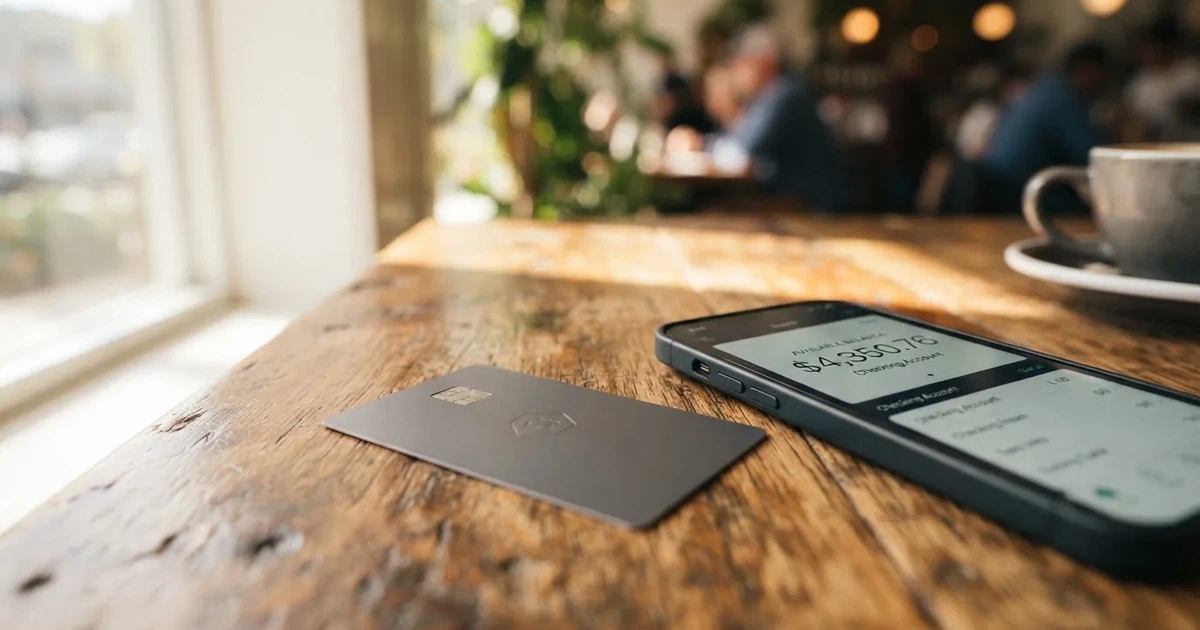
If you are a US resident who already holds a spread of digital assets, or who has been turned away by ordinary banks, this card does something few others do: it turns 300-plus assets plus a USD balance into ordinary purchase power. If you are anywhere else, or if you want a card that behaves like a normal debit card with a normal current account behind it, keep reading — the eligibility line is short and it is not negotiable.
The conditions described on this page are current as of October 28, 2026.
The score: 5.8 out of 10
I score the Uphold card 5.8 / 10. That is not a bad card. It is a capable product wrapped around a wallet, aimed at a narrow set of people, and its central weakness — who can actually hold one — is structural rather than something a support ticket can fix.
| Criterion | Mark | Why |
|---|---|---|
| Who can get it | 2 / 10 | Card page is US residents in states and Washington D.C. only; not in Louisiana, New York or US territories |
| Cost | 6 / 10 | Essential: $0 annual, $0 virtual, $4.99 plastic, FX 1.50%, ATM $2.95; Elite: $99.99 annual, FX 0%; BTC/ETH conversion spread 2.05% to 2.2% |
| Top-up options | 8 / 10 | Card spends the wallet balance: 300+ digital assets and USD, stablecoins highlighted; funded by bank transfer, PayPal or crypto; networks not named |
| Reliability and complaints | 6 / 10 | Issuer Cross River Bank (Member FDIC), programme run by Uphold HQ Inc.; Trustpilot 4.6 out of 5 on 27,602 reviews, but freezes lasting weeks and up to three months |
| Everyday use | 9 / 10 | Virtual and physical Visa, Apple Pay and Google Pay “when available”, ATM $2.95 on Essential and $0 on Elite |
The 9 out of 10 for everyday use is not decoration. Virtual and physical Visa cards, both mobile wallets, free ATM on the paid tier, and $25,000 of card balance is a genuinely well-equipped setup for daily spending. The 2 out of 10 for eligibility is what pulls the total down, and no amount of goodwill elsewhere recovers it.
Who this suits. US residents whose money is already digital assets, especially anyone who has spent 300-plus coins at once, and anyone who finds ordinary bank cards closed to them. The 2 percent XRP rewards on Essential are worth more than most cards’ headline cashback if you were going to hold XRP anyway.
Who it does not suit. Anyone outside the United States. Anyone who wants their money to behave like a bank deposit. Anyone who is uneasy about depending on a platform that holds the keys.
Will they give you the card?
Residence-based, US only. The card is for US residents in US states and Washington D.C., and it is not available in Louisiana, New York or US territories. There is no residency elsewhere on the pages I read, and no citizenship-versus-residence distinction stated — the gate is simply where you live.
That means: if you are reading this outside the fifty states and DC, stop here. There is no waiting list, no invitation tier, and no way to change the answer.
Within the United States, the more interesting question is what happens after approval. The card’s terms require an accurate real name, a valid US mailing address and a date of birth, and restrict the card to personal use. There is no credit check. The public pages do not state what identity documents are required, what proof of address is required, how old you must be beyond the usual adult threshold, what KYC tiers exist, or how long verification takes — the card simply says an Uphold wallet is needed and that setup takes under five minutes.
So the honest answer to “will they give me the card” splits in two. Eligibility is narrow and clear. Verification once you’re eligible is where the uncertainty lives, and I will come back to it in the risks section, because it is the single most common theme in complaints.
How to get it
The card is a Visa — virtual and physical. The Elite physical card is metal, the Essential physical card is plastic, and the card currency is USD.
Delivery needs a US mailing address. The pages do not state a delivery time or a shipping cost, which is exactly the sort of thing you want to know before you order. Expedited replacement is “not available” if a card is lost, stolen or damaged in transit. A replacement costs $4.99 on Essential and $29.99 on Elite, with one free replacement per year on Elite.
There is no credit check, and you need an Uphold wallet before the card makes sense — the card spends the wallet, not a separate card balance. Upgrading Essential to Elite carries a $0 fee, so you can start on the free tier and move up once you know whether the rewards are worth $99.99.
Fees: what it really costs
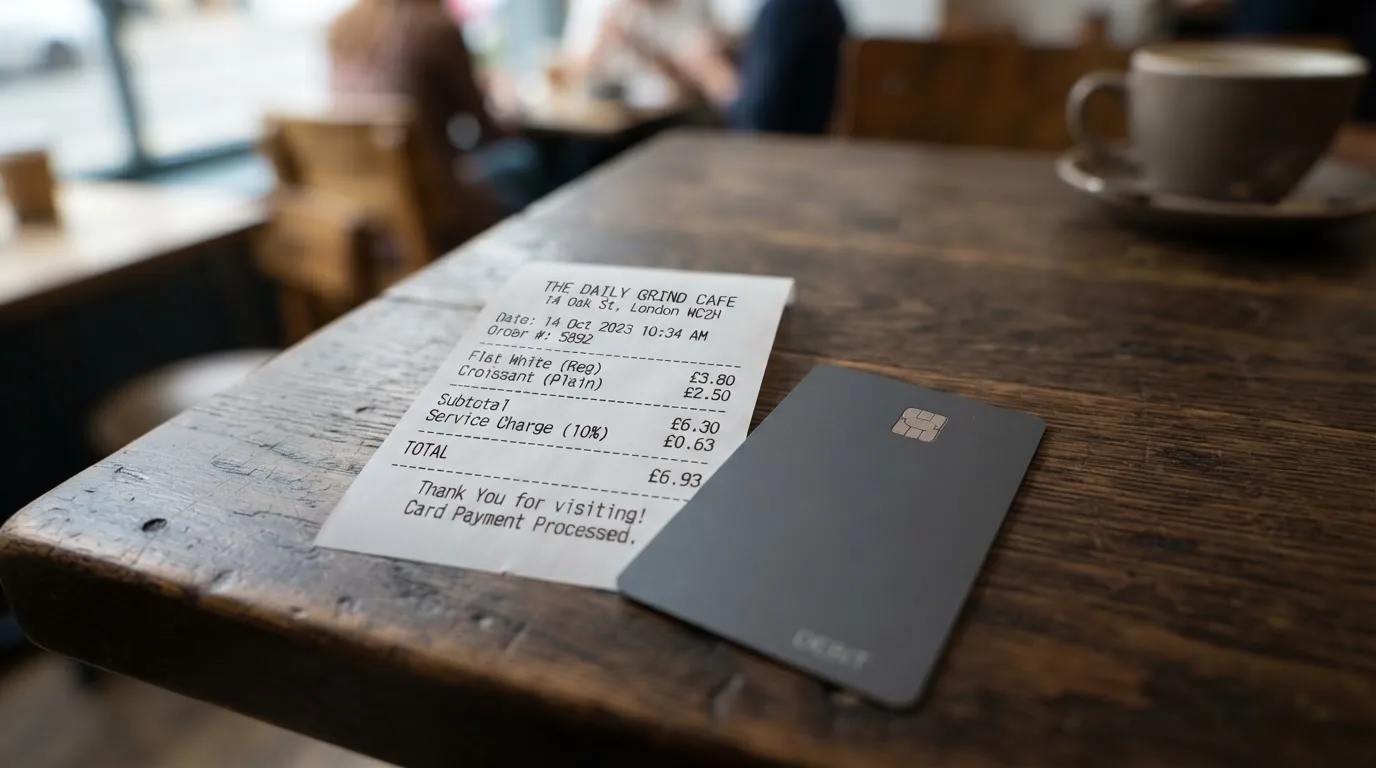
The headline is that Essential has no annual fee. The catch is that Essential is not free to use — it charges you at the moment of spending, while Elite charges you once a year.
| Fee or limit | Essential | Elite |
|---|---|---|
| Annual fee | $0 | $99.99 |
| Virtual card issuance | $0 | $0 |
| Physical card | $4.99 (plastic) | $0 (metal) |
| Card issuance | $4.99 | $0 |
| Replacement card | $4.99 | $29.99, one free per year |
| Foreign transaction fee (purchases) | 1.50% | $0 |
| ATM withdrawal fee, in or out of network | $2.95 | $0 |
| Foreign ATM transaction fee | $1.50 | $0 |
| POS purchase | $0 | $0 |
| Close card via customer service | $0 | $0 |
| Customer service | $0 | $0 |
| Crypto conversion fee | not stated on the page | not stated on the page |
| ATM balance inquiry | not available | not available |
| ATM free allowance | not stated | not stated |
Three everyday payments, and which fees touch them
Buying a $30 lunch in New York. No foreign transaction fee, because there is no conversion. POS purchase is $0. If you fund it straight from a USD balance, there is no conversion cost at all. If you fund it from crypto, the conversion spread applies — and that is where Essential users get surprised, because the spread is the real cost, not the $0 line items.
Paying $60 for a hotel in Lisbon. The hotel sees a US Visa, so Visa converts to USD at the rate in effect on the processing day, and the foreign transaction fee is added on top: 1.50 percent on Essential, zero on Elite. The bank’s own terms say it does not reimburse exchange-rate losses or foreign fees, so a currency move between the day you pay and the day it settles is yours. A multi-currency balance is not stated for the card.
Taking $80 out of an ATM in Bangkok. Essential: $2.95 for the withdrawal, plus $1.50 for the foreign ATM transaction. Elite: $0 and $0. If you need foreign cash regularly, the Elite tier’s ATM and FX numbers are the whole argument for its $99.99.
Then there is the conversion spread, which is not in the table above because it is not a card fee — it is what Uphold charges to turn crypto into spendable dollars. USD and USD stablecoins convert 0% (1:1, $20,000 monthly cap per customer); other stablecoins under 0.25%; major FX pairs 0.3%; BTC/ETH 2.05% to 2.2%; altcoins 2.85% to 3.8%; precious metals 2.35% to 3.40%. The app’s “Preview Trade” shows the all-in price before you commit.
Limits
| Limit | Essential | Elite |
|---|---|---|
| Maximum card balance | $25,000 (both) | $25,000 (both) |
| Purchases and total withdrawals | $2,500/day, $10,000/month | $25,000/day, $100,000/month |
| ATM withdrawals | $500/day, $2,000/month; 3 per day, 10 per month | $2,000/day, $10,000/month; 3 per day, 30 per month |
| Bank-teller cash | same as ATM amounts | same as ATM amounts |
The $25,000 card-balance ceiling is the number that ends most daydreams. This is not a card you can hold an entire balance fund on.
Top up: the card spends your wallet, not its own balance
There is no separate card balance to load. The card draws on your Uphold wallet, which holds 300+ digital assets and USD, with stablecoins highlighted as the practical route. You fund that wallet by bank transfer, direct deposit, PayPal or crypto deposit.
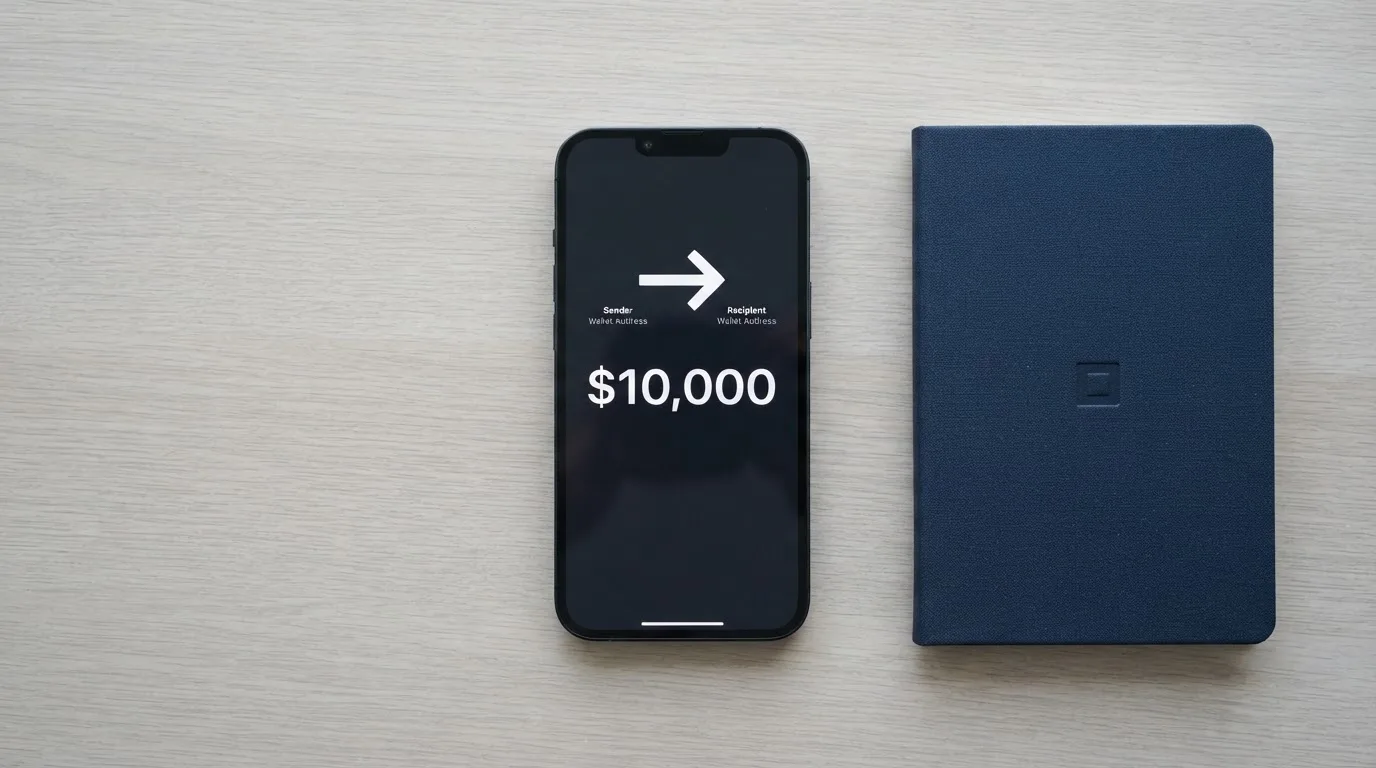
Per-method deposit fees and minimums are not stated, and — importantly for anyone planning to send crypto straight in — the supported networks are not listed either. I would not send a deposit until you have confirmed the network in the app, because blockchain transfers are irreversible and a deposit on the wrong network can be lost or need manual support recovery with no guarantee. On-chain network fees (gas or bandwidth) are charged by the blockchain, not by Uphold.
Deposits themselves are cheap to convert: USD and USD stablecoins at 0%, other stablecoins under 0.25%. The expensive side is converting BTC or ETH, at 2.05% to 2.2%, and altcoins at 2.85% to 3.8%. One of the more common complaints is that spread-based pricing feels costly in volatile markets — which is fair, because a 3% spread applied while the price is moving fast is a real cost.
Balances in the card account do not expire. You can close the card through customer service at $0 fee, though the bank may cancel the card at any time.
Paying with it every day
Daily use is where this card is at its best. You get a virtual card instantly enough for online subscriptions and a physical one for everything else, Apple Pay and Google Pay “when available”, and that “when available” caveat is worth noticing — the pages hedge on it. Blocked merchant categories are not stated, so if you gamble or buy anything that sits in a sensitive category, do not assume.
The rewards are the sharpest thing here. Elite pays 4% in XRP on crypto- and metals-funded spend, or 3% in XRP on fiat and stablecoin spend, with a cap up to $300. Essential pays 2% in XRP with a cap up to $120. The rewards currency is currently XRP, and the programme applies to cards activated on or after 1 Jan 2026, with rewards available for three months after activation.
Two things to hold onto. First, a 4% reward paid in XRP is not 4% — it is 4% in a volatile asset, so the real value depends on where XRP is when you spend it. Second, if you do not already believe in XRP, the reward is a discount on a position you have to want anyway.
Beyond rewards, the practical texture is good: strong spending limits on Elite, free cash at home ATMs, free cash worldwide, and zero foreign fees on the paid tier. App ratings are strong on the US App Store at 4.7 out of 5 across 91K ratings (version 6.111.0, iPhone, read 2026-10-20); the Google Play rating was not read.
If something goes wrong with a payment, the dispute route is the app: start a dispute in the Uphold Platform, report errors within 60 days, and note that phone reports need written confirmation within 10 business days. The bank decides within 10 business days; it may take up to 45 days with provisional credit inside 10 business days, and up to 90 days for new cards, point-of-sale or foreign-initiated transactions. Unauthorized Visa transactions are investigated in 5 business days, plus 5 more. Lost or stolen cards cap your liability at $50 if you report within 2 business days, up to $500 later. The terms do not use the word “chargeback” — worth knowing if you go looking for that specific protection.
What can go wrong
This is the section I would read twice, because the card’s strong points are all on the marketing side and the weak points are all in how accounts behave under stress.
Account freezes without explanation are the dominant complaint. Themes from September–October 2026 on Trustpilot cluster around account freezes and restrictions without explanation lasting weeks to three months — often triggered right after a first deposit, linking the card, a withdrawal attempt, or a location mismatch. Verification problems also recur: expired identity links, and lockouts after a phone change.
The rating depends on where you look. Trustpilot as I read it on 2026-10-20 shows 4.6 out of 5 across 27,602 reviews, of which about 6,386 fall in the last 12 months — 67% five-star, 17% one-star. But 0% of negative reviews received a reply. On other aggregators the picture is far worse: ComplaintsBoard sits at 1.9 out of 5 across 13 reviews, and I found UK Financial Ombudsman decision DRN-5127266 on a closed wallet and card (that one was a UK card issued by Optimus Cards UK, not this US programme). A strong average with unanswered one-stars is a specific kind of warning: the people with problems are not getting replies.
Support is slow in exactly the situations where speed matters. Users describe bot-driven, email-only support during the very moments when money is stuck. You can reach the phone line on +1 888-977-7217 or the number on the back of the card, mail Uphold Card, 228 Park Ave. S., #50458, New York, NY 10003-1502, use the app or platform, or support.support.uphold.com; CFPB complaints go to 1-855-411-2372. Hours and languages are not stated.
Insured money is narrower than “it’s my wallet” suggests. USD balances are held at Cross River Bank, a Member FDIC bank, and the card issuer is Cross River Bank with Uphold HQ Inc. as programme manager. Uphold states it is not itself an FDIC-insured bank. Only the USD fiat account is FDIC-insured — crypto and metals are not, at all.
Programmes can be frozen by someone else. The card rides on Visa, and networks can suspend programmes: Visa terminated its global agreements with FTX in November 2022, and WaveCrest’s Visa programmes were closed in Europe in 2018. A concrete recent instance: the Uphold status page reported a Mastercard-related issue freezing some UK cards, resolved 19 May 2026. For this US card, the risk is that the bank cancels the card at any time — stated in the terms.
Security is partly your job. Uphold recommends enabling two-factor authentication and uses email verification for unusual activity, and describes a solvency proof through Reservechain. But the in-app card freeze, spending controls and card insurance are not stated on the security page. Visa Zero Liability does not cover ATM transactions outside Visa/PLUS networks — so a foreign ATM cash withdrawal is the exact case with the thinnest cover.
Merchants can decline you for reasons that have nothing to do with you. A merchant can look up your card’s issuing institution and country and apply extra scrutiny when the issuer country differs from your billing address. Prepaid and foreign BINs get declined more often for that reason alone. Declines can also leave holds on funds for several days, typically up to 7.
Losing money to a wrong network or a lost key is permanent. Blockchain transfers are typically irreversible; there is no built-in recovery. If you are new to this, a seed phrase is 12 to 24 words in unencrypted form, and anyone who has it can restore the wallet and spend the funds. Custodial platforms have a record of it too — Mt. Gox, Coincheck and Ronin Network all lost large sums.
The tax side is not nothing. In the US the IRS treats digital assets as property, so each card payment funded from crypto is generally a separate taxable disposal measured at the fair market value on the transaction date. Whether that affects you depends on your situation — take your own advice — but do not treat every tap as an ordinary purchase.
Finally, a note on crypto in general that applies to every card in this category: stablecoins aim to hold a stable value but are not necessarily stable. TerraUSD collapsed in May 2022 and USDC temporarily lost its peg in March 2023 during the US banking crisis. If your spending money sits in stablecoins, you are taking a risk dressed as cash.
What to take instead
Only if you are eligible in the first place. These are the options people compare Uphold to, with their own published scores.
| Card | Score | Where | The catch |
|---|---|---|---|
| Uphold | 5.8 / 10 | US states and DC only | 2.05%–2.2% BTC/ETH spread, $25,000 balance cap |
| Coinbase Card | 6.4 / 10 | All US states except Hawaii | A spread applies when Coinbase buys, sells or trades crypto |
| OKX | 6.2 / 10 | EU plus Norway, launched 28 January 2026 | Euro Mastercard virtual card; cashback only on USDG purchases |
| Bybit Card | 6.0 / 10 | Argentina, AIFC, Georgia, Kazakhstan, Australia, Mexico, Brazil, Peru, Asia Pacific | 0.9% crypto conversion fee; the product is explicitly not for European Economic Area customers |
Coinbase Card is the closest comparison and scores higher. A Visa prepaid debit, virtual or physical, in all US states except Hawaii, with zero spending fees and no annual fees, funded by a linked bank account, a paycheck deposit, or crypto on Coinbase that converts to USD at payment. Account opening follows the USA PATRIOT Act identity rules. Its rewards are optional crypto rewards on every purchase for US card users, at a variable rate shown in the app with a rotating choice of coin. If you are US-based and want the simplest version of this idea, this is the one to look at first.
OKX is the European answer, and the reason so many people in the EU end up here in search of a Uphold equivalent. A euro-denominated virtual Mastercard debit linked to OKX Pay, issued through an unnamed European licensed payment provider; no physical card is mentioned. Iceland and Liechtenstein are excluded, and the pages are inconsistent about how far the EEA exclusion reaches. No transaction fee and no OKX FX fee, with a 0.1% conversion spread per a May 2026 explainer against 0.4% in the launch release. You spend from USDC or USDG in OKX Pay, there is no auto top-up, and a payment is declined if the balance is short. Cashback tiers run 2% to 10% but only on USDG purchases — USDC earns none.
Bybit Card is the broadest map — nine regions — but also the messiest. Virtual first, physical in phases and not in Peru, with mixed networks and currencies (Mastercard in Argentina, Mastercard credit in several regions, Visa prepaid in Brazil and Peru, Visa credit in Asia Pacific) and validity from 3 to 6 years. No virtual issuance fee “until further notice” and “no annual fees”, but physical issuance runs to 29.99 USD in Australia or 29.99 USDT in Georgia and Kazakhstan. Conversion is 0.9% over the One-Click Sell rate, FX adds 2% on top of the network rate in Australia, Asia Pacific, Georgia and Mexico, 7% in Argentina, 1.5% in Brazil. Argentina adds VAT and taxes on top. Since 2026-10-05 only crypto-funded transactions earn anything, and you spend from the Funding Account with a reorderable priority list starting with USDT. Its restricted-country list for fiat services includes Belarus, Russia, Serbia, China and the United States.
My honest read: if you are in the US, the choice is Uphold against Coinbase Card. If you are in the EU, Uphold is not on the table at all.
Who I would recommend it to
Three groups, in order of how confidently I would say it.
First, US residents who already hold a spread of crypto. If your money is already in 300-plus assets and you want to spend it without selling everything into USD, this card does the job. Elite’s zero FX, free ATM and $25,000/day ceiling are unusually generous for a crypto card, and the 4% XRP reward on crypto-funded spend is the best number in this review.
Second, anyone turned away by ordinary banks. If your address or your paperwork closes a normal card, this is a real route to spending power, with no credit check and an Elite upgrade that costs $0 to switch to. That alone justifies a 5.8.
Third — with eyes open — beginners who understand they are holding a wallet, not a current account. Only USD is FDIC-insured. Only USD converts at zero spread. The moment you spend altcoins you are paying 2.85% to 3.8%, and the moment you withdraw crypto you are trusting a custodian whose commonest complaint is unexplained freezes.
I would not recommend it if your money is primarily fiat, if you need a card accepted everywhere without occasional declines, if you cannot tolerate a support channel that does not answer its one-star reviews, or if you are outside the United States. Under 5.8 out of 10, the card is a good tool inside its lane, not a replacement for how most people bank.
Frequently asked questions
What is the Uphold card?
The Uphold card is a Visa card that spends your Uphold wallet balance directly — 300+ digital assets plus USD, with stablecoins highlighted — instead of a separate bank account. You get a virtual card and a physical one (plastic on Essential, metal on Elite), the currency is USD, and there is no credit check. It is a Visa product run by Uphold HQ Inc. with Cross River Bank, a Member FDIC bank, as issuer. An Uphold wallet is required first, and setup is stated as under five minutes.
Is Uphold a bank?
No — Uphold states it is not itself an FDIC-insured bank. USD balances are held at Cross River Bank, which is a Member FDIC bank, so the fiat side sits inside US deposit protection. The crypto and metals in your wallet are not insured at all. That distinction is the one to keep in mind: your dollars are treated far more carefully than your coins, and the card spends both.
Who can get the Uphold card?
US residents living in a US state or Washington D.C., on a residence basis. It is not available in Louisiana, New York, or US territories. The card terms require an accurate real name, a valid US mailing address and a date of birth, and it is personal use only. The public pages do not state the identity documents, proof of address, age threshold or KYC tiers required, so if you are outside the US the answer is simply no.
How much does the Uphold card cost?
Essential costs $0 a year, $0 for the virtual card and $4.99 for the plastic card, but charges 1.50% on foreign transactions and $2.95 per ATM withdrawal, plus $1.50 for foreign ATM transactions. Elite costs $99.99 a year with a free metal card, zero foreign transaction fees and zero ATM fees, and includes one free replacement per year. Converting BTC or ETH to spendable dollars costs 2.05% to 2.2%.
Does the Uphold card work in other countries?
You can use it, but not everywhere equally well. The card is issued in the US, so merchants elsewhere may see a foreign BIN and decline it or apply extra scrutiny — which happens to prepaid and foreign-issued cards generally. Spending abroad also triggers Visa’s conversion to USD at the processing-day rate, plus the foreign transaction fee of 1.50% on Essential or zero on Elite, and the bank does not reimburse exchange-rate losses. If foreign spending is routine, Elite is the tier built for it.
How much can I spend or withdraw with the Uphold card?
The maximum card balance is $25,000 on both tiers. Essential allows $2,500 a day and $10,000 a month in purchases and total withdrawals, with ATM withdrawals at $500 a day and $2,000 a month, three per day and ten per month. Elite allows $25,000 a day and $100,000 a month, with ATM withdrawals at $2,000 a day and $10,000 a month, three per day and thirty per month. Bank-teller cash matches the ATM amounts.
How do I top up the Uphold card?
There is no separate card balance to load — you fund the wallet the card spends from. Options are bank transfer, direct deposit, PayPal, or a crypto deposit, with stablecoins highlighted as the practical route. Per-method fees and minimums are not stated, and the supported networks are not listed on the pages I read, so confirm the network in the app before sending crypto, because blockchain transfers cannot be reversed.
Is the Uphold card safe and worth it?
Worth it depends entirely on whether you already hold crypto — the 2% or 4% XRP reward is valuable if you want XRP anyway and close to nothing if you do not. Safe is more complicated: only USD is FDIC-insured, crypto is not; freezes without explanation are the most common complaint; and 0% of negative Trustpilot reviews received a reply. Treat it as a wallet with a Visa number attached, not as a bank account.
What are the Uphold card’s main complaints?
The most frequent, in the September–October 2026 reporting, is accounts frozen or restricted without explanation for weeks to three months — often after a first deposit, linking the card, a withdrawal or a location mismatch. Then slow bot-driven support, identity-verification problems such as expired links or lockouts after a phone change, and unexpected charges. Reports also cite withdrawal denials during KYC reviews and spread-based pricing feeling costly in volatile markets.
What are the alternatives to the Uphold card?
Within the US, Coinbase Card is the main comparison: Visa prepaid, all states except Hawaii, zero spending fees and no annual fee, funded by a bank link, paycheck or crypto balance, with optional variable crypto rewards. For Europe, OKX offers a euro virtual Mastercard linked to OKX Pay with cashback only on USDG purchases. For nine other regions, the Bybit Card covers Argentina, Kazakhstan, Georgia, Australia, Mexico, Brazil, Peru, Kazakhstan’s AIFC and Asia Pacific — but adds conversion and FX fees on top.
Exchange cards – cryptocardsearch.com
Content created by the «cryptocardsearch.com» team