
The card scores 4.9 out of 10: virtual only, USDT-only top-ups, and a named list of 13 countries where it does not work
 Available in US
If you have trouble getting an ordinary bank card — because of where you live, your status, or a bank that does not want your business — a crypto card looks like the obvious way out. The EMCD card is one of the options in that category, and it is worth understanding exactly what it is before you spend anything: a virtual card that draws on a USD balance you fill with USDT, with no physical version yet, no cash withdrawals, no 3-D Secure, and a published list of thirteen countries where it does not work at all. I went through the card’s own pages and its help centre line by line, and this is what I found. The score I give it is 4.9 out of 10.
The conditions described here are current as of October 28, 2026.
Verdict: 4.9 / 10, and here is why
The single strongest thing about this card is reach: it works wherever Mastercard is accepted, apart from thirteen named countries, and that is a wider map than most crypto cards managed to draw. Everything after that is weaker. It is virtual-only, its balance is held in US dollars and topped up only with USDT from the provider’s own wallet, its fee schedule adds up quickly on small purchases, and the card’s own pages contradict each other about which network it runs on — the card page says Visa Platinum, the help centre says Mastercard. Those two facts sit at the centre of everything else, because a card network is not a detail: it decides which shops accept you, which online merchants will let you through their fraud filters, and how you get money back when something goes wrong.
Who does it suit? Someone who already uses USDT, keeps it on the provider’s platform, spends in US dollars or accepts the conversion cost, and only needs a card number for online payments where 3-D Secure is not demanded. For that person it does a specific job. Who does it suit less? Anyone who needs a physical card, cash withdrawals, several currencies held at once, non-US-dollar spending without an extra charge, or a fallback network when a merchant refuses a card. It is also a poor choice if you are in one of the thirteen restricted countries, and a poor choice if the idea of an unknown issuer behind the card makes you uneasy — because there is no issuer named.
| Criterion | Mark | Why |
|---|---|---|
| Who can get it | 9 / 10 | Works wherever Mastercard is accepted, except 13 named countries |
| Cost | 2 / 10 | Plus $19 issue, Premium $25; $5 monthly; 1.5% top-up; 1.5% + $0.50 per purchase; 3% on non-USD |
| Top-up options | 4 / 10 | USDT only, from the wallet’s Main account, network not stated, minimum $20 |
| Reliability and complaints | 4 / 10 | Issuer and legal entity unnamed, network named inconsistently, Trustpilot reports of post-KYC blocks |
| Everyday use | 5 / 10 | Virtual only, no ATM, no 3-D Secure, mobile wallets marked as coming |
| Total | 4.9 / 10 | Wide reach, narrow product |
One more note for people weighing this up: the existing EMCD user who already tops up with USDT and is happy paying 1.5% on the way in and 1.5% plus fifty cents on the way out will find this card does exactly what they expect. It is not a general-purpose replacement for a bank card, and the card does not pretend to be one.
Will they give you the card?
Broadly, yes, and that is the card’s real strength. The page says the card works “worldwide” wherever cards are accepted. The help centre is more precise: the card works wherever Mastercard is accepted except that payments are not available in Afghanistan, Belarus, Cuba, Iran, North Korea, Syria, Venezuela, Russia, Myanmar, Somalia, Ukraine, Yemen and China.
Take a moment over that list, because it is the first thing to check against where you actually live. If you are in one of those thirteen places, the answer is no, and no amount of verification will change it. There is also a separate notice saying some EMCD services are unavailable in certain jurisdictions, without naming them; the help-centre article on this was previously reported to list Russia as restricted. Where the page and the help centre overlap, the help centre’s list is the one I would rely on.
Beyond geography, the gate is ordinary identity verification — the same kind any regulated platform runs, and the kind described further down this page in more detail. Nothing in the published rules suggests nationality is checked against a list of its own, but every provider in this category screens against sanctions lists, and the issuer behind the card is not named on the page, which leaves you unable to check which policy applies to you.
My honest read: for a person in a country outside the thirteen, the question of eligibility is not the obstacle. The obstacles are all further down the page — no physical card, USDT-only funding, and fees.
How to get it
The path is short, which is one of the better things about it. You sign up, complete EMCD’s standard identity verification — the card describes it as “an ID and about 5 minutes” — and order the card. Two things are worth noting as you go.
The first is that ordering requires $15 of funding that stays in the balance. That is money committed before you have spent anything.
The second is that verification is not entirely finished at sign-up. The card performs mandatory identity verification after your first top-up, using a valid government ID, and says this “usually takes a few minutes”. The card then activates automatically. If the check fails, you retry with a different document. Whether a proof of address is required, and which verification levels exist, is not stated on the public pages — so if you expect a longer process, do not plan around one.
What you end up with is a virtual card. The card page says explicitly: “Currently, we only offer virtual cards.” No physical card, no delivery, no waiting for post. The card is valid for two years, after which a new card with a new number is issued.
And here is the contradiction I keep coming back to. The card page describes the product as a Virtual Visa Platinum. The help centre says the card runs on Mastercard, virtual, in USD. Those cannot both be true in the way they are written. I would not treat the network as settled until EMCD states it in one place — and the currency of the card is not stated either, though the balance is held in US dollars, which is the number that actually affects your costs.
Fees: what it really costs
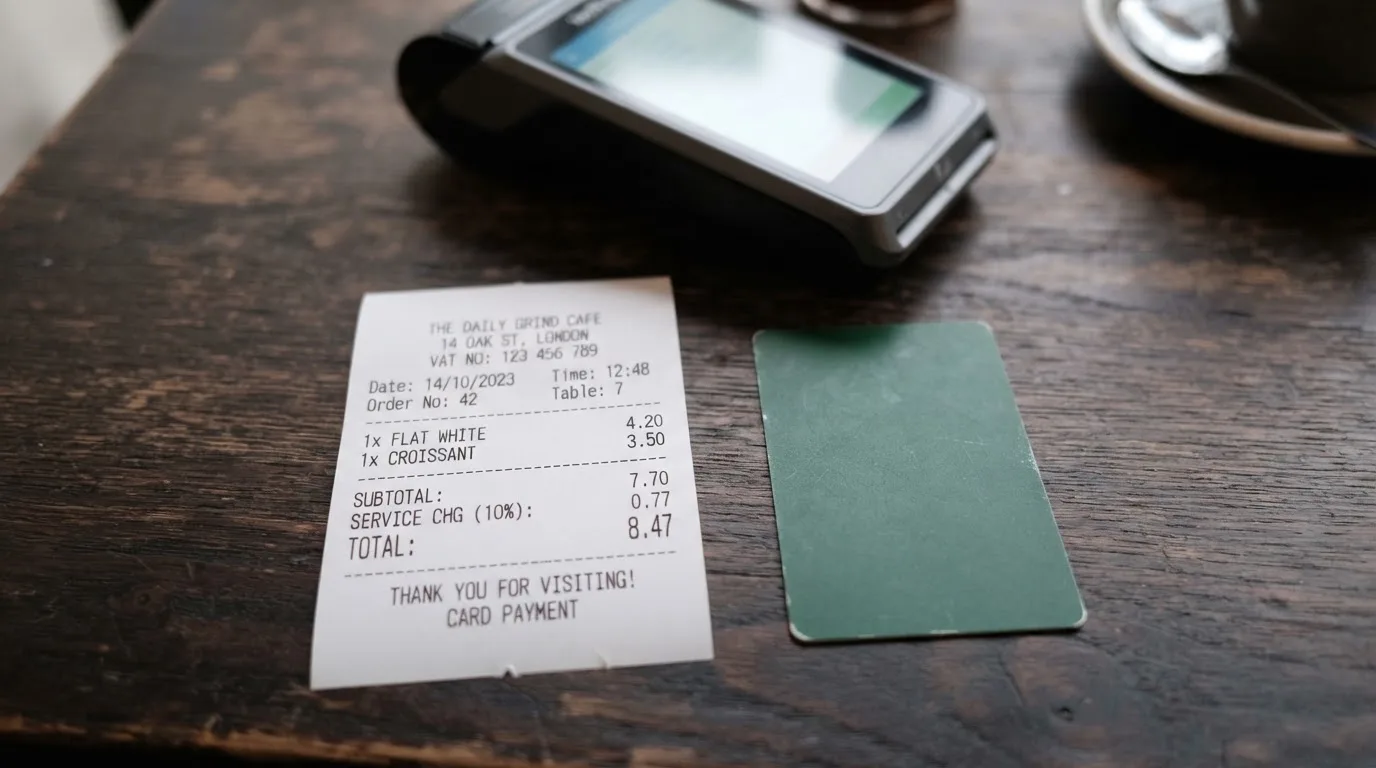
The fee section is where this card earns its lowest mark, and the reason is arithmetic rather than shock. On a small everyday purchase, a fixed charge of fifty cents plus 1.5% is heavy: on a ten-dollar coffee the percentage is fifteen cents and the fixed fee is fifty, so more than three-quarters of what you pay in fees is the flat part. It is a card that gets more expensive the smaller your purchases are.
The card has three tiers. Active is free to issue. Plus is $19. Premium is $25 — whether those issuance fees are one-off or periodic is not stated, which matters if you plan to stay on the card for years. The help-centre fee schedule adds monthly maintenance of $5 and a closure fee of $15.
The card’s own Active tier page advertises “0% fees” on standard purchases, but the help-centre schedule lists fees that plainly apply: 1.5% on top-up, 1.5% plus $0.50 per purchase, $1.50 for a declined payment, $0.50 for a refund, $2.00 for a reversal, $35 for a chargeback, and a possible 3% bank conversion fee on non-USD purchases. The help-centre article does not state which tier those belong to, and the “0%” claim does not say what is excluded. Treat the schedule as the reliable number and the marketing line as the exception.
One third-party site, CoinInterestRate, lists a different picture: 2.5% top-up and conversion fee, no monthly or annual fee, no FX fees. That is unofficial, it is not confirmed by EMCD, and it contradicts the card’s own schedule on both the top-up fee and the monthly fee. Where an unofficial source and the provider disagree, the provider’s schedule is what will be charged.
| Fee or limit | Value |
|---|---|
| Issuance, Active tier | Free |
| Issuance, Plus | $19 |
| Issuance, Premium | $25 |
| Monthly maintenance | $5 |
| Closure | $15 |
| Top-up | 1.5% (unofficial source: 2.5%) |
| Purchase | 1.5% + $0.50 |
| Declined payment | $1.50 |
| Refund | $0.50 |
| Reversal | $2.00 |
| Chargeback | $35 |
| Non-USD purchase | Possible 3% bank conversion fee |
| Limits | Set in the app; Plus $1,000 per transaction / $3,000 daily / $10,000 monthly; Premium $10,000 / $50,000 / $400,000 |
| Cash withdrawals | Not supported |
Two everyday payments, to make the percentages concrete. A $12 lunch bought in a country that spends euros: the purchase fee is roughly $0.68, and if your bank’s conversion applies, another 3% on the converted amount — call it around $0.36 on $12 — takes the total to a little over a dollar on a twelve-dollar meal. A $40 online subscription in US dollars: the purchase fee is $1.10, no conversion fee, and that is the good case. The pattern is clear: the card is cheapest on larger, US-dollar payments and most expensive on small, foreign-currency ones.
Two more limits worth reading twice. Cash withdrawals are not supported at all — the help centre says the card “does not currently support cash withdrawals”, and the FAQ says withdrawals “will be” available once a physical card launches, which is not a date. And the issuing bank may close the card if the balance is $20 or less, or if there is no activity for 30 days. If you top up $20 and spend a little, you are close to that floor.
Top up: one route, and it is USDT
There is one documented way to fund the card, and it is narrow. You top up with USDT from the Coinhold Wallet’s Main account — the card’s own platform wallet. There is no top-up by card number, and no other asset or route is described. The FAQ on that page reports an unofficial 2.5% top-up and conversion fee; the card’s own schedule says 1.5%, and that is the number to plan around.
The mechanics are simple: the first top-up has a minimum of $20, and it usually completes in three to five minutes. $15 of the first top-up is held as reserve until your total card spending exceeds $2,500 — so that money is not yours to spend while it is held, on a card whose minimum first top-up is $20 in the first place. Terms depend on which card plan you are on and may change.
Now the sharpest gap. The network is not stated. USDT exists on several chains — Ethereum, Tron, Solana, Polygon, Avalanche and others — and they do not interoperate. The card says it takes USDT from its own wallet, which reduces the risk considerably, but if you are transferring in from elsewhere, sending on the wrong network is a common and irreversible way to lose funds. Nobody has published which network to use. Who pays the network fee is also not stated; that fee belongs to the blockchain, not to the card.
Getting money back out is where this gets genuinely uncomfortable. A free transfer from the card balance back to the Main account is not supported. The only documented route is closure: on closing, the remaining US dollar balance is converted to USDT and credited to the main EMCD account. So the balance is not a bank balance you can withdraw at will — it is money you can spend through the card or reclaim by closing it, and a closure costs $15.
That is a real constraint. If your plan involves pulling funds back to pay a rent share or an invoice, this card is not built for it.
Paying with it every day
Day to day, the card works in a narrow but usable band: online payments, and contactless if your phone supports it, from a virtual card number.
Mobile wallets are the confusing part. The FAQ says the card works with Apple Pay and Google Pay. The feature list on the same site marks both as “Coming soon”. Assume they may not work, and that if they do, it is on the provider’s timetable rather than yours.
Cash is simply out — no ATM support, no withdrawal, no physical card. So this is not a card for a market stall, a taxi, or a tip.
Some categories are blocked: fuel, ride-hailing, AI subscriptions, money transfers, crypto exchanges, gambling, brokerage, and most entertainment except cinemas and theatres. That is a long list, and it removes the sort of small daily errands people actually use a card for.
There is no 3-D Secure on this card. Any merchant that requires a step-up identity check for online payments will decline it, and in Europe that includes a large share of online shops. This is the single practical limit most likely to frustrate you, and it is not a settings you can change — it is a property of the card programme. It also means less fraud protection on the online payments the card is best suited to.
Cashback is not mentioned anywhere on the card’s pages. If a rewards rate is part of what you want from a card, this one does not offer one.
The good news is the ordinary controls are present: you manage the card in the EMCD app, you can freeze and unfreeze it and set limits there. And card validity is two years, after which a new card with a new number is opened — so you will be re-adding it to anything that stores the number.
What can go wrong
Let me separate what the card itself tells you from what users report.
The provider’s own gaps. No issuer is named, and no legal entity or registration country is stated on the card page. Third-party listings that describe the card do not name an issuer either. If you cannot tell which institution is behind your card, you cannot check its licensing, and you cannot tell which regulator’s rules protect you. For an EU reader, that is the first question to ask: under MiCA, e-money tokens may be issued only by a credit institution or an electronic money institution, and a card is a payment service regulated separately from the crypto side — a crypto card often depends on two licences. A provider that names neither leaves you unable to check ESMA’s register of authorised entities for them.
The contradiction. Card page: Visa Platinum. Help centre: Mastercard. In a category where network identity decides merchant acceptance, that is not a cosmetic error.
User reports. Trustpilot reviews for EMCD as a company — not specifically for this card — are mixed: 190 reviews, with a score hidden “due to a breach of guidelines”, 83% five-star and 11% one-star. EMCD says it removed fake reviews. The one-star reports describe login and email-verification errors, inability to add a UK phone number and no support reply. Recurring themes in the negative reviews include accounts blocked or banned after KYC/AML review between November 2025 and April 2026, slow KYC and document checks, referral and welcome bonuses unpaid without completed KYC, slow or missing support replies between November 2025 and March 2026, and US users blocked since 1 May 2025. Positive reviews cite a 12% annual interest rate and fast payouts, and one 2025 review says it was always paid.
Two things I want to be precise about, because they cut both ways. Those positives mostly describe the exchange side, not the card — I found no complaint specific to the EMCD card, and no Reddit threads about it. And no official incident involving the card has been reported in searches. The pattern that concerns me is not that the card fails, but that accounts get frozen after verification passes — so the KYC you complete is not the last gate.
Custody. The wallet here is custodial: EMCD holds the credentials. That means your USDT is exposed to the provider’s solvency and security, the same risk profile that made Mt. Gox, Coincheck and the Ronin Network losses possible. Whether customer funds are safeguarded in segregated accounts or insured is not stated. Insurance or safeguarding arrangements are simply not stated on the card’s pages.
Merchant-side declines. A prepaid or foreign-issued card can be declined at the till for reasons that have nothing to do with you: the merchant’s system looks up the issuing institution and country from the first six or eight digits of the card number, and may apply extra scrutiny when that country differs from your billing address. Address verification, which compares the street number and postal code you type against issuer records, is mostly a US, Canada and UK mechanism and is generally unavailable for foreign-issued cards — a common cause of declines. Blocked merchant categories add their own.
Deposits. Blockchain transfers are irreversible. A stablecoin sent on a network the provider does not support, or to an address belonging to a different network, can be lost or need manual recovery with no guarantee. With the network not stated here, this is a live risk rather than a theoretical one.
Dead balances and closures. A balance of $20 or less, or 30 days without activity, can get the card closed by the issuing bank. Combined with a $15 closure fee and no free transfer back, a dormant account is a small trap.
Support. The FAQ and help centre are real, the help centre is in English, Portuguese, Russian and Spanish, and the help menu says “Support 24/7” — though the email address in the footer is obscured and the languages card support itself covers are not stated. Users nonetheless report missing replies, and one cannot check a licence when the address is hard to find.
What to take instead
If the EMCD card’s problem is that it is USDT-only, virtual-only and closed to thirteen countries, the alternatives solve it in different ways — so compare them on the axis you actually care about.
| Card | Score | Where | Card type | Notable fees |
|---|---|---|---|---|
| EMCD | 4.9 / 10 | Worldwide except 13 countries | Virtual only; network stated inconsistently | 1.5% top-up; 1.5% + $0.50 purchase; $5 monthly; possible 3% FX |
| Bybit Card | 6.0 / 10 | Named regions incl. Argentina, Georgia, Kazakhstan, Australia, Mexico, Brazil, Peru, Asia Pacific, AIFC | Virtual and physical | Conversion 0.9% (0.5% Argentina); FX 2% on top of network rate; Argentina 7% |
| Coinbase Card | 6.4 / 10 | All US states except Hawaii | Visa prepaid, virtual or physical | No spending or annual fee; crypto conversion spread applies |
| OKX | 6.2 / 10 | EU plus Norway, from 28 January 2026; Iceland and Liechtenstein excluded | Virtual Mastercard in euro | No card or transaction fee; conversion spread 0.1%–0.4% |
Coinbase Card is the narrowest but the cleanest on cost. It is US-only — every state but Hawaii — and a Visa prepaid debit card that spends cash or crypto, with crypto converted to dollars at the point of payment. “Zero spending fees and no annual fees”, with a spread on conversion rather than a layered fee stack. If you are in the US, this is the comparison that matters most, because it has a physical option and a stated fee philosophy EMCD does not.
Bybit Card is the broadest reach of the four, and the one with the richest feature list — which is also its risk. Regions are named individually, and the cards page states plainly that the product is not for European Economic Area customers and that all EEA participation is strictly prohibited. Virtual and physical cards exist, with issuance free “until further notice” in all regions and small fees for physical cards in some ($29.99 in Australia, 5 USD in Argentina, 29.99 USDT in Georgia, Kazakhstan and Asia Pacific, free in Brazil and Mexico; VIP holders with a physical card in Australia, Kazakhstan, Georgia or Asia Pacific pay nothing). Cashback runs from 2% to 10% by tier with monthly caps, and since 5 October 2026 only crypto-funded transactions earn it — fiat-funded spending does not. Bybit’s fiat services are restricted in Belarus, Russia, Serbia, China and the US, and there is no card-specific statement on Russian or Belarusian citizens, nor any citizenship-versus-residence rule. Whether a card programme this complex is worth it depends entirely on whether you want the rewards.
OKX is the European answer, and the newest. A virtual Mastercard in euros, launched in the EU plus Norway on 28 January 2026, with Iceland and Liechtenstein excluded — although the explainer I read draws a conclusion of the “entire EEA” that contradicts its own launch text, so read the list carefully rather than the summary. No card fee, no transaction fee, no FX fee, and a conversion spread reported as 0.1% by a May 2026 explainer against 0.4% in the launch press release; the newer figure is the one to use. Funded from USDC or USDG held in OKX Pay, with no auto top-up — an insufficient balance means the payment is declined. Cashback applies only to USDG purchases; USDC earns none. If you are in Europe and want a card that holds euros, this is the direct comparison to EMCD.
Who I would recommend it to
To someone who already holds USDT on the platform, spends mainly in US dollars, needs a virtual card number for online subscriptions, and is content to put $15 into a reserve and pay 1.5% plus fifty cents each time they buy something. To someone in a country outside the thirteen on the restricted list, who has decided that a card with no named issuer is an acceptable trade for having one at all.
To no one who needs cash, a physical card, more than one currency, or a card that works at a merchant demanding 3-D Secure. To no one who plans to withdraw money back to their own wallet — the free transfer does not exist and closing costs $15. To no one who is uneasy about the combination of an unnamed issuer, an unnamed legal entity, a network the card’s own pages contradict, and Trustpilot reports of accounts frozen after KYC completes.
Before you commit, check three things in this order: that your country is not on the restricted list, that you genuinely live in US-dollar spending, and that the merchant categories you care about are not blocked. If all three clear, the card is fine for what it is. If any one does not, one of the alternatives above will serve you better, and I would rather say that than talk you into it.
Frequently asked questions
What is the EMCD card?
It is a virtual payment card that spends a US dollar balance you top up with USDT held in the provider’s own Coinhold Wallet. The card works wherever Mastercard is accepted, except thirteen named countries. There is no physical version, no cash withdrawal, and no 3-D Secure. Its own pages disagree on the network: the card page says Visa Platinum, the help centre says Mastercard.
Is EMCD a bank, and who owns it?
No — it does not present itself as a bank. The card page names EMCD and the Coinhold Wallet but does not state the legal entity, the registration country, or the card issuer, and third-party listings do not name an issuer either. That means you cannot check which institution stands behind the card or which licence protects it.
Who can get the EMCD card?
Eligibility follows geography rather than citizenship rules. The card works where Mastercard is accepted, excluding Afghanistan, Belarus, Cuba, Iran, North Korea, Syria, Venezuela, Russia, Myanmar, Somalia, Ukraine, Yemen and China. A separate notice says some services are unavailable in certain unnamed jurisdictions, and the help-centre article was previously reported to list Russia.
How do I get and activate the EMCD card?
You sign up, complete EMCD’s standard identity verification — the card describes it as “an ID and about 5 minutes” — and order the card. Two things are worth noting as you go.
Is the EMCD card free?
Partly. The Active tier is free to issue, but the help-centre schedule lists monthly maintenance of $5, a closure fee of $15, and issuance of $19 for Plus or $25 for Premium. Spending is not free: 1.5% plus $0.50 per purchase, 1.5% on top-up, and a possible 3% bank conversion fee on non-USD purchases. The Active page advertises 0% fees, which does not reconcile with the schedule.
How do I top up the EMCD card, and can I get the money back?
You top up with USDT from the Main account of the Coinhold Wallet, with a $20 minimum on the first top-up, a 1.5% fee, and typically three to five minutes to arrive. $15 of the first top-up is held as reserve until total spending passes $2,500. A free transfer back is not supported; on closure the remaining balance is converted to USDT and credited to the main account.
Can I add the EMCD card to Apple Pay or Google Pay?
Possibly, and that is the problem. The FAQ says the card works with both mobile wallets, but the feature list on the same site marks them “Coming soon”. Treat them as unavailable for now. Many merchants will not accept the card at all without 3-D Secure, which it does not support, so an online purchase is not guaranteed even where Apple Pay itself would work.
Is the EMCD card safe to use?
Nothing here is a promise of safety — judge it yourself. It is custodial, so your USDT is exposed to the provider rather than held by you, and safeguarding arrangements are not stated. It has no 3-D Secure, so online payments carry less fraud protection. Users report accounts blocked after KYC, and the issuer behind the card is unnamed, which leaves you unable to verify its standing.
Why is a declined EMCD payment still costing me money?
The fee schedule lists $1.50 for a declined payment, $0.50 for a refund and $2.00 for a reversal, plus $35 to raise a chargeback. Declined authorisations can also leave a hold on funds for several days. On a card charging 1.5% plus fifty cents per purchase, the fixed fees are the part most likely to surprise you at the wrong moment.
Exchange cards – cryptocardsearch.com
Content created by the «cryptocardsearch.com» team