
The Binance card, honestly weighed: who can actually get one, what it costs, and where it falls short
 Available in US
A cryptocurrency exchange launching a payment card used to be a marketing exercise, a way to put a logo in a wallet and convert balance into transactions. With Binance the picture is different. The card was once rolled out across regions, then narrowed sharply. As of this writing the only country where Binance officially supports the card is Brazil, and even there most of the figures you will see in third-party reviews and aggregators do not appear on Binance’s own pages. That mismatch is the first thing to understand about this product, because it shapes everything that follows: who can get one, what it really costs, and how confident you can be in the numbers.
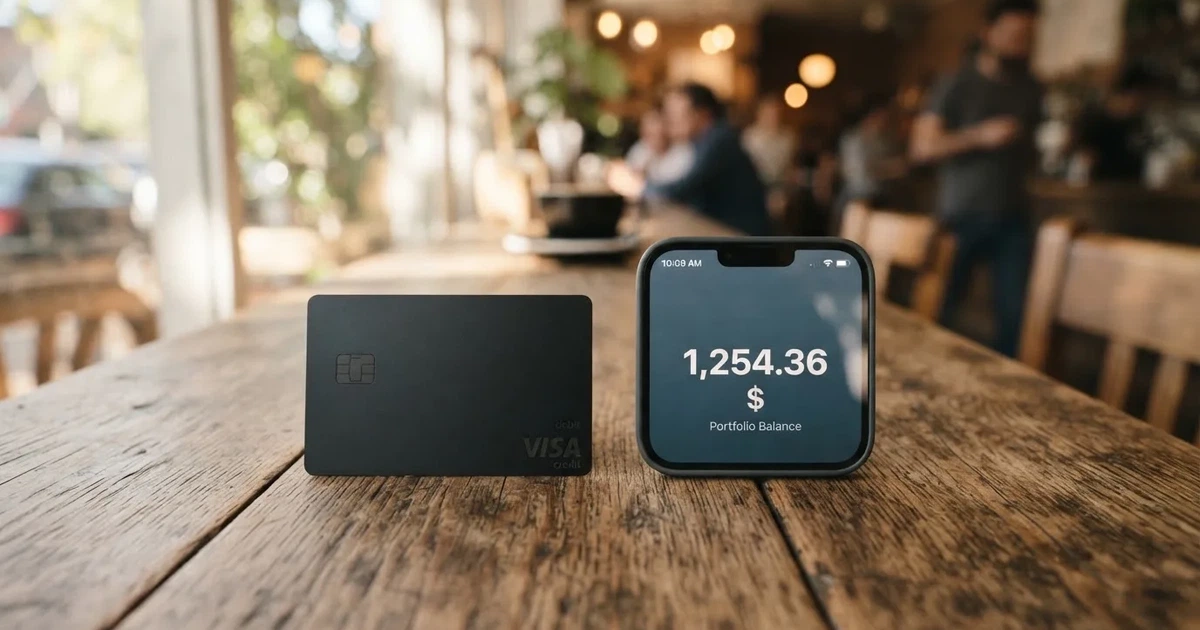
I worked through the card’s official pages, the 2023 launch release, the help-center entries, and a few independent aggregators. The score that came out of that review is 5.7 out of 10, and the reasons for it sit less in any single fee and more in the combination of a thin official document, an outdated issuer reference, and a rewards programme that is at once modest and inconsistent across regions. If you are a Brazilian resident who already keeps crypto on Binance, the card is a reasonable everyday spending tool. If you are anywhere else, the answer is more likely to be a different card, and I have listed the alternatives that came out ahead of it at the end.
Conditions on this page are current as of October 28, 2026.
Verdict
Binance’s card is a prepaid Mastercard, and the version that matters today is the Brazilian one. It can be virtual or physical, denominated in BRL, and it leans on Apple Pay, Google Pay, and Brazilian payment apps for everyday use. Officially that is the whole picture. The card’s own pages are sparse on detail, so a great deal of what is written about the card elsewhere comes from third-party aggregators and a launch release from 2023 that named an issuer (Dock) which no longer matches what the same aggregators say today (Immersve globally, Pomelo in Brazil). That gap between the official story and the unofficial one is part of why the card lands where it does in the scoring.
For a Brazilian user who already holds crypto on Binance, the card is functional: low conversion fees, a small cashback in BRL, and free ATM withdrawals up to a point. For everyone else the card is unavailable in any official sense, and the unofficial footprint is shrunken and inconsistent. The most likely reader of this page is not in Brazil, and the honest answer for that reader is to look at one of the alternatives in the last section.
Score
| Criterion | Mark | Why it lands there |
|---|---|---|
| Who can get it | 3/10 | Officially only Brazil. Unofficial sources list Australia, New Zealand and Peru as still verified, but the EEA and UK programmes ended in December 2023 and the US never had it. |
| Cost | 6/10 | Officially a 0.9% crypto conversion and a 1–2% FX fee. Third-party sources add zero annual, issuance and monthly fees, plus two free ATM withdrawals a month. |
| Top-up options | 7/10 | Funding and Spot balances, plus a long list of supported coins and a payment priority of 3 to 12 assets. Network choice on deposits is the usual crypto caveat: pick the wrong chain and the funds are gone. |
| Reliability and complaints | 5/10 | The 2023 release named Dock as issuer; aggregators in 2026 name Immersve and, in Brazil, Pomelo. Trustpilot disabled Binance’s TrustScore after detecting fake reviews, and the Brazilian complaints site Reclame Aqui has surfaced allegations of uncredited promotions and dispute handling problems. |
| Everyday use | 9/10 | Virtual and physical cards in Brazil, Apple Pay and Google Pay, and a free-ATM allowance make it genuinely usable day to day for those who can get one. |
| Total | 5.7/10 | A useful card for a narrow audience, with too many missing official figures and too much regional drift to recommend more broadly. |
Who can get the Binance card
Officially, only one country: Brazil. The 2023 launch release said the card was open to Binance users in Brazil with a valid national ID, and that remains the clearest statement of eligibility on Binance’s own channels. That single-country footprint is the largest reason the “Who can get it” mark sits at 3 out of 10. It is not that the card is bad in Brazil, it is that the rest of the world has, for practical purposes, been pushed out of the funnel.
Third-party sources widen the picture, but unevenly. One aggregator (SpendNode, August 2026) lists Brazil, Australia, New Zealand and Peru as verified, and notes that EEA and UK card support ended in December 2023; the US, it says, never had the card. Another (CryptoCardHub, August 2026) lists Armenia, Brazil, Colombia, Mexico and Peru as available and most of Europe as restricted. These are unofficial claims, and they do not align perfectly. What they agree on is the direction of travel: the card has contracted. If you are reading this in 2026 and you are not in Brazil, treat any “available in your country” claim as unconfirmed until you can complete the in-app onboarding yourself.
For the Brazilian reader, the identity steps are more specific than Binance’s own pages make clear. The official position is that KYC is required and that the card issuer will ask for photos and documents. Unofficial sources fill in the detail: a CPF tax number, a photo ID and a selfie (Kkinvesting, October 2026; SpendNode, August 2026). The card itself is a prepaid Mastercard, virtual and physical in Brazil, denominated in BRL. Delivery time for the physical card, per one aggregator, is about 14 days; the virtual card is instant. None of that is on Binance’s own card page.
A few practical points worth raising now, because they will repeat later:
- Residency versus citizenship. Even where the card is available, eligibility is gated on country of residence, and the issuer screens nationality and country of birth separately from address. If you are a citizen of a country that is restricted but you live in Brazil, you may still be stopped at the identity stage. This is a general policy of regulated card programmes, not a Binance quirk, and it is worth checking in your own case before you start.
- Age and address proof. The launch release mentioned “valid national ID” and KYC documents. Age and proof of address are not spelled out on the official page, but the unofficial description of the onboarding (CPF, photo ID, selfie) is consistent with a standard Brazilian KYC pack. Plan for a few days of back-and-forth.
- Why the gap matters. The reason I keep coming back to the official-versus-unofficial split is that you, the reader, will mostly be reading unofficial sources. The card’s own pages are thin. A figure in a comparison article is not a guarantee; a figure in the app at the moment you transact is. Treat the unofficial as a working hypothesis, not a contract.
How to get the card
For the Brazilian reader, the steps work like this. You start inside the Binance app, complete the platform’s KYC, and then enrol for the card under the cards section. The launch release framed the card as a “prepaid crypto card”, and the unofficial description (CryptoCardHub, August 2026) is that the Brazil programme offers a virtual and a physical card in BRL, with the physical card shipped to your address and the virtual card generated for immediate use in supported wallets.
A small note on the issuance cost. The aggregators say there is no annual, issuance or monthly fee, and that the physical card is first free if you keep roughly 10 USDT-equivalent in your Binance balance; cancelling the physical card within the first year costs 30 BRL. None of this is on Binance’s own pages. If the cost is a deciding factor for you, verify it in the app before you apply, because a third-party page is not where a fee should be discovered by surprise.
The aggregator also describes a delivery window of about 14 days for the physical card and an instant virtual card, and a one-time physical-card first-year fee in the same paragraph. There is no official confirmation of any of that. The honest framing is: official says you need KYC; unofficial says what KYC looks like, what the card costs, and when it arrives. Both are useful; only the first is reliable.
What the Binance card really costs
The card’s own pages do not publish a fee schedule, so the numbers in this section come in two layers. The first layer is the 2023 launch release: BRL payments at zero fee, 0.9% conversion on crypto payments, and a footnote that third-party and network fees may still apply on ATM withdrawals. The second layer is what the aggregators report today: zero annual, issuance and monthly fees; a 0.9% crypto conversion (with a 0.1% rate for USDC); an FX fee of 2% in Brazil and most countries, 3% in New Zealand, and 1–2% on non-BRL payments; fees are not refunded on merchant refunds, and refunds are paid back in USDC.
That second layer should be read as unofficial. The reason it appears at all is that the card’s own pages do not give you a fee table, and you have to make a decision with the numbers you can find. The figures here are the best working hypothesis, and they should be checked in the app before they cost you real money.
Costs at a glance
| Fee or limit | Value (unofficial where noted) |
|---|---|
| Annual / monthly / issuance fee | 0 (unofficial) |
| Physical-card first-year cancellation fee | 30 BRL (unofficial) |
| Crypto conversion | 0.9% (0.1% for USDC) (unofficial) |
| FX fee | 2% Brazil and most countries; 3% New Zealand; 1–2% on non-BRL (unofficial) |
| ATM withdrawals | 2 free per month, then 1.50 each (unofficial) |
| Daily ATM limit (Brazil) | 3 per day; BRL 3,000 daily (unofficial) |
| Monthly ATM limit (Brazil) | 30 per month (unofficial) |
| KYC1/2/3 daily ATM (Brazil) | 3,000 / 5,000 / 7,000 BRL (unofficial) |
| KYC1/2/3 monthly ATM (Brazil) | 25,000 / 25,000 / 50,000 BRL (unofficial) |
| KYC1/2/3 daily spend (Brazil) | 25,000 BRL (unofficial) |
| KYC1/2/3 monthly spend (Brazil) | 50,000 / 50,000 / 150,000 BRL (unofficial) |
| KYC1/2/3 yearly spend (Brazil) | 200,000 / 450,000 / 600,000 BRL (unofficial) |
| Refunds | Paid in USDC, fees not refunded (unofficial) |
A few of those numbers are worth narrating. The 0.9% conversion is consistent with what the launch release said, which is a small reassurance. The FX fee, at 2% for most readers, is in the same range as competitors, though higher than Coinbase’s effectively zero. The ATM allowance is friendly if you rarely use cash: two free withdrawals a month is enough for most people, and the 1.50 fee after that is a small deterrent rather than a trap. The daily and monthly limits are large for everyday use and small for serious spending, which is the usual pattern for a prepaid card.
Let me walk through three everyday payments to make the fees concrete.
A coffee in BRL, paid with crypto in your Binance account. You have USDC, you tap to pay at a café in São Paulo. The card converts USDC at 0.1% (per the unofficial rate), and the merchant is paid in BRL with no separate FX fee because the card is denominated in BRL. Your cost is the conversion spread and the café’s own price. There is no cashback on this transaction in the official documents, but the unofficial cashback programme in Brazil (1.5% under 500 BRL monthly, 2% from 500 BRL, 3% from 5,000 BRL, capped at 500 BRL a month, paid in BRL) means a small return lands at the end of the cycle. That is a fair deal for an everyday purchase.
An online subscription priced in USD, paid from a non-USD crypto balance. You hold BTC, you pay a US-based streaming service. The card converts BTC at 0.9%, then applies the 2% FX fee because the merchant currency differs from BRL. On a 10 USD subscription the combined cost is roughly 0.29 USD before the spread, and a small amount of cashback may or may not apply depending on the unofficial programme. The fees here are reasonable but not invisible.
A cash withdrawal from a Brazilian ATM, third ATM in the month. The first two withdrawals are free; the third costs 1.50, plus any fee the ATM operator charges. A 300 BRL withdrawal costs you 1.50 plus the operator’s fee. If you also cross a foreign-currency threshold (say you are abroad and the ATM dispenses in a non-BRL currency), the 2% FX fee would also apply. For occasional cash, the card is fine. For regular cash, it is not the cheapest tool.
The pattern to take away is straightforward. In BRL, in Brazil, the fees are low and the cashback is real. Outside that pattern, the card’s costs climb quickly, and the unofficial cashback tiers stop being available in any form Binance’s own pages confirm. That is also why the verdict lands where it does: the card is good in its lane and silent about the rest.
Top up options for the Binance card
The card draws on the balances already inside your Binance account. There is no separate card balance to top up in the traditional sense. Unofficial sources describe the funding model as the Binance Funding balance and the Spot balance, with support for a long list of assets: BNB, BTC, ETH, USDT, USDC, FDUSD, SOL, ADA, LTC, LINK and XRP. The card can be set to spend from a payment priority of 3 to 12 assets, choosing the order in which the platform sells crypto to fund the transaction.
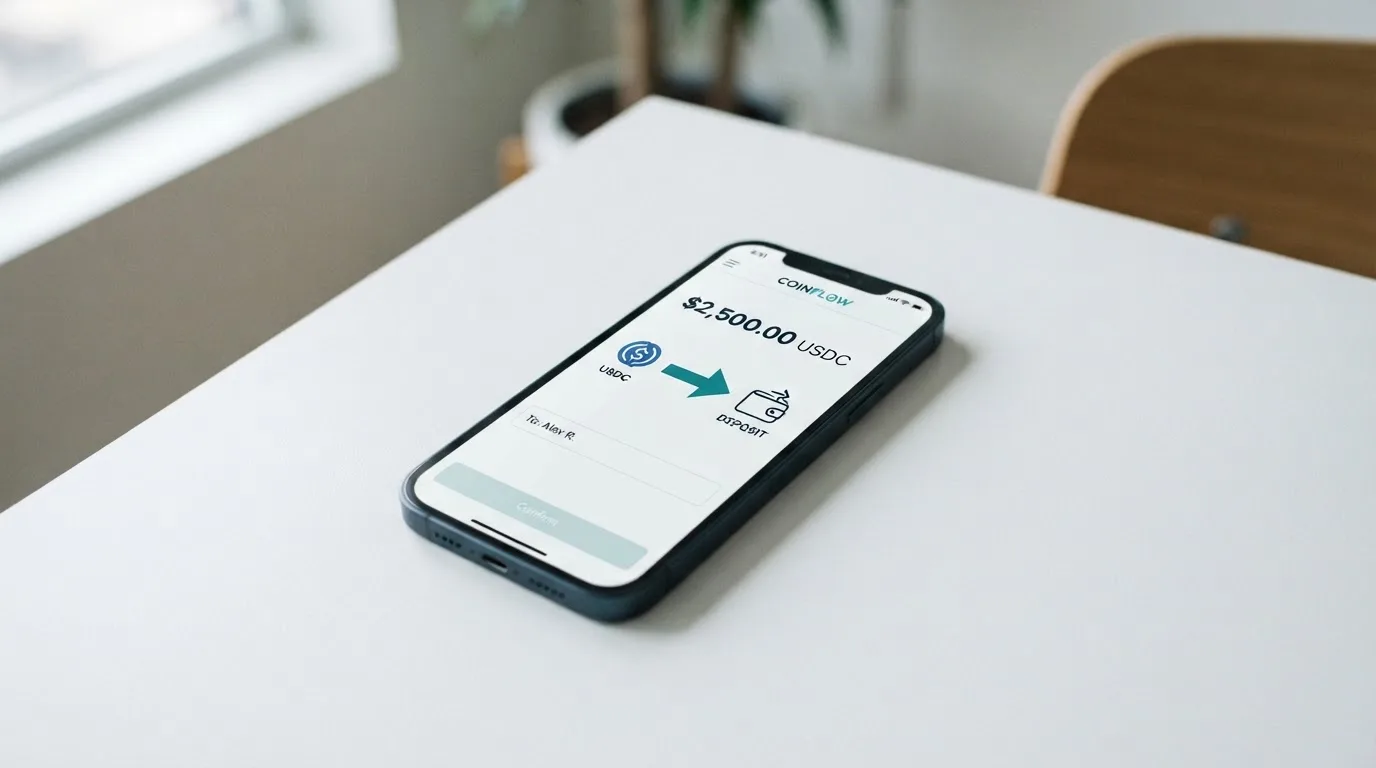
The way the top-up works in practice is: you already hold crypto on Binance, the card has no balance of its own, and at the moment of payment the platform sells the asset you have put at the top of the priority list. If you hold only BTC, that is what gets sold; if you have a stack of stablecoins above it, those get sold first and you keep the BTC untouched. The choice is yours, and the priority list is a useful knob for tax planning and for keeping a long-term position intact while you spend.
A few practical warnings that belong in this section, because they are about top-ups even though they are general to crypto:
- Network choice on deposit. If you fund the Binance account from another wallet, you choose the network at the deposit step. Pick the wrong network (sending USDT on a chain the exchange does not support, for example, or sending USDC on Tron, which Circle no longer supports natively) and the funds are not lost forever, but they will need manual support recovery, and there is no guarantee. The 2026 list of networks Circle lists for USDC does not include Tron; older deposits there can still be a problem.
- Gas fees. Network fees are charged by the blockchain, not by the card. ERC-20 transfers on Ethereum still cost gas in ETH, so a wallet with USDT but no ETH cannot send. That is a wallet-level problem, not a card-level one, but it will bite you the first time you try to move stablecoins from a self-custody wallet to Binance.
- Stablecoins are not perfectly stable. The TerraUSD collapse in 2022 and the USDC depeg in March 2023 are reminders that a stablecoin can move against its peg. If your priority list puts USDC at the top and USDC is at a discount to the dollar, you are paying that loss at the moment of conversion. The card does not protect you from this; it only converts what is in the balance.
- Sanction screening still applies. Stablecoin issuers can and do freeze addresses on sanctions lists. Tether has done this. If the address you are sending from ends up on a list, the funds can be held by the issuer, not by the card.
A note on stablecoins that often surprises readers. Tether’s USDT and Circle’s USDC make up around 90% of stablecoin market capitalisation by recent industry counts, and Circle publishes monthly reserve attestations and describes USDC as redeemable 1:1 for USD, mostly backed by cash and cash equivalents including an SEC-registered government money market fund. That is reassuring, not absolute. It is a reason to prefer USDC over a smaller stablecoin for everyday card use, not a reason to skip thinking about the peg.
Paying with the Binance card every day
For a Brazilian cardholder, the daily-use story is the strongest part of the product. The card is virtual and physical, denominated in BRL, and it works with Apple Pay, Google Pay, Mercado Pago and 99Pay, per the aggregators. That is a real wallet, not a marketing line. You can pay at a supermarket terminal, in an app, on a website, and at an ATM (with the two-free-per-month allowance).
The cashback programme is what makes the everyday case more interesting. The unofficial Brazilian tiers run from 1.5% under 500 BRL a month to 2% from 500 BRL and 3% from 5,000 BRL, with a 500 BRL cap and the cashback paid in BRL. Kkinvesting (October 2026) describes a different structure paid in USDC, with 1.5% from the first dollar, 2% from 100 USD and 3% from 1,000 USD, credited by the tenth of the following month. SpendNode (August 2026) frames it as up to 3% in BNB for APAC, MEA, Australia, New Zealand and Brazil, and up to 2% in LATAM and CIS. These are not the same programme described three ways; they are three different programmes, none of which appears on Binance’s own page. The honest summary is: there is a cashback, it is somewhere between 1.5% and 3% depending on where you are and which aggregator is right, and the cashback currency varies by region.
The Binance app, which is what you will use to manage the card, sits at a 4.7/5 in the App Store with over 117,000 ratings (SpendNode, August 2026). That is not a card-specific rating, but the card lives inside the app, so a stable, well-rated app is part of the daily-use experience. The card page advertises 24/7 chat support and a support-centre link, both of which are the general Binance support channels rather than a card-specific desk.
Two daily-use behaviours that are worth keeping in mind:
- 3-D Secure. Online payments will often be challenged with a one-time code or a biometric step, in line with the EMV 3-D Secure 2 standard that Mastercard runs as Identity Check. That is part of the experience, not a glitch. Approve it and the payment goes through; do not approve it and the payment fails.
- Holds on authorisations. A declined or held authorisation can leave a hold on the funds for up to a week, even when the merchant does not actually capture the money. If your priority list is tight, plan for that.
Disputes and refunds are the rougher edge. The Binance support FAQ says to contact support immediately for an unauthorised transaction, with explanation, transaction records and receipts; the card transactions FAQ tells you to contact customer support for disputes and refunds; time frames are not stated. The Binance terms also note that the user is liable for credited amounts in case of chargeback and that a chargeback can lead to suspension or restriction of the account. Translation: the dispute path is open, but the platform can also come after you for a chargeback that goes the other way. None of this is unique to Binance, but it is the everyday reality of running a balance on a custodial platform.
What can go wrong with the Binance card
A payment card that is denominated in one country and held by a customer in another is a familiar source of friction, and the Binance card is no exception. A few of the things that most often go wrong are worth walking through.
The programme can shrink. Visa’s 2022 termination of its global agreements with FTX and the FTX US debit card wind-down is the canonical example. The older WaveCrest suspension in 2018 closed every crypto card programme that issuer ran in Europe in a single stroke. Binance’s own card programme contracted sharply at the end of 2023, when EEA and UK support ended. The card you apply for today may not exist in its current form in two years, and the historical pattern across crypto cards is that the user gets a notice period, then the card stops spending, then the user is asked to withdraw the remaining balance. Plan for that.
The issuer reference is drifting. The 2023 release named Dock as the issuer. By 2026, aggregators name Immersve globally and Pomelo in Brazil. This matters because the issuer is the entity that actually holds the banking relationship, the BIN and the regulatory licence. If the issuer on your card is not the issuer you were promised, the dispute path, the regulator you complain to, and the safeguarding of your balance are all different. You may not be able to tell which is which from the card itself.
Trustpilot and complaint-site signals are mixed. Trustpilot disabled Binance’s TrustScore after detecting fake reviews; that is a Trustpilot decision, not a card-quality verdict, but it is what you would find if you went looking. The Brazilian complaints site Reclame Aqui has surfaced allegations of uncredited promotions, unauthorised charges and dispute-handling problems. These are allegations, not findings, and they are from third-party complaint platforms rather than from a regulator, but they are a fair representation of what the user community is saying.
The card is prepaid, not credit. The launch release calls it a “prepaid crypto card”. A prepaid card draws on a stored balance; it cannot overdraw, and it does not give you the consumer protections of a credit card. In the US, debit reversal rights come from Regulation E, credit rights from Regulation Z, and prepaid-card coverage varies; do not assume your card has the same protection as a credit card just because it carries a Mastercard logo.
Crypto is irreversible. A card payment funded by a crypto sale is, on the crypto side, a transaction that cannot be reversed by the network. If a merchant charges you twice or ships the wrong item, the dispute is between you, the merchant and the card issuer; the network cannot claw the funds back for you. If you are the one who sent crypto to the wrong address, the network will not help you recover it. The seed phrase, the address book, and the network choice are your responsibility, and the card does not soften that.
Account-level risks apply. Binance is a custodial platform. The list of custodial failures is long: Mt. Gox, Coincheck, Ronin Network. The card does not change that. The Brazilian card programme is operated by Pomelo, an e-money institution, and Pomelo’s safeguarding regime applies to the fiat balance, not to the crypto that funds the conversion. The crypto sits with Binance until the moment of conversion, and Binance’s risk applies to it.
KYC and sanctions can stop you mid-flow. Brazilian onboarding asks for CPF, photo ID and a selfie. Nationality and country of birth are screened separately from residence. If a sanction check trips, the account can be frozen pending documents, and the EU framework explicitly requires institutions to end relationships where due diligence cannot be completed. This is a general policy of regulated card programmes, not a Binance quirk, and it is worth treating the KYC pack as something to get right the first time.
A short version of this section, if you are skimming: the card is fine, the platform is the same kind of risk as any other custodial crypto platform, and the issuer reference is the part I would keep an eye on.
What to take instead of the Binance card
Three alternatives came out ahead of the Binance card: Bybit Card (6.0/10), OKX (6.2/10) and Coinbase Card (6.4/10). They are not in a strict order; they are three different answers to the question of which crypto card to use, and the right one for you depends on where you live, what you spend in, and how much you want the rewards to dominate the choice.
| Card | Score | Best for | Where it works | What you give up |
|---|---|---|---|---|
| Bybit Card | 6.0/10 | Tiered cashback and Pay-Later | Argentina, AIFC (Kazakhstan), Georgia, Kazakhstan, Australia, Mexico, Brazil, Peru, Asia Pacific | Explicitly excludes the EEA; rewards paid as points convertible to USDT |
| OKX | 6.2/10 | EEA residents in euro | EU plus Norway (Iceland and Liechtenstein excluded) | Mastercard virtual debit in euro; no physical card mentioned; no cashback on USDC |
| Coinbase Card | 6.4/10 | US residents who want a Visa debit | All US states except Hawaii | Crypto conversion spread; rotating crypto rewards rather than a fixed cashback |
A few more words on each, in case the table is not enough.
Bybit Card. The headline on Bybit is the tier structure: Base 2%, Beta 2% from 500 USD monthly spend, Alpha 4% from 3,500 USD, Apex 6% from 9,500 USD, Omega 8% from 12,500 USD, and Infinite 10% from 25,000 USD, paid as points convertible to USDT. From October 2026 only crypto-funded transactions earn, fiat-funded spending does not. The card is virtual and physical in most supported regions, with the network and currency varying by country (Mastercard prepaid in Argentina, Mastercard credit in AIFC, Georgia, Kazakhstan, Australia and Mexico, Visa prepaid in Brazil and Peru, Visa credit in Asia Pacific). Issuance is free in most regions; physical issuance is 29.99 USD in Australia and 29.99 USDT in Georgia, Kazakhstan (AIFC) and Asia Pacific. The platform explicitly excludes EEA customers, and the fiat-service restricted list includes Belarus, Russia, Serbia, China and the United States, with no card-specific citizenship rule. If you are in a Bybit-supported country and you spend enough to clear the lower tiers, the Bybit card is a stronger rewards product than Binance; if you are in the EEA, it is not available to you at all.
OKX. The OKX card is a Mastercard virtual debit, denominated in euro, linked to OKX Pay, issued by an unnamed European licensed payment provider. The card is targeted at the EEA plus Norway, with Iceland and Liechtenstein excluded (the summary says “entire EEA”, which contradicts the country list). Fees are described as zero card fee, zero transaction fee, zero OKX FX fee, with a conversion spread of 0.1% per the May 2026 explainer, compared to the 0.4% market spread in the earlier launch press release. Funding is in USDC or USDG held in OKX Pay; other coins must be converted first, and there is no auto top-up. Cashback is only on USDG purchases; USDC earns none. Tiers range from 2% capped at 10 EUR a month for Regular users to 10% capped at 1,000 EUR (unofficial figure not confirmed by the card) for VIP4+. For an EEA user with euro-denominated spending, this is a clean answer; for anyone outside the EEA, it is not the product.
Coinbase Card. The Coinbase card is a Visa prepaid debit, virtual or physical, available in all US states except Hawaii. Account opening follows the USA PATRIOT Act identity rules, and there is no other-country availability. The card spends cash or crypto, with all crypto converted to USD at the moment of purchase. Fees are zero spending fees and no annual fees, with the spread on Coinbase’s buy, sell and trade operations acting as the conversion cost. Rewards are optional crypto rewards on every purchase for US card users, with a variable rate and a rotating list of reward tokens. The card’s strength is the regulatory standing of the issuer and the simplicity of the pricing; its weakness is that the conversion happens at the Coinbase spread, which can be more or less than 0.9% depending on the asset and the moment. For a US-based user, this is the obvious comparison; for anyone else, the card is not available.
A short note on what is not in the table. The Wirex card, the Crypto.com card, the Nexo card and the Alchemy Pay options all come up in similar reviews, and they are reasonable answers in their own right. The reason they are not on the list here is that the focus was on the three alternatives above; if you are choosing between cards, those three are the ones compared directly against Binance, and the scores are the ones established in this review.
Who I would recommend the Binance card to
The honest answer is: a fairly narrow reader. The card is worth considering if you are a Brazilian resident who already keeps crypto on Binance, you want a prepaid card in BRL, you are happy with a small BRL cashback, and you do not need a credit card’s consumer protections. In that case the card is functional, the fees are reasonable, the wallet support is real, and the unofficial cashback tiers give you a small return. The downsides (a thin official document, a drifting issuer reference, a custodial platform underneath) are real but not disqualifying for an everyday spending tool.
If you are outside Brazil, the card is not officially available to you, and the unofficial footprint is shrunken enough that I would not count on it. The right answer is one of the alternatives above, picked by region: Coinbase for the US, OKX for the EEA, Bybit for the Bybit-supported countries where the tier structure rewards your monthly spend.
If you are inside Brazil but you are uneasy about the issuer drift, the right move is to use the card for everyday spending, keep the bulk of your crypto in a self-custody wallet, and only move what you plan to spend into the Binance Funding balance. That way the card’s daily-use story stays useful and the platform-level risk on the rest of your stack is yours to manage.
Frequently asked questions
What is the Binance card?
The Binance card is a prepaid Mastercard that draws on the crypto and fiat balances inside your Binance account. Officially it is available in Brazil, where it is offered as virtual and physical in BRL, with support for Apple Pay, Google Pay, Mercado Pago and 99Pay. Third-party sources also list Australia, New Zealand, Peru and a handful of other countries as still verified, though the official pages do not confirm that.
How does the Binance card work?
The card has no balance of its own. When you pay, Binance sells the asset at the top of your payment priority (for example USDC, then USDT, then BTC) and the card settles the merchant in BRL or another supported currency, depending on the card you hold. The conversion fee is 0.9% on most assets (0.1% on USDC, per unofficial sources), and the FX fee is 2% in most regions.
Is Binance a bank?
No. Binance is a cryptocurrency exchange. The card is issued by a separate entity (the 2023 release named Dock, while 2026 aggregators name Immersve globally and Pomelo in Brazil), and the card programme operates under an e-money or payment-services licence, not a banking licence. Funds on the card are not bank deposits and are not covered by deposit guarantee schemes.
Who owns Binance?
Binance is operated by a group of entities, including the ADGM-registered Nest Exchange Limited, Nest Clearing and Custody Limited and Nest Trading Limited (regulated by the FSRA in Abu Dhabi, per the binance.com footer as of 2026-10-20). Binance’s founder and former CEO is Changpeng Zhao. The card-specific operating entity is not stated on Binance’s own pages; the unofficial sources name the issuers listed above.
Is the Binance card available in my country?
Officially, only Brazil. Third-party sources list Australia, New Zealand and Peru as still verified, and CryptoCardHub lists Armenia, Brazil, Colombia, Mexico and Peru as available. The EEA and UK card programmes ended in December 2023, and the US never had the card. None of these unofficial claims is confirmed by Binance, so the only country where the answer is “yes” with confidence is Brazil.
How do I apply for the Binance card?
You start in the Binance app, complete the platform’s KYC, and enrol for the card in the cards section. In Brazil that typically involves a CPF tax number, a photo ID and a selfie. The card is prepaid Mastercard, virtual and physical, with the physical card delivered in about 14 days (per one aggregator) and the virtual card available instantly.
Does the Binance card require KYC?
Yes. The card issuer requires KYC, including photos and documents, as part of the onboarding. The exact KYC levels and review times are not stated on Binance’s own pages; unofficial sources describe a Brazilian pack of CPF, photo ID and selfie. Nationality and country of birth are screened separately from residence.
How do I top up the Binance card?
There is no separate card balance to top up. The card draws on your Binance Funding and Spot balances. You can fund the Binance account by depositing crypto from another wallet (choose the network carefully) or by buying crypto inside the app. The card spends from the payment priority of 3 to 12 assets you set in the app.
Is the Binance card safe?
The card is a prepaid Mastercard, which gives you a standard set of network-level protections (3-D Secure, dispute paths, fraud reporting), but it is not a credit card and the consumer protections are not the same. The platform underneath is custodial, which means the crypto you hold on Binance is exposed to platform-level risk. Trustpilot disabled Binance’s TrustScore after detecting fake reviews, and the card’s own pages do not publish a fee schedule; the user community has surfaced allegations of uncredited promotions and dispute handling problems. Treat the card as a spending tool, not as a savings account.
Is the Binance card worth it?
For a Brazilian resident who already keeps crypto on Binance and spends in BRL, the card is a reasonable everyday tool: low conversion fees, a small BRL cashback, and broad wallet support. For anyone outside Brazil, the card is not officially available, and one of the alternatives in this review (Coinbase for the US, OKX for the EEA, Bybit for Bybit-supported regions) is likely a better answer.
Exchange cards – cryptocardsearch.com
Content created by the «cryptocardsearch.com» team