
Zebec card review — three Mastercard prepaid tiers, one wallet, a few rough edges
 Available in US
The Zebec card is a prepaid Mastercard that draws on a balance funded from the Zebec wallet, which holds more than 180 tokens across 21 or more blockchains. There are three tiers (Silver, Carbon and Black), each with its own country list, fees and limits, and the everyday experience is built around Apple Pay and Google Pay rather than a piece of plastic. If you already use the Zebec wallet, the card is the obvious way to spend that balance in shops and online; if you do not, the rest of this review walks through what you would be signing up for, including the parts the marketing pages do not spell out.
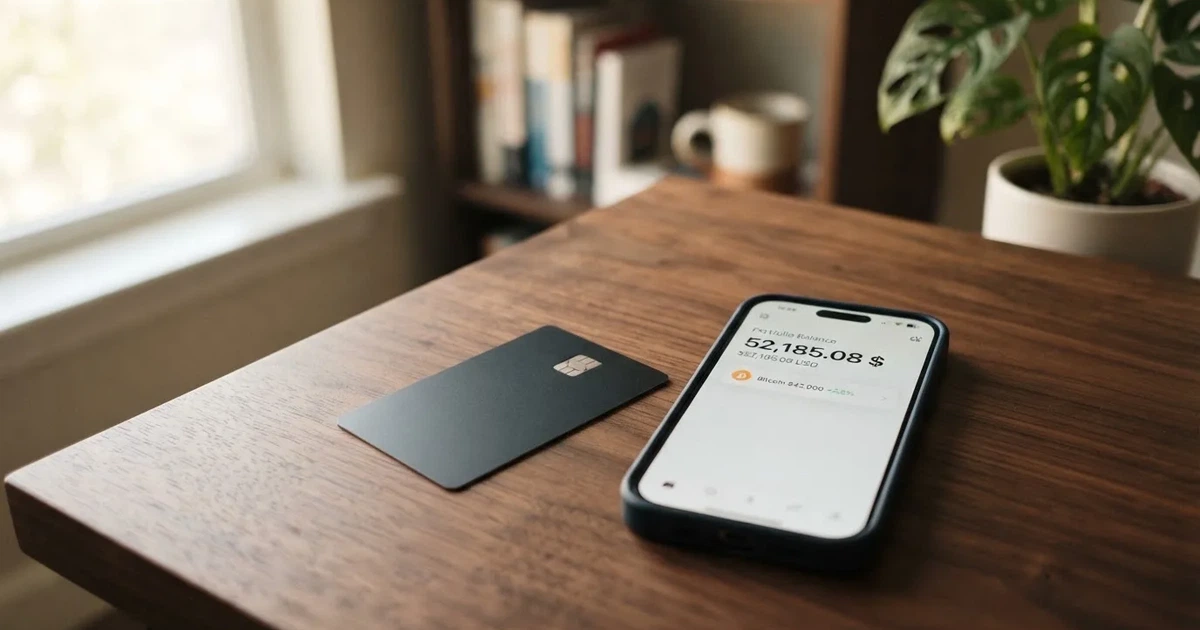
Conditions on the card programme are current as of October 28, 2026.
Verdict: a 7.1 out of 10, with a few caveats
I worked through the card’s three tiers, the costs, the top-up path, the everyday experience and the parts where the official pages are quiet, and my overall mark is 7.1 out of 10. The card does several things well — wide token support, a clean prepaid model, no sign-up fee on the two entry tiers, mobile wallet support on every tier — but it loses marks on a few things that matter: the issuer, BIN sponsor and legal entity are not named, the Black tier is currently “temporarily offline for upgrades”, and the third-party directory I checked, CryptoCardHub, rates it 3.3 and ranks it #23 of 86. There is also a real ambiguity in the public materials: the availability page says Carbon USD International is offered in “90+ countries” while the Carbon page says “over 70 countries”. Those two numbers should agree, and they do not.
| Criterion | Mark | Why |
|---|---|---|
| Who can get it | 8 / 10 | Three tiers with overlapping but different country lists; Silver and Carbon cover the US, Canada, the UK, Gibraltar, Guernsey, Isle of Man, Jersey, the EU (except Malta), and 90+ non-US/Canada countries for Carbon USD International; Black is global subject to sanctions |
| Cost | 8 / 10 | Silver and Carbon have no sign-up or transaction fees; Black charges activation, top-up and monthly fees; “variable FX fees may apply” but the exact percentages are not stated |
| Top-up options | 9 / 10 | Funded from the Zebec wallet, which holds 180+ tokens across 21+ blockchains; the specific coins are not listed |
| Reliability and complaints | 5 / 10 | No issuer, BIN sponsor or legal entity named; no complaints or reviews found; the Black page shows “offline for upgrades”; CryptoCardHub gives 3.3 |
| Everyday use | 5 / 10 | All three tiers are Mastercard prepaid with Apple Pay and Google Pay; whether you get a physical card and ATM access is not stated in the public pages |
The card suits you if you hold tokens on multiple chains and want a single prepaid balance to spend from, if you cannot easily get a bank card in your country, and if you are happy to work inside the Zebec app. It is less suitable if you need a transparent fee schedule in writing, if you need a physical card at the point of signup, if you want cashback or rewards, or if you need a card programme with a clear licensed issuer behind it.
Who will they give you the card
Eligibility is by country of residence, which Zebec calls the “issue location” — the country where you declare your home address and apply. Citizenship is not part of the rule as the card states it, but the residence check is enforced by IP and declared address, so a VPN does not move you to a different country for this purpose. Silver’s US programme is restricted to US residents, which means it also includes Puerto Rico, the US Virgin Islands, Guam, American Samoa and the Northern Mariana Islands. Silver GBP is for UK residents plus Gibraltar, Guernsey, Isle of Man and Jersey. Silver EUR is for EU residents, with Malta explicitly excluded. Carbon USD International opens the door to more than 90 countries outside the US and Canada — the list is shown at sign-up and the named examples include Japan, Singapore, Brazil, Kenya and Uruguay. Black is described as global, subject to sanctions, which means there is no residence list but there is a sanctions list.
There is a separate compliance list of places where the cards “cannot be used”, regardless of which tier issued them. That list includes the Russian Federation and Belarus alongside Iran, Cuba, Syria and North Korea. The restriction is on the location of use, not on your nationality, so a card issued in the EU will still be declined at a terminal in Moscow. This is the rule the card states, not a suggestion, and you should treat it as part of the deal.
A small note on the public materials, because it tripped me up: the availability page says Carbon USD International is offered in “90+ approved countries” while the Carbon product page itself says “over 70 countries”. Both come from Zebec, and both are official, so the public pages disagree with each other. If you are in a country that matters here, the list shown inside the app at sign-up is the one that will actually be applied.
How to get it
The flow is to order a card inside the Zebec Web or Mobile SuperApp and then fund it from the Zebec wallet. You do not apply through a bank. The three tiers differ in important ways that the marketing pages gloss over: Silver is a single-use prepaid card — each issuance gives you a new card number — and comes in USD, EUR or GBP depending on your region. Carbon is reloadable, keeps the same card number across reloads, and also comes in USD, EUR or GBP. Black is positioned as a premium reloadable card in USD (the Black product page also shows EUR and USD cards with other fiat “planned”). Whether you receive a physical card, a virtual card, or both, and whether ATM access is included, is not stated in the official materials I read.
KYC requirements differ by tier. Silver needs a local phone number in the region because two-factor tokens are sent by SMS. Carbon USD International uses email tokens instead, which is one reason it covers so many countries. Silver’s blog describes “limited KYC based on address” with activation “in seconds” after email confirmation; Black’s page says KYC information must be submitted to activate and cites activation “in under a minute” after KYC. The full KYC document list, the KYC tiers, the official reasons for rejection, and the official processing time for Silver and Carbon are not stated in the public pages. A third-party directory, CryptoCardHub (undated), describes Zebec cards as virtual with a physical card planned or not widely distributed; treat that as unofficial and unconfirmed.
Delivery time for any physical card is also not stated; the docs and the Black page describe digital activation only. If a physical card is critical for you, confirm it inside the app before you sign up.
Fees: what it really costs
The card’s pricing depends a lot on which tier you choose, and the official pages are clearer about the entry tiers than about Black. Here is what is published, copied exactly:

| Fee or limit | Silver | Carbon | Black |
|---|---|---|---|
| Issuance / sign-up | None | None (described as a no-fee promo, subject to change) | Activation fee applies (amount not stated) |
| Transaction fee | None | None (no-fee promo) | Not stated |
| FX fee | “Variable FX fees may apply” | “Variable FX fees may apply” | Not stated; crypto conversion, exchange and gas fees also variable and additional |
| ATM fee | Not stated | Not stated | Not stated |
| Top-up fee | Not stated (only “variable FX fees may apply”) | Not stated | “Approximately 2%” plus a $0.30 per-transaction fee |
| Monthly fee | None | None | $1 monthly |
| Minimum load | $10 | $10 | Not stated |
| Load limit | $1,000 per load | $1,000 / £1,000 / €1,000 per the cards page; the Carbon page itself says $10,000 USD per load | Up to $10,000 per load |
| Maximum balance | $1,000 | $10,000 / £5,000 / €5,000 | $50,000 |
| Daily spend | Not stated | $10,000 (USD) | Not stated |
A few everyday examples, walked through the way you would actually run into them:
- A coffee paid in your card’s currency. If you are on Silver or Carbon, no sign-up fee, no transaction fee, no conversion. That is the cleanest case the card has, and the one its pricing is built around.
- A coffee paid in a currency that is not your card’s currency. “Variable FX fees may apply” is all the docs say, and the crypto conversion rate “varies by token”. The Silver blog adds that you can avoid FX fees by matching the card denomination to the funding currency, which is a useful tip but does not give you a number. The actual FX percentage is not published anywhere I could find.
- A top-up onto Black. Roughly 2% on the top-up, $0.30 per transaction, plus whatever gas, crypto conversion and exchange fees the underlying chain and the conversion path add. That can stack up fast on smaller loads, and the percentages are not exact.
The honest summary is that the entry tiers are attractively free, Black is meaningfully more expensive in ways that are not fully disclosed, and the foreign-currency picture is the part where the marketing pages are most economical with the truth.
Top up: how the card gets its balance
Funding is from the Zebec wallet: the card does not accept a bank transfer or a card-to-card top-up, it spends the balance the wallet holds. Zebec describes the wallet as supporting “180+ tokens across 21+ blockchains”, which is a wide net, but the official pages do not list the specific coins. In practice, you fund the wallet with whatever the app accepts, then load from the wallet onto the card. The minimum load is $10 on Carbon; the maximum load and maximum balance are what the table above shows for each tier.
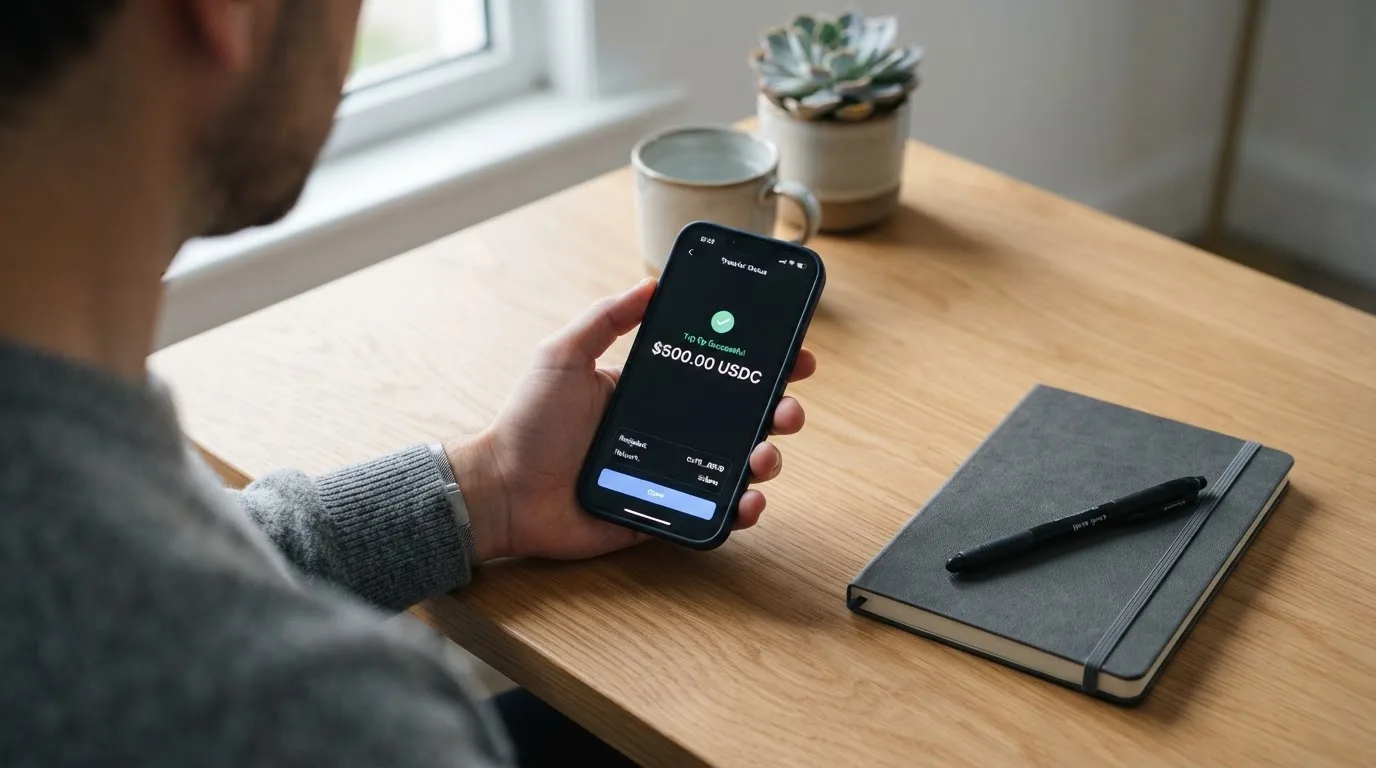
The mechanics matter here, because the card balance is in fiat (USD, EUR or GBP depending on tier) and the wallet holds tokens. Somewhere in the flow the tokens are converted into the card’s fiat, and that conversion is where the fees and the FX exposure live. The published rate “varies by token” and the fees attached to that conversion are not spelled out; you see them in the app at the moment you confirm a load. If your wallet only holds a small-cap token on a chain with high gas, that load is going to cost you more than the headline “no transaction fee” suggests.
There is no published “fiat top-up” path: the card is fed by the wallet, not by a bank account or a debit card. Withdrawals from the card back to the wallet or to a bank account are not stated on the pages I read. If you think of the card as a one-way valve from wallet to merchant, that is closer to how it actually works.
Paying with it every day
All three tiers are Mastercard prepaid, and all three support Apple Pay and Google Pay. That is the everyday case the card is built for: tokenise the card into a mobile wallet, tap to pay in shops, and use the card number for online purchases. The blocked merchant categories — for example, gambling, which the wider card industry often restricts by policy — are not stated on the official pages, and the dispute, refund and chargeback process is also not described (the only contact path mentioned is [email protected]). If a transaction goes wrong, you are at the mercy of a support email.
There is no cashback programme. The only reward mentioned is that staking $ZBCN earns “extra rewards”, and the rate is not stated. If you compare this to a card that gives you 1% or 2% back on every purchase, the Zebec card is the wrong tool for that.
The app is the Zebec Mobile SuperApp on iOS and Android, with a Web SuperApp as well. The iOS App Store listing I read (the AE store) showed 5.0 out of 5 from 2 ratings, in English. The Google Play rating is not stated. Two ratings is not a sample size to lean on, and it is worth noting that the app store a reader sees depends on their country, so the rating in your store may be different.
What can go wrong
A few things are worth weighing up before you load a non-trivial amount.
The issuer, BIN sponsor and legal entity are not named. Mastercard appears as a network partner, but the licensed institution actually issuing the card is not disclosed in the public materials. The card programme’s “backend processing partner” for Black is named as Mobilum, but that is a processor, not the issuer. The practical upshot is that if the programme is suspended or wound down, the counterparty you need to deal with is not the name on the front of the card.
No complaints, but no reputation either. I could not find a Trustpilot page or meaningful Reddit threads on Zebec cards. CryptoCardHub, a third-party directory, rates the Zebec Card 3.3 and ranks it #23 of 86 cards it tracks. That is a low third-party score and a mid-table rank, but the sample is whatever the directory aggregates, and I could not confirm how current it is.
The Black tier is currently “temporarily offline for upgrades”. The Black product page shows that message with expected resumption in Spring 2026; whether it has actually resumed since is not confirmed in the public materials. UK availability for Black is also described as restricted pending regulatory review. If you are picking a tier for the long term, treat Black as the one with the most moving parts.
Custody of the card balance is not stated. Zebec says the wallet is separate from the app — that is, a non-custodial connection between the wallet and the SuperApp — but the card balance itself is held with the card programme, and which entity holds it, under what safeguarding regime, is not stated. In the EU, an e-money institution has to segregate customer funds, but the card programme’s jurisdiction and licence are not on the page.
No dispute or chargeback process is described. Only “contact [email protected]” appears on the cards, Black and payees pages. If you dispute a transaction, the path is an email, not a formal chargeback workflow with reason codes and a clock.
Sanctions and restricted use. The cards “cannot be used” in a compliance list that includes the Russian Federation and Belarus alongside Iran, Cuba, Syria and North Korea. The restriction is on the place of use, not on your citizenship, and the card network enforces it, not Zebec.
Stablecoin and network risks apply, because the wallet is the funding source. Transfers are irreversible. A deposit sent on a chain the provider does not support, or to an address on a different network, can be lost or need manual recovery with no guarantee. Tether says it disables tokens in wallets on the OFAC sanctions list and has frozen funds tied to illicit activity, so stablecoins are not censorship-proof and you should not treat them as untraceable cash.
What to take instead
The Zebec card is not the only prepaid option in this corner of the market. Here is a quick comparison, scored the same way the main card is, with the headline trade-offs.
MetaMask Card (7.1 / 10). Sign-up is open in 45 listed countries and territories, with other regions on a waitlist; US and UK sign-ups are temporarily closed. You need proof of residency. The card is Mastercard, virtual first, with a Metal version pre-orderable in the app after the Virtual is approved; one card per user; issued by Monovate, with Crypto Life as the card provider. The Virtual is free with no annual fee; the Metal is $199 a year. Fees are described as “minimal” per transaction, with no MetaMask fees and no foreign transaction fee, using the Mastercard rate. It spends directly from the connected wallet on Linea, Base, Monad and Solana, with named tokens including mUSD, wETH, EURe, GBPe, USDC and USDT. Cashback is paid in mUSD into the Money Account: 1% on Virtual, headline 3% on Metal (with a footnote that drops to 1% above $10,000 spent), plus a $FLY bonus through the Blackbird dining app.
KAST (6.1 / 10). Eligibility is shown only at KYC, with a country list that is referenced but not published; KAST also checks the ID you hold, so a dual citizen with a supported-country ID can pass. The card is Visa, with up to 10 cards per user: Visa Platinum Standard, Visa Infinite metal Premium, Visa Infinite gold-plated Private, plus themed designs (Pengu, Solana, Bitcoin). Pricing is membership-based: Standard $0, Premium $1,000 a year, Private $10,000 a year, billed annually; extra virtual cards cost $2, the standard physical card is free with a $40 delivery fee, and there is a $1 a month inactivity fee after 12 months. Stablecoin top-ups (USDT, USDC, PYUSD, RLUSD on Ethereum, Solana, Polygon, Arbitrum and TRON) are 0%, USD card spend is 0%, non-USD FX is 0.5%–1.75% depending on residence, transaction country and programme. Cashback is in USD: 1.5% (Standard, first $2,000 a month), 2% (Premium, first $10,000), 3% (Private, first $40,000), plus KAST Points on Premium and Private.
Zeal (6.1 / 10). Spend is accepted in 150+ countries, but issuance depends on regional eligibility; the underlying Gnosis Pay programme is live in the EU, the UK, Brazil, Colombia, Mexico, Japan, Singapore, the Philippines, Indonesia and Thailand, with Mexico, Colombia and Bolivia called out in Zeal’s update notes. The card is Visa, virtual-first, addable to Apple Pay, with accounts in EUR, USD and GBP. There is no published fee schedule on the Zeal site or its App Store page, and Zeal says it does not charge an additional FX fee — conversion is at the Visa wholesale rate, with Gnosis Pay’s own fees (ATM, for instance) still applying. Cashback is up to 4% in GNO on Gnosis Chain, with the GNO held in the card Safe to qualify; the App Store also advertises up to 5% variable APY on EUR/USD balances.
If you want the simplest path with the widest token list, Zebec and MetaMask are the closer match. If you want a published fee schedule and clear USD cashback, KAST is the more transparent pick, especially at Premium and Private. If you want a self-custody wallet feeding a card and you are happy inside the Gnosis ecosystem, Zeal is the more on-chain option.
Who I would recommend it to
I would recommend the Zebec card to a reader who already keeps tokens across many chains, has a Zebec wallet they are comfortable with, and wants a single prepaid balance to spend from a phone. The Silver and Carbon tiers in particular are priced at zero on the headline fees, which makes them a reasonable default for small, regular spending — a coffee here, a subscription there — as long as you stay in the card’s currency and you do not push the FX and conversion costs to the back of your mind.
I would not recommend it to a reader who needs a transparent, written fee schedule, a physical card guaranteed at signup, a named licensed issuer on the page, a cashback programme, or a card programme with a public reputation. Black in particular is in a “temporarily offline for upgrades” state on the official page, with UK availability restricted pending regulatory review, so picking Black right now means accepting a moving target. If any of those things are non-negotiable, the alternatives above — MetaMask Card for wallet-native spending, KAST for a published fee schedule and USD cashback, Zeal for self-custody on Gnosis — are more honest about what they are and what they cost.
Frequently asked questions
What is the Zebec card?
The Zebec card is a prepaid Mastercard available in three tiers — Silver, Carbon and Black — that spends a balance funded from the Zebec wallet. The wallet holds more than 180 tokens across 21 or more blockchains, and the card converts that balance into USD, EUR or GBP (depending on tier) for everyday purchases. All three tiers support Apple Pay and Google Pay.
How does the Zebec card work?
You open the Zebec Web or Mobile SuperApp, complete KYC, order a card and load it from your Zebec wallet. At purchase, the card balance is drawn down in fiat, and the underlying token conversion happens when you load, not at the moment of tap. The card cannot overdraw, because it is prepaid.
Is Zebec a bank?
No. Zebec describes itself as a decentralised payments infrastructure provider that has been building since 2021, with 250+ enterprise clients and 50,000+ monthly users cited on its pages. The card programme’s licensed issuer and the legal entity behind it are not stated in the public materials I read.
Who owns Zebec?
The public materials I read do not name the owner, the legal entity or the card issuer. Mastercard appears as a network partner logo, and the Black page names Mobilum as a backend processing partner, but the issuer and BIN sponsor are not disclosed.
Is the Zebec card available in my country?
It depends on the tier. Silver and Carbon are country-list programmes: Silver USD for US, Canada, Puerto Rico, USVI, Guam, American Samoa and the Northern Mariana Islands; Silver GBP for the UK, Gibraltar, Guernsey, Isle of Man and Jersey; Silver EUR for the EU except Malta. Carbon USD International is for 90+ approved countries outside the US and Canada (the Carbon page itself says “over 70”, and the two official numbers disagree). Black is global subject to sanctions. The list shown in the app at sign-up is the one that will actually be applied.
Can I use the Zebec card in Russia or Belarus?
No. The cards “cannot be used” in a compliance list that includes the Russian Federation and Belarus alongside Iran, Cuba, Syria and North Korea. The restriction is on the place of use, not on your nationality, and the card network enforces it.
Does the Zebec card require KYC?
Yes. Silver and Carbon both run a KYC check at sign-up; Silver uses SMS tokens to a local phone number in the region, and Carbon USD International uses email tokens. The full document list, the KYC tiers, the rejection reasons and the official processing time are not stated on the public pages.
Is the Zebec card free?
Silver has no sign-up or transaction fees. Carbon has no sign-up or transaction fees, with the docs describing that as a promo “subject to change”. Black charges an activation fee, a top-up fee of “approximately 2%” plus $0.30 per transaction, and a $1 monthly fee. “Variable FX fees may apply” is the language on Silver and Carbon, and the exact FX percentage is not published.
How do I top up the Zebec card?
You top it up from the Zebec wallet. The minimum load is $10 on Carbon. There is no published bank-transfer or card-to-card top-up path; the card is fed by the wallet, and the conversion from token to fiat happens at load time, not at the moment of purchase.
Is the Zebec card safe?
There are good signs and gaps. The card is prepaid, so it cannot overdraw, and the SuperApp supports the usual instant-freeze and 2FA controls. The gaps are that the issuer, BIN sponsor, legal entity and the safeguarding regime for the card balance are not stated, there is no published dispute or chargeback process (only an email to [email protected]), and the third-party directory CryptoCardHub rates the card 3.3 and ranks it #23 of 86. Treat it as a small-balance spending tool rather than a primary card until more of those gaps are filled in.
Wallet cards – cryptocardsearch.com
Content created by the «cryptocardsearch.com» team