
Trustee card, a prepaid Mastercard in name only, and what it actually feels like to spend from one
 Available in US
Trustee is a crypto-finance app built around a single idea: turn a stablecoin balance into something you can tap at a shop or push through an online checkout. The card on offer, a virtual Mastercard for now, is the everyday face of that idea. The pitch on the official site is short and confident: a “Worldwide Crypto Card” that lets you “spend crypto with 0% fees on transactions”. Spend a few minutes with the small print and the picture gets more complicated, and so does the user feedback. This review walks through what the company says, what the unofficial sources report, and what real customers have been writing on Trustpilot, so you can decide whether Trustee fits your situation or whether one of the alternatives near the end makes more sense.
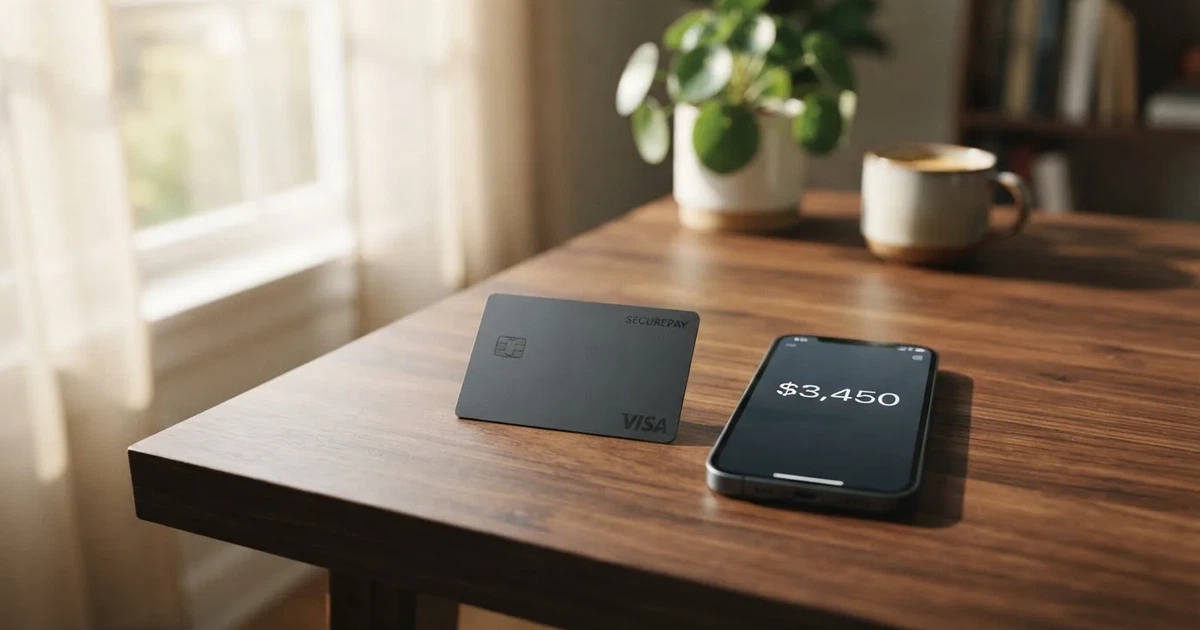
The conditions in this review are current as of October 28, 2026.
Verdict
Trustee earns 5.1 out of 10 in this review. That is not a flattering score, but it is not a warning either. The card is real, it is issued in Great Britain, and it does what it says on the page in the narrow sense: a virtual Mastercard-style number that you load with USDC or USDT and spend in dollars. Where it loses marks is in the gaps: the company does not name a country list, the physical card is paused, ATM withdrawals are not available, the conversion markup is not disclosed, and the public feedback includes a steady stream of frozen-funds complaints. The headline “0% fees on transactions” is true for the network side; it does not mean the total cost of spending is zero.

The card suits a specific reader. If you live in the European Economic Area, or in Ukraine or Moldova according to third-party guides, and you mostly need a virtual dollar card for online subscriptions, software bills and similar payments, and you already hold USDC or USDT, Trustee is worth a look. If you need a physical card in your wallet, if you want to take cash out of an ATM, if you want a published fee schedule you can trust before you sign up, or if you need a long history of clean customer reviews, Trustee is not the right product for you today.
| Criterion | Mark | Reason in short |
|---|---|---|
| Who can get it | 5 / 10 | Country list not published; only “Worldwide” and “Issued in Great Britain”; unofficial guides name EEA, Ukraine and Moldova. |
| Cost | 7 / 10 | “0% fees on transactions” advertised; conversion markup not stated; unofficial sources cite 0.5% on crypto-to-euro, reviews mention up to 2% in practice. |
| Top-up options | 5 / 10 | USDC or USDT only, on networks that are not named, and only via the Trustee Plus wallet. |
| Reliability and complaints | 3 / 10 | Trustpilot at 2.2 from 236 reviews, 56% one-star; recurring theme of funds frozen under AML review with no clear timeline. |
| Everyday use | 5 / 10 | Virtual card available and delivered in minutes; physical paused; Apple Pay and Google Pay supported; ATM withdrawals not available. |
| Total | 5.1 / 10 | A real but narrow product, weighed down by missing disclosures and a loud minority of unhappy customers. |
Who will they give you the card
The official Trustee card pages answer the “where” question with two short phrases. The product is described as a “Worldwide Crypto Card”, and the issuer line says “Issued in Great Britain”. A full country list is not on the page, and the site does not say whether you need to live somewhere specific, hold a passport from somewhere specific, or both. That is the first gap a careful reader will notice: most competing cards publish either an eligible-country list or a “supported in 100+ countries” line with a few examples. Trustee does neither.
Third-party guides fill some of that gap. A comparison site and a forklog guide from 2023 to 2025 describe the card as available to residents of the European Economic Area plus Ukraine and Moldova, and usable wherever Mastercard is accepted. The dating is loose and the guides may now be out of date, so treat this as unofficial background, not as a published rule.
The issuer on the page is named as Wirex Limited, a UK-based electronic money institution. Trustee as an entity does not appear on the card page itself, which is worth knowing if you are comparing licences or trying to understand which company you are contracting with.
The age rule, like the country rule, is not stated on the card page. The wider industry norm is 18 or older for prepaid and debit cards, and Trustee’s KYC flow asks for an ID document, a selfie and an address, which suggests an adult-only product. Proof of address and any additional documents are not listed up front; reviews indicate they can be asked for later, which is a normal pattern rather than a red flag on its own.
If you are reading this from a country the company has not named, your safest move is to start the Trustee Plus app, attempt KYC, and see what the app tells you before you transfer any crypto in. If the app says you are not eligible, the answer is the answer; the country question is settled at the KYC step, not at the marketing step.
How to get it
The full sign-up is done inside the Trustee Plus app, the same app that holds your crypto wallet. There is no web-only sign-up and no branch to walk into. The flow has four pieces, in this order.
First, you install Trustee Plus and create an account. Second, you complete KYC. The KYC screen on the app walks you through a Profile step, an Identity step, choosing your country, picking the “Other method” path, stating the purpose of the account and the source of your income, typing in your residential address, uploading an ID card or international passport, and uploading a selfie. The company says the review “usually takes little time”, but it does not give a fixed number of hours or a fixed cutoff. The reasons for rejection, the existence of multiple KYC levels, and the maximum processing time are not stated on the public pages. Reviews show that an AML review can be added on top of KYC, with funds held until the review is closed, and the review can take weeks.
Third, you order the card. The virtual card is orderable and is issued “in a few minutes”. The physical card is currently shown as “Temporarily unavailable”, with a waitlist option mentioned; delivery time, delivery cost, delivery countries and replacement policy are not stated for the physical card because the physical card is not on sale.
Fourth, you top up the card balance in USDC or USDT. The card currency is the US dollar, so even though the company supports a wider range of tokens in the wallet, the card itself draws on a USDC or USDT balance. The two balances, the wallet and the card, are separate: you top up the wallet, then move value to the card balance.
You need a smartphone to use Trustee: the iPhone app requires iOS 17.0 or higher (version 2.1.6 at the time of writing), and an Android APK is offered on the site rather than going through Google Play. The App Store listing, currently shown in the Nepal storefront, has no rating because there are not enough ratings, and Google Play was not checked here.
What it really costs
The “Fees” section of the site advertises 0% fees on transactions, which is a true statement in a narrow sense and an easy one to misread. It refers to card payment commission, not to the cost of getting your money onto the card in the first place and not to the foreign-exchange cost of paying in a currency that is not the US dollar. You should read it as “we do not add a card-payment surcharge”, not as “everything is free”.
The official fees that are on the page are short:
| Fee or limit | Value |
|---|---|
| Virtual card price | 10.00 $ (listed price, not labelled as a one-off fee) |
| Monthly maintenance fee | not stated |
| Card payment commission | 0% (“0% fees on transactions”) |
| Crypto-to-fiat conversion markup | not stated |
| Foreign-exchange markup on non-USD payments | not stated |
| ATM withdrawal fee and limit | not available; cash withdrawals currently disabled |
| Daily transaction limit | not stated |
| Monthly transaction limit | 30,000 USDC equivalent |
| Card currency | USD |
A few things are worth pointing out. The virtual card is listed at 10.00 $ rather than described as a fee, which is a small wording choice but matters when you compare cards; MetaMask’s virtual card is free, and KAST’s standard virtual card is 0 $ as part of its free tier. The monthly limit is given in USDC, the same stablecoin you load with, so 30,000 USDC is the cap on how much you can put through the card in a month before you hit a wall. Daily limits, and what happens if you hit them, are not stated.
The unofficial picture is more detailed. A guide on cryptocardhub has a 2023 to 2025 figure of a 0.5% crypto-to-euro conversion fee and a virtual card price of EUR 10 (with a note about a promotion that waived it at one point); the physical card was EUR 25 in that source. The same source says monthly maintenance is 0 EUR. Trustpilot reviews, by contrast, mention conversion costs of up to 2% per transaction, which is well above the 0.5% figure and is the kind of thing that pushes the cost score down. ATM withdrawals are not available at the moment, so older guides describing 1.5% + 1 EUR per withdrawal and limits of EUR 2,000 a day do not apply to the card as it stands today.
To make this concrete, three everyday payments:
- An online subscription billed in US dollars. You load 50 USDC, move it to the card balance, and pay. Card payment commission is 0%. If the conversion is in the 0.5% unofficial range, the conversion slice on that 50 USDC is 25 cents. If it is at the 2% end of the reviews, it is 1 $. Either way, well within reason.
- A subscription billed in euros. The card converts at payment time. The card-payment commission is still 0%, but a non-USD FX markup is added on top of the wholesale rate. The page does not state the markup, so a reader has to assume it is non-zero and could be 1% to 2% based on what reviews describe. On a 50 € charge, that is between 50 cents and 1 €.
- An ATM cash withdrawal. Not available. The site says the team is “working on this”, and the physical card is also paused, so there is no working cash path on the card today. If you need cash, the card is not the answer.
The honest summary: the published cost is one number (10 $ for the virtual card, 0% card commission) and the rest is a fog of “not stated”, unofficial 0.5% conversion and reviews that mention up to 2%. If the company published its conversion markup the way MetaMask and KAST do, the cost score would probably move up. Until it does, “0% fees on transactions” is half a disclosure.
How to top up Trustee
Topping up the Trustee card is a two-step dance because the wallet and the card are separate balances. You first move USDC or USDT into the Trustee Plus wallet, and from there you move the funds to the card balance. The site says the move is “usually within up to 5 minutes” once you trigger it. The minimum top-up, the network fees charged by the underlying blockchain, and the list of supported networks are not stated on the card page.
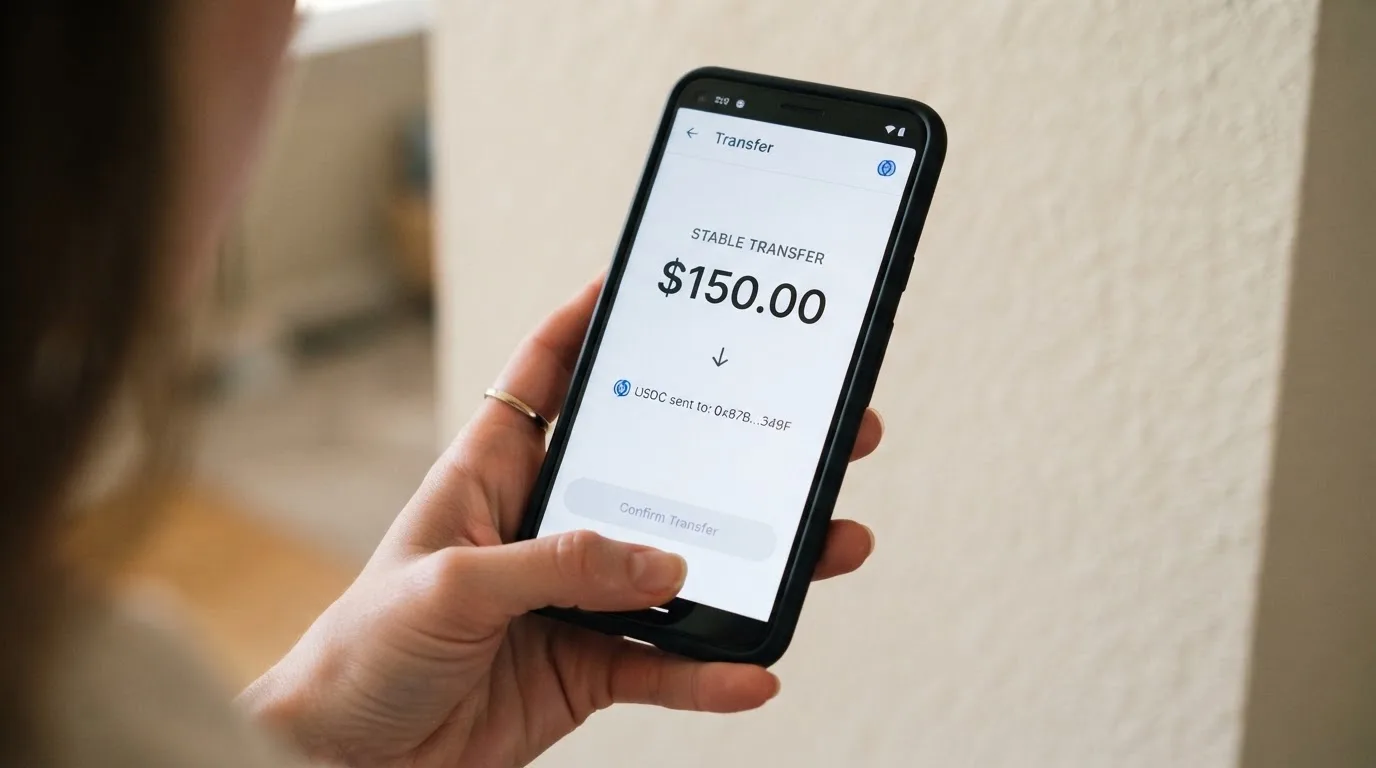
That is a meaningful gap. USDC and USDT live on many blockchains: Ethereum, Tron, Solana, Polygon, Arbitrum, Base, Avalanche, and so on. The card does not say which of these networks it accepts deposits on, or whether it picks one by default, or what happens if you send on the wrong network. The wiki on the site has a “How to add funds to the EUR balance” article and a “Trustee Plus fees” article, but the fees article was not retrievable at the time of writing. The wiki also mentions a personal IBAN for SEPA bank transfers, which is a separate funding path for people who want to top up from a bank account rather than from crypto.
The unofficial guides describe a wider range of assets in the Trustee Plus wallet, around 30, including BTC, ETH, TRX, USDT, USDC and SOL, but they also note that only BTC, ETH and USDT can be spent from the card, with USDC used for wallet top-ups. That contradicts the official “USDC or USDT” line in a way that matters if you were planning to load the card with bitcoin: official sources say no, unofficial sources say yes, and neither source is exhaustive.
If you are topping up from a centralised exchange, the safe order of operations is to check inside the Trustee Plus app what deposit address and what network the app currently shows, send a small test amount first, and only send the full amount once the test has arrived. The reason is a basic fact of crypto transfers: a deposit sent on a network the card provider does not support, or to an address for a different network, can be lost or can require manual support recovery with no guarantee of success.
Cash ATM withdrawals are not available on the card at present, the team says it is “working on this”, and the wiki page about withdrawing to a bank card exists but was not read in full. A card-balance-back-to-crypto path is not described on the public pages either, so closing the card and recovering your balance is not a fully documented process today.
Paying with it every day
Once the card is loaded, the daily-use story is fairly standard. You add the virtual card to Apple Pay or Google Pay and pay at contactless terminals, or you type the card number into an online checkout. The page advertises 3-D Secure in the broader app context, so online merchants that ask for an extra confirmation step will work, but you should be ready for the one-time-code screen to appear.
There are a few practical limits to keep in mind. The card currency is the US dollar, and payments in euros, zloty, pounds and so on are converted at payment time. The conversion markup is the one number the company does not publish, so a 1% to 2% hidden cost is the realistic assumption based on the unofficial sources and the Trustpilot pattern. A monthly cap of 30,000 USDC applies; the daily cap is not stated. Some merchant categories are blocked by some issuers even when the marketing page does not say so; Trustee does not publish a list of blocked merchant categories, and the same gap exists for the merchant countries where the card is known to be accepted versus known to be declined.
A block to keep in mind if you travel: Address Verification Service, the system that checks the numeric parts of a billing address during an online transaction, is mostly used in the US, Canada and the UK, and is generally unavailable for cards issued outside those markets. A Trustee card is issued in Great Britain, so it falls inside the typical AVS markets, but a billing-address mismatch (for example, you typed your address in Warsaw while travelling) can still lead to a decline.
There is no rewards programme on the page. Unofficial sources conflict: one says there is a referral programme and hotel discounts, another says cashback is “in development”, and a sponsored MEXC piece claims up to 8% cashback. None of these is on the official card page, so it is safest to assume there is no cashback until you see it in your own card screen.
There is also no dispute process described on the card or wiki pages. The wider Trustee Plus app has support, and the card pages advertise “real people without bots”, but the formal chargeback path is not documented. One Trustpilot review on a separate Trustee page describes a card being blocked after a chargeback request, which is a useful warning rather than a rule: the absence of a published dispute procedure means you should keep your own records of every transaction.
If you need a card that is invisible to your daily life (no monthly fee drama, no FX surprises, no physical card to wait for), Trustee is closer to that than to the alternative. If you need a card that does more, like cashback, multi-currency accounts, or a published dispute path, you should look at the alternatives at the bottom.
What can go wrong
This is the section the cost score cannot capture, and where the Trustpilot picture matters most. The Trustpilot page for Trustee Plus carries a 2.2 out of 5 score from 236 reviews, of which 56% are one-star and 37% are five-star. The company replies to 98% of the negative reviews, mostly with templated “your funds are safe” messages, and a pattern of complaints is easy to spot:
- Funds frozen under AML review. Multiple reviews from April to October 2026 describe balances locked while Trustee Plus asks for source-of-funds documents. One reviewer reports 21,360 USDT held since 1 October 2026, with the review stretching past 53 days. Another mentions 30+ days. The reviews do not say whether the funds were eventually released; the page does not give a typical AML review timeline, and the templated company replies do not commit to one.
- “Return to source” refunds stuck. From March to October 2026, several reviewers say that refunds they were told would be returned to the original source have not been credited. This is a real concern if you load the card and then need to unwind a payment.
- Copy-paste support. From June to October 2026, several reviewers describe the same scripted reply coming back multiple times, with no escalation to a human who can actually look at the account. The card page advertises “real people without bots”, and the Trustpilot reply rate is high, but the perceived quality of the support is low.
- Lost access or verification revoked. July and October 2026 reviews mention accounts locked out after re-verification failed.
- Card blocked. A July 2026 review describes a card block, with the company reply on 30 July 2026 putting the cause on the card issuer.
There is a separate Trustpilot page for Trustee with 2.5 out of 5 from only 5 reviews, all one-star from June to October 2026. The themes are similar: AML holds, a chargeback followed by account closure on 22 September 2026, and a request for five separate documents on 12 October 2026. The profile is unclaimed, so the company is not replying on that page. It is possible that this page is about a different entity with a similar name, and the reviews themselves flag that ambiguity. The fact that the names overlap is itself a risk worth flagging: if you search for “Trustee reviews” you can land on the wrong one.
The wider context is that crypto platforms and crypto card programmes have been shut down before. Visa terminated its global agreements with FTX in November 2022, and the FTX US debit card was wound down by its issuer. WaveCrest, a Visa card issuer that supplied several crypto card brands, was suspended by Visa in Europe in 2018, closing every programme on its books overnight. Stablecoin issuers have also de-pegged: TerraUSD in May 2022, USDC briefly in March 2023 during the US banking crisis. None of these events means Trustee is at risk, but they are the reason the absence of a published insurance or safeguarding number on the card page is more than a footnote.
The security side of Trustee has positives. The sign-in uses a passkey, biometric (Face ID) or an Apple/Google account. The app advertises multi-level two-factor authentication, and the wider Trustee ecosystem is tested by Hacken and runs a HackenProof bug bounty. Funds are described as “safeguarded, but not controlled” by the company, which is a custodial model. Whether the safeguarding meets the EU “segregated in dedicated accounts or insured” standard for electronic money institutions is not stated on the card page.
A simple rule of thumb: do not leave more on the card balance than you can lose, and do not treat the card as a long-term store of value. The official monthly cap of 30,000 USDC is a useful ceiling, not a target.
What to take instead
Three other crypto cards, each with a published fee page and a published country list, give a sense of what the market looks like alongside Trustee. The order here is by review score, and the numbers are taken from each card’s own research summary.
| Card | Score | Card | Cost | Fees | Funding | Rewards |
|---|---|---|---|---|---|---|
| Trustee | 5.1 / 10 | Virtual Mastercard, USD | 10 $ virtual, 0% card commission | Conversion markup not stated; unofficial 0.5% to 2% | USDC, USDT via Trustee Plus | None on the page |
| MetaMask Card | 7.1 / 10 | Virtual Mastercard, instant; Metal pre-order, $199/year | Virtual free | Minimal transaction fee; Mastercard wholesale FX | Spends from the connected wallet on Linea, Base, Monad, Solana | 1% (Virtual) and 3% on first $10,000 then 1% (Metal) in mUSD |
| KAST | 6.1 / 10 | Visa Platinum (Standard), Visa Infinite (Premium), Visa Infinite gold (Private) | Standard 0 $/year; Premium 1,000 $/year; Private 10,000 $/year; extra virtual card 2 $ | Stablecoin top-up 0%, USD spend 0%, non-USD FX 0.5% to 1.75% | USDT, USDC, PYUSD, RLUSD on Ethereum, Solana, Polygon, Arbitrum, TRON | Up to 3% in USD + up to 2% in KAST Points |
| Zeal | 6.1 / 10 | Visa card (virtual, Apple Pay); physical not stated | No published fee schedule | No Zeal FX markup; Visa wholesale rate | EUR, USD, GBP stablecoin accounts on Gnosis Chain and Celo | Up to 4% in GNO; up to 5% APY on balances |
MetaMask Card (7.1 / 10) is the highest-scoring alternative here, mainly because its cost and fee structure are published and its virtual card is free. Sign-up is open in 45 listed countries and territories, with a waitlist elsewhere; US and UK sign-ups are temporarily closed per the FAQ. Eligibility is residence-based and requires proof of residency, but the country list is explicit. The card is issued by Monovate, with Crypto Life as card provider. Cashback is 1% on the free virtual card and 3% (capped at the first $10,000) on Metal.
KAST (6.1 / 10) is a more expensive proposition on the surface, with annual memberships of 0 $/1,000 $/10,000 $ across Standard, Premium and Private, but the published fee schedule is comprehensive: 0% on stablecoin top-up, 0% on USD card spend, 0.5% to 1.75% non-USD FX depending on residence and programme. Up to three extra virtual cards at 2 $ each, ten cards per user, three reward tiers. The country list is shown inside KYC rather than on a marketing page, and the restrictions around citizenship and ID are spelled out.
Zeal (6.1 / 10) is the newest name here. It spends from on-chain balances in EUR, USD and GBP stablecoin accounts on Gnosis Chain and Celo. The published reward is up to 4% cashback in GNO, with GNO held in the card Safe to qualify, plus up to 5% variable APY on balances. The fee schedule is light (no Zeal FX markup; Visa wholesale rate; underlying Gnosis Pay fees may apply) and the country list is wider: spend in 150+ countries, with card issuance in the EU, UK, Brazil, Colombia, Mexico, Japan, Singapore, the Philippines, Indonesia and Thailand at the time of writing.
If you mostly need a virtual dollar card for online payments and you already hold USDC or USDT, Trustee can work, but you should be ready for a small hidden conversion cost and for an AML review that may not have a clear timeline. If you want published fees, a wider set of supported networks, or a cleaner Trustpilot, MetaMask, KAST or Zeal are easier places to start.
Who I would recommend it to
The honest answer is: a narrow group of readers, with eyes open. Trustee is a fit if you live in the EEA, in Ukraine or in Moldova (per the unofficial guides), and you need a virtual US dollar card for online payments, and you already have USDC or USDT to load, and you are comfortable with a service whose fee schedule is half-published and whose Trustpilot page is a quarter of the way down. The card is also a fit if you want to test Trustee Plus as a wallet first and use the card as a secondary feature, rather than the other way round.
Trustee is not a fit if you need a physical card in your wallet today, if you need to take cash out at an ATM, if you need cashback or a published rewards programme, if you need a published dispute process before you spend, if you live in a country that the unofficial guides do not name, or if you plan to load and hold a balance larger than what you would write off as a single bad bet. For any of those cases, MetaMask, KAST or Zeal will be a better starting point, and the cost of starting a second card application is low enough that it is worth doing in parallel rather than after a bad first month.
Frequently asked questions
What is the Trustee card?
A prepaid Mastercard-style number issued by Wirex Limited in Great Britain, accessed through the Trustee Plus app. You load it with USDC or USDT, and it spends in US dollars. The virtual card is orderable; the physical card is temporarily unavailable.
How does the Trustee card work?
You install Trustee Plus, complete KYC, order the card, move USDC or USDT from your wallet balance to the card balance, and then pay online or via Apple Pay or Google Pay. Payments in non-USD currencies are converted automatically at payment time, and the conversion markup is not published.
Is Trustee a bank?
No. Trustee is not a bank and the card is not a bank-issued product. The card is issued by Wirex Limited, an electronic money institution in Great Britain. Funds on the card are safeguarded, not covered by a deposit guarantee scheme.
Who owns Trustee?
The card page names Wirex Limited as the issuer and does not name a Trustee entity. Trustee Plus, the app, is published by MIKEPAY INC. on the App Store listing. There is also a separate Trustee site with a different Trustpilot page; the two should not be confused.
Is the Trustee card available in my country?
The card page does not list countries. The official phrases are “Worldwide Crypto Card” and “Issued in Great Britain”. Unofficial guides from 2023 to 2025 name the EEA, Ukraine and Moldova. The practical answer is set at KYC: if the app lets you complete the flow, you are eligible; if it does not, you are not.
Does the Trustee card require KYC?
Yes. The flow asks for an ID card or international passport, a selfie, your address, the purpose of the account and the source of your income. The processing time is described as “usually little time”, and reviews show that an AML review can be added on top of KYC.
How do I top up the Trustee card?
Move USDC or USDT into your Trustee Plus wallet and then into the card balance. The card is credited “usually within up to 5 minutes”. The minimum top-up, the network fee and the supported networks are not stated on the public pages, so a small test transfer first is the safe move.
How do I add the Trustee card to Apple Wallet or Google Pay?
Inside the Trustee Plus app, open the card and choose Add to Apple Wallet or Add to Google Pay. The tokenised number is stored on the device and replaces the card number at the terminal; each tap uses a one-time dynamic security code.
Is the Trustee card free?
The card payment itself is 0% commission. The virtual card is listed at 10.00 $, the physical card is paused, the monthly maintenance fee is not stated, and the conversion markup is not stated. Unofficial sources cite 0.5% on crypto-to-euro and Trustpilot reviewers mention up to 2% in practice.
Is the Trustee card safe?
The sign-in uses a passkey, biometrics or an Apple/Google account, the app advertises multi-level two-factor authentication, and the wider Trustee ecosystem runs vulnerability testing with Hacken and a HackenProof bug bounty. The card is custodial, the company does not publish a safeguarding number or an insurance line, and the Trustpilot pattern of AML-related holds means the safer working assumption is not to hold a balance on the card that you would not be willing to lose.
Wallet cards – cryptocardsearch.com
Content created by the «cryptocardsearch.com» team