
Spending crypto from a broker account, and what the card does with it
 Available in US
The Trade Republic card is one of the more interesting things in this category, and the reason is structural rather than cosmetic: the crypto sits with a broker you already hold an account with, and the card spends from that balance rather than from a separate card-wallet you have to fund from scratch. That makes it feel less like a prepaid card and more like a debit card with a crypto engine behind it. It is also a German product with EU reach, issued by Trade Republic Bank in Berlin, which narrows who can realistically use it.
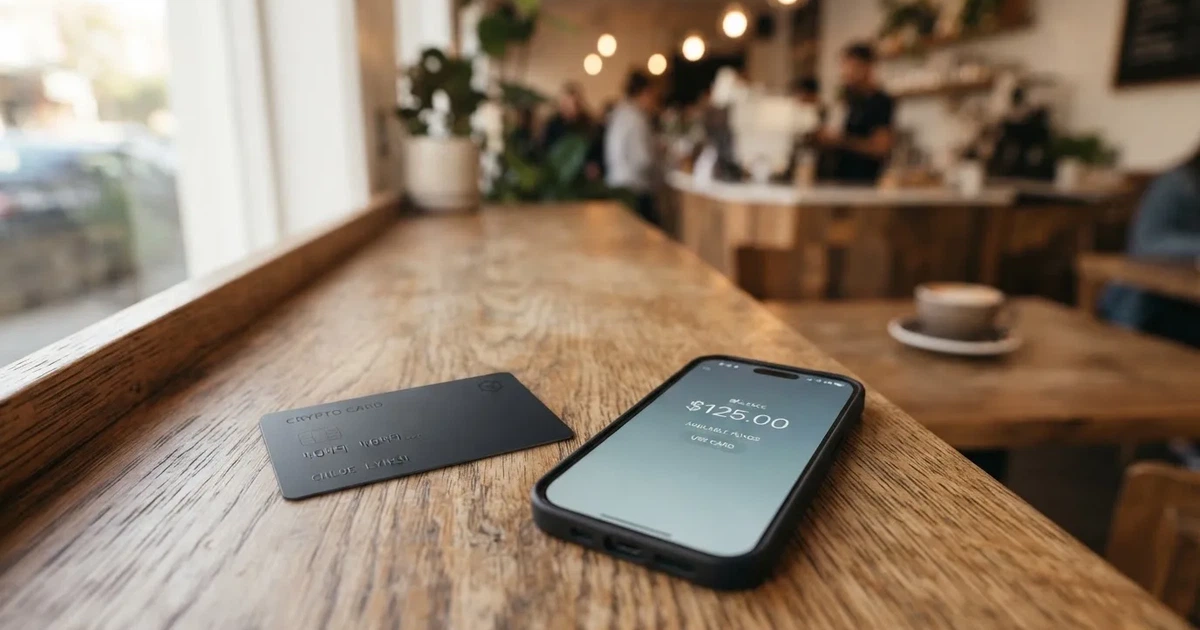
My score for it is 7.2 out of 10. That is a good card, not a flawless one, and the deduction is mostly about information: a lot of what you would want to know — which countries, which limits, which coins, what it costs — is not stated in the pages you can read. What is stated is solid, and the parts that are missing are the parts third-party reviewers keep measuring.
The conditions described below are current as of October 28, 2026.
| Criterion | Mark | Why |
|---|---|---|
| Who can get it | 5 / 10 | A German and EU product, with en-de and en-nl site versions; the official pages do not publish a country list |
| Cost | 8 / 10 | Officially the amounts are not stated. Unofficial: virtual card 0 EUR, Classic 5 EUR one-off, Mirror 50 EUR, no annual or monthly fee, no currency surcharge, top-up by card 1% |
| Top-up options | 5 / 10 | The crypto on a Trade Republic account can be spent with the card; the coin list is not disclosed. Unofficial: SEPA transfer free, top-up by card 1% |
| Reliability and complaints | 9 / 10 | Issuer is Trade Republic Bank GmbH, Berlin; Trustpilot 4.6 out of 5 from 67,608 reviews; general complaints about support and account blocks, none found about the card |
| Everyday use | 9 / 10 | Unofficial: virtual, Classic and Mirror (metal), Apple Pay and Google Pay, free ATM withdrawals from 100 EUR worldwide |
Two things stand out in that table. Reliability scores well because the broker underneath is large and well regarded, not because the card is remarkable. Top-up options scores poorly because the card’s most interesting feature — spending the crypto you already hold — is documented in a press release without the list of supported assets.
Who will they give you the card to
The card is not stated in readable official pages. That is the plain fact, and I would rather say it than dress it up. The product is based in Germany and aimed at the EU: the site runs in en-de and en-nl versions, and the card is issued by Trade Republic Bank, Berlin. Whether that means every EU resident can open an account and order the card, or only residents of specific member states, is not something the public pages spell out in a way you can rely on before signing up.
This matters more for crypto cards than it does for ordinary bank cards. A crypto card is sold on a promise that money can move without friction, and the most common friction is eligibility. If you are outside the euro area, or in a country where the broker does not operate, the whole proposition collapses at step one. So the first thing to check, before reading any fee table, is whether your country of residence appears in the sign-up flow at all — not in a marketing page, but in the actual account-opening form, which is the only place the answer seems to be reliable.
The audience this card genuinely suits is narrower than the marketing suggests: EU residents who already hold crypto with Trade Republic and want to spend it directly. If you do not already have an account there, the card has nothing to connect to.
How to get it
The sign-up process is not stated in readable pages either. What I can tell you is the shape of it: this is a regulated broker, so opening an account means identity verification — that much is standard for the sector, and I describe the pattern below in the background section — but the exact documents Trade Republic asks for, and the order in which it asks for them, are not in the public material.
The card itself is called “The Trade Republic Card” and is issued by Trade Republic Bank in Berlin. The network, and whether the card comes in both a virtual and a physical form, is not stated in the readable text. Unofficial sources describe three versions: a virtual card, a Classic card, and a Mirror card in metal, with the Mirror differing only by its casing — same fees, same limits. Treat that as a good description of what exists rather than as an official specification.
Delivery times are not stated officially. What third-party reviewers say, and it is useful because it answers the question most people actually have — can I use this the moment I sign up — is that the virtual card is usable immediately after the account is opened, while the physical card takes longer. Replacement costs the same as the original: 5 EUR for the Classic, 50 EUR for the Mirror, for loss, theft or expiry.
If your reason for being here is that ordinary bank cards are hard to get in your situation, then the honest answer is that this is probably not the card that solves it. Trade Republic is a regulated EU broker with ordinary verification requirements. It is a good card for people who already pass them, not a workaround for people who cannot.
Fees: what it really costs
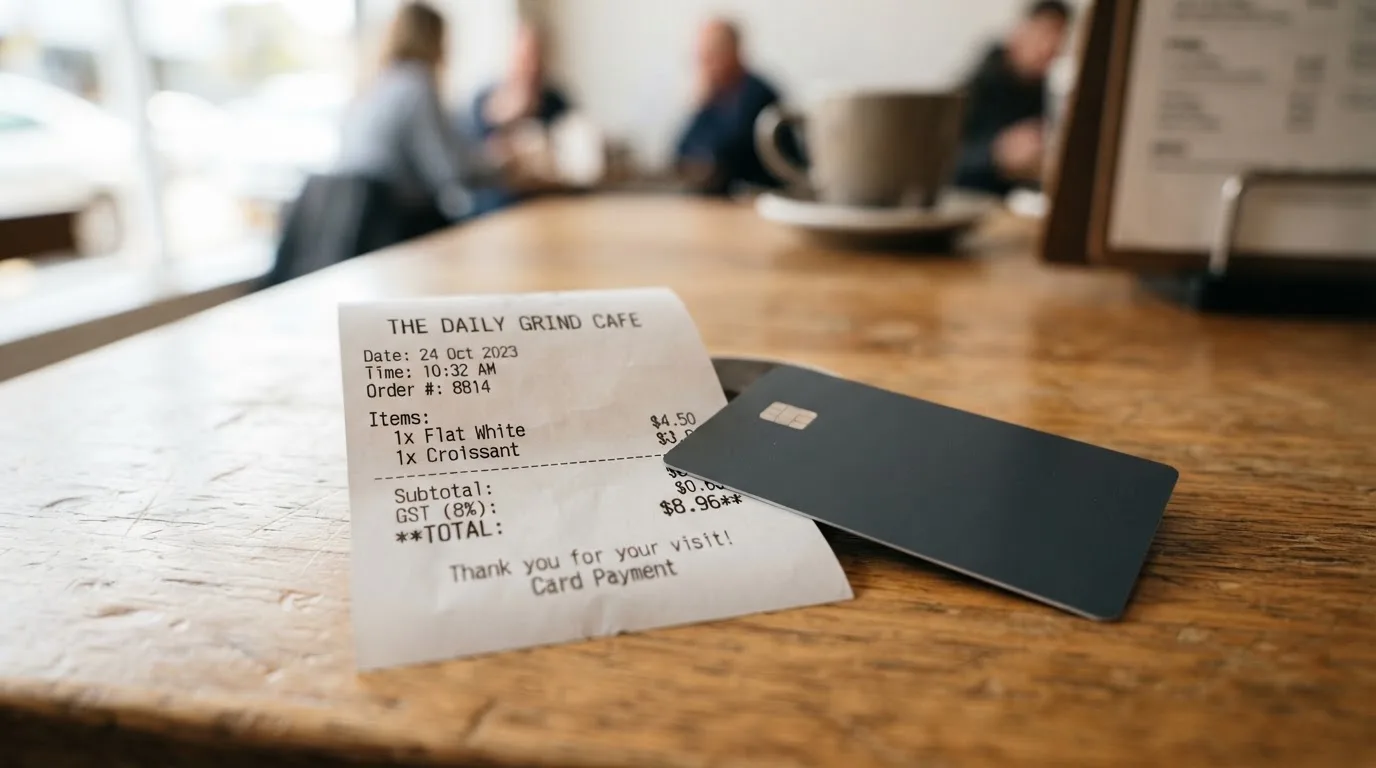
Here is where I have to be blunt about the sourcing. Officially, the amounts are not stated. The card has been advertised as having no monthly fee through a third-party review rather than through the card’s own pages, and when I went looking for official figures I did not find readable ones. So the table below draws on unofficial sources — German card reviews and finance sites, dated 2026 — and I have marked them as such. They agree with each other on the main points, which is why I am willing to repeat them at all.
| Item | Amount | Status |
|---|---|---|
| Virtual card | 0 EUR | Unofficial |
| Classic card, one-off | 5 EUR | Unofficial |
| Mirror (metal) card, one-off | 50 EUR | Unofficial |
| Annual or monthly fee | none | Unofficial |
| Foreign-currency surcharge | none, official Visa rate used | Unofficial |
| Top-up by card, Apple Pay or Google Pay | 1% of the amount | Unofficial |
| Top-up by SEPA transfer | free | Unofficial |
| ATM withdrawal | free | Stated on the card page |
| ATM withdrawal under 100 EUR | 1 EUR | Unofficial |
| ATM withdrawal of 100 EUR or more | free worldwide at Visa ATMs | Unofficial |
| Card spend | no card-specific fee mentioned in the press release | Stated in press coverage |
| Trading commission | commission-free, 1 EUR third-party cost per trade | Stated in the help center |
Two of those lines deserve a caveat. The ATM rule comes from third-party reporting: withdrawals of 100 EUR or more are free at Visa ATMs worldwide, below 100 EUR there is a 1 EUR fee, and one review reports no cap on the amount or the number of withdrawals. The same review notes that the ATM operator may still charge its own fee on top, which is normal and worth remembering. And on the card fee itself: the press release says that spending crypto with the card counts as a sale of the crypto, which has tax implications, and mentions no card-specific fee. Absence of a mention is not the same as a published zero, so I would check the current fee schedule in the app before you rely on it.
Now, three everyday payments, and which fees apply.
- A coffee in Berlin, 4.50 EUR, paid by tapping. On the numbers above, no card fee, no conversion, no top-up fee — you are spending a balance you already funded. The exchange-rate cost of turning crypto into euros, if you pay from a crypto balance, is not published, and that is the gap I would want filled before you make this your main card.
- A hotel in Amsterdam, 300 EUR, from a euro balance. Same again: no currency surcharge, because unofficial sources say the official Visa rate is used. This is one of the genuinely better features. Ordinary bank cards routinely add 2–3% on foreign spend; this one reportedly does not.
- A subscription charged in USD. The Visa rate applies, but your bank or the issuer may still decide a USD charge looks unusual and ask questions. That is the merchant-category and foreign-BIN issue I come back to below, not a fee.
The recurring cost, if there is one, is not in this table at all. It is the spread between the price you bought a coin at and the value the card converts it at. Nobody publishes it, and for a card whose entire purpose is spending crypto, that is the number most worth asking about at the counter.
Top up: how the balance gets filled
The press release is explicit about the central feature: customers can use crypto held with Trade Republic for card payments. That is the idea of the card, stated plainly. The coin list is not disclosed, which is the first thing I would want to know — if the answer turns out to be a stablecoin and one or two majors, the card is a convenient wrapper rather than a real multi-asset spender.
The mechanics of top-up are not stated officially either. From unofficial sources, the pattern is familiar: a SEPA bank transfer is free, and topping up by card, Apple Pay or Google Pay costs 1% of the amount. Withdrawal terms are not stated.
That 1% deserves a moment of attention, because it is the fee people trip over. If you are moving money in by card to convert it into crypto and then spending that crypto, you are paying 1% on the way in and whatever spread applies on the way out. Two costs, and only one of them is written down. If your plan is to hold a balance and spend from it, the SEPA route costs nothing and is obviously the better one — provided your bank can do SEPA transfers at all, which is exactly the problem for people who cannot get an ordinary card in the first place.
Worth keeping in mind about stablecoin deposits in general: they are irreversible. A transfer sent on a network the provider does not support, or to an address belonging to a different network, can be lost, and recovery then depends entirely on the provider’s support. There is a documented complaint from July 2026 about a Portuguese user who deposited crypto to an address without any network warning. Whether or not that happened on this card, the lesson is generic and applies everywhere.
Paying with it every day
Three versions, unofficial: virtual, Classic, and Mirror in metal. Apple Pay and Google Pay are supported and the card is added through the app, per German sources from 2026 — and the card page itself confirms free ATM withdrawals worldwide. This is where the 9 out of 10 for everyday use comes from. The feature set is unremarkable in the way you want a payment card to be: nothing to learn, nothing to set up, nothing that fails at the till.
The rewards are more interesting, and here the official and unofficial numbers do not quite line up, which tells you something about how quickly this is changing. The press release from 14 November 2025 announces a 2% Crypto Saveback on card spend, reinvested into a savings plan, up to 1,500 EUR of monthly spend. The card page says 1% Saveback on card payments. Third-party German reviews describe 1% Saveback into a savings plan of at least 50 EUR a month, capped at 15 EUR a month, and not paid on transfers, ATM withdrawals, investments, top-ups, PayPal, gambling or quasi-cash. One review says crypto-funded payments earn 2% with a cap of 30 EUR since the end of 2025. And there is an unofficial report that Trade Republic changed the Saveback terms and a user lost the 1% they had been getting, with the date unread.
Read that as a whole and the sensible conclusion is: there is a real cashback mechanism, the rates have moved more than once, and the exclusions are extensive. Do not build a budget around it, and check the current terms in the app.
What is not stated officially: how the app handles blocked merchant categories, and how disputes work when a payment goes wrong. The second one matters. A declined authorisation can leave a hold on funds that stays for several days, and if a charge goes through in error, how fast Trade Republic reverses it is something you should find out from a real customer, not from me.
What can go wrong
The complaints picture is better than the category average, and I want to be precise about why. Trustpilot, read on 20 October 2026, shows 4.6 out of 5 from 67,608 reviews, with 11% one-star and the most recent review dated the same day. The visible reviews are mostly positive, and one of them simply says the card works worldwide. I found no card-specific complaint theme there at all.
The complaints that do exist are about Trade Republic generally, not the card: slow or hard-to-reach support, high crypto spreads, account blocks that are hard to resolve. German press has reported rising complaints to BaFin, though the dates are unclear. Each of those three lands differently on a card user. Support is where you end up when a payment is declined at 11pm. Spreads are the card’s whole cost model, as I noted above. And account blocks are the serious one — for someone who cannot easily get another bank card, being cut off from the one you have is not an inconvenience.
On the entity side: the issuer is Trade Republic Bank GmbH, Brunnenstrasse 19-21, 10119 Berlin. The licence and BIN sponsor are not stated in the readable text, and the support centre’s article text was not readable when I looked. So I can confirm who is issuing the card, which is the part that matters most, and not the details beneath it.
Under the EU’s markets-in-crypto regulation, the transitional period for existing providers ran until 1 July 2026, or until a provider got a MiCA authorisation or was refused one, whichever came first. ESMA keeps an interim register of authorised providers that anyone can check. That is worth two minutes of your time before you move a balance you depend on — not because anything suggests a problem here, but because it is cheap and the register is public.
The tax point deserves one line because it is the one most people meet first. Spending crypto with the card counts as a sale of that crypto. If you are holding gains, each card payment is potentially a separate taxable disposal, measured in local currency at the value on the date of the transaction. Whether short or long-term depends on how long you held. I am not going to tell you what you owe — that depends on your situation and your jurisdiction — but I will tell you that keeping statements will matter more here than with an ordinary card.
What to take instead
None of these is a straight substitute, and I want to be careful about that. They are different structures aimed at different people, and the right comparison is with what you are trying to solve.
RedotPay scores 6.9 out of 10. It publishes what Trade Republic does not: two official country lists, one for identity verification and one for card issuance, though they word the rule differently — the KYC list says citizens of the listed countries cannot complete verification, while the issuance list says residents of 47 places are ineligible for both virtual and physical cards and cannot be used as billing addresses. It offers a USD card and an HKD card, priced higher than Trade Republic’s: 10.00 USD for a virtual card, 100.00 USD for a physical one, with a paid tier at 12.90 USD a month. Its transaction fee is 1.00%, rising to 1.20% in non-default currency. Choose it if you are outside the euro area and want clarity about eligibility over price.
Bitpanda scores 6.5 out of 10. It requires a verified account and residence in a euro-area country, and users verified through Bankident cannot order a card. It is a physical Visa debit card, EUR only, one active card at a time, with free first shipment and a reissue fee in single-figure euros. It spends from a chosen main asset — cryptocurrencies, precious metals or EUR — converted at payment. Choose it if you want a plain euro-area debit card with a metal option rather than a crypto engine.
Wirex scores 6.7 out of 10. Availability of the physical and virtual cards depends on your region, and fees are published for the UK, EEA, APAC, Singapore, Australia and “other”. Card issuance is free in those regions, but the metal Visa Signature carries a 45 GBP order fee in the UK. Its rewards are paid in its own token, from 0.5% on Standard up to 8% on Elite, with a long exclusion list including ATM withdrawals, crypto purchases and gambling. Choose it if you are outside the EU and its token-based rewards appeal to you.
The honest summary: if your problem is eligibility, RedotPay’s published lists will tell you faster than anything else here. If your problem is cost, Trade Republic’s one-off 5 EUR is hard to beat. And if your problem is that you cannot get an ordinary card at all, none of these is the answer — that is a banking access problem, and no crypto card changes it.
Who I would recommend it to
I would recommend it to EU residents who already hold crypto on Trade Republic and want to spend it without moving it first. The broker underneath is solid, the fee structure is thin, and the one feature that makes it different — paying straight from a crypto balance — is real and officially announced.
I would not recommend it as your only card. The limits are unpublished, the coin list is undisclosed, the spread is not published, and cashback terms have changed more than once. Those are the four facts I would want answered before I moved my everyday spending onto it, and none of them is a reason to walk away — just a reason to start small, use it alongside something else, and keep the statements.
And if you are reading this because ordinary cards are hard to get where you live: this is a regulated EU product with ordinary verification. It is not a door around that problem, and I would rather say so now than have you find out after the KYC.
Frequently asked questions
What is the Trade Republic card?
The Trade Republic card is a payment card issued by Trade Republic Bank in Berlin that lets you spend the crypto held in your Trade Republic account. A press release from 14 November 2025 announced the crypto spending feature and a 2% Crypto Saveback on card spend, reinvested into a savings plan. The card is separate from the broker app — you get a card that works at tills and online, funded from crypto rather than from a bank account.
How does the Trade Republic card work?
You hold crypto with Trade Republic, and when you pay, the crypto is treated as sold and the card spends the proceeds. Three card versions are described in unofficial reviews: virtual, Classic, and Mirror in metal. Unofficial sources also report Apple Pay and Google Pay support, with the card added in the app, and free ATM withdrawals worldwide.
Is Trade Republic a bank, and who owns the card?
The card’s issuer is Trade Republic Bank GmbH, at Brunnenstrasse 19-21, 10119 Berlin — that name comes from the page footer. The bank issues the card itself. The licence details and BIN sponsor behind the card are not stated in the readable public text, so I would confirm them before depositing anything you cannot replace.
Can I get the card in my country?
I cannot tell you, and neither can the public pages. The product is Germany and EU based, with en-de and en-nl site versions, and the official pages do not publish a country list. The only reliable check is the sign-up form itself: if your country of residence appears there, you can proceed; if it does not, no amount of reading will help.
How much does the Trade Republic card cost?
Officially, the amounts are not stated. Unofficial German reviews from 2026, which agree with each other, say the virtual card is 0 EUR, the Classic card is 5 EUR one-off, and the Mirror metal card is 50 EUR one-off, with no annual or monthly fee. Top-up by card costs 1%, SEPA transfer is free, and no foreign-currency surcharge is reported.
Does the card require KYC?
Almost certainly yes, since it comes from a regulated EU broker, but the exact requirements are not stated in the readable pages. What EU rules generally involve: your name, address, date of birth, nationality, identity documents, a sanctions check, and whether you are politically exposed. I did not read Trade Republic’s own verification pages, so treat the standard as the standard, not as their confirmed list.
How do I top up the card?
The central mechanism is your existing crypto balance, though the list of supported coins is not disclosed. For adding fiat, unofficial sources say SEPA bank transfer is free and top-up by card, Apple Pay or Google Pay costs 1% of the amount. That 1% is the one to avoid if you are topping up regularly — move money by SEPA instead.
Where can I use the card, and are there limits?
The card page states free ATM withdrawals worldwide. Unofficial reports say withdrawals of 100 EUR or more are free at Visa ATMs, and a 1 EUR fee applies below that, with the ATM operator possibly charging its own. Spending limits are not stated officially; unofficial figures put them at 1,500 EUR per day and 6,000 EUR per week, with no separate point-of-sale limit given.
Is the card safe?
Nothing I found suggests the card itself is a problem. The issuer is a German bank, Trustpilot shows 4.6 out of 5 from 67,608 reviews, and I found no card-specific complaint theme among them. The broader risks are the familiar ones: crypto transactions are irreversible, and spending crypto counts as a sale with tax implications. The genuine customer complaints are about support and account blocks, not about payments failing at the till.
Is the Trade Republic card worth it?
For the specific person it suits — an EU resident who already holds crypto there and wants to spend it — yes, and I scored it 7.2 out of 10. Outside that, the case is thinner: limits, coin list and spread are all unpublished, and the cashback terms have changed more than once. Start with it as a second card rather than your only one.
App and neobank cards – cryptocardsearch.com
Content created by the «cryptocardsearch.com» team