
No KYC, one network, no plastic — what the Tegro card really gives you
 Available in US
Tegro is one of those crypto cards where the pitch is short: you already have a Telegram account, you already hold USDT, and in a couple of minutes you have a Visa card number that spends from that balance. No passport, no selfie, no video call, no monthly fee. The catch is that almost everything specific about the card — which bank issues it, which countries it works in, what a currency conversion costs, what happens to your balance if the operator disappears — is not written down anywhere I could find. That absence is not a scandal on its own, but it is the thing that decides who should use this and who should not.
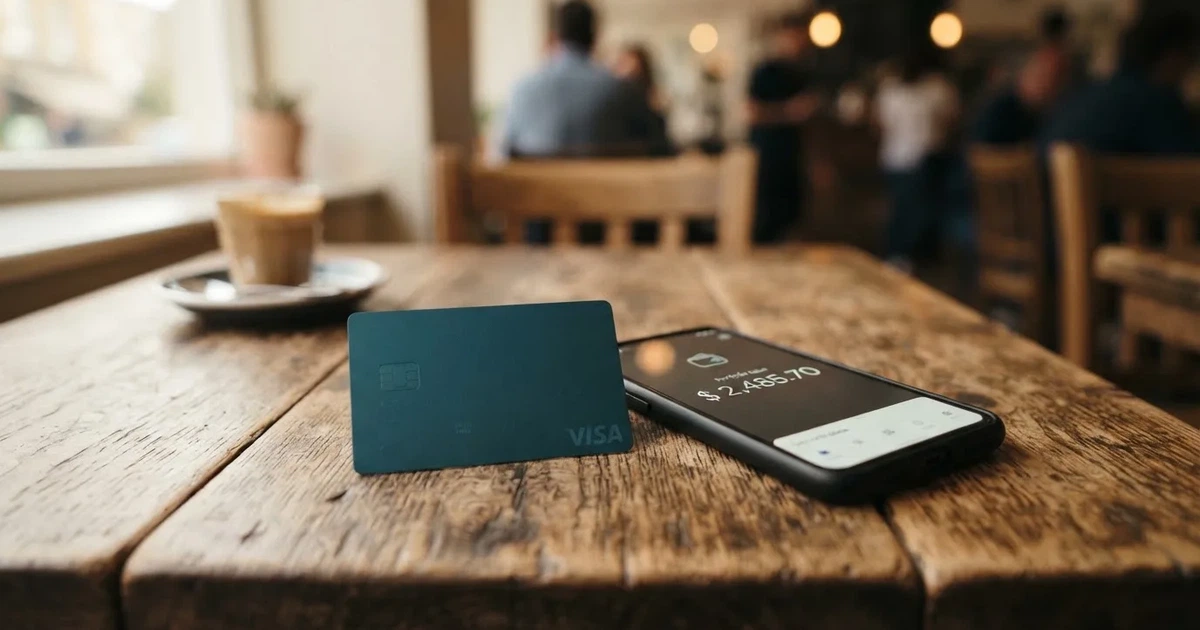
The conditions described below are current as of October 28, 2026.
I am going to take the card apart in the order you would: who gets it, how to get it, what it costs, how you put money in, what daily life with it looks like, what can go wrong, and what the alternatives are. Where the card’s own pages say something, I quote it. Where they are silent, I say they are silent, because a missing number is itself information when you are deciding whether to trust something with your balance.
Verdict: 4.7 out of 10
My score for the Tegro card is 4.7 out of 10. That is not a rounding of a good card into a disappointing one — it is a genuinely mixed card with two strong points (no identity checks, no recurring fees) and several large unknowns that pull the whole thing down.
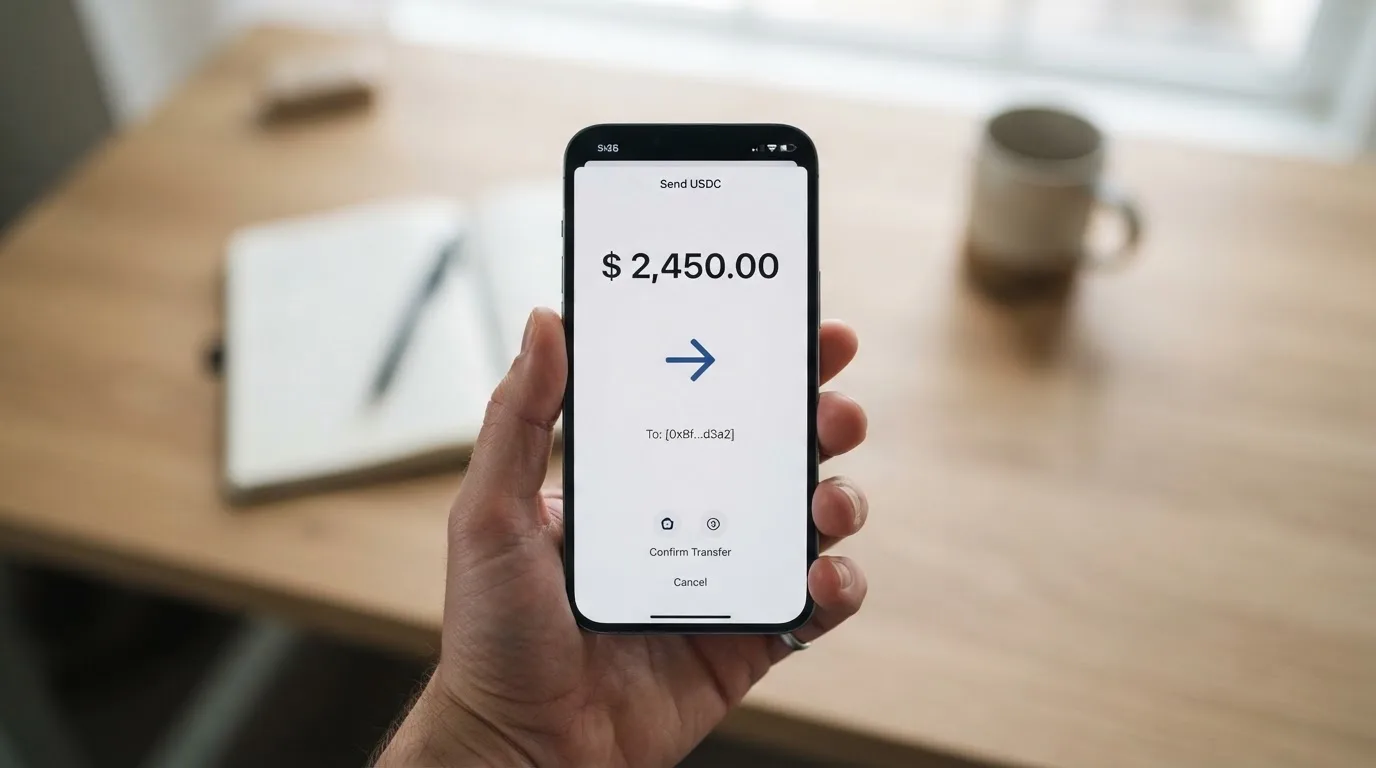
Who it suits: you hold USDT on the Tron network, you need a card number rather than a full bank account, and documents are either impossible or genuinely awkward for you to provide right now. If your USDT sits on Ethereum, Polygon or Solana, this card is not for you unless you are willing to convert and pay a network fee first.
Who it does not suit: anyone whose spending depends on predictability. If you want to know what a euro payment will cost before you tap, if you want a physical card for a shop that refuses prepaid numbers, or if you want to know which legal entity is standing behind your balance, the public information is not there.
| Criterion | Mark | Why |
|---|---|---|
| Who can get it | 7 / 10 | Works wherever Visa is accepted; no country list is published, and people from sanctioned countries are excluded |
| Cost | 3 / 10 | $13 issuance once, no subscription or monthly fee; 4% top-up fee; $50 minimum, so a $50 card costs $65 |
| Top-up options | 4 / 10 | USDT on Tron (TRC-20) only; other networks have to be converted to TRC-20 first |
| Reliability and complaints | 4 / 10 | Issuer unnamed (“partner bank under the Visa programme”), operator Libermall LLC, licences not disclosed; no complaints found, one positive review |
| Everyday use | 5 / 10 | Virtual Visa in a Telegram bot only, Apple Pay and Google Pay supported, no plastic and no ATM |
| Total | 4.7 / 10 | Strong on access and absence of monthly fees, weak on transparency and flexibility |
The single highest mark is eligibility, and it is generous rather than absolute: the card says it works “wherever Visa is accepted” and does not publish a country list, which removes the usual country-by-country guessing. The lowest is cost, and that surprises people, because “$13 once” sounds cheap. The reason it is a 3 is the combination — a $50 floor, a 4% top-up fee on top of it, and an example in which a $50 card costs $65 in total. That is not a rounding error; it is a third of the balance.
Who they will give you the card to
There is no country list. The card’s own wording is that it works “wherever Visa is accepted”, and the terms add two conditions and only two: you must confirm you are 18 or older, and you must confirm that you are not in a country under international sanctions. People from sanctioned countries and people on sanctions lists cannot use the service. No specific country is named as eligible or excluded.
So the honest answer to “can I get one in my country?” is: probably yes, because almost nothing is restricted, but the card never says so explicitly, and the sanctions confirmation is a self-declaration that you make and answer for. If you are in a place where a bank account for yourself is awkward — and that is the situation this card is built for — this eligibility profile is genuinely the point of it. The person who will not get it is anyone in a sanctioned jurisdiction or on a sanctions list.
Two things about the shape of this arrangement matter more than the eligibility list itself. First, the terms page is titled “Libermall Card” and names Libermall LLC as the operator. Second, the card itself is issued by an unnamed “partner bank under the Visa programme”, and Tegro is described as the ordering and support interface. In practical terms: the entity whose page you read is not the entity whose name is on the card programme, and the name of the issuer is not disclosed. Licences are not stated. I am not going to turn that into an accusation — plenty of legitimate programmes work exactly this way — but it is a fact you should hold in mind while reading the risk section.
How to get it
The whole signup is three steps, and it takes minutes rather than days.
- Open the Telegram bot @TegroCardbot.
- Order a card in the chat.
- Send USDT on the Tron network (TRC-20) to the address the bot gives you.
There is no application form, no document upload and no waiting for approval in the ordinary case. The card’s phrase for this is “Zero KYC” — “a Telegram account is enough, no documents”. The card details arrive in the Telegram chat itself.
What you get is a virtual Visa card. There is no plastic: the card’s own words are “no plastic”, and there is nothing to be delivered. Card amounts and limits are in USD. The card header also mentions Mastercard, but the product described everywhere else is a Visa — treat Mastercard as marketing copy until you see it on your own card.
One important nuance on the “no KYC” claim, because it is narrower than it sounds. The no-KYC rule applies to the virtual card. Some other products with extended features do require verification — name, date of birth, citizenship, address, ID document and selfie. And the operator monitors for unusual activity, which can trigger a request for more information. The card does not say what happens if you do not supply it, and it does not list the reasons a verification can be refused. So the accurate reading is: you can get the basic card with no documents, and you are not permanently exempt from being asked.
Fees: what it really costs
Here is the whole published price list. It is short, and two of the most important entries are missing from it.
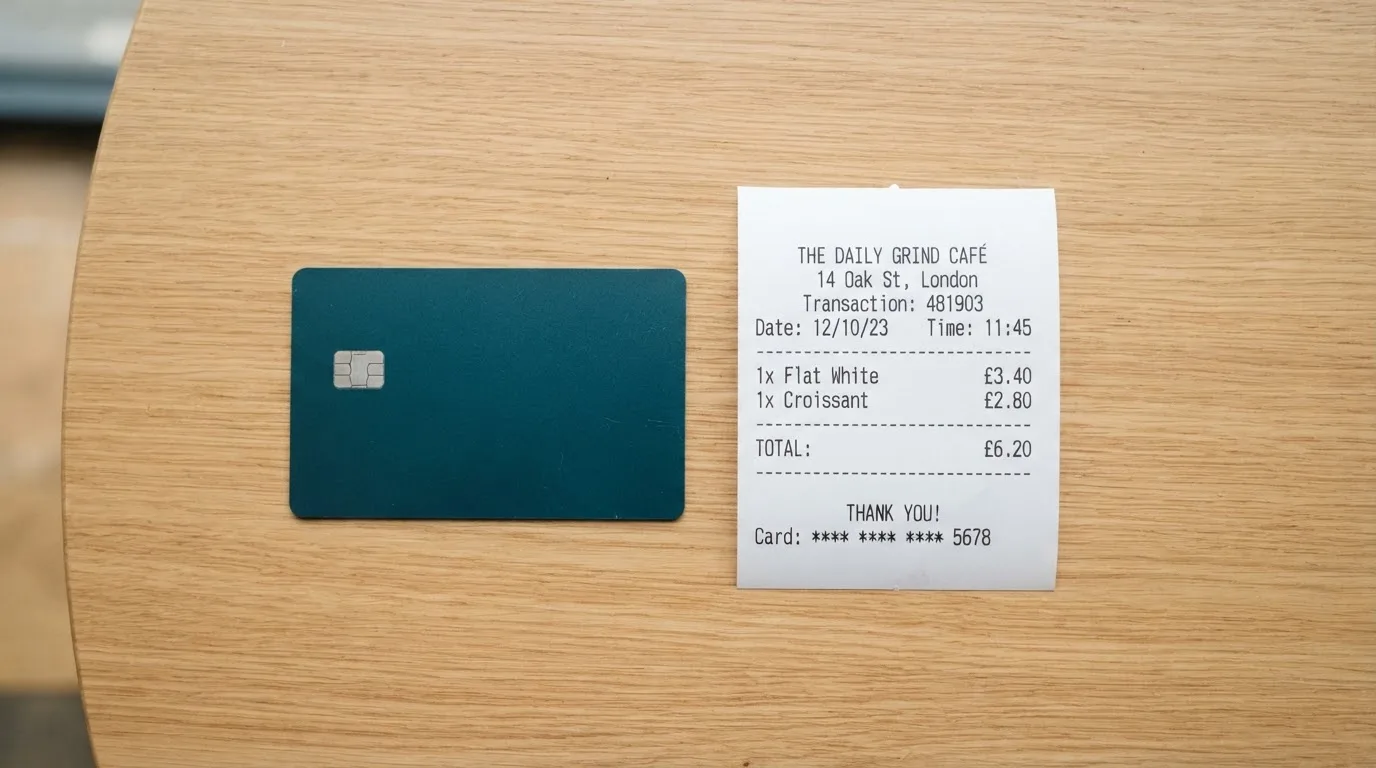
| Item | Fee or limit | Notes |
|---|---|---|
| Card issuance | $13 one-time | Charged once, at issue |
| Subscription / monthly fee | None | “No subscriptions” |
| Top-up fee | 4% of the amount | Charged on deposit |
| Minimum card amount | $50 | Example given: a $50 card costs $65 in total |
| Card limit at start | $1,000 | Per card |
| Daily spend limit | not stated | Terms say limits depend on card type and may change |
| Monthly spend limit | not stated | Same wording |
| Currency conversion / FX fee | not stated | No figure or spread published |
| Fee for paying in another currency | not stated | Card amounts are in USD |
| Cash withdrawal / ATM | not stated | ATM is not mentioned at all |
| Tiers | Single tier | One virtual Visa product, no tiers |
| Cashback or rewards | not stated | No cashback mentioned |
Now the three everyday payments, which is where a reader’s real spending lives.
Paying $40 of groceries in USD. No per-transaction fee is published — the card lists no payment fee for a USD purchase from a USD balance. The 4% fee was charged earlier, on the top-up, not here. This is the clean case, and it is the reason the card can feel generous on day one.
Paying €30 in a euro shop from a USD balance. The card does not state what this costs. There is no published FX fee and no published conversion spread, and no figure for paying in a currency other than the balance currency. You will be converted at some rate, and the card’s public pages do not tell you what you lose to it. If euro spending is a regular part of your life, this single gap is disqualifying on its own, because you cannot budget a number you cannot see.
Paying $10 in a local currency twice a month from an ATM. There is no physical card, so this is not possible through the card itself. The ATM is never mentioned in the card’s material at all, and I would treat any ATM promise you find elsewhere as unverified.
The 4% top-up fee in context. This is the number to hold on to. It is charged on the amount you deposit, and it sits on top of the one-time $13 issuance fee. The card’s own example makes the shape concrete: a $50 card costs $65 in total, which is the $50 plus the $13 — and if you top up the $50 you have also paid 4% of that $50, which the card’s example does not itemise for you. Two small details worth knowing: the minimum card balance is $50, so you cannot test this card with a $10 deposit; and the starting card limit is $1,000, which is a spending ceiling, not a balance requirement.
Fees are one of the two things people search for when they are about to trust a card with real money, and here is my honest summary: this card is cheap to hold and expensive to fill. The absence of a monthly fee is genuinely valuable if you would otherwise be paying one. The 4% top-up fee is a toll on every deposit, which makes it a poor fit for a card you would top up frequently, and a reasonable fit for one you load once and spend down.
How to top it up
Topping up is USDT on Tron, TRC-20, only. That single sentence is the whole funding section.
The bot issues you an address and a unique amount, and the deposit is credited automatically. That is a well-thought mechanism: the unique amount is how the system recognises your transfer without you having to submit a form, and it removes the usual anxiety of “did my deposit go through?” There is no fiat top-up offered, and no bank transfer option.
The catch is the network. If your USDT is on Ethereum, on BNB Smart Chain, on Polygon, on Solana or anywhere else, you must convert it to TRC-20 first, which means a swap, a network fee, and a moment when your funds are exposed to price movement between the two. A USDT deposit sent to an address of a different network, or on a network the card provider does not support, is the classic irreversible mistake here: blockchain transfers cannot be reversed, and recovery then depends on support working on goodwill with no guarantee.
A related detail is genuinely unclear and I will not guess at it: who pays the Tron network fee for your deposit is not stated. On-chain fees are charged by the blockchain, not by the card provider, so whatever the arrangement, it is not a card commission — but whether you need a little TRX on hand to complete the transfer is something you should confirm before your first deposit, not after.
Two more funding facts worth knowing before you start. Your balance must stay at or above $50 in card value, or the card cannot be used. And the terms say crypto transfers are irreversible — that sentence is aimed directly at you, and it is the sentence to read twice.
On the way out, the card is silent. Withdrawal is not stated, and the balance remaining in an account if the service is closed is not stated either. The terms do say you may stop using the service at any time, and that the operator may suspend or terminate access for violations of the terms, legal requirements, or fraud prevention. A service with no published withdrawal route and no published balance-on-closure terms is a service where the exit is worth asking about before the entry.
Paying with it every day
Everyday use is where a virtual card earns its keep or exposes its seams, so let us walk a real day.
At the coffee shop, tapping the phone. Apple Pay and Google Pay are supported, and this is the strongest reason the card works without plastic. In practical terms you add the card number to your wallet and tap; the number is replaced on-device rather than stored in the cloud, and each payment carries its own one-time code. This is the normal, good path, and it is what most daily spending will look like.
Online, at a shop you have never used. The card does not say whether 3-D Secure is applied, so you do not know in advance whether a payment will sail through or will stop to ask you for a code. Address verification is also worth thinking about: it compares the numeric parts of the billing address you type against the issuer’s records, and it is generally unavailable for foreign-issued cards — which is exactly what a virtual card with a USD balance and no stated issuing country is. Declines are a normal part of card life anywhere, and a declined authorisation can leave a hold on funds for several days.
In a shop that does not want prepaid or foreign cards. This is a real and well-documented behaviour in the industry, not a superstition. Merchants can look up the first six or eight digits of a card number — the issuer identification number — and see the institution and country, and some will apply extra scrutiny or decline outright when the issuer country does not match the billing address. Tegro does not publish its BIN’s country. So if a decline ever looks inexplicable to you, this is the first thing to consider, and it is a reason to keep a second card for anything important.
In a category the issuer blocks. Gambling is the usual one, and many issuers block it by policy rather than by law. Tegro does not publish a blocked-category list. Assume some categories will fail and do not be surprised.
Getting money out. You cannot use an ATM with this card; there is no physical card and no ATM is mentioned. The reverse question — how you withdraw money from Tegro — has no published answer.
Handling a dispute. The terms say returns and chargebacks are handled under the rules of the payment systems and within the timeframes of the company’s partners; try the merchant first, then support. No timeframes are published, and the governing law is Wyoming, USA. For context, chargeback rights in the US come from Regulation E for debit cards and Regulation Z for credit cards, and prepaid-card coverage varies — so it is not something to assume you have. One more thing from the terms worth internalising: crypto transfers are irreversible. A refund that has to travel back through the crypto side is a different proposition from an ordinary bank refund.
Two absences shape the daily experience. There is no app: the service runs entirely in the Telegram bot @TegroCardbot. And there is no cashback or rewards mentioned, so if part of why you want a crypto card is earning something back on your spending, this is not that card.
Support runs through Telegram at @Tegro_bot, with replies promised “within a day”. The site is in Russian and English. Working hours are not stated.
What can go wrong
Here is the part of the review I would ask you to read twice, because it is where the missing information stops being an inconvenience.
You do not know who stands behind the balance. The card is issued by an unnamed partner bank under the Visa programme; Tegro is the interface; the operator named in the terms is Libermall LLC; and licences are not stated. There is no published insolvency protection, no named safeguarding arrangement and no published deposit guarantee. Anyone who tells you a crypto card balance is insured is generally wrong — e-money balances are not the same as bank deposits.
The custody arrangement puts the risk on you, not the keys. With a custodial setup the provider holds the credentials, so you must trust the provider completely. That is not a scare tactic; it is the structural fact that card money sits with the operator while you are spending it. The industry record is not comforting: Mt. Gox reported about $350 million stolen over 2011–2014, Coincheck about $400 million in 2018, and Ronin Network $625 million in 2022. Holding funds with a custodian carries counterparty and hack risk, and this card is custodial.
Stablecoins are not what their name suggests. USDT is pegged to the dollar and Tether describes its reserves as intended to back it one-to-one, but stablecoins are not necessarily stable. TerraUSD collapsed in May 2022 and USDC temporarily lost its peg in March 2023 during the US banking crisis. So the “dollar” on your card balance is a token whose dollar promise comes from an issuer’s reserves and market confidence. It also means stablecoins are not censorship-proof: Tether says it disables tokens in wallets on the OFAC sanctions list and has frozen funds tied to illicit activity.
Crypto transfers are one-way. The terms say it plainly. There is no reversal, no chargeback and no protection at that layer.
The issuer can change the ground under you. Visa and Mastercard do not issue these cards themselves; they license issuers, and they can suspend a programme. Two precedents are on the record: Visa said in November 2022 that it had terminated its global agreements with FTX, and the FTX US debit card programme was wound down by its issuer; WaveCrest, a Visa issuer that supplied several crypto card brands, was suspended by Visa in Europe in 2018, closing all its Visa programmes. Closures usually follow a pattern — a notice period, then loading and spending stop, then users are asked to withdraw remaining balances. I found one 2026 closure reported by a secondary source where new loads ended on 8 July 2026 and spending stopped on 8 August 2026; that is a single unconfirmed source, but the pattern is the thing to recognise. Ask yourself, before you load, where you would go if the bot stopped answering.
Nothing describes the everyday protections. No two-factor authentication is described, no in-app freeze, no insurance, no spending-limit control you can reach yourself. The card may pause an operation or restrict access on risk. The card’s own guidance — never share the PAN and CVV, do not store them unencrypted — is sound but thin, because it assumes there is nothing else to do.
A minimum balance is a tripwire. $50 minimum, $1,000 starting limit, and terms saying limits depend on card type and may change. A card that falls below the floor may simply stop working.
Regulation is a moving target. The EU’s MiCA regime applies to the crypto side while a card is regulated separately as a payment service, so a crypto card often depends on two licences. MiCA took legal effect in June 2023, its stablecoin rules applied from 30 June 2024 and the remaining provisions from 30 December 2024, and the transitional period for existing providers runs only until 1 July 2026 or until a MiCA authorisation is received or refused, whichever comes first. ESMA keeps an interim register of authorised providers that you can consult. In the US, FinCEN guidance treats administrators and exchangers of convertible virtual currency as money transmitters, while ordinary users buying goods are not. For this card specifically, I found no dated regulatory events and no public enforcement — and I also found no published authorisation to look up.
Taxes nobody here will advise you on. I am not going to give tax advice, but I will tell you the mechanic. The IRS treats digital assets as property, so exchanging them for goods, services or dollars generally produces a taxable gain or loss, measured in local currency at fair market value on the date of the transaction. That means each payment funded from crypto can be a separate disposal, and holding for a year or less makes it short-term. A jurisdiction that taxes on that basis treats a card payment very differently from a bank transfer. Take your own advice; just do not assume the card payment is invisible.
The reputation file is thin, and thinner than it looks. I found no substantive complaints and no Reddit threads. I found one Trustpilot review, five stars, dated 5 June 2026, describing it as simple and noting that support and clear limits and fees “will be important”. That page is on tegro.cash, a possibly related brand whose connection to this card is not confirmed, so treat it as unofficial rather than as a verified review of the product you would be signing up for. A listing on a product-hunting site shows 0 upvotes and 1 comment, with no user feedback. All of this was checked on 2026-10-20. The honest reading: there is no record of trouble, and there is very little record at all.
What to take instead
Three alternatives came up repeatedly enough to compare directly. Here they are, with the same caution about unpublished figures applying to them.
| Tegro | MaxSwap | Karta | Worldwide | |
|---|---|---|---|---|
| My score | 4.7 / 10 | 5.2 / 10 | 7.9 / 10 | 4.2 / 10 |
| Card type | Virtual Visa | Virtual Mastercard | Visa Signature, virtual and physical | Virtual Mastercard, tiers |
| KYC as described | Zero KYC for the virtual card | Not stated | Not stated | Not stated |
| Cost | $13 once, no monthly fee | $50 card with a $25 first deposit; total issuance listed as $77.125 | Virtual activation 5.00 USDT; physical from 100.00 USDT; virtual accounts free | Standard from 2,900 RUB/year; Premium from 3,900 RUB/year; Promo 2,390 RUB issue and 0 RUB maintenance in year one |
| Top-up fee | 4% | 4.5% + $1 | Crypto top-up free | Promo 0%; SBP has no transfer fee |
| Payment fee | not stated | 0.25 USD + 0.4% | 1.5% | 0.00 USD per operation |
| Networks / funding | USDT TRC-20 only | Crypto, no network list: ADA, ALGO, AVAX, BCH, BNB, BTC, DOT, ETH, HBAR, HT, KRRX, LINK, LTC, MATIC, NEAR, SHIB, SUSHI, TON, TRX, UNI, USDC, USDT, XLM, XRP | USDT or USDC on Tron, Ethereum, BNB Smart Chain, Polygon, Arbitrum, Optimism, Base, Solana; also fiat rails by country | SBP from a Russian card, credited in 1–3 minutes; an app listing takes USDT TRC-20 |
| Rewards | not stated | not stated | Cashback claimed, rate and payout currency not stated | not stated |
Karta is the one I would look at first if you want a fuller card. It is the only one of the four with a physical card, Visa Signature tier cards, free crypto top-ups, USDT or USDC across seven named networks, fiat rails by country including ACH, SWIFT, domestic wire, SEPA, PIX, bank transfer and SPEI, and withdrawals to external crypto wallets. It works in 200+ countries and territories where Visa is accepted, with availability depending on local regulations and partner coverage. The costs are steeper: 1.5% per card payment, 1.5% plus EUR 2 for SEPA, 1.4% plus $2 for SWIFT in USD. Its cashback is claimed without a published rate or payout currency.
MaxSwap is the closest structural rival, also virtual-only, with a no-geographical-restrictions claim on its site, a longer list of accepted coins and a transparent per-transaction fee of 0.25 USD plus 0.4%. But it is more expensive to enter: 4.5% plus $1 to fund, a $25 first deposit requirement, and total issuance listed at $77.125.
Worldwide is the one with physical-world local rails, positioned as a Russian-language Telegram mini-app card that can be ordered and topped up from Russia without a VPN, with SBP transfers credited in 1–3 minutes, no transfer fee on SBP, 0.00 USD per card operation and an FX rate close to the exchange or central bank rate shown before you top up. It is also the least documented on eligibility: it does not describe who qualifies or in which countries, and it does not say whether it looks at citizenship or residence.
None of these is a bank. When you see “Visa” on any of them, you are looking at a licence holder, a programme manager and a front end — often three different companies — which is why the issuer question matters on all of them.
Who I would recommend it to
I would recommend the Tegro card to exactly three kinds of person.
The first is someone already holding USDT on TRC-20 whose real problem is that an ordinary bank card is out of reach — no documents, no local address, no account. For them this card removes a genuine obstacle, with no monthly fee attached to the privilege.
The second is someone who needs a card number for a small number of online or wallet-tap payments, tops it up once, and spends it down. In that pattern the 4% fee is a one-off rather than a toll, and the lack of plastic and apps is a non-issue.
The third is someone who has checked the operator themselves — the terms, the entity, the licence position in their own jurisdiction — and decided the risk is acceptable for the amount involved. That last clause is not a formality. For anyone else, I would point at Karta, because it answers more of the questions a nervous person asks: which networks, which payment fees, a physical card, withdrawals out.
What I would not do is load a large balance into this card to park it, treat it as a bank account, or use it for anything you would miss if the balance were gone. And before you fund it, I would ask support in writing the two questions the pages do not answer: what happens to the balance if the service closes, and what exactly is charged when I pay in a currency other than USD. If those answers are clear, you are in a much better position than the website puts you in.
Frequently asked questions
What is the Tegro card?
It is a virtual Visa card that spends from a balance you load with crypto, ordered and used entirely inside a Telegram bot rather than an app. The card’s own pitch is “zero KYC” — a Telegram account is enough, with no documents — and there is no physical plastic version. Card amounts and limits are in USD, and topping up is done with USDT on the Tron network.
Does the Tegro card require KYC?
Not for the basic virtual card: the card describes “no passport, selfie or verification” for it. Some other products with extended features do ask for name, date of birth, citizenship, address, ID and a selfie. The operator also monitors for unusual activity and may ask for more information at any point, and the card does not publish the grounds on which a verification can be refused.
How do I top up the Tegro card?
You send USDT on Tron, TRC-20, to an address the bot gives you, along with a unique amount it assigns; the deposit is credited automatically once the transfer arrives. Crypto held on any other network has to be converted to TRC-20 first. The minimum card balance is $50, the top-up fee is 4% of the amount, and there is no fiat top-up option.
What does the Tegro card cost?
Issuance is $13, once, and there is no subscription or monthly fee. Beyond that, a top-up costs 4% of the amount, and the card’s own example says a $50 card costs $65 in total. The minimum balance is $50 and the starting card limit is $1,000, but the card does not state the FX fee, the conversion spread, or what it costs to pay in a currency other than USD.
Is Tegro a bank, and who owns it?
No. The terms page is titled “Libermall Card” and names Libermall LLC as the operator, and the card itself is issued by an unnamed “partner bank under the Visa programme”, with Tegro acting as the ordering and support interface. Licences are not stated on the card’s public pages, so if that matters to you, this is the first thing to ask before depositing.
Can I use the Tegro card in my country?
The card says it works “wherever Visa is accepted” and publishes no country list, and the terms exclude only people from sanctioned countries and people on sanctions lists. You must also confirm you are 18 or older. So most people should qualify, but nothing is guaranteed in writing for any specific country.
Is the Tegro card safe?
It is custodial: the money sits with the operator while you spend it, so you are trusting a company rather than holding your own keys. What is missing matters as much as what is there — no two-factor authentication, no in-app freeze, no insurance is described, no withdrawal route is published, and no balance-on-closure terms. Crypto transfers are also irreversible, which the card’s terms state explicitly.
Does the Tegro card have an app, Apple Pay or Google Pay?
There is no app — everything happens in the Telegram bot @TegroCardbot, with support at @Tegro_bot replying within a day. Apple Pay and Google Pay are supported, so daily payments can be made by tapping a phone without touching the card number. What you cannot do is withdraw cash: there is no physical card, and no ATM is mentioned anywhere in the card’s material.
How do I withdraw money or delete my Tegro account?
Withdrawal is not stated in the card’s public material, and neither is what happens to any remaining balance if the service is closed, so I would ask support directly before you load anything. The terms do say you may stop using the service at any time, and that the operator may suspend or terminate access for breaches of the terms, legal requirements or fraud prevention.
Is the Tegro card worth it?
For its intended user — someone holding USDT on TRC-20 who needs a Visa number and cannot get an ordinary card — the absence of monthly fees is a genuine advantage, and it scores 4.7 out of 10. If you spend in other currencies, need cash, want a physical card, or need a named, licensed issuer, the missing fee figures and missing entity details make a richer card such as Karta the better bet.
Virtual cards – cryptocardsearch.com
Content created by the «cryptocardsearch.com» team