
Solid card: a free virtual Visa that spends directly from a self-custody wallet
 Available in US
The Solid card is a Visa payment card issued on the Visa Platinum tier, built around a self-custody crypto wallet: the user holds the keys, and funds move from the wallet to the merchant at the moment of purchase. It is offered in 105 countries, has no monthly fee and no top-up fee, and the onboarding is advertised as a two-minute identity check. In this review I look at who actually qualifies, what it costs in practice, how the top-up flow works, and where the gaps are, so you can decide whether it fits how you pay.
The conditions described here are current as of October 28, 2026.
Verdict: 7.8 out of 10
The Solid card does something that is genuinely rare in the crypto-card space: it stays self-custodial, charges nothing for issuing or topping up, and runs on the Visa network so it works in most places a debit card is taken. The catch is that it is virtual-only, the everyday card is USD-denominated, and the tier system that drives the headline cashback is paid for either in cash or by locking up the project’s native FUSE token for a year. If you already keep dollars or stablecoins in your own wallet, this is one of the cleaner ways to turn them into a Visa payment; if you want a physical card, a multi-currency wallet, or ATM access, it is not the right product.
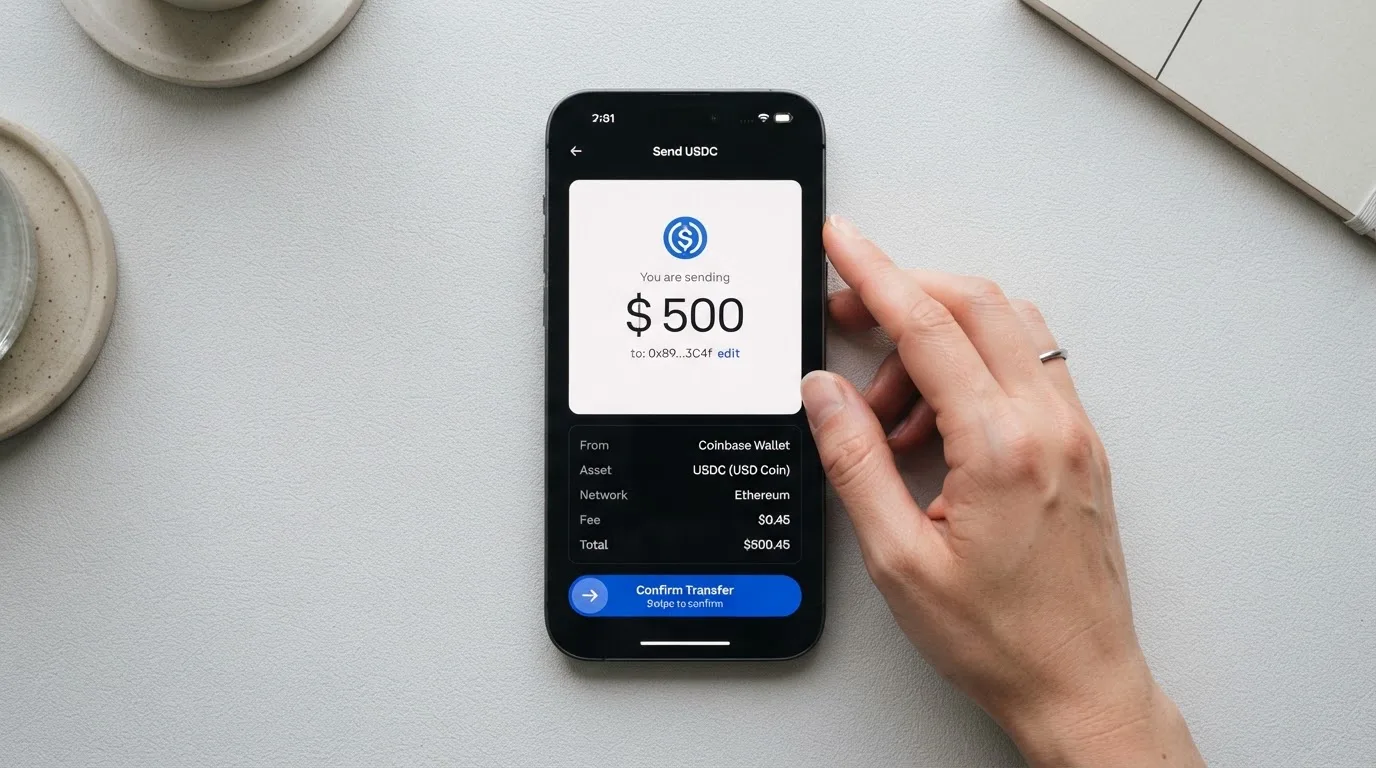
I find the strongest fit is a self-custody user who already lives in stablecoins and wants a free virtual card to spend from that balance. That is the audience the score is built around, and the breakdown below shows where each mark comes from.
| Criterion | Mark | Why |
|---|---|---|
| Who can get it | 9 / 10 | Available in 105 countries across most major world regions, but no country list is published |
| Cost | 8 / 10 | Card issue and monthly fee are free, top-ups are 0% at every tier, but non-USD spending carries a 1.5% FX cost and the Virtual Account costs $10 to open |
| Top-up options | 8 / 10 | Dollars, USDC and USDT via bank transfer or crypto on Fuse, Ethereum, Base (and other networks via a bridge), with a $10 minimum |
| Reliability and complaints | 8 / 10 | The card is issued by Rain or Wirex depending on country of residence, the banking side is SSB (Member FDIC), and I found no public complaints to weigh against it |
| Everyday use | 5 / 10 | Only a virtual Visa is described, no physical card; Apple Pay and Google Pay are supported, but an unofficial source says there is no ATM access |
| Total | 7.8 / 10 |
Who they will issue the card to
Solid says the card is offered in “105 countries across most major world regions” and the issuer is assigned by country of residence: Rain or Wirex, depending on where you live. The 105-country figure is presented as the headline availability, but the company does not publish a country list or a list of excluded countries. The official guidance is to check the app for your country, or to join the waitlist if it is not yet supported. That makes the rule easy to summarise and hard to verify: it is a residence-based rule, set in practice at the app level rather than on the public page.
The card is described as a virtual Visa on the Visa Platinum tier, with the card currency set to USD. The page footnote calls it “a Visa credit card issued by Rain”, which is the kind of detail that matters when a card gets declined at a foreign merchant: the merchant’s BIN lookup will see a US-issued Visa, regardless of where the cardholder actually lives.
A non-official source, an affiliate site called SpendNode (September 2026), says the card is not issued to residents of a list of countries that includes India, Turkey and Russia. That is an unofficial report, not confirmed by the card’s own pages, and the public site does not name the excluded places. Treat it as a hint to check the app before assuming you qualify.
The card’s own terms treat residency as the trigger, not citizenship. The card’s own pages do not state that distinction explicitly; it follows from the general rules regulated businesses work under.
How to sign up
The signup flow is short on paper. You download the app, verify your identity (advertised as taking 2 minutes), and the free virtual card is issued; once you deposit at least $10 the card activates for spending. The site advertises the identity check as taking “2 minutes”, and there is no published list of accepted documents, no separate proof-of-address step, and no mention of an age requirement. The card’s public pages also do not describe any KYC tiers (for example basic versus enhanced), or the reasons a check could be rejected. The user’s recourse if a verification fails is to contact support, not to follow a published appeals path.
The card itself is described as virtual only: “Get your free Solid Card directly in the app”, with no mention of a physical version. Because no physical card is described, there is no delivery time, no shipping cost, and no replacement procedure to weigh. That keeps the onboarding simple, and it also means the only card you will ever have is the one inside the app.
The legal paperwork is the Fuse Network LTD Card Terms, split into a US Consumer Program and an International Consumer Program. Solid says it is a financial technology company, not a bank; the banking piece is SSB, which is a Member FDIC, so the dollar balance held with SSB is insured up to $250,000 per depositor per insured bank. That insurance covers deposits, not the crypto wallet, and the card issuer (Rain or Wirex) is the entity that holds the card programme. Licence numbers are not published on the pages read.
What it really costs: the Solid card fees
The headline numbers are friendly. The card is free to issue, there is no monthly fee, and topping up the card costs 0% at every tier. The costs that do show up sit around currency conversion, network fees on crypto deposits, and the one-off Virtual Account opening fee.

| Fee or limit | Value |
|---|---|
| Card issuance | Free |
| Monthly fee | Free |
| Top-up fee | 0% at Core, Prime and Ultra tiers |
| USD card spending | No fee |
| Non-USD spending | 1.5% FX cost built into the rate (1% card provider + 0.5% Solid) |
| Crypto deposit on Fuse | Free |
| Crypto deposit on Ethereum | 0.1% |
| Crypto deposit on other networks (via bridge) | 0.03% bridge fee |
| Minimum crypto deposit | $10 |
| Swap fee by tier | 0.5% (Core) / 0.25% (Prime) / free (Ultra) |
| Virtual Account opening | $10 one time |
| Apple Pay / Google Pay | 0% |
| Single transaction max | Roughly $750,000 |
| Large transaction check | Transactions above roughly $250,000 may need extra Visa verification |
| Daily / monthly limits | “Based on available balance / collateral”; can be set per transaction, daily, weekly, monthly, yearly or lifetime, and adjusted per user |
Three everyday payments, walked through, show how the numbers behave.
A $40 lunch in a US city, paid in dollars from a USDC balance. You convert USDC to dollars in-app, then pay; the spend itself carries no fee, and there is no FX because the merchant is paid in USD. The cashback depends on your tier: 3% on Core ($50 monthly cap), 4% on Prime ($100 cap), 5% on Ultra ($200 cap), paid in USDC 14 days after the transaction settles. A $40 lunch on Core returns $1.20 in USDC.
A €35 train ticket in Paris, paid in euros. Solid is a USD card, so the network converts the euros to dollars and Solid adds a 1.5% FX cost on top (1% from the card provider, 0.5% from Solid). The cashback in USDC is the same percentage by tier, but the 1.5% FX cost applies first; on Core that comes to about $0.53 in FX on a $37-equivalent ticket, against $1.11 in USDC cashback. You still come out ahead on the small ticket, but the margin is tighter, and on a larger purchase the FX cost is the line that grows.
A $100 top-up, sent as USDC on Ethereum. The deposit fee is 0.1% (about $0.10), and Ethereum gas is charged by the network, not by Solid, so what you actually pay depends on congestion that day. The same $100 sent on Fuse is free of Solid’s deposit fee; the network fee depends on Fuse at the time. The cashback discussion is moot on a top-up: rewards apply to card spending, not to deposits.
The Visa Platinum tier the card is issued on also brings purchase protection up to USD 10,000, with claims handled through Visa’s benefits portal. That is a real benefit, not a Solid perk, and it is worth knowing about before assuming the card has no purchase cover at all.
How to top it up
Solid describes two ways to put money on the card: a bank transfer and a crypto deposit. Dollars and stablecoins are both accepted, with USDC and USDT named as the stablecoins. The “Cash” mode (the default) spends from the balance; a “Credit” mode is in beta and is only available on Wirex-issued cards, where the card effectively borrows against a soUSD balance.
On the crypto side, the named networks are Fuse, Ethereum and Base (the last accepts EURC). Other networks can be reached through a bridge, which is where the 0.03% bridge fee comes from. The minimum crypto deposit is $10, the deposit fee is 0% on Fuse, 0.1% on Ethereum, and 0.03% on bridged networks, and the page does not say who pays the underlying network fee on a crypto deposit beyond those lines. On a busy Ethereum day, that is a more meaningful cost than the 0.1%; on Fuse or via a bridge, the network cost is usually the smaller of the two.
On the fiat side, bank transfers and a Virtual Account (which costs $10 to open, one time) are the routes. The Virtual Account is the mechanism that lets a US user fund the card with ACH or a wire, in dollars, with the funds arriving in the wallet. Other regions have their own rails depending on the issuer.
For withdrawals, the homepage describes “instant withdrawals” of earnings and cashing out to a bank account, with ACH and wire arriving as dollars in the wallet. The fee for withdrawing, and what happens to the balance when the card is closed, are not stated.
The tier system is worth understanding here, because tier affects both the cashback on a spend and the fee on a swap. Core is the default: 3% cashback, $50 monthly cap, 0.5% bank-deposit and swap fee, standard support. Prime raises cashback to 4% ($100 cap), adds category bonuses (10% on AI, streaming and music; 8% on rides), adds 2% APY on the first $10,000 in savings, lowers the fee to 0.25%, and unlocks priority support. Prime is reached either by paying $199 per year, or by locking 50,000 FUSE for 12 months. Ultra lifts cashback to 5% ($200 cap), boosts the categories (20% on AI, streaming and music; 10% on rides and airlines), adds 3% APY on the first $25,000, drops deposit and swap fees to free, and is reached by locking 400,000 FUSE for 12 months. From 12 October 2026 the lock amounts rise to 70,000 FUSE for Prime and 600,000 FUSE for Ultra; members who reached a tier before 25 September 2026 keep it, with at least 30 days’ notice of any change.
The card does not come in a metal version, and there is no separate annual or physical-card fee to compare.
Paying with it every day
The card is a virtual Visa, and Solid’s pages describe Apple Pay and Google Pay on mobile as “one-tap integration”. On the web app the card details are added manually. The block list of merchant categories is not published; the only category the site calls out is gas stations, which carry “extra safeguards” rather than a hard block. That leaves most everyday categories open by default, which is what a payment card is for, but it also means the user does not have a published list to check before assuming a given merchant will work.
Disputes and chargebacks are not described on Solid’s pages, so the formal path is Visa’s standard one, via the network. The Visa Platinum purchase protection, up to USD 10,000, is also a Visa benefit, claimed through Visa’s benefits portal, and not something Solid runs itself. The 3-D Secure (Visa Secure) flow applies for online payments: the issuer either approves the payment or asks for a one-time code or biometric check, depending on its risk view of the transaction. AVS, the address check some US, Canadian and UK merchants use, is generally not available for foreign-issued cards and can cause declines; that is a general property of the network, not a Solid-specific setting, but it is a real reason a card can fail at checkout in those markets.
Apple Pay and Google Pay replace the card number with a device-specific number stored in the Secure Element, never on Apple or Google’s servers, and each payment uses a one-time dynamic security code. That is the standard tokenised-mobile-wallet flow, and it means the underlying card number is not exposed at a contactless terminal, which is the strongest “use your phone to pay” configuration.
The mobile apps are listed on the Apple App Store and Google Play, and there is a web app. The site does not show an aggregate rating or a review count, so I cannot quote a public star score. Help is available through a help center at support.solid.xyz, an email at [email protected], a Telegram group at t.me/SolidYield, and an X account at x.com/SolidYield. Standard support is for Core, priority support for Prime and Ultra; Visa’s Customer Service Center is available 24/7 by digital and phone channels for the card itself.
Cashback is paid in USDC and lands 14 days after the transaction settles. The headline figure on the homepage is “up to 5% cashback”, which is the Ultra-tier number; Core’s 3% is the more realistic everyday figure for most users.
What can go wrong
The most important structural risk on a self-custody card is the same as on any self-custody wallet: you hold the keys, and a lost seed phrase is a lost balance. Solid describes the wallet as “fully self-custodial, only you hold the keys”, funds “remain in your non-custodial wallet until used for transactions”, and supports passkeys. That is the same trade-off as any non-custodial crypto wallet: phishing, clipboard-hijacking malware that swaps an address, and a backup that is never tested are all real ways to lose access, and there is no support team with the ability to restore your funds.
Counterparty risk on the card and banking side is the usual split. Solid is the programme manager and not a bank. The banking piece is SSB, Member FDIC, so the dollar balance held there is insured up to $250,000 per depositor per insured bank; that insurance does not cover the crypto wallet. The card itself is issued by Rain or Wirex, depending on the country of residence, and the rules that govern the card are the Fuse Network LTD Card Terms (US Consumer Program and International Consumer Program). Rain and Wirex are the entities the cardholder has a direct relationship with for the card; if either programme is closed or restricted, the card stops working and the user has to follow that programme’s withdrawal process to recover any balance.
The rule of thumb from the general background is that programme closures typically give a notice period, then stop spending and loading, then ask users to withdraw remaining balances. A 2026 closure reported by a single secondary source put new loads ending on 8 July 2026 and spending stopping on 8 August 2026, but that is one unconfirmed report; do not treat it as a Solid-specific event.
Operational reliability is hard to call from the public pages. Solid’s own pages do not describe a complaint history or programme change; the dedicated search I ran on 20 October 2026 for “Solid card complaints reddit trustpilot” returned no Trustpilot page, no App Store score, and no Reddit thread for Solid — the results were other brands with the word “Solid” in the name. That silence is the best evidence available, and it is a softer finding than a clean Trustpilot page would be.
The card can be frozen or unfrozen instantly in the app, per-user limits can be applied, and large transactions (above roughly $250,000) may need extra Visa verification, with a single-transaction cap of roughly $750,000. The “freeze” button is a useful control, but it is a card-side control; it does not freeze the underlying self-custody wallet, which is governed by the wallet’s own security.
The FX cost on non-USD spending is a quiet but real cost, and the 1.5% applies whether the spend is large or small. On a $5 coffee in a non-USD country, the FX cost is roughly $0.08, which is small in absolute terms but large in percentage terms. For everyday non-USD spending, a multi-currency card that settles in the local currency is usually cheaper.
What to take instead
If Solid’s specific mix — virtual-only, self-custody, USD-denominated, no ATM, no metal — does not match your situation, the alternatives below are the most natural next steps. The four are picked because they each move a different dial: more payment formats, multi-currency balance, a metal card with cashback, and a different country list.
| Card | Score | Where it stands out | Where Solid wins |
|---|---|---|---|
| RedotPay | 6.9 / 10 | Virtual and physical card, USD and HKD card options, 105+ country reach | Solid is self-custody and free to issue at every tier |
| Bitpanda | 6.5 / 10 | Physical Visa debit in EUR, euro-area residence, first card free | Solid accepts crypto on more networks and has no FX fee on the USD card itself |
| Wirex | 6.7 / 10 | Worldwide (130+ countries), physical and virtual card, metal Visa Signature, cashback in WXT | Solid is self-custody, free to issue, and has no top-up fee |
RedotPay (6.9/10) issues both a virtual and a physical card, with USD and HKD card options and a 130+ country footprint. The KYC rules are spelled out in two official lists that overlap but differ: a “citizen of these countries” list that bars identity verification, and a “residents of these areas” list (47 places, dated 28 August 2026) that bars card issuance. India, Indonesia, Morocco, Nepal, Singapore and Turkey are on the residency list but not the citizenship list; Russia, Belarus, Ukraine and Serbia are on both. The card application is $10 for a virtual card and $100 for a physical card (not cancellable or refundable once paid), virtual replacements start at $5 and rise to $10, and there is no monthly or annual fee. The transaction fee is 1% on the default-currency conversion and 1.20% on non-default-currency transactions, and a small-authorisation fee applies after the first five $1-or-less authorisations per card per month. The reward is a $5 welcome credit, not a recurring cashback rate.
Bitpanda (6.5/10) issues a physical Visa debit card in EUR, requires a verified Bitpanda account and residence in a euro-area country, and does not allow cards for users verified through “Bankident”. The account opening and first shipment are free, a reissue is €5.90 (the FAQ quotes €9.90 for a lost or stolen card), and each additional physical card is €10. The non-EUR FX fee is €0 but “VISA mark-up fees apply”, and the crypto conversion spread is not stated. The card spends from a chosen main (and optional fallback) asset, including cryptocurrencies, precious metals or EUR, converted to EUR at payment; the minimum payment is €1. The reward is described as 1% cashback on crypto spending on the body copy and “up to 2%” on the page summary, with fiat, stocks, metals and stablecoins excluded.
Wirex (6.7/10) is the closest in style, with worldwide reach (130+ countries), a virtual and a physical card, a metal Visa Signature option, and cryptoback paid in WXT rather than USDC. The fee page lists UK, EEA, APAC, SG, AU and “Other” with delivery fees for the UK, EEA, Hong Kong, Singapore, Australia, New Zealand, the Philippines and Taiwan; card issuance is free in those regions. The metal card costs 45 GBP to order on the UK page with free DHL Express, “only 45 EUR” delivery elsewhere. FX is described in marketing text as “no foreign exchange fees” with “market-leading exchange rates” shown in the app, which is a softer claim than a published 0%. Singapore terms mention conversion, replacement, balance-enquiry and termination fees (amounts not read), and Singapore residents are not allowed to make cash withdrawals. Cryptoback is 0.5% on Standard, 3% on Premium and up to 8% on Elite, with a list of excluded merchant categories including gambling, ATM withdrawals, cash advances and crypto purchases.
Who I would recommend it to
I would recommend the Solid card to a self-custody user who already lives in USDC or USDT, holds the position in their own wallet, and wants a free virtual Visa to spend from it without taking the funds through a centralised exchange first. The two-minute KYC, the free card, the zero top-up fee and the Apple Pay / Google Pay support cover the common everyday case (online purchase, contactless tap, app purchase) without any meaningful overhead, and the self-custody design means the user is not adding a custodial counterparty to the funds while they sit waiting to be spent.
I would not recommend it to someone who needs a physical card, who needs ATM access, who spends a lot in non-USD currencies and is sensitive to a 1.5% FX cost, or who wants a card whose cashback is paid in fiat. For a multi-currency card with a physical card and ATM access, a regulated euro-area card like Bitpanda or a worldwide metal-card programme like Wirex is the better fit, with RedotPay as the option for someone who specifically wants both virtual and physical cards in USD and HKD.
The honest summary is that the card does what it claims on the headline line (free virtual Visa, self-custody, stablecoin-funded), and the limitations it has are largely by design, not by accident. If you want a wallet that is yours, a card that is free, and a network that works in most places a Visa is taken, this is one of the cleaner products in the category; if you want anything beyond that, the alternatives above are the next place to look.
Frequently asked questions
What is the Solid card?
The Solid card is a virtual Visa payment card issued on the Visa Platinum tier and tied to a self-custody crypto wallet, so the cardholder holds the wallet keys and the card spends directly from that balance. The card is offered in 105 countries, and the card-issuing bank is Rain or Wirex, depending on the country of residence.
How does the Solid card work?
You download the Solid app, verify your identity (advertised as taking 2 minutes), receive a free virtual Visa, and top up the card with dollars, USDC or USDT. Cash mode (the default) spends from the balance; Credit mode, in beta and only on Wirex-issued cards, borrows against a soUSD balance. At payment time, the crypto in the wallet is converted and the merchant is paid.
Is Solid a bank?
No. Solid describes itself as a financial technology company, not a bank. The banking piece is SSB, which is a Member FDIC, so the dollar balance held with SSB is insured up to $250,000 per depositor per insured bank. The card itself is issued by Rain or Wirex, depending on the country of residence.
Is the Solid card available in my country?
Solid says the card is available in 105 countries across most major world regions, but the company does not publish the country list. The official guidance is to check the app for your country, or to join the waitlist if it is not yet supported. A non-official source (SpendNode, September 2026) reports that residents of countries including India, Turkey and Russia are not eligible; that list is not confirmed by Solid’s own pages.
Does the Solid card require KYC?
Yes. Solid describes a single identity check “in about 2 minutes” with no levels and no published list of accepted documents. The check is required before the card is issued, and rejection reasons are not stated on the public pages.
How do I top up the Solid card?
You top up the card with a bank transfer or with a crypto deposit. The accepted stablecoins are USDC and USDT; the accepted networks are Fuse, Ethereum and Base (EURC), with other networks reachable through a bridge. The minimum crypto deposit is $10, the deposit fee is 0% on Fuse, 0.1% on Ethereum, and 0.03% on bridged networks. On the fiat side, a Virtual Account costs $10 to open once and is the route for ACH and wire deposits in dollars.
Is the Solid card free?
The card is free to issue and has no monthly fee. Top-ups are 0% at every tier. The fees that do apply are a 1.5% FX cost on non-USD spending, a 0.1% deposit fee on Ethereum (gas is separate), a 0.03% bridge fee on other networks, and a $10 one-off fee to open the Virtual Account.
Can I add the Solid card to Apple Pay or Google Pay?
Yes. Solid describes “one-tap integration” with Apple Pay and Google Pay on mobile, with the card details added manually on the web app. The card itself is virtual only, so the wallet-on-phone is the only physical form factor.
Is the Solid card safe to use?
The card is self-custodial, so the user holds the wallet keys and the funds stay in the user’s own wallet until the moment of payment. The card can be frozen or unfrozen in the app, per-user limits can be applied, and Visa Platinum purchase protection is available up to USD 10,000. The dollar balance at SSB is FDIC-insured up to $250,000; the crypto wallet is not insured.
How do I close my Solid account and withdraw my balance?
The homepage describes “instant withdrawals” of earnings and a cash-out to a bank account via ACH or wire, with the funds arriving as dollars in the wallet. The withdrawal fee and the exact procedure for closing the account and recovering the remaining balance are not stated on the public pages; the practical path is to contact support at [email protected] or open a request through support.solid.xyz.
App and neobank cards – cryptocardsearch.com
Content created by the «cryptocardsearch.com» team