
An Honest Look at the RedotPay Card
 Available in US
The RedotPay card is a crypto-linked payment card that lets you spend directly from a stablecoin balance, either through a virtual card you generate in the app or a physical Visa debit card mailed to you. It plugs into Apple Pay and Google Pay, works at ATMs, and converts crypto to fiat at the moment of payment — all for a 1.00% transaction fee. On my scorecard it comes out at 6.9 / 10: strong on reach and everyday use, weaker on reliability and complaint handling.
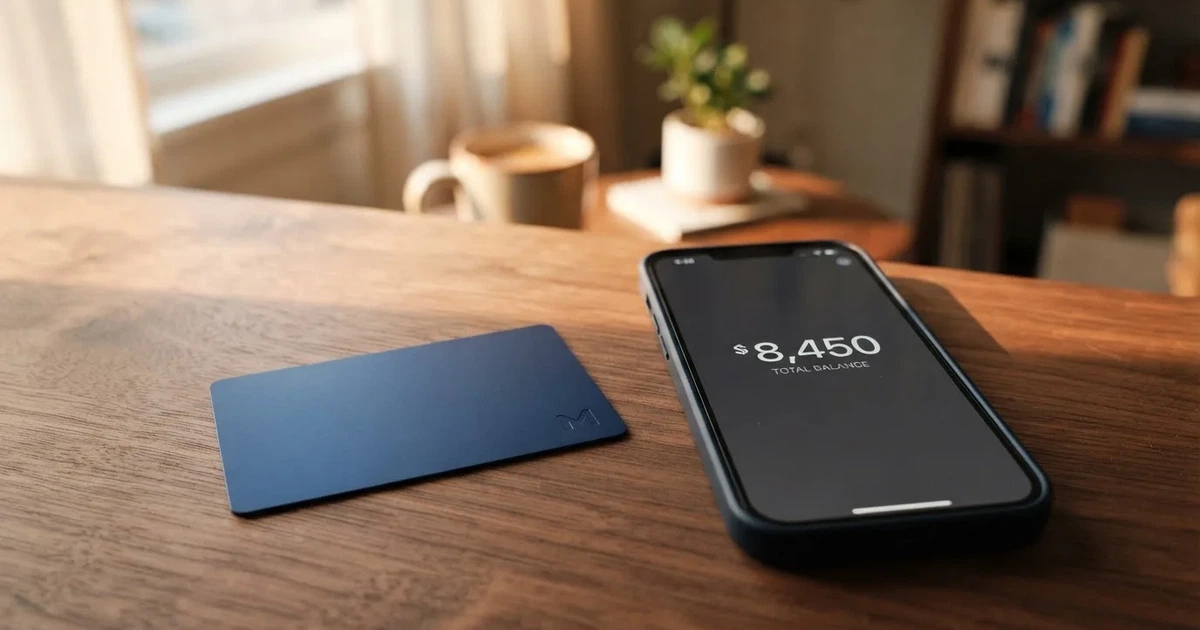
Who is this for? In short: crypto holders outside the restricted-country lists who want either a virtual or a plastic card and have no easy route to a normal bank card. Who is it not for? People who need dispute resolution they can count on, heavy cash users who mind the ATM percentages, or anyone who cannot clear identity verification comfortably.
The conditions described here are current as of October 28, 2026.
Verdict: my score breakdown
Let me walk you through how I arrived at 6.9 / 10, criterion by criterion.
| Criterion | Mark | Why |
|---|---|---|
| Who can get it | 8 / 10 | 47 places are closed for card issuance (list dated August 28, 2026); the rest of the world is open; the service claims 9 Million+ Users |
| Cost | 6 / 10 | Virtual 10.00 USD, physical 100.00 USD, servicing free; 1.00% fee, 1.20% other currency, ATM 2% up to 10,000 USD/month |
| Top-up options | 8 / 10 | Crypto on-chain, USDT-TRC20 from 1 USDT, USDC and ETH; top-up to card balance is free, network list visible on the deposit page |
| Reliability and complaints | 4 / 10 | Issuer unnamed (BIN Sponsor), software manager Redotpay Technology Pte. Ltd.; complaints of KYC and source-of-funds freezes, Trustpilot 778 reviews |
| Everyday use | 9 / 10 | Virtual and physical, Apple Pay and Google Pay, ATMs worldwide |
| Total | 6.9 / 10 | Solid reach and usability, held back by trust and complaint concerns |
Read that table twice. The top two rows and the bottom row are why this isn’t a 9: getting in is easy and spending is easy, but when something goes wrong — a verification hold, a frozen balance, a support ticket — that’s where the complaints concentrate. The everyday-use 9 is real and deserves respect; the reliability 4 is the reason the total sits mid-table.
Is it a good value? Depends what you compare it to. The service claims reach across most of the world and a $10 virtual card, which is genuinely cheap entry. But a lower score doesn’t mean “avoid at all costs” — it means know where the edges are before you commit real money.
Who will they issue the card to?
Two official lists word the same restriction differently, and that difference matters for you.
The KYC list (“Unsupported Countries/Regions”) says: “If you are a citizen of any of the countries or regions listed below, you will not be able to complete identity verification (KYC) or use RedotPay’s services.” It frames the restriction as citizenship-based and says the limits are “based on local regulations and sanction policies—not on individuals.”
The card-issuance list, dated August 28, 2026, is narrower but phrased by residence: “Residents of these areas are ineligible for both virtual and physical cards.” It also names those places as ineligible as billing addresses. Citizenship is not mentioned on this list.
So there are two different gates. The KYC list keys on citizenship and covers a wide set. The issuance list keys on residence and covers 47 places. Some names — Russia, Belarus, Ukraine, Serbia — appear on both lists, so they’re doubly out. Others — Georgia, Armenia, Kazakhstan, UAE — appear on neither, which means neither list closes them.
The 47-place issuance list, dated August 28, 2026, adds these six to the ones already restricted: India, Indonesia, Morocco, Nepal, Singapore, Turkey.
Why does the distinction matter to you in practice? If you’re a citizen of a KYC-listed country but a resident of, say, Germany, the citizenship rule is the one that bites. If you’re a resident of India, the issuance rule is the one that bites. Because the two lists use different criteria, the safest reading is: if your citizenship or your residence appears anywhere on either list, assume you can’t complete the process. Don’t try to work around it — that’s not a technicality, it’s a hard stop.
For everyone else reading this from a country not on either list: this is open to you, subject to identity verification succeeding (see the signup section). The service states 9 Million+ Users, which suggests broad take-up.
How to get it
The process is standard KYC-plus-steps. Here’s the shape of it:
- Install the app and sign up (by email, Google, or Apple ID).
- Verify your identity.
- Fund the account.
- Open the Card section and choose virtual or physical.
What the verification actually requires:
- Age: minimum 18.
- ID: only original physical documents — “Do not use copies, screenshots, or photos of a screen.” The document must be valid at least 3 months from submission. Both sides if there’s data on the back.
- Extra documents: JPG, PNG, or PDF up to 10MB, *only if the system asks*. You don’t upload them unprompted.
- Address: you type in the “true, current address in full.” No separate proof-of-address document is mentioned.
For the physical card, the billing and shipping address must be in English. One thing to note: the cardholder name printed on the back cannot be changed, so get that spelling right the first time.
On the card itself: you can choose virtual or physical. The Singapore terms describe a Visa debit card; the card page itself only says “leading card networks.” Card currencies available are a USD card (USD BIN) and an HKD card (HKB BIN) — so your card’s currency is fixed at issue and determines the ATM and daily limits you’ll see later.
Delivery for the physical card: standard mail is waived; DHL Express cost “varies by country,” calculated at checkout. As of July 21, 2026, delivery is unavailable in the issuance-restricted places plus Egypt, Palestine, Tunisia, “due to logistical and customs constraints.” How long delivery takes is not stated on the public pages, so don’t plan around a specific date.
One honest gap: only one verification level is described (identity plus address, with extra documents on request). The processing time and the official reasons for rejection are not stated. So you won’t find a published turnaround or a published list of what gets you declined — plan for some uncertainty there.
Fees and what a payment really costs
This is where I spend the most time, because “1% fee” only tells you half the story. Let me give you the table, then walk through three ordinary payments and show which fees actually apply.
| Fee or limit | Amount |
|---|---|
| Virtual card application | 10.00 USD |
| Physical card application | 100.00 USD (not cancellable or refundable once paid) |
| Virtual card replacement | 5.00 USD first, 10.00 USD each later |
| Account maintenance | Waived (no monthly or annual fee, no inactivity fee mentioned) |
| Transaction fee | 1.00% (the crypto conversion fee) |
| Default-currency transaction | Waived |
| Non-default currency transaction | 1.20% |
| Small authorization (1.00 USD or less) | First 5 per card/month waived, then 0.2 USD |
| Declined transactions | First 3 per month waived, then 0.5 USD |
| Some merchants | 1.5% (min 0.50 USD), first 3 per month waived |
| ATM (HKD card) | 2.00% |
| ATM (USD card) | 2% while monthly ATM withdrawals are 10,000 USD or less; 3% above |
| Per-transaction limit | 100,000 USD |
| Daily limit | 1,000,000 USD (both BINs) |
| ATM withdrawals | 3 per day, 30 per month |
| ATM daily amount | 23,000 HKD (HKD card) or 3,750 USD (USD card) |
| ATM monthly amount | 75,000 HKD or 50,000 USD |
| Balance limit | Unlimited |
| RedotPay Pro (paid tier) | 12.90 USD monthly or 129.00 USD annual |
A few details worth internalizing:
- The 1.00% transaction fee is the crypto conversion fee — it’s how your crypto becomes fiat at the point of sale.
- The fee is deducted from the balance.
- The 5 USD welcome reward “can’t be used toward the issuance fee.” So don’t mentally offset your $10 virtual card against the reward; the reward is spend-only, not a discount on the card.
- The merchant-surcharge row is specific: some merchants carry 1.5% (min 0.50 USD), first 3 per month waived. The named ones are Gulf Health Counsel, Free Fire, PUBG Mobile, Brawl Stars, eFootball, Facebook Ads, and Discord. If you spend on those, budget the extra.
- The fee table has been effective since December 1, 2025.
- On top-ups from a mainstream credit/debit card in the app: 3% fee, minimum 1 USD (more on this in the funding section).
- There’s a footnote that matters in some regions: “For USD cards: In some countries and regions, daily limits are $3,000 and monthly limits are $10,000.” — much lower than the headline 1,000,000 USD daily. So your *effective* limit may be capped by where you are, not just by your card.
Now, three everyday payments, to make the fees concrete:
Payment 1 — a $40 coffee on your USD card, in the US. This is your default currency, so the 1.00% crypto conversion fee applies ($0.40). The default-currency waiver applies to the FX surcharge, so there’s no extra 1.20%. Over $1, so the small-auth rule doesn’t kick in. Net: you pay $40 plus the conversion cost folded into the 1%.
Payment 2 — a €25 dinner in the eurozone on your USD card. Now you’re paying in a non-default currency, so the 1.20% fee applies on top of the 1.00% crypto conversion fee. The app lets you toggle currencies; a *disabled* currency is declined outright, so make sure the currency you need is enabled.
Payment 3 — withdrawing $200 cash at an ATM abroad on your USD card. This hits the 2% ATM fee (monthly withdrawals are under 10,000 USD, so you’re on the lower rate). That 2% is separate from the 1% crypto conversion — so a cash withdrawal can be closer to 3% all-in before you count any network’s own ATM fee. And remember the daily ATM cap: 3 withdrawals and 3,750 USD/day on the USD card.
The single most useful thing you can take from this section: the “1% card” headline applies to default-currency card spending. Foreign currency, cash, and top-ups each add their own layer. Plan around the full stack, not the sticker.
How to top it up
Topping up is one of this card’s strengths — I scored it 8 / 10.
Your two main routes:
- On-chain crypto deposit. Send supported assets to the card balance. The fee to the card balance is free.
- Buy crypto with a credit card in the app (ETH, USDC, USDT — depends on region).
On the on-chain route, specifics matter a lot:
- The minimum deposit is asset- and network-dependent; for example USDT-TRC20 minimum 1 USDT after network fees.
- Each asset is accepted only on the networks shown on the Deposit page, and RedotPay may change that list.
- The network fee is borne by the sender and is counted before the minimum — so if the network fee eats into your 1 USDT, your deposit may land under the minimum.
On the fiat-to-crypto-in-app route: transfers in from a mainstream credit/debit card carry a 3% fee, minimum 1 USD. That’s meaningfully more expensive than topping up directly with crypto you already hold.
A warning that generalizes beyond this card: blockchain transfers are irreversible. Send on a network the provider doesn’t support, or to an address meant for a different network, and the funds can be lost or need manual support recovery with no guarantee. Check the Deposit page’s network list every time — it can change. The list of supported assets and networks for *fiat* deposits is visible in the app; what’s on the Deposit page is the on-chain reality.
One gap to flag: withdrawal details are not stated on the public pages. If part of your plan is “cash out to my bank,” don’t assume the method or the cost until you’ve seen it in the app.
Paying with it every day
This is where the card earns its 9 / 10 for everyday use. Here’s the good news, then the fine print.
The good:
- Both a virtual and a physical card, so you can have an online-only number and a card in hand.
- Apple Pay / Google Pay integration for the virtual card — tokenized into your phone, so you tap rather than type.
- ATM access, with cash available “globally,” tap or swipe, on the physical card.
- Card currencies: USD and HKD, with an in-app currency toggle.
The fine print:
- No formal list of blocked merchant categories is published. There’s no MCC list given.
- “Some individual merchants may have their own internal policies regarding prepaid or crypto cards” — so a merchant can decline you regardless of the card’s rules.
- Illegal use is banned, and the card is not usable in sanctioned countries.
- Controls you get: per-card limits, online / POS / ATM toggles, and currency toggles. That’s a good toolkit for freezing and compartmentalizing.
This “prepaid card” character is worth understanding, because it explains a lot. In this model, your crypto is converted and loaded as a stored balance, and the card spends only that balance — it can’t overdraw. That’s the safest possible shape for a crypto card (no credit risk), but it’s also why merchants treat it differently: a prepaid BIN looks like a prepaid BIN, and some shops decline prepaid cards or foreign-issued ones as a matter of policy.
Rewards: there’s a 5 USD welcome reward, usable only on spending and valid for 30 days. The card page lists “Points & Rewards” and “RedotPay Pro” as separate programmes. No card cashback rate is stated — so don’t assume spend earns a percentage back; the number isn’t published.
The app: on the iOS App Store it’s rated 4.75 from 4,312 ratings, updated September 28, 2026. The Android rating is not stated.
One more honest gap: how disputes work is not stated. There’s no published chargeback or dispute process on the public pages. If a charge goes wrong, you’d be finding that policy out the hard way.
What can go wrong
This is the section I weighted most heavily, and it’s why the reliability mark is 4 / 10.
Freezes are the headline complaint. Officially, RedotPay acknowledges freezes linked to P2P orders and dispute handling. Unofficially, users report KYC-related holds on funds, support escalations going unanswered for days, and limited daily payments. On Trustpilot the page showed 778 reviews (2026), with themes of KYC holds, slow support, and daily payment limits. A review-analysis site adds that freezes involving source-of-funds reviews lasting weeks are the most serious complaint — that third-party claim isn’t confirmed by the card, but it aligns with the user reports.
Whose card is it really? This matters for recourse. The App Store seller is “Red Dot Technology Limited.” The Singapore terms name “Redotpay Technology Pte. Ltd.” as the program manager and an unnamed “BIN Sponsor” as the actual issuer, and users must be “ordinarily resident outside of Singapore.” So RedotPay runs the programme and the app, but the legal issuer is a shell the public pages don’t name. If something goes wrong, you’re dealing with a programme manager across a border from a hidden issuer. The website footer also cites “N° 144 en el Registro de PSAV de la CNV (República Argentina)” — a payment-service registration.
The terms are strict on your money. The Singapore terms state fees are non-refundable (cl. 16.3) and the terms let RedotPay freeze accounts. So your recourse when you disagree is thin by design.
Two protections aren’t stated: whether customer funds are safeguarded or insured (e-money providers are typically required to safeguard funds in the EU, but this card’s pages don’t say), and whether there’s two-factor authentication. Don’t assume either.
Support specifics are not stated. No published response times or channels beyond the app escalation complaints above.
Now the general risk context, because it applies to how much you should leave on this card at once. Card programmes *do* get shut down: Visa terminated its global agreements with FTX on November 13, 2022 and the FTX US debit card was wound down by its issuer. WaveCrest, a Visa issuer that supplied crypto card brands, was suspended by Visa in Europe in 2018, closing all its Visa programmes. When programmes close, you typically get a notice period, then spending and loading stop, then you’re asked to withdraw remaining balances. Card networks can suspend a programme, and Visa and Mastercard do not issue crypto cards to consumers themselves — they license issuers.
Practical takeaway: treat this card as a spending tool, not a vault. Don’t park long-term savings on the card balance, and keep the source-of-funds picture clean so a review passes quickly if one is triggered.
What to take instead
RedotPay isn’t the only way to spend crypto, and the honest comparison helps you decide. Here are three alternatives, each with its own trade-offs.
| Alternative | Score | Card | Key cost note | Top-up / funding |
|---|---|---|---|---|
| RedotPay | 6.9 / 10 | Virtual + physical, USD/HKD, Visa (Singapore terms) | Issuance 10.00 / 100.00 USD; 1% conversion; ATM 2–3% | Crypto on-chain (free) or fiat-to-crypto in app (3%) |
| Bitpanda | 6.5 / 10 | Physical Visa debit, EUR only, one active card | Account/monthly/first shipment free; reissue 5.90–9.90 EUR | Spends from a chosen asset (crypto, metals, or EUR), auto-converted |
| Wirex | 6.7 / 10 | Virtual + physical; Visa (SG terms) or Visa/Mastercard by region | Card issuance free in many regions; metal card 45 GBP/45 EUR | Fiat deposit free via SEPA/Faster Payments/ACH/PIX; spends cash, stablecoins, crypto |
| COCA | 6.4 / 10 | Physical + virtual, Visa | Not stated; footer advertises “fee-free swaps” | Not stated; assets moved to a linked smart-contract wallet |
A few notes on reading that table:
- Bitpanda is euro-area only and rule-based by residence (verified account + euro-area residence; “Bankident”-verified users can’t order). Its crypto conversion fee/spread isn’t stated, and its FX is EUR 0 but “VISA mark-up fees apply.” Its cashback is stated inconsistently (1% in body, “up to 2%” in a summary), and it’s excluded on fiat, stocks, metals, and stablecoins.
- Wirex offers Cryptoback in its own token: Standard 0.5%, Premium 3%, Elite up to 8% (metal card “up to 8% back in WXT”), with exclusions (ATM withdrawals, crypto purchases, gambling, refunds, and a long MCC blocklist). Card availability depends on region, its metal card costs 45 GBP (UK) or 45 EUR elsewhere, and its terms bar cash withdrawals in Singapore and transactions with prohibited countries.
- COCA advertises up to 8% cashback in stablecoins on card spend and up to 50% on subscriptions (Netflix, Spotify, etc.), with the Basic tier automatic and higher tiers requiring $COCA held in the wallet. Its costs aren’t stated on the public pages.
The pattern across all four: crypto cards generally trade higher rewards or wider reach for thin published recourse. If your priority is a clean banking relationship, none of these replaces a normal debit card. If your priority is *any* usable card funded by crypto, RedotPay’s combination of low entry ($10 virtual), free crypto top-up, and wide reach makes it a reasonable pick — and on those specific axes it beats the field.
Who I’d recommend it to
I’d recommend the RedotPay card to you if all of these are true:
- You hold crypto or stablecoins and want to spend them without selling through an exchange each time.
- You live in a country on neither the KYC nor the issuance-restricted list, and you’re comfortable with identity verification.
- You want both options — a virtual card for online subscriptions and a physical card for tap and cash.
- You value reach — ATMs “globally,” Apple Pay and Google Pay — over dispute polish.
- You can tolerate a 1% conversion fee and can avoid foreign-currency and heavy-ATM spending, or budget for the extra layers.
- You can pass a source-of-funds review without friction, because that’s where the complaints concentrate.
I’d steer you away if:
- Your main need is dispute resolution or chargebacks — how disputes work is not stated, and support is the weak point.
- You plan to hold a large balance on the card; safeguarding and insurance aren’t stated, and the issuer is unnamed.
- You need cash often — ATM fees of 2–3% plus caps (3/day, 30/month) add friction and cost.
- You’re in a restricted country — citizenship *or* residence on either list is a hard stop.
- You want a cashback rate — no card cashback rate is published; the welcome reward is 5 USD, spend-only, 30 days.
My honest one-line verdict: a capable, wide-reaching spending tool with a real trust caveat — good for everyday use if you keep the balance small, but not something to depend on for recourse.
Frequently asked questions
What is the RedotPay card?
The RedotPay card is a payment card that spends from a crypto balance. You top the card up with stablecoins or crypto, and it converts to fiat at the moment of payment for a 1.00% conversion fee. You can hold either a virtual card (generated in the app, works with Apple Pay and Google Pay) or a physical Visa debit card. It behaves like a prepaid card drawing on a stored balance, so it can’t overdraw.
How does the RedotPay card work in practice?
You sign up in the app, verify your identity with an original physical ID, fund the account, then open the Card section and choose virtual or physical. At payment, your crypto is converted and the fiat amount is charged, with the 1.00% crypto conversion fee deducted from your balance. Paying in your card’s default currency (USD or HKD) is waived of the FX surcharge; a non-default currency adds 1.20%.
Is RedotPay a bank?
RedotPay is not itself a bank. Its Singapore terms name Redotpay Technology Pte. Ltd. as the program manager and an unnamed “BIN Sponsor” as the actual card issuer. The App Store seller is Red Dot Technology Limited. The website footer also cites an Argentine payment-service registration (N° 144, PSAV register of the CNV). So it’s a card programme run by a fintech on top of an underlying licensed issuer.
Who owns RedotPay?
Ownership isn’t spelled out as a simple parent on the public pages. What you’re told: the programme manager is Redotpay Technology Pte. Ltd. (Singapore terms), the App Store seller is Red Dot Technology Limited, and the actual issuing bank is an unnamed “BIN Sponsor.” The service claims 9 Million+ Users. If exact ownership matters to you, that’s a question for their support — the pages don’t lay out a clean ownership chain.
Does getting the RedotPay card require KYC?
Yes. There’s a minimum age of 18, and you must submit an original physical ID (no copies, screenshots, or photos of a screen) valid at least 3 months, both sides if there’s back data. Extra documents (JPG/PNG/PDF up to 10MB) are only requested if the system asks. You type your true current address in full. Citizenship on the KYC restricted list blocks verification entirely; residence on the 47-place issuance list blocks both card types.
How much does the RedotPay card cost to get and keep?
A virtual card costs 10.00 USD to apply; a physical card costs 100.00 USD and is non-refundable once paid. A virtual replacement is 5.00 USD the first time, 10.00 USD after. Account maintenance is waived — no monthly or annual fee and no inactivity fee mentioned. There’s an optional RedotPay Pro tier at 12.90 USD monthly or 129.00 USD annually. The 5 USD welcome reward cannot be used toward the issuance fee.
What are the RedotPay fees and limits?
The main fee is a 1.00% crypto conversion fee; a non-default currency adds 1.20%. ATM withdrawals cost 2% (HKD card) or 2% up to 10,000 USD/month then 3% above (USD card). Limits: 100,000 USD per transaction and 1,000,000 USD daily on both BINs — though some regions cap USD cards much lower ($3,000 daily, $10,000 monthly). ATM: 3 per day, 30 per month, up to 3,750 USD (USD card) or 23,000 HKD daily. Balance limit unlimited.
How do I top up the RedotPay card?
Two routes. First, send crypto on-chain to the card balance — this is free, with a minimum that depends on asset and network (for example 1 USDT on TRC20, after network fees, which you bear). Each asset is only accepted on the networks listed on the Deposit page, and that list can change. Second, buy crypto with a credit card in the app, which carries a 3% fee (minimum 1 USD). Always confirm the network before sending — blockchain transfers are irreversible.
Is the RedotPay card safe, and can I trust it?
It has real controls — per-card limits, online/POS/ATM toggles, currency toggles, and mobile wallet tokenization — but the trust picture is mixed. The issuer bank is unnamed (a “BIN Sponsor”), fund safeguarding and two-factor authentication are not stated, and the terms allow account freezes. Trustpilot showed 778 reviews with themes of KYC holds on funds, slow support, and daily payment limits. Treat it as a spending tool, not a vault, and keep the balance small.
Is the RedotPay card worth it?
That depends on what it’s worth to you. If you hold crypto, can’t easily get an ordinary bank card, and want a low-cost ($10 virtual) card with wide ATM and Apple/Google Pay reach, it’s a reasonable pick — and it scores 8/10 on both reach and top-up options. If you need strong dispute resolution, a published cashback rate, cheap foreign-currency spending, or frequent cash withdrawals, the 4/10 reliability mark and the fee stack make it a weaker choice. Judge it against the alternatives before you commit a large balance.
App and neobank cards – cryptocardsearch.com
Content created by the «cryptocardsearch.com» team