
A free Visa that draws on a euro balance, with an unlisted card issuer and limited public detail
 Available in US
Rebind is a Visa payment card tied to a euro balance, with savings paid on the same balance and a marketing pitch that leans hard on “no fees”. The card is free, and the company makes a point of saying it charges nothing for the account, transfers, foreign exchange, or minimums. The problem is that the public information about Rebind is unusually thin for a financial product: the card issuer is not named, the supported countries are described as “40+” without a published list, the top-up channels in crypto are not documented on the official site, and the cashback scheme that gets mentioned in user reviews is not explained in the marketing pages. That is not a reason to dismiss Rebind, but it is a reason to walk in with your eyes open and to check the specific facts that matter to your situation before you rely on it.

The card sits in a small and growing corner of the market: products that take stablecoins (or, in Rebind’s case, a euro balance that is funded by them) and turn them into a Visa that you can tap at a shop. The premise is attractive if you keep money in crypto and want to spend it without first selling to your bank account. The execution is what varies, and Rebind’s execution is, in places, less documented than the alternatives.
The score from my review is 5.8 out of 10. Rebind does the cheap, no-frills part well; it is less convincing on transparency, on who can actually get one, and on what happens when things go wrong. The breakdown of that score, and the reasoning behind each row, is in the verdict table below.
Conditions on this page are current as of October 28, 2026.
Verdict
Rebind earns a 5.8 / 10 from me. The card itself is free, the headline fees are genuinely zero, and the euro balance earns yield that is paid every second and is not locked up. That is a real offer. What pulls the score down is the gap between what the marketing site tells you and what you need to know to use the card safely: no published list of supported countries, no published card issuer, no published crypto top-up method, and a savings programme that pays yield from “third-party DeFi protocols” with no description of the underlying risk.
| Criterion | Mark | Why it scored this way |
|---|---|---|
| Who can get it | 5 / 10 | Works in 40+ countries inside and outside the eurozone, but the full list is not on the public page; the only route to check eligibility is to download the app. Unofficial sources narrow this to EU, EEA and the United Kingdom. |
| Cost | 8 / 10 | No account fee, no transfer fee, no foreign exchange fee, no minimums. Buying and selling assets carries a “small fee” whose amount is not published. Unofficial reports cite a 1.5% markup on spending outside EUR and GBP. |
| Top-up options | 4 / 10 | Officially, an IBAN with instant transfers. Crypto is not documented on Rebind’s own pages; unofficial sources say ETH and USDC on Gnosis Pay infrastructure. |
| Reliability and complaints | 5 / 10 | Rebind SAS has no banking licence; the euro balance is e-money issued by Monerium; the card issuer is unnamed. No deposit insurance. User reviews complain about cashback tied to holding GNO and delays withdrawing from yield contracts. |
| Everyday use | 6 / 10 | Free Visa that “spends euros globally”. Unofficial: virtual and physical cards are issued, ATM is free, Apple Pay and Google Pay are not supported. |
| Total | 5.8 / 10 | Strong on price, weak on disclosure. A reasonable pick if you live in a supported country, you are comfortable with Monerium’s e-money, and you do not rely on mobile wallets. |
The audience that Rebind genuinely suits is narrow. It suits a euro-zone resident who already holds ETH or USDC, wants a free Visa to spend that balance, and is comfortable with the idea that the euro side of their account is e-money, not a bank deposit, and that the yield on the balance is paid by external DeFi protocols rather than by Rebind. If that is you, Rebind will probably do what you want at a low price. If you live outside the EU/EEA/UK, if you want Apple Pay, if you need a named, regulated card issuer, or if you want a published fee schedule, Rebind is not the right card for you.
Who will they give you the card
Rebind says the card works in 40+ countries, both inside and outside the eurozone. The full list lives on a separate guides page that I did not read, which means there is no way to confirm from the public website whether your country is included. Independent sources narrow this significantly: the only places where the card is reliably available appear to be the EU, the EEA, and the United Kingdom. If you are based elsewhere, the practical answer is that the card is probably not for you, and you will only find out by downloading the app and trying.
Rebind is built around a euro balance. Even if you live outside the eurozone, the account is denominated in EUR and the euro side of the card is e-money issued by Monerium, an EU-licensed electronic money institution. That has two consequences. First, your account is governed by EU e-money rules no matter where you live, which can be useful or constraining depending on your view. Second, the “euro balance” you see in the app is not a deposit at a bank, and it is not covered by any deposit guarantee scheme. It is a claim on Monerium, and Monerium is required to safeguard the funds it holds, but that is a different thing from deposit insurance.
The age requirement is not stated on the pages I read. The general rule for prepaid and e-money cards in the EU is 18+, and Rebind almost certainly applies that, but I cannot confirm the exact threshold from the company’s own documentation. If you are signing up on behalf of a minor, do not assume Rebind is appropriate.
What this means for you in practice: before you install the app, work out whether the country you live in is one of the 40+. If you cannot confirm that from the website, the only honest test is to sign up and see whether the next step lets you continue. If you live in a country outside the EU, EEA and UK, I would treat the unofficial restriction as a working assumption and have a backup card in mind.
How to get it
The sign-up flow is described in two sentences on the official site: “Free to open. Only takes 5 min.” That is the whole of what Rebind says about onboarding. There is no list of documents you need, no description of the address-proof requirement, and no explanation of how the identity check works.
What I can piece together from unofficial sources: signing up requires an email address, a phone number, and an identity document. Proof of address and a selfie are not required. That is lighter than most bank-grade KYC, but it is still a regulated e-money product, so the platform has to verify your identity under EU anti-money-laundering rules even if it does not ask you for a utility bill.
The card itself is described as a free Visa. Rebind does not say on its own pages whether the card is virtual-only, physical-only, or both; unofficial sources describe both, with a virtual card issued first and a physical card available afterwards. Delivery time is not stated. Account currency is the euro. The marketing line “spend euros globally” and “pay in any currency” tells you the card handles non-euro transactions, which is what the no-FX-fee claim refers to.
There is no information on the public pages about tiered accounts or different cardholder levels. There is one product, with one set of fees, and the headline is “free”.
The KYC level — how far Rebind goes in verifying your identity — is not stated on the pages I read, beyond the “5 minutes” promise. If your situation is unusual (you are a non-resident, you have recently moved, you hold citizenship of a country that is not your country of residence), expect the system to ask for more documents than the basic sign-up implies, and budget time for that. EU rules require the institution to refuse the relationship if it cannot complete due diligence, which is one reason any e-money account can be frozen pending documents.
What this means for you: the sign-up is fast and free, but the time you save at the start may reappear later if the platform asks for additional documents before it will let you spend or withdraw. Have a passport or national ID card ready, and a clear phone number and email address, and be prepared for the possibility of follow-up questions.
What it really costs
This is the section where Rebind looks best. The marketing pages are explicit: no account fees, no transfer fees, no foreign exchange fees, no minimums. The card is described as free. The IBAN that comes with the account supports instant transfers 24/7 at no cost, and savings start from €1.
The one place the picture gets murkier is the spread on buying and selling assets. Rebind says buying and selling assets carries “a small fee” and does not publish the amount. The conversion spread, which is the gap between the rate you see and the mid-market rate, is also not stated. In practice, that is where crypto card providers typically make their money when they do not charge explicit transaction fees, and the only way to find out what you are paying is to test a small top-up and compare the rate against a public reference such as the European Central Bank’s daily rate or a major exchange.
Unofficial sources put a 1.5% markup on spending outside EUR and GBP. That figure is not confirmed by Rebind, and you should not treat it as the rate you will see, but it is consistent with how the “no FX fee” promise can co-exist with a real cost: the fee is hidden in the spread rather than charged as a line item. If you spend mostly in euros or sterling, this matters less; if you spend in dollars, Swiss francs or another currency, the hidden cost can be larger than a 1.5% line-item fee would be.
The euro account earns yield: up to 5% on EUR and up to 8% on USD, variable, paid every second, with no lock-ups. The yield comes from third-party DeFi protocols, which is a different thing from a bank deposit rate. The rate is variable, not guaranteed, and depends on the protocols in use at any given time. The maximum rate is a ceiling, not a floor.
ATM fees and transaction limits are not stated on Rebind’s pages. Unofficial sources say ATM withdrawals are free and that no daily, monthly or ATM limits are published. “Not published” is not the same as “not enforced”; if you plan to use the card heavily, test small first.
| Fee or limit | Amount |
|---|---|
| Card issuance | Free |
| Account fee | None |
| Monthly fee | None |
| Buying and selling assets | “Small fee” (amount not stated) |
| Conversion spread | Not stated |
| Foreign exchange fee | None published; unofficial reports 1.5% markup outside EUR/GBP |
| ATM withdrawal | Not stated; unofficial: free |
| Daily spending limit | Not stated |
| Monthly spending limit | Not stated |
What this means for you in everyday payments. The three payments most people make are a coffee, a supermarket shop, and an online subscription.
For a coffee paid in euros, the cost is the euro price of the coffee. There is no transaction fee on the card, no FX fee, and no minimum. The hidden cost is the spread on the asset you used to fund the euro balance: if you converted USDC to euros at a 0.3% spread, that 0.3% is baked into the price you paid for the coffee.
For a supermarket shop paid in a non-euro currency (say, US dollars while you are travelling), the official fee is zero, but the unofficial 1.5% markup, if accurate, is the real cost. On a €100 shop that is €1.50, which is competitive with most bank cards but not free.
For an online subscription billed in a third currency, the same FX rule applies. If the merchant’s bank treats your card as foreign (because the BIN identifies the issuer country as something other than the merchant’s country), the payment can be declined even when the fees would have been zero. The BIN-lookup behaviour is something to be aware of; it is a category-level fact about cards and not specific to Rebind.
Top up
The official way to add money to Rebind is an IBAN with instant transfers 24/7 at no cost. There is no minimum, and transfers from a SEPA bank account are the documented route. If you have a euro bank account and you want to fund your Rebind balance in fiat, the path is straightforward: open the app, copy the IBAN, send a SEPA Instant transfer, and the balance arrives within seconds.
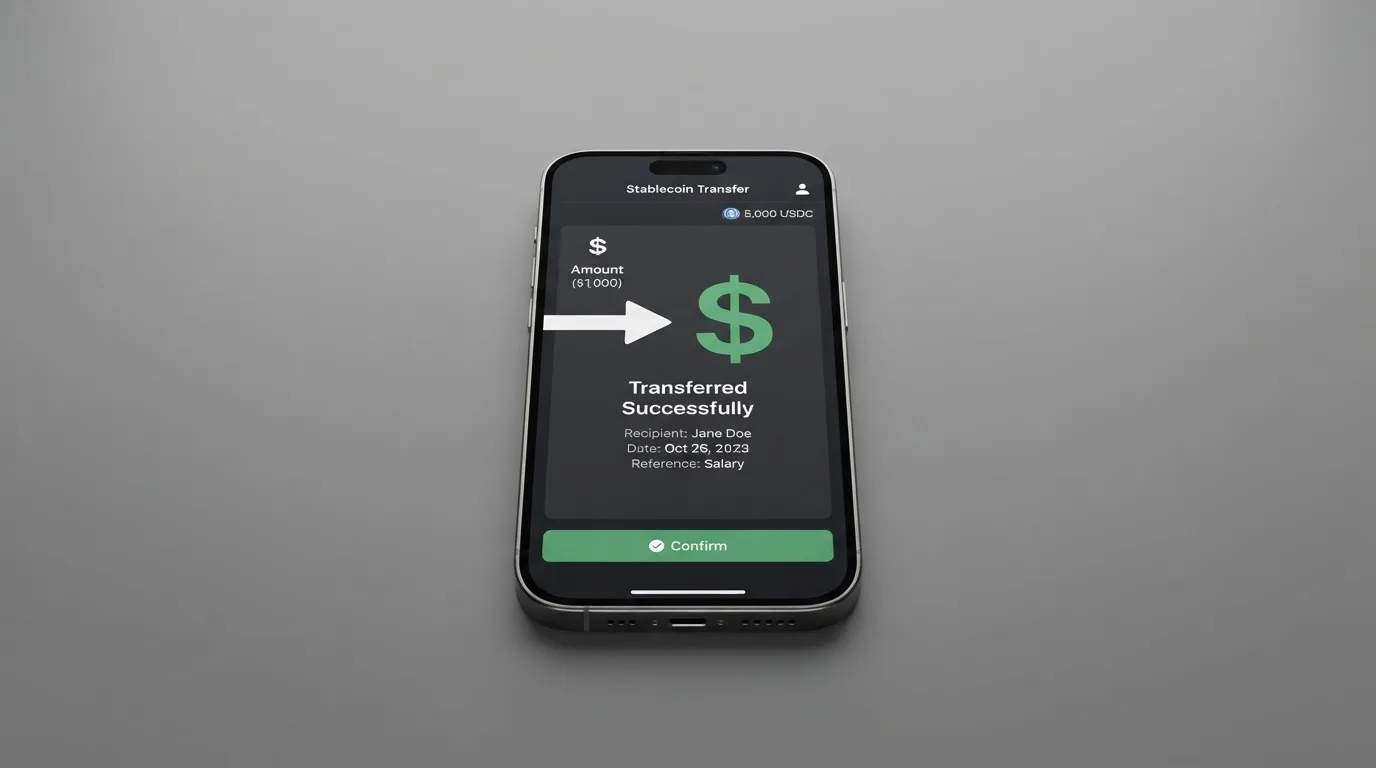
The official site does not document a crypto top-up. That is a noticeable gap, because Rebind markets itself as a card you spend “from a crypto balance” in some descriptions, yet the public pages do not say which cryptocurrencies, on which networks, to which addresses. Unofficial sources fill in part of the picture: ETH and USDC are supported, and the infrastructure is built on Gnosis Pay. Gnosis Pay is a separate card programme that runs on the Gnosis Chain, and it is not a household name in the way Ethereum or Base are, so the choice of network has consequences for fees and for the tokens you can use.
What this means in practice. If you are topping up from a euro bank account, the IBAN route is well documented and works as described. If you are topping up from a crypto wallet, you have to work out the network and the asset from sources other than Rebind’s own website, and the risk of sending on the wrong network is real: blockchain transfers are irreversible, and a stablecoin sent to an address of a network the platform does not support can be lost or sit in a recovery queue with no guarantee of return.
The savings side of the account is the other half of “top up”. Once your euro balance is funded, it can be moved into a yield-bearing contract that pays up to 5% on euros. The yield is variable and is paid by external DeFi protocols, not by Rebind or Monerium. Withdrawals from those contracts are described as available at any time, with no lock-ups, but the speed of withdrawal and any fees involved are not explained in the public pages. User reports describe multi-day delays when pulling out of the yield contracts, which is consistent with the underlying DeFi protocols having their own settlement windows.
What this means for you: if you plan to use Rebind, the IBAN route is the only one I can recommend with confidence based on the public documentation. The crypto route is real but under-documented; test with a small amount first, and confirm the network and the receiving address in the app before you send anything meaningful.
Paying with it every day
The card is a free Visa that spends the euro balance. The marketing promise is “spend euros globally”, which means the card is meant to work in non-euro countries too. Where you can use it depends on the merchant: any shop that takes Visa will take the card, but whether the payment goes through smoothly depends on the merchant’s own rules and on the way the card issuer is set up.
Unofficial sources say both a virtual and a physical card are issued, that ATM withdrawals are free, and that Apple Pay and Google Pay are not supported. A reviewer on the App Store says the virtual card has to be added to mobile wallets by manual card entry, which is friction most people do not expect on a card that brands itself as a modern product. If mobile wallet support matters to you, this is a real gap.
Cashback is not described on Rebind’s own pages, but user reports mention cashback tied to holding the GNO token (the native token of the Gnosis Chain) with weekly caps, and a 5.6% yield cited in some user reviews. Aggregator scores for Rebind conflict: an English-language summary gives 8.3 out of 10, while French, Russian and Chinese summaries give 6.2. That kind of divergence usually reflects a mix of limited data and reviewers weighting different factors, but it is also a sign that the user experience is not consistent.
Blocked merchant categories are not stated. Gambling, adult content, and other categories that some issuers block are not mentioned on Rebind’s pages, and the only way to know is to test a small payment or to ask support.
Disputes and chargebacks are not described. The standard process for a Visa dispute is that the cardholder contacts the issuer, the issuer investigates, and the merchant’s bank either honours the dispute or escalates. If Rebind’s unnamed card-issuing partner is the one running that process, the time it takes is outside Rebind’s direct control.
The app is available on the App Store and Google Play. I did not check the current ratings.
What this means for you in the situations most readers care about. Tapping to pay in a shop in your home currency works on the basic model of “swipe the card, money comes out of the euro balance”. Online purchases in a foreign currency work too, with the FX rule above. Subscriptions and recurring payments are where prepaid-style cards can struggle, because the merchant’s pre-authorisation can fail if the balance is not pre-funded far enough in advance. ATM withdrawals are reportedly free, but the daily limit, if any, is not published, so plan for that gap. And if you are a heavy Apple Pay or Google Pay user, the lack of wallet support is a deal-breaker rather than an inconvenience.
What can go wrong
There are five distinct risks with Rebind, and the company itself does not pretend they do not exist. The official site is candid about the first one: Rebind is a technology company without a banking licence. The euro balance is e-money issued by Monerium, an EU-licensed electronic money institution. The card is issued by an unnamed “licensed, MiCA-compliant card-issuing partner” whose logo is not on the page. The logos that do appear on the page — Stripe, Visa, Privy, Gnosis Pay — are not identified as the card issuer.
That structure has practical consequences. The euro balance is not a bank deposit. It is not covered by the French deposit guarantee scheme (FGDR) or any equivalent. If Monerium were to fail, your claim would be against Monerium’s safeguarded funds, not against a deposit guarantee. The card itself is issued by a partner whose identity is not public, and the partner’s solvency and the segregation of cardholder funds follow the partner’s regulatory regime rather than Rebind’s.
The yield side has its own risks. Rebind says the savings come from third-party DeFi protocols. Those protocols are smart contracts, and smart contracts have a long history of exploits. The protocol is not named in the public pages, so there is no way to look up the audit history or the historical loss record. The “no lock-ups” promise is paired with user reports of multi-day delays when withdrawing from yield contracts, which suggests the withdrawal window depends on the protocol’s own settlement, not on a guarantee from Rebind.
The cashback that gets mentioned in user reviews is, by those accounts, conditional on holding GNO, the native token of the Gnosis Chain, with weekly caps. The headline number is higher than the realised number for most users. If you do not hold GNO, the cashback may not apply. Rebind does not document this on its own pages, which is a transparency gap rather than a wrongdoing, but it is the kind of detail that matters when you compare the card’s effective return to the headline return.
Support is referenced from the footer of the site, but I did not test response time. There is no Trustpilot page for Rebind, and no Reddit thread that surfaces in search. The absence of a public review footprint is unusual for a financial product and makes it harder to predict how the company handles problems when they arise.
Programme-level risks are the ones that are not specific to Rebind but apply to the whole category. Card networks can suspend issuers, and when they do, programmes wind down. Visa’s termination of its FTX agreement in November 2022 and the 2018 suspension of WaveCrest are precedents. When a programme winds down, the typical sequence is a notice period, then a stop on new loads, then a stop on spending, then a request to withdraw remaining balances. If Rebind’s card-issuing partner were to lose its Visa licence, the same sequence would apply to Rebind cardholders, and the speed of the wind-down would be set by Visa and by the partner, not by Rebind.
Identity verification can also close accounts. EU rules require the institution to refuse the relationship if due diligence cannot be completed, which means an account can be frozen pending documents and, in the worst case, closed with a return of the balance. This is not a Rebind-specific problem, but it is the kind of event that turns “free” into “inconvenient” if you are caught by it.
What this means for you. Treat the euro balance as money you can afford to be without for a few weeks if something goes wrong. Do not park your salary or a large lump sum in a Rebind balance if you need that money to be available on demand through a deposit guarantee. If you use the yield feature, treat the maximum rate as a ceiling and the realised rate as something you have to monitor. And if you cannot find a public Trustpilot or Reddit footprint for the product, that is itself a signal: the more users a financial product has, the more visible its problems are, and Rebind’s relative silence is a reason to be cautious rather than a reason to assume everything is fine.
What to take instead
The honest comparison is with three other cards that do similar things in different ways. None of them is a perfect substitute, and each has its own trade-offs.
| Card | Score | Issuer | Best for | Main trade-off |
|---|---|---|---|---|
| Rebind | 5.8 / 10 | Unnamed Visa partner, Monerium e-money | Euro-zone residents with crypto, no mobile-wallet need | Undisclosed card issuer, no published top-up coins |
| MetaMask Card | 7.1 / 10 | Monovate (Mastercard) | Users already deep in the MetaMask wallet | 45-country list, US/UK sign-ups closed |
| KAST | 6.1 / 10 | Visa (Platinum/Infinite tiers) | Tiered membership, stablecoin-funded USD balance | Up to USD 10,000/year membership, 0.5-1.75% non-USD FX |
| Zeal | 6.1 / 10 | Gnosis Pay (Visa) | EUR/USD/GBP stablecoin balances, EU/UK/Brazil | 150+ spend countries, no published fee schedule |
MetaMask Card scores 7.1 out of 10. It is a Mastercard, with a virtual card issued instantly and a Metal card that can be pre-ordered in the app after the virtual one is approved. The virtual card is free; the Metal card is USD 199 per year. MetaMask charges a “minimal fee for each transaction” (the amount is in a linked fee table I did not read), no MetaMask-specific fees, and no foreign transaction fee, using the Mastercard wholesale rate. The card spends directly from the connected wallet on Linea, Base, Monad and Solana, and the supported tokens include mUSD, wETH, EURe, GBPe, USDC and USDT, with nine in total. Cashback is 1% on Virtual and headline 3% on Metal, capped at 3% on the first USD 10,000 spent then 1%, paid in mUSD into the Money Account. Sign-up is open in 45 listed countries, and the published list includes Andorra, Argentina, Brazil, Canada, Mexico, Germany, France, Spain and Uruguay; other regions are on a waitlist. Sign-ups from US and UK residents are temporarily closed per the FAQ, and the residence-based approach means citizenship is not the deciding factor. The downsides are the 45-country cap, the closed US/UK sign-ups, and the requirement to use the MetaMask wallet as the funding source.
KAST scores 6.1 out of 10. It is a Visa with three tiers: Standard (free, with a USD 0 annual membership), Premium (USD 1,000/year) and Private (USD 10,000/year), each with its own card design (Platinum, Infinite metal, Infinite gold plated) and cashback rates (1.5% on the first USD 2,000/month for Standard, 2% on the first USD 10,000/month for Premium, 3% on the first USD 40,000/month for Private). The account balance is in USD, and stablecoin deposits (USDT, USDC, PYUSD, RLUSD on Ethereum, Solana, Polygon, Arbitrum and TRON) are converted 1:1 with a 0% spread. Stablecoin top-ups and card spending in USD are 0%. Non-USD FX is 0.5-1.75% depending on residence country, transaction country and card programme, plus USD 0.10 on non-USD transactions under USD 25, plus USD 0.50 on declined transactions for insufficient balance. Apple Pay and Google Pay are 0%. KAST allows up to 10 cards per user. The downsides are the membership fees for the higher tiers, the non-USD FX band, and the Terms-of-Service conflict on which stablecoins are acceptable (USDT and USDC per Terms, more per the app).
Zeal scores 6.1 out of 10. It is a Visa built on Gnosis Pay, with a virtual card addable to Apple Pay for online use and accounts in EUR, USD and GBP. The card programme is live in EU, UK, Brazil, Colombia, Mexico, Japan, Singapore, Philippines, Indonesia and Thailand per Gnosis Pay docs, with Zeal update notes mentioning Mexico, Colombia and Bolivia specifically, and the card is spendable in 150+ countries. Zeal charges no additional FX fee and uses the Visa wholesale rate; Gnosis Pay fees (such as ATM) may still apply. Spending is from balances in the card Safe, denominated in EUR, USD or GBP stablecoins on Gnosis Chain and Celo, though the exact coins are not stated for Zeal. Cashback is up to 4%, paid in GNO on Gnosis Chain, with the requirement that GNO be held in the card Safe, and rates can change. The app also advertises up to 5% variable APY on EUR/USD balances. The downside is that no fee schedule is published, which makes it hard to compare costs in detail.
If you are choosing between these, the deciding factors are country, currency, and mobile-wallet support. If you live in the EU or EEA and want a euro balance that earns yield, Rebind is the cheapest of the four on the fee line and the weakest on disclosure. If you live in one of the 45 countries where MetaMask Card is available and you already use MetaMask, the MetaMask card is the better all-round product despite the closed US/UK sign-ups. If you want tiered membership and a USD balance, KAST is the natural choice. If you want Apple Pay and EUR/USD/GBP stablecoin balances, Zeal is the closest functional match to Rebind and the more transparent of the two.
Who I would recommend it to
I would recommend Rebind to a euro-zone resident who already holds ETH or USDC, wants a free Visa to spend that balance, and is comfortable with two structural facts. The first is that the euro side of the account is e-money issued by Monerium and not a bank deposit, so the standard deposit guarantee does not apply. The second is that the yield on the balance comes from third-party DeFi protocols that are not named on the public pages, and the realised rate is variable.
I would not recommend Rebind to a US or UK resident (the unofficial restriction appears to apply), to anyone who relies on Apple Pay or Google Pay, to anyone who needs a named, regulated card issuer on the public page, or to anyone who wants a published fee schedule. For those readers, the alternatives above are stronger fits.
If you are on the fence, the practical test is simple: download the app, complete sign-up, and see whether your country is supported and whether the IBAN top-up works as described. Send a small amount first, not your full balance. Read the in-app fee disclosures that are not on the marketing site, because those are the ones that will determine your real cost. And if the cashback that user reviews talk about matters to you, check in the app whether it is tied to holding GNO before you plan around it.
Frequently asked questions
What is the Rebind card?
The Rebind card is a free Visa tied to a euro balance held as e-money by Monerium, with savings paid on the same balance from third-party DeFi protocols. It is positioned as a way to spend a crypto-funded euro balance at any merchant that accepts Visa, in any currency.
How does the Rebind card work?
You sign up in the app, fund the euro balance by IBAN transfer (or, by unofficial accounts, by sending ETH or USDC on the supported networks), and spend the balance with the card. Yield accrues on the balance every second, with no lock-ups, and is paid by external DeFi protocols rather than by Rebind or Monerium.
Is Rebind a bank?
No. Rebind SAS is a French technology company without a banking licence. The euro balance is e-money issued by Monerium, an EU-licensed electronic money institution. The card is issued by an unnamed “licensed, MiCA-compliant card-issuing partner”.
Who owns Rebind?
Rebind SAS, built in Paris. The site’s footer lists technology partners including Stripe, Visa, Privy and Gnosis Pay, but does not identify the card-issuing partner by name. There is no public information on the investors or the ownership structure beyond that.
Is the Rebind card available in my country?
Officially, the card works in “40+ countries, inside and outside the eurozone”, with the full list on a separate guides page that I did not read. Unofficial sources narrow the working list to the EU, EEA and the United Kingdom. The only reliable way to confirm eligibility is to download the app and try to sign up.
How do I get the Rebind card?
You download the app, sign up with email, phone and an identity document, complete the in-app KYC, and request the card in the app. The card is described as free, and unofficial accounts describe both a virtual and a physical card.
Does the Rebind card require KYC?
Yes, because the euro balance is e-money issued by an EU-licensed institution. Unofficial accounts describe the KYC as requiring email, phone and an ID document, without proof of address or a selfie. The official page does not list the required documents.
How do I top up the Rebind card?
The official route is an IBAN with instant SEPA transfers 24/7 at no cost. The official site does not document a crypto top-up. Unofficial sources say ETH and USDC are supported on Gnosis Pay infrastructure, but the network and the receiving address are not on Rebind’s own pages.
How do I add the Rebind card to Apple Wallet?
By current unofficial accounts, you cannot. The card is reported as not supporting Apple Pay or Google Pay, and one App Store reviewer says the virtual card can be added to a wallet only by manual card entry. If mobile-wallet support is a requirement, Rebind is not the right product today.
Is the Rebind card safe?
In the sense that it is operated by a French company with an EU-licensed e-money partner, yes, in the same way that any regulated e-money product is. In the sense that your balance is fully protected, no: euro balances are e-money, not bank deposits, and are not covered by the French deposit guarantee scheme. The yield comes from third-party DeFi protocols whose names are not published, and the cashback reported in user reviews is tied to holding the GNO token. Treat the product as a current account, not as a savings account.
Wallet cards – cryptocardsearch.com
Content created by the «cryptocardsearch.com» team