
Phantom Cash card, a virtual Visa that spends a stablecoin balance
 Available in US
Phantom Cash is a virtual Visa debit card that spends directly from a CASH stablecoin balance inside the Phantom wallet, and nothing else. If that sentence describes what you want, a stablecoin card that lives where your crypto already is, this is one of the few products built for exactly that job. If you live outside the United States, want a physical card, expect to draw cash from an ATM, or need any card details to be public, this is not it.
Conditions are current as of October 28, 2026.
This review goes through who actually qualifies, what the card really costs (the official pages say “fees may apply” and stop there), how to load it, what everyday use looks like, and the risks that come with a single-issuer, single-network product on top of a relatively new stablecoin. Conditions are current as of 2026-10-20.
Verdict
Phantom Cash scores 5.3 out of 10 in this review. The number is not a verdict on the product idea, it is a reflection of how much of the basic card experience is still undisclosed, restricted, or quietly in flux. The card is genuinely useful for a narrow audience: people inside the United States (everywhere except New York state) who already keep dollar stablecoins in Phantom and want to spend them through Apple Pay or Google Pay without first cashing out to a bank. Outside that group, the gaps become hard to ignore.
Here is how the score breaks down:
| Criterion | Mark | Why it lands there |
|---|---|---|
| Who can get it | 4 / 10 | US only, excluding New York; no physical card and no spending abroad outside the Visa network |
| Cost | 7 / 10 | The official page does not list fees; the best unofficial read suggests no issuance, replacement or inactivity fees, with a 1% + $0.30 international transaction fee |
| Top-up options | 4 / 10 | Loads via Apple Pay, Google Pay, debit card or bank; no direct crypto top-up is named, which is unusual for a card that supposedly spends from a stablecoin |
| Reliability and complaints | 6 / 10 | Lead Bank issues, Bridge Ventures manages, Stripe processes; an official notice says the virtual card is being replaced as Phantom moves to a new issuer, with no dates given; no Phantom-specific complaints found |
| Everyday use | 5 / 10 | Virtual-only Visa, Apple Wallet and Google Wallet, no ATM access per unofficial sources |
| Total | 5.3 / 10 |
The shape of the product is clear: it is for the person who already uses Phantom as a Solana wallet, holds CASH there, and wants a clean way to tap to pay. If that is not you, alternatives further down this review cover different combinations of country reach, fee transparency and rewards.
Who can get the Phantom Cash card
Phantom Cash is only available to residents of the United States, and the United States minus New York state. The eligibility rule is by residence, not citizenship, which is the relevant distinction for anyone who has moved. The official pages do not call out citizenship rules or a list of excluded countries beyond New York, so a person physically in California with a non-US passport will need to verify their situation directly with the card programme rather than assume one way or the other.
Two further points are worth holding onto. The first is the 18+ age rule that applies to the identity check. The second is the wallet-only shape of the product: there is no physical card, so anyone whose daily life still depends on inserting or swiping a piece of plastic is out of luck. If you need a card you can hand to a hotel reception or pull from a wallet at a restaurant that does not yet take contactless, this is not that product.
The country restriction also bleeds into where the card can be used. Visa acceptance is global in principle, but the card is denominated in the CASH balance, and the product has been built around US-side top-up and withdrawal. Anyone who travels or relocates should expect friction.
How to get the Phantom Cash card
The setup is short enough to walk through. Open or sign into the Phantom mobile app, fund a Cash balance, complete identity verification through Link (Phantom’s identity partner, with Stripe handling the bank transfer, direct deposit and debit card flows behind the scenes), generate the virtual card, then add it to Apple Wallet or Google Wallet. That is the whole sequence the marketing page describes.
The identity step is the part that needs the most care. Phantom as a wallet does not require KYC to use; Phantom Cash as a card does, because regulated payment flows sit behind it. The verification is mandatory for the virtual card. What is not spelled out on the official pages is the level of detail that Link or Stripe will ask for, the time it takes, and what happens if the application is rejected. A proof-of-address document is not mentioned, but US card programmes typically want one; if you live at a different address from the one on your ID, have a recent utility bill or lease ready before you start.
Once the card is in your wallet, you tap to pay as you would with any other Apple Pay or Google Pay card. The official pages do not describe a separate “activation” step; the card is functional as soon as the virtual number is generated and added.
Fees
This is the part of the review where the gap between the official and unofficial picture is widest, and where you have to do the most work yourself. The Phantom Cash marketing page says only that “fees may apply” and points to a Cardholder Agreement for the actual numbers. That agreement was not in the materials reviewed, and the card programme’s fee schedule is not republished on the public pages.
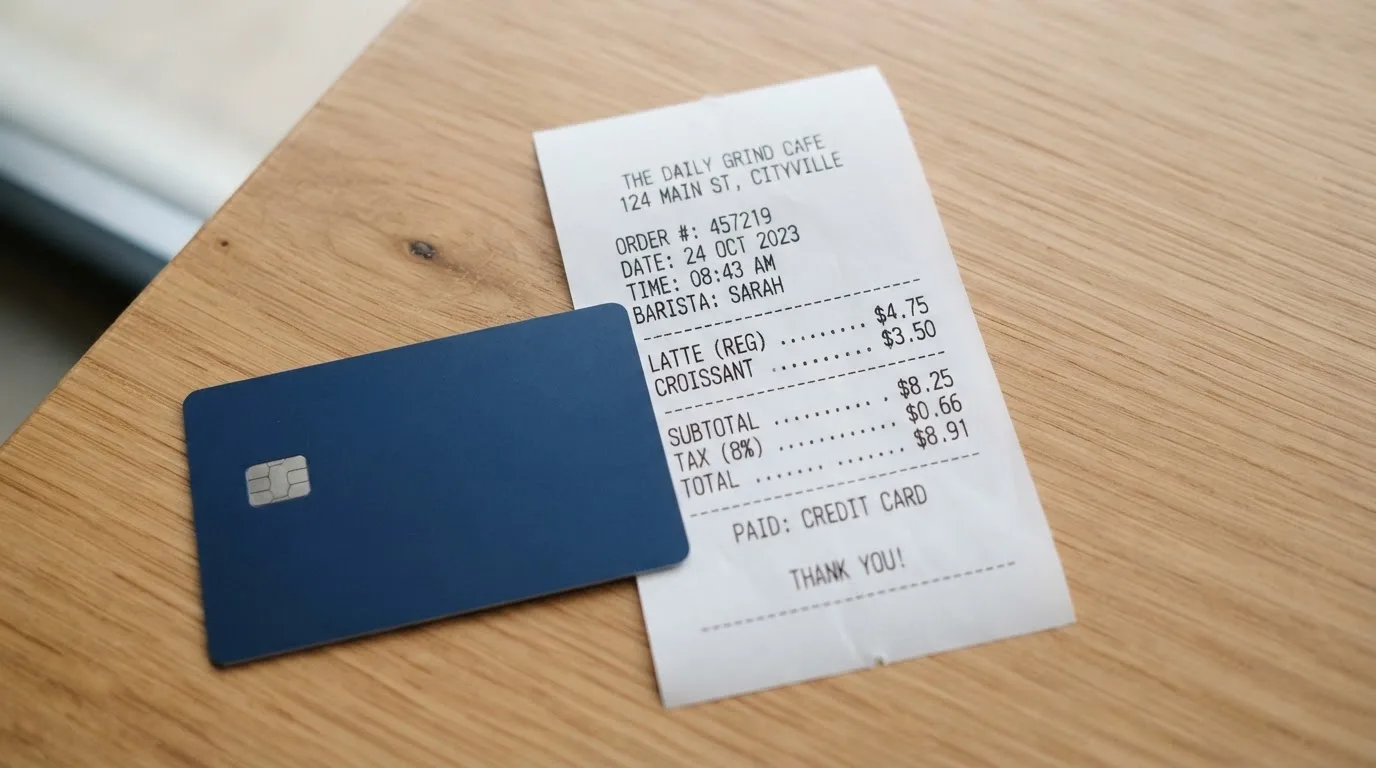
A third-party card-details page, the kind that aggregates Visa and Mastercard programmes for comparison shoppers, paints a different picture. Per that source, the unofficial read on Phantom Cash is: no card issuance fee, no replacement fee, no inactivity fee, free cash loads, US purchases free, an FX fee of 1% plus $0.30 per international transaction, no ATM withdrawals at all, and a default daily spending limit of $2,000 that can be raised to $5,000 on request. The monthly limit is not disclosed. None of this has been confirmed by the card programme, so treat it as a working estimate, not a guarantee, and check the Cardholder Agreement before relying on it.
Here is what the costs table looks like with the official silence filled in by the unofficial read:
| Fee or limit | Amount |
|---|---|
| Card issuance | Not stated (unofficial: free) |
| Card replacement | Not stated (unofficial: free) |
| Monthly or annual fee | Not stated (unofficial: none) |
| Inactivity fee | Not stated (unofficial: none) |
| Cash load / top-up | Not stated (unofficial: free) |
| Conversion fee | Not stated (stablecoin trades described as fee-free) |
| FX fee (international) | Not stated (unofficial: 1% + $0.30 per transaction) |
| ATM withdrawal | Not stated (unofficial: not offered) |
| Daily spending limit | Not stated (unofficial: $2,000 default, up to $5,000 on request) |
| Monthly spending limit | Not stated |
| Cashback | No card cashback stated |
What this means for an everyday payment matters more than the table. Three scenarios show how the fees actually land.
A US supermarket purchase, paid by tapping the virtual card in Apple Pay, is the cleanest case. The card is denominated in the CASH balance, which is dollar-pegged, and US-side spending is described as free on the unofficial read. If that holds, this is the everyday case where Phantom Cash adds nothing to the cost of a normal debit card.
An online subscription billed in euros, paid through a US-issued virtual Visa, hits the international transaction fee. The unofficial read is 1% plus $0.30 per transaction, so a €50 subscription adds roughly $0.50 to $0.80 on top of the converted dollar amount. That is low for a crypto card, but it is not zero, and it is the case where the Cardholder Agreement really should be opened.
A second US purchase the same day, after the first one, falls inside the unofficial daily limit and should not trigger any extra fee. Where the daily ceiling becomes a real constraint is the person who treats the card as a primary spend card. At the default $2,000 a day, a single large bill payment or a month of business travel is more than enough to require a temporary limit increase, and the request process is not described on the public pages.
The honest summary is this. The card looks inexpensive or even free for ordinary US spending, but the official silence is real, and a card without a published fee schedule is a card you cannot fully budget against. Anyone who plans to spend on it should treat “fees may apply” as a signal to read the Cardholder Agreement before the first transaction, not after.
Top up
Topping up Phantom Cash starts with the CASH stablecoin balance, not with a direct crypto transfer. The card spends whatever sits in that balance, and the balance is funded through four payment rails depending on your region: Apple Pay, Google Pay, debit card, and bank account. The official pages do not name a direct stablecoin or token deposit as a top-up option for the card, which is a notable absence for a product that is otherwise a stablecoin card. Stablecoin trades inside the wallet are described as fee-free, but that is the trading layer, not the funding rail for the card.
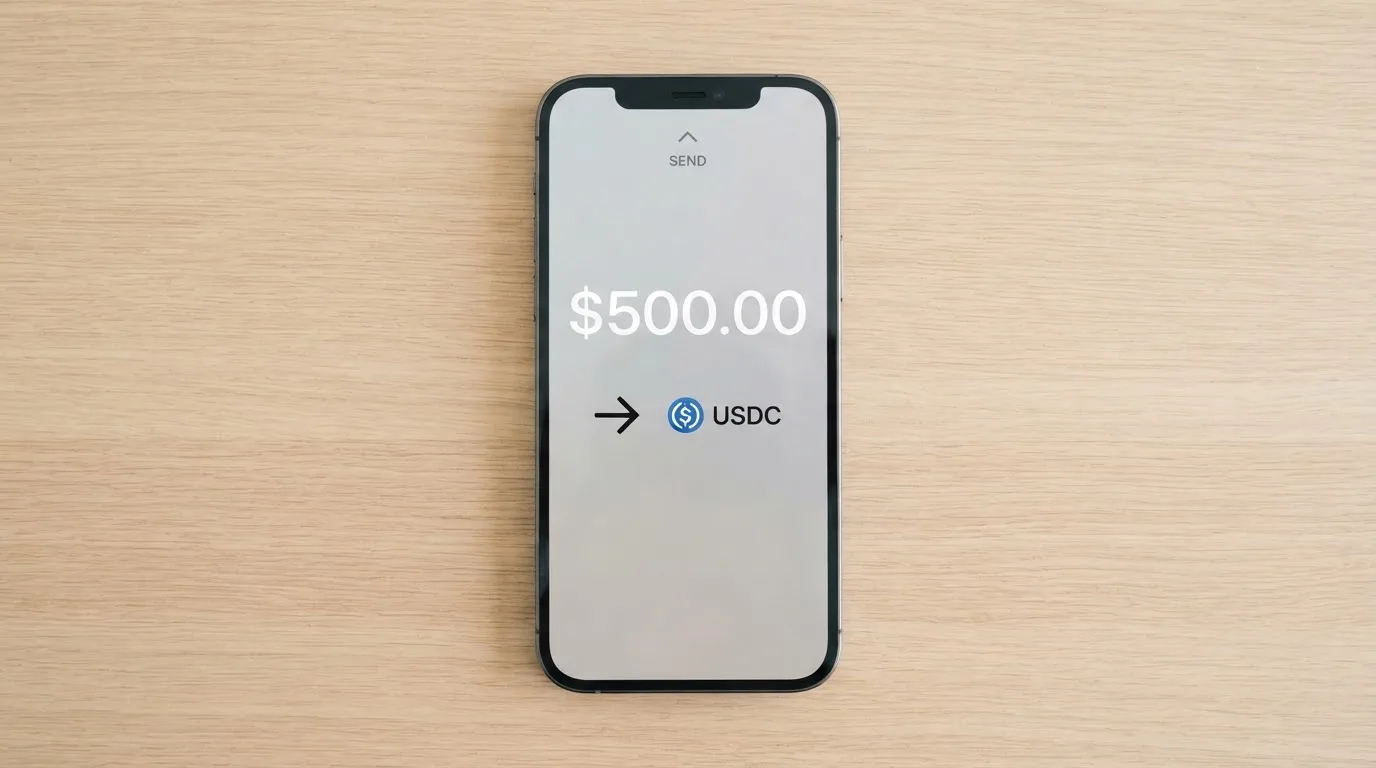
The minimum amount, the time it takes for a top-up to land, and whether a fee is charged on each funding method are not stated. In practice, bank and debit card top-ups often carry a small percentage fee, and Apple Pay and Google Pay funding can route through the underlying card with whatever fee that card adds; none of that is published on the public pages, so the cheapest path depends on which of the four methods is cheapest in your region.
Withdrawals work in the opposite direction. Cash can be moved out to a US bank account or to a Solana wallet, again with no fee, minimum or timing stated. What is not stated is how the card behaves if it is closed, how long balances remain withdrawable, and whether the balance is converted to dollars before withdrawal or moves as CASH. For a person whose main use case is spending, none of this is urgent; for a person who plans to hold meaningful sums in the CASH balance, it is the kind of detail that should be confirmed before parking money there.
The practical shape of the flow is: load dollars into the Cash balance through a payment rail, spend through the card, withdraw back to a bank or a Solana wallet when needed. Anything that looks like a direct on-chain deposit to the card is, in practice, a deposit to the wallet, then a swap into CASH, then a card spend.
Paying with Phantom Cash day to day
In normal use, the card behaves like any other Visa loaded into Apple Wallet or Google Wallet. You tap to pay, the merchant sees a Visa authorisation, and the amount is deducted from the CASH balance at the point of sale. Because the card is virtual, there is no plastic to wear out, no chip to fail, and no address to update if you move. There is also no way to hand a card to a cashier, a hotel desk, or a rental car counter, which is the first thing to accept about living with a virtual-only card.
The official pages do not list restricted merchant categories, so it is reasonable to expect that what Visa normally blocks, this card also blocks. Gambling, some adult entertainment categories, and certain high-risk merchant codes tend to be restricted by issuer policy, but the precise blocked list for Phantom Cash is not stated.
There is no cashback or rewards programme on the card itself. The closest thing to a yield is the passive income that the CASH stablecoin is described as earning inside the wallet, with no published rate. That is a feature of holding CASH, not a reward for spending, and the difference matters for anyone who treats card rewards as a meaningful part of their spending.
Card disputes for debit card transactions are handled by Stripe, the same processor that sits behind the funding flows. What is not stated is the dispute process itself: how a claim is opened, what evidence is needed, how long it takes, and what counts as a chargeable reason. For a virtual-only card, the dispute cases that come up most often are online fraud and goods not received, and both depend on the dispute process being workable.
There is one operational change worth knowing. The official help centre says the virtual Phantom debit card is being replaced as Phantom moves to a new card issuer, and that users need to re-add the replacement card to Apple Wallet or Google Wallet. No dates are given. If the card is currently sitting in your wallet, it is worth checking the Phantom help centre before any large purchase to confirm whether the card you have is the current one or the soon-to-be-replaced one.
What can go wrong
Five risks deserve to be called out by name, because each one of them is a way the card can stop being useful without warning.
The first is the issuer change already in motion. The official notice says the card is being replaced as Phantom moves to a new issuer. Until the swap is complete, the card could be reissued to a new virtual number, and any recurring payment set up on the old number will fail until it is updated. The help centre does not give a date, and that absence of a date is itself the risk.
The second is the official fee silence. The marketing page does not publish a fee schedule, and the Cardholder Agreement is the only place those numbers live. Anyone who relies on the unofficial read without checking the agreement is budgeting on someone else’s guess. If a fee is introduced or raised, there is no public record to compare against.
The third is the geography. US-only issuance, New York excluded, and a balance that flows through US-side payment rails means a trip abroad does not break the card, but a move abroad does. A cardholder who relocates to another country can keep the CASH balance in the wallet, but the card’s funding and withdrawal paths are US-shaped, and the international transaction fee is now applied to almost every purchase.
The fourth is the stablecoin. CASH sits in a regulated on-chain wrapper, and Phantom says the balance is secured on-chain. Stablecoins are not risk-free: they depeg (TerraUSD in May 2022, USDC briefly in March 2023) and the issuer’s reserves are the real backing. For a daily-spend balance the size of a typical debit card top-up, a small depeg is a nuisance; for a parked balance of any size, it is a real exposure. The card programme also does not state whether the balance is FDIC-insured or covered by an equivalent guarantee. Phantom is explicit that it is “not a bank”, and the card is issued by Lead Bank under a Visa licence, with Bridge Ventures as the programme manager.
The fifth is the operational basics that are also not stated. Card freeze, two-factor authentication, dispute time frames, and language support for the chat-based help centre are all unaddressed on the public pages. The help centre itself does offer a “Start a chat” option, so human support exists, but the hours and languages are not described.
No Phantom-specific complaints were found in the searches done for this review, and that absence is worth what it is worth. Trustpilot, Reddit and news searches for “Phantom Cash” did not return a body of complaints, which is unusual for a card that has been live long enough to start swapping issuers, and is consistent with a small user base that is also concentrated in one product (the Phantom wallet) rather than spread across a community.
What to take instead
If Phantom Cash is the right product for you, none of these alternatives will be a perfect substitute, because the narrow thing it does well, spending a stablecoin balance from a single wallet, is what the alternatives do less directly. If Phantom Cash is not quite right, here is what to look at.
MetaMask Card, scored 7.1 out of 10, is the closest comparison on geography. Sign-ups are open in 45 listed countries and territories, including Brazil, Canada, Mexico, Germany, France, Spain and Argentina, with other regions on a waitlist. Sign-ups in the US and UK are temporarily closed per the FAQ, which is a meaningful caveat for the reader. Proof of residency is required, and the card is a Mastercard rather than a Visa, with a virtual card issued first and a Metal card available for pre-order. The virtual card is free, Metal is $199 a year, and the headline cashback is 1% on Virtual and 3% on Metal, paid in mUSD, with a footnote that the 3% on Metal applies only to the first $10,000 spent. Spending is from the connected wallet, with Linea, Base, Monad and Solana as the named networks and a token list that includes mUSD, wETH, USDC and USDT. For a non-US reader who wants a stablecoin card and can wait for their country to come off the waitlist, this is the most direct alternative.
KAST, scored 6.1 out of 10, is a different shape of product. It is a multi-currency stablecoin account with up to 10 cards per user, three programmes (Standard, Premium and Private) and a fee schedule that is actually published. Standard is $0 a year, Premium $1,000 and Private $10,000, with annual billing. Stablecoin top-up is 0%, USD card spend is 0%, transaction fees are 0%, and non-USD FX is 0.5%–1.75% depending on residence, transaction country and programme. Cashback is paid in USD: 1.5% on Standard up to $2,000 a month, 2% on Premium up to $10,000, 3% on Private up to $40,000, with KAST Points adding 1% on Premium and 2% on Private. The trade-off is country reach: KAST does not publish its supported-country list, eligibility is checked at KYC, and the rules explicitly say that living in a supported country while holding an ID from a restricted region can still fail KYC, with VPN use not a workaround. For a US reader who values published fees and tiered rewards over a single virtual card, KAST is the alternative with the most disclosed detail.
Zeal, scored 6.1 out of 10, sits in the middle. The card is a Visa, virtual for online use and addable to Apple Pay, with accounts in EUR, USD and GBP. Zeal charges no additional FX fee and converts at the Visa wholesale rate, while Gnosis Pay’s own fees (for example, ATM) can still apply. The cashback is up to 4% paid in GNO on Gnosis Chain, conditional on holding GNO in the card Safe, with rates that can change, and the App Store entry also advertises up to 5% variable APY on EUR and USD balances. Spend is supported in 150+ countries, with card-programme availability listed in the EU, UK, Brazil, Colombia, Mexico, Japan, Singapore, the Philippines, Indonesia and Thailand. For a reader who wants a self-custody-style stablecoin card and is comfortable holding GNO to keep the cashback, this is the cleanest of the three on the fee side.
What none of these does is exactly what Phantom Cash does, which is sit inside a wallet you already use and spend a single stablecoin balance with no extra top-up step. That product shape has its audience, and the alternatives above are a comparison of the trade-offs, not a ranking.
Who I would recommend it to
I would recommend Phantom Cash to a US resident, outside New York, who already keeps a meaningful dollar balance in the CASH stablecoin inside Phantom and wants to spend it through Apple Pay or Google Pay without first transferring to a bank. For that reader, the card is doing exactly what it is built to do, and the missing physical card, ATM access, and published fee schedule are acceptable trade-offs.
I would not recommend it to a person who needs a physical card, plans to use ATMs, lives outside the US, expects to be paid cashback in any meaningful way, or treats a public fee schedule as a non-negotiable. The geography and the silent fee schedule each rule out a different audience, and together they rule out most readers who do not already use Phantom as a wallet.
If the choice is between Phantom Cash and a US reader with no Phantom history, I would point that reader at KAST, where the fees are published, the country support is broad, and the cashback is paid in dollars. If the choice is between Phantom Cash and a non-US reader, the comparison is MetaMask Card or Zeal, depending on whether the priority is country reach and waiting list progress, or a Visa product with no extra FX fee.
Frequently asked questions
What is the Phantom Cash card?
The Phantom Cash card is a virtual Visa debit card issued by Lead Bank and built into the Phantom mobile wallet. It spends directly from a CASH stablecoin balance inside the wallet, and the card itself is added to Apple Wallet or Google Wallet for tap-to-pay. There is no physical version of the card.
How does the Phantom Cash card work?
You fund a Cash balance in the Phantom app, complete an identity check through Link, generate the virtual card, and add it to Apple Wallet or Google Wallet. Each purchase converts the spent amount from the CASH stablecoin balance at the point of sale, and the deduction is immediate. Withdrawals go back to a US bank account or to a Solana wallet.
Is Phantom Cash a bank?
No. Phantom states explicitly that it is “not a bank”. The card is issued by Lead Bank under a Visa licence, Bridge Ventures LLC is the programme manager, and Stripe processes the underlying transactions. The CASH balance is held on-chain as a stablecoin, not as a bank deposit.
Is the Phantom Cash card available in my country?
The card is available to residents of the United States excluding New York state. The official pages do not name a wider list of supported countries. For non-US residents, MetaMask Card or Zeal cover broader geographies and are worth comparing first.
How do I apply for the Phantom Cash card?
The application is in-app: open Phantom, fund a Cash balance, complete the identity verification, generate the virtual card and add it to Apple Wallet or Google Wallet. The official flow does not include a separate web application or a physical card delivery step.
Does the Phantom Cash card require KYC?
Phantom as a wallet does not require KYC. Phantom Cash as a card does, because the bank transfer, direct deposit, and debit card flows are handled by regulated payment partners. The verification goes through Link, with Stripe as the underlying processor, and applicants must be 18 or older.
How do I top up the Phantom Cash card?
You top up the underlying Cash balance, not the card directly. The four named methods are Apple Pay, Google Pay, debit card, and bank account, and the available methods depend on your region. Minimum amounts, fees and timing for top-ups are not stated on the official pages.
Is the Phantom Cash card free?
The marketing page does not publish a fee schedule. A third-party read suggests no issuance, replacement or inactivity fees, free cash loads, and free US purchases, with a 1% + $0.30 fee on international transactions. The official confirmation lives in the Cardholder Agreement, which is the document to read before relying on any of those numbers.
Is the Phantom Cash card safe?
The balance is held on-chain as CASH, Phantom says it does not store KYC information, and the identity flow is handled by Stripe. The official pages do not describe a card-freeze feature, two-factor authentication or insurance for the balance, and Phantom is explicit that it is “not a bank”, so there is no FDIC-style deposit guarantee to fall back on.
How do I delete my Phantom Cash account?
The official help centre offers a “Start a chat” option for account questions, and account closure behaviour is part of that conversation. The public pages do not describe a self-serve deletion flow, the time it takes, or what happens to a remaining Cash balance, so the chat is the right place to start.
Wallet cards – cryptocardsearch.com
Content created by the «cryptocardsearch.com» team