
MEXC Card review: a USDT-only virtual Visa with 4–10% cashback — and an unnamed issuer
 Available in US
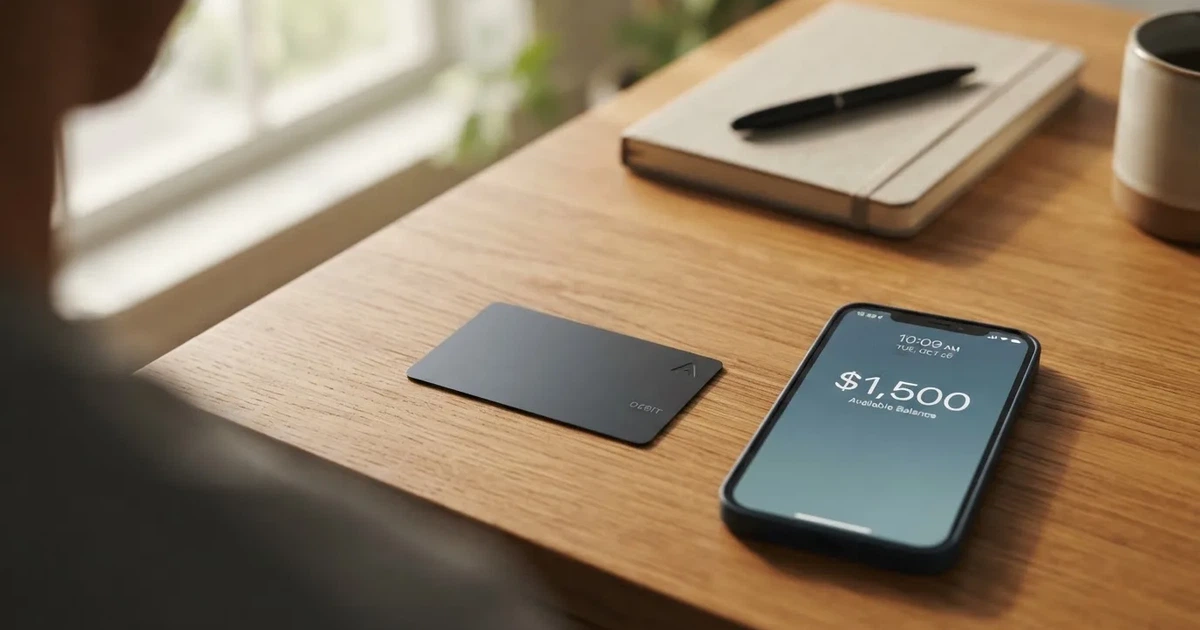
The MEXC card is not a bank card. It is a virtual Visa Platinum that draws on a balance you hold on the MEXC crypto exchange, and the card is part of a product line launched on 31 August 2026 with two regional variants: MEXC Global Card and MEXC Card for Asia-Pacific markets. On paper the pricing looks unusually good — zero annual fee, zero crypto conversion fee on the Global Card, and cashback between 4% and 10% depending on your M-Score tier. In practice three things give me pause, and they are not small: the card issuer is never named on the public pages, the card is USDT-only with no networks stated, and the exchange itself carries a heavy load of one-star user reviews about frozen withdrawals. I scored it 5.6 out of 10. It fits a narrow user — someone already holding USDT, based in an eligible country, who wants a spending card with cashback and no annual fee — and it does not fit anyone who needs a physical card, an ATM, a US or European banking licence, or a card they can trust with their savings.
Conditions stated below are current as of October 28, 2026.
Verdict
My score is 5.6 / 10. That is not a rejection, it is a “know exactly what you are signing up for” verdict. The MEXC card does the basic thing — turn a crypto balance into ordinary card payments with real cashback and no annual charge — but it does it through an unnamed issuer, on a virtual-only card, funded only with USDT, inside an exchange with a documented history of frozen accounts.

| Criterion | Mark | Why |
|---|---|---|
| Who can get it | 8 / 10 | Global Card is open to residents of 69 countries and territories, others judged by address-proof country; unofficial catalogs say 110 countries |
| Cost | 7 / 10 | Issuance 20 USD (temporarily waived), annual fee and top-up 0, crypto conversion 0%, FX at Visa rate with no markup, 1% transaction fee from 1 Oct 2026 |
| Top-up options | 4 / 10 | USDT only: transfer to the Fiat account, then to the card; networks not named |
| Reliability and complaints | 3 / 10 | Issuer not named, balance sits at the exchange; Trustpilot shows no score, 88% one-star, reports of freezes and withdrawal delays; unofficial: on Hong Kong SFC’s suspicious-platforms list |
| Everyday use | 4 / 10 | Virtual Visa Platinum only; Apple Pay and Google Pay present; no physical card, no ATM |
| Total | 5.6 / 10 | A good rewards rate on top of a thin, custodial product |
Who this suits: you already sit on a USDT balance, your country of address is eligible, and you treat the card as a spending tool rather than a savings account. Who it does not suit: anyone who wants a physical card or ATM access, anyone in a blacklisted country, and anyone who needs a named, licensed issuer behind the card. My strongest feelings about the audience are this — the people who will be happiest are USDT holders in Asia who mostly want cashback on everyday spending and do not mind that the balance sits with an exchange.
Will they give you the card
Yes, if your country is on the eligible side of the line — and the line is drawn by the country on your proof of address, not by your nationality. The card page lists “The Philippines, Taiwan, Thailand…” with a Details link that leads to the full list, so the public page shows a sample rather than the whole thing. As of August 2026 the application blacklist included the United States, China, India, Indonesia, Turkey and Russia among others. The Philippines, Taiwan, Vietnam and Thailand were not blacklisted. The list changes, which means your answer can change too.
One thing to get straight before you apply: the Global Card is closed to residents of 69 countries and territories, and people elsewhere are admitted according to the country on their address proof. Separately, unofficial catalogs describe the reach differently — DefiLlama lists the card in 110 countries, and SpendNode says Global Card covers Southeast Asia, Latin America, Africa, the Caribbean, the Gulf, Central Asia, plus Japan, South Korea, New Zealand and Israel. Take those as third-party descriptions, not as the card’s own confirmed list; the official list excludes Russia and Turkey.
How to get it
The path is short and the gate is Advanced KYC. You must complete Advanced KYC before you can apply — that means a government ID plus a face verification. You also need a proof of address from an eligible country. No income proof is asked for. Age is not stated on the pages I checked. Once KYC is done, you apply on the My MEXC Card page, transfer USDT to your Fiat account, and fund the card.
What you get at the end is a virtual card only — physical cards are “not yet available” on the card page. The network is Visa, at Platinum tier, and the card currency is USD. Delivery timing is not applicable to a virtual card, but if you were counting on a plastic card in the post, that is not on offer today.
What it really costs
Pricing here is the strongest part of the product. The Global Card launched with a 20 USD issuance fee that is waived for a limited time as of August 2026, a 0% service fee, and no annual, top-up, inactivity or termination fee. Crypto conversion on the Global Card is 0%. Non-USD purchases convert at the Visa rate with no MEXC markup. What is coming is a 1% transaction fee from 1 October 2026, so a 100 USD purchase deducts 101 USDT. The APAC Card is a different shape: issuance 0, transaction fee 0%, but 1% crypto conversion and the Visa rate plus 1% on non-USD purchases. The Visa spread itself is said to be usually 0.1% to 0.3%. Monthly fee and ATM fees are not stated on the page; ATM withdrawal fees are listed as “Not applicable to virtual cards”.
Here is the cost picture in one place:
| Fee or limit | Global Card | APAC Card |
|---|---|---|
| Issuance | 20 USD, waived for a limited time (as of Aug 2026) | 0 |
| Annual fee | 0 | not stated |
| Top-up fee | 0 | 0 |
| Crypto conversion | 0% | 1% |
| FX | Visa rate, no MEXC markup | Visa rate plus 1% on non-USD |
| Transaction fee | 1% from 1 Oct 2026 | 0% |
| ATM withdrawal | Not applicable to virtual cards | Not applicable to virtual cards |
| Per-transaction limit | 80,000 USD | 50,000 USD |
| Per-day limit | 1,000,000 USD | 50,000 USD |
| Per-year limit | no monthly or annual cap listed | 1,000,000 USD |
| Transaction count | 100 per day, 2,500 monthly, 25,000 annually | 50 per day, 1,040 per year |
Two everyday payments, so you can feel it. A 30 USD subscription paid in your home currency: on the Global Card you pay 30 USDT plus the 1% transaction fee — 30.30 USDT — plus the small Visa spread of roughly 0.1–0.3%, with no conversion charge on top. On the APAC Card the same purchase costs 30 USDT plus 1% on the non-USD conversion, roughly 30.60 USDT. A 500 USD purchase in USD on the Global Card deducts 505 USDT from 1 October 2026. Before that date, and while the issuance fee is waived, the same 500 USD purchase is 500 USDT plus only the Visa spread.
Daily and monthly spending limits on the Global Card are generous — 80,000 USD per transaction and 1,000,000 USD per day — though note the transaction counts are far lower: 100 a day, 2,500 a month, 25,000 a year. If you are wondering about monthly or annual spending caps on the Global Card, none are listed.
How to top it up
Top-up is USDT-only and it is a two-step move: you transfer USDT to your Fiat account, then add it to the card from the My MEXC Card page. Which blockchain networks to use is not stated anywhere on the pages I checked — and that omission matters, because a stablecoin transfer sent on the wrong network can be lost or need manual support recovery with no guarantee. There is no top-up fee and moving USDT into the Fiat account is free. The Global Card guide gives a per-top-up range of 1 to 1,000,000 USDT, though an older MEXC post cites a 100 USDT minimum, which conflicts. Fiat top-up is not stated.
On the way out, the card termination fee is 0 and there is no inactivity fee. How to move the remaining balance back to the exchange account, and what happens on closure, is not stated.
Paying with it every day
Day to day you are spending a stored balance, prepaid-style, in USD. The Global Card supports Apple Pay and Google Pay; the APAC Card supports Google Pay only. Which merchant categories are blocked is not stated, so gambling merchants and similar are a question you would have to answer by trying. Cashback is the part that is generous: it is set by your M-Score tier and paid by the 15th of the following month.
| Tier | Cashback | Monthly cap |
|---|---|---|
| Standard | 4% | 100 USDT |
| Premier (600–799) | 6% | 300 USDT |
| Elite (800+) | 10% | 800 USDT |
The Standard / Premier / Elite tiers change only the cashback rate and the monthly cap — there is no metal or physical tier, because the card is virtual only. Referral pays 20 USDT to the referrer and 10 USDT to the referee.
If a payment goes wrong, the process is: contact the merchant first, then MEXC Customer Service with your reason and evidence. The windows are 90 days for duplicate charges and 120 days for suspected fraud, goods not received, or goods not as described. Filing a dispute is free, though a review fee may apply if it is rejected for incomplete evidence. Refunds usually land in 1–7 days, travel refunds up to 30 days. There is a 0.50 USD charge per refund, but only if the refund rate is excessively high, and cashback on refunded purchases is deducted.
What can go wrong
The biggest risk is structural. The card is custodial: the exchange holds your spending balance, and there is no safeguarding or insurance statement anywhere on the pages I found. The issuer is not named. That means your money sits with an exchange, not with a licensed bank, and custody has a history — Mt. Gox (about 350 million USD reported stolen, 2011–2014), Coincheck (about 400 million USD, 2018), and the Ronin Network (625 million USD, 2022).
Then there is the card itself. If you lose it, the card page tells you to freeze it in Card Management and contact Customer Service for a replacement. 3-D Secure one-time codes arrive by email — valid for four minutes — or in the MEXC app. Repeated failed payments can trigger a risk review and card termination. When you add the card to a wallet, the issuer can restrict the tokenised number by channel, so a card added for phone use can be blocked on website or magnetic-stripe use.
The reputational risk is the part I would weigh heaviest. FinTelegram reported a Trustpilot score of 1.8/5 for MEXC with one-star reviews on frozen or withheld funds, withdrawal friction and support, and says MEXC was on the Hong Kong SFC’s suspicious-platforms alert list. On Trustpilot itself, read 20 October 2026, the exchange shows no score (a “breach of our guidelines” notice, with fake reviews removed) across 1,368 reviews, 88% of them one-star. Recurring themes: accounts flagged “risk” with no reason given and then restricted, withdrawals frozen or delayed for months, generic support replies, hard account deletion, and one review citing a 0.50 USD fee on a declined Apple Pay transaction. Official MEXC incidents are not stated. A separate analysis says Trustpilot later removed fake reviews, which cuts the other way — but 88% one-star is what the page showed when I looked.
One more practical caution: a card issued in one country can look “foreign” to a shop in another, because merchants can look up the issuing institution and country from the card number and may apply extra scrutiny when it differs from your billing address. Some merchants decline prepaid or foreign cards on that basis alone. Declined authorisations can also leave a hold on your funds for several days.
What to take instead
If the MEXC card appeals to you because of the cashback, these are the comparisons worth making. Every score below is from the same review process I used for MEXC.
| Alternative | Score | Where it works | What stands out |
|---|---|---|---|
| Bybit Card | 6.0 / 10 | Argentina, AIFC (Kazakhstan), Georgia, Kazakhstan, Australia, Mexico, Brazil, Peru, Asia Pacific; not for EEA customers | Virtual and physical cards, Mastercard or Visa by region, 0.9% crypto conversion, 2% FX on top of the network rate in several regions, points or cashback only on crypto-funded payments from 5 Oct 2026 |
| Coinbase Card | 6.4 / 10 | All US states except Hawaii | Visa prepaid debit, “zero spending fees and no annual fees”, bank link or paycheck deposit; optional crypto rewards at a variable rate shown in the app |
| OKX | 6.2 / 10 | EU plus Norway, launched 28 Jan 2026; Iceland and Liechtenstein excluded | Mastercard virtual debit in euro linked to OKX Pay, no card fee, no OKX FX fee, conversion spread cited as 0.1% (May 2026) vs 0.4% in the launch release; cashback only on USDG purchases |
The honest comparison: Bybit scores higher mainly because it issues physical cards in some regions and names its regions openly. Coinbase scores highest on cost clarity but is US-only. OKX is the euro/MiCA route but cashback is limited to USDG purchases. MEXC’s edge over all three is the cashback rate — 4% to 10% by tier, uncapped at the top tier until 800 USDT a month — and its weakness is that nothing behind the card is named.
Who I would recommend it to
I would recommend the MEXC card to a USDT holder in an eligible country who wants cashback on ordinary spending and is comfortable leaving the balance with an exchange. The 0% crypto conversion on the Global Card and the 10% Elite cashback are genuinely better than most of what I have reviewed, and the absence of an annual fee makes it easy to try. I would point someone else — anyone who wants a physical card, an ATM, a named issuer, a non-USDT asset, or a card in a currency other than USD — toward Bybit, Coinbase or OKX instead. Before you commit, the three questions I would ask are: which country is my address proof from, which network do I send USDT on, and what happens to my balance if the exchange freezes my account. The first two have clear answers in the card’s own pages. The third does not, and that is the one that should decide it for you.
Frequently asked questions
What is the MEXC card?
The MEXC card is a virtual Visa Platinum that spends a balance you hold on the MEXC crypto exchange. It is not a bank card and there is no physical version yet. Two products sit under the name: MEXC Global Card, launched 31 August 2026, and MEXC Card for selected Asia-Pacific markets. Both are denominated in USD, funded in USDT, and used through Apple Pay or Google Pay rather than plastic.
How does the MEXC card work?
You load USDT into your MEXC Fiat account, move it to the card, and the card spends that stored balance like a prepaid card. It cannot overdraw because there is nothing behind the balance. Payments convert at the Visa rate with no MEXC markup on the Global Card, and crypto conversion is 0% there. You can freeze the card in Card Management if you lose it and request a replacement through Customer Service.
Who can get the MEXC card?
Eligibility follows the country on your proof of address. The Global Card is closed to residents of 69 countries and territories, others are admitted by address-proof country. As of August 2026 the application blacklist included the United States, China, India, Indonesia, Turkey and Russia; the Philippines, Taiwan, Vietnam and Thailand were not on it. The list changes, and third-party catalogs describe the reach differently from the official pages.
Is MEXC a bank, and who owns it?
The public pages do not name the card issuer or any banking licence, so on the evidence available MEXC’s card is not presented as a bank product. Unofficial research from SpendNode in 2026 says the reviewed documents identify no issuer and no safeguarding arrangement, with the exchange holding custody of spending balances. Nobody has published an issuer name for the card that I can find.
How much does the MEXC card cost?
The Global Card’s 20 USD issuance fee is waived for a limited time as of August 2026, and the annual fee, top-up fee, inactivity and termination fees are all 0. Crypto conversion is 0% and non-USD purchases convert at the Visa rate with no markup. The one cost to watch is the 1% transaction fee that applies from 1 October 2026, so a 100 USD purchase deducts 101 USDT. The APAC Card adds 1% crypto conversion and 1% on non-USD purchases.
How do I top up the MEXC card?
You transfer USDT to your Fiat account on the exchange, then add it to the card from the My MEXC Card page. There is no top-up fee and moving USDT into the Fiat account is free. Each top-up runs from 1 to 1,000,000 USDT per the Global Card guide, though an older MEXC post cites a 100 USDT minimum. Which networks to use is not stated, so confirm that before sending.
Does the MEXC card require KYC?
Yes — Advanced KYC is required before you can apply, meaning a government ID plus a face verification. You also need a proof of address from an eligible country. No income proof is required. Age limits are not stated on the pages I checked. Processing time and the reasons a rejection might happen are also not stated, which leaves you in the dark if an application does not go through.
Is the MEXC card safe to use?
Structurally it is a custodial product: the exchange holds your spending balance and no safeguarding or insurance statement appears on the pages I found. Custody carries real risk — Mt. Gox, Coincheck and the Ronin Network are the standard precedents. On the exchange itself, Trustpilot showed no score with 88% one-star reviews out of 1,368 when I read it on 20 October 2026, with recurring themes of frozen withdrawals and risk-flagged accounts.
How do I add the MEXC card to Apple Wallet?
You add the Global Card to Apple Pay through the MEXC app once it is funded, and the card currency is USD. Apple Pay replaces your card number with a device-specific number stored in the Secure Element, and each payment uses a one-time dynamic code, so the card number itself is not stored on Apple’s servers. The issuer can still restrict the tokenised number by channel. The APAC Card supports Google Pay only, not Apple Pay.
How do I withdraw money from MEXC?
For the card itself, there is no ATM — withdrawal fees are listed as “Not applicable to virtual cards”. To get value back off the card you move your remaining balance back to the exchange account; the termination fee is 0 and there is no inactivity fee, but the exact process and what happens on closure are not stated on the public pages. For the exchange, users report withdrawal delays, which is one of the recurring complaints on review sites.
Exchange cards – cryptocardsearch.com
Content created by the «cryptocardsearch.com» team