
MetaMask card, in plain words: who can get it, what it actually costs, and where the rough edges are
 Available in US
The MetaMask card sits in a small group of payment cards that spend directly from a self-custody crypto wallet, without forcing you to hand your coins to a custodian first. That idea is the whole point of the product, and it explains both its appeal and most of its rough edges. This review walks through who the card is built for, what the fee structure looks like in everyday use, how funding actually works, and the practical questions that show up once you start trying to live with the card day to day. The aim is to give you a clear picture before you install the app and start the sign-up, not to talk you into a decision.
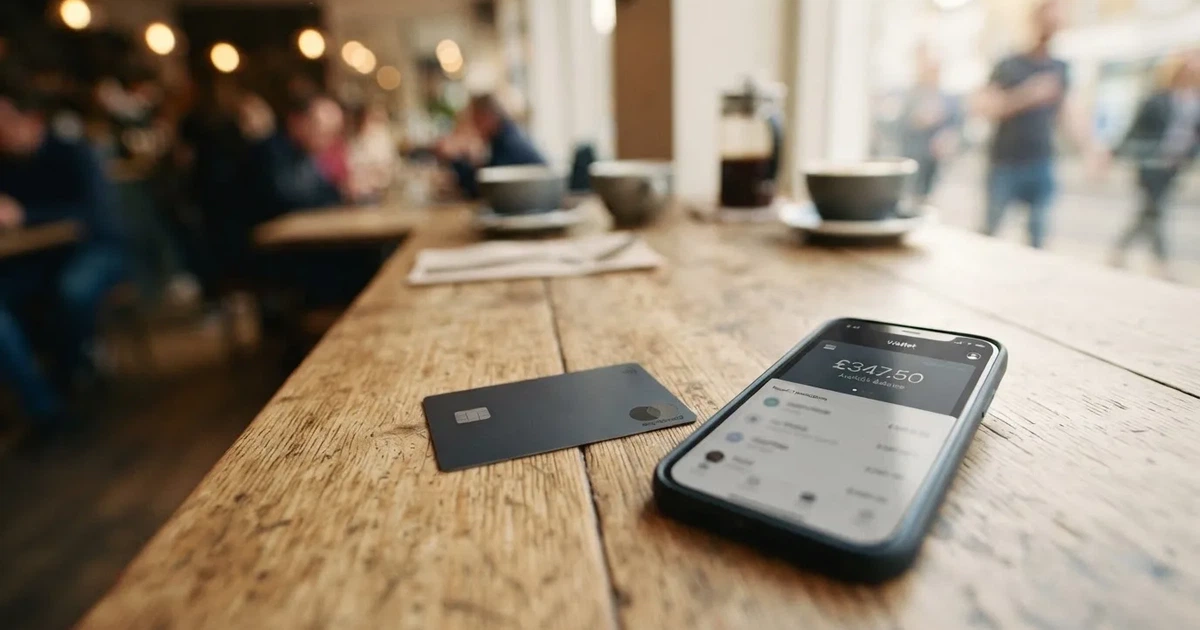
Conditions on the card are current as of October 28, 2026.
Verdict
The MetaMask card lands at 7.1 out of 10, with a split that matches how the product is actually built: very strong on day-to-day mechanics, weaker on the bits that go wrong when things go wrong.
| Criterion | Score | Why it scored that way |
|---|---|---|
| Who can get it | 7 / 10 | Sign-up is open in 45 listed countries across Europe, Latin America, Canada and others, with more regions on a waitlist; the US and UK are temporarily closed. |
| Cost | 8 / 10 | Virtual is free, no annual or monthly fee; Metal is $199 a year; a minimal per-transaction fee is charged without a published amount; no foreign-transaction fee. |
| Top-up options | 8 / 10 | Spends directly from a connected wallet on Linea, Base, Monad and Solana, in mUSD, wETH, EURe, GBPe, USDC and USDT; a Solana-only wallet can’t withdraw credit. |
| Reliability and complaints | 4 / 10 | The issuer is Monavate and the card programme is run by Crypto Life; user reports describe refunds stuck in a “Credits” balance, looping support tickets and frozen cards. |
| Everyday use | 9 / 10 | Virtual card is instant, plus a Metal tier, Apple Pay and Google Pay, and ATM withdrawals up to $1,000 a day on Virtual and $5,000 on Metal. |
| Total | 7.1 / 10 |
The audience the card is tuned for is a self-custody wallet user in Europe or Latin America who already keeps assets on Linea, Base, Monad or Solana, and who wants to spend stablecoins and a handful of major tokens without first selling them onto a centralised exchange. If that is you, the cost is low and the day-to-day experience is smooth. If you live in the US or the UK, you cannot sign up right now, and if you are not already comfortable running a self-custody wallet, the card asks more of you than a custodial card would.
Will they give you the card
Whether MetaMask will hand you a card depends on where you live, not where you hold citizenship. Sign-up is open in 45 listed countries and territories, with everything else funnelled to a waitlist. The full list of 45, as published, is: Andorra, Argentina, Austria, Belgium, Brazil, Bulgaria, Canada, Chile, Colombia, Costa Rica, Croatia, Cyprus, Denmark, Dominican Republic, El Salvador, Finland, France, Germany, Gibraltar, Greece, Guatemala, Guernsey, Hungary, Iceland, Ireland, Isle of Man, Italy, Jersey, Liechtenstein, Luxembourg, Malta, Mexico, Monaco, Netherlands, Norway, Panama, Poland, Portugal, Romania, Slovakia, Slovenia, Spain, Sweden, Switzerland, Uruguay. Russia, Belarus and Turkey are not on it.
The geography rule cuts the other way too. Sign-ups in the US and the UK are temporarily closed, even though the Metal card page still shows Metal as available in the US. There is no public statement on when either country reopens, and the official line is that ineligibility limits sign-ups rather than spending. Citizenship is not stated as a separate rule, which means it is your residence that the card checks first. For practical purposes, the card is unavailable in the US and the UK and unavailable to residents of any country not on the 45-name list.
A second filter sits underneath the country list: KYC. The card pages say you need proof of residency, handled by Crypto Life (the card provider), and there is no credit check. They do not specify which documents are accepted, whether a minimum age is enforced, or how long approval takes. Unofficial community write-ups (cryptocards.so, 2026) describe a flow that asks for email, phone and ID only, with address proof and a selfie not required, and approvals coming back “fast” or “near-instant”. Those details are not on MetaMask’s own pages and should be treated as unconfirmed.
How to get it
The on-ramp is built around the MetaMask app, not a website. You start in the app, go through KYC with Crypto Life, and once approved the virtual card appears in your wallet straight away. There is no waiting for the mail for the first product, and one card per user is the rule.
The card itself is a Mastercard, issued by Monavate (sometimes spelled “Monovate” on the FAQ) and run under the MetaMask brand by Crypto Life. The card’s base currency is not stated on the public pages, but in practice it spends the tokens you delegate to it and the network does the conversion at the point of sale, so the underlying currency matters less than the tokens you hold.
Once the virtual card is in your hand, the Metal tier is pre-orderable in the app, provided you have a verified address to ship to. MetaMask Card Support is reachable 24 hours a day for assisted replacement, and the official line is that Metal “ships securely to a verified address”. What the official pages do not say is the delivery time, the replacement cost, or what happens to your virtual card if the Metal goes missing in the post. Unofficial user reports describe a promised two-week delivery turning into a wait of more than a month.
KYC is described in the same sparse way throughout: proof of residency required, no credit check, and any further questions about document types, processing time, or rejection reasons are not stated. Treat those unknowns as real, not as gaps you can fill in later.
Fees: what it really costs
The headline pricing is friendly: the virtual card is free with no annual or monthly fee, and the Metal tier costs $199 a year. There is no foreign transaction fee on top of the Mastercard rate, and MetaMask states explicitly that it adds “no additional MetaMask fees” to the underlying conversion.
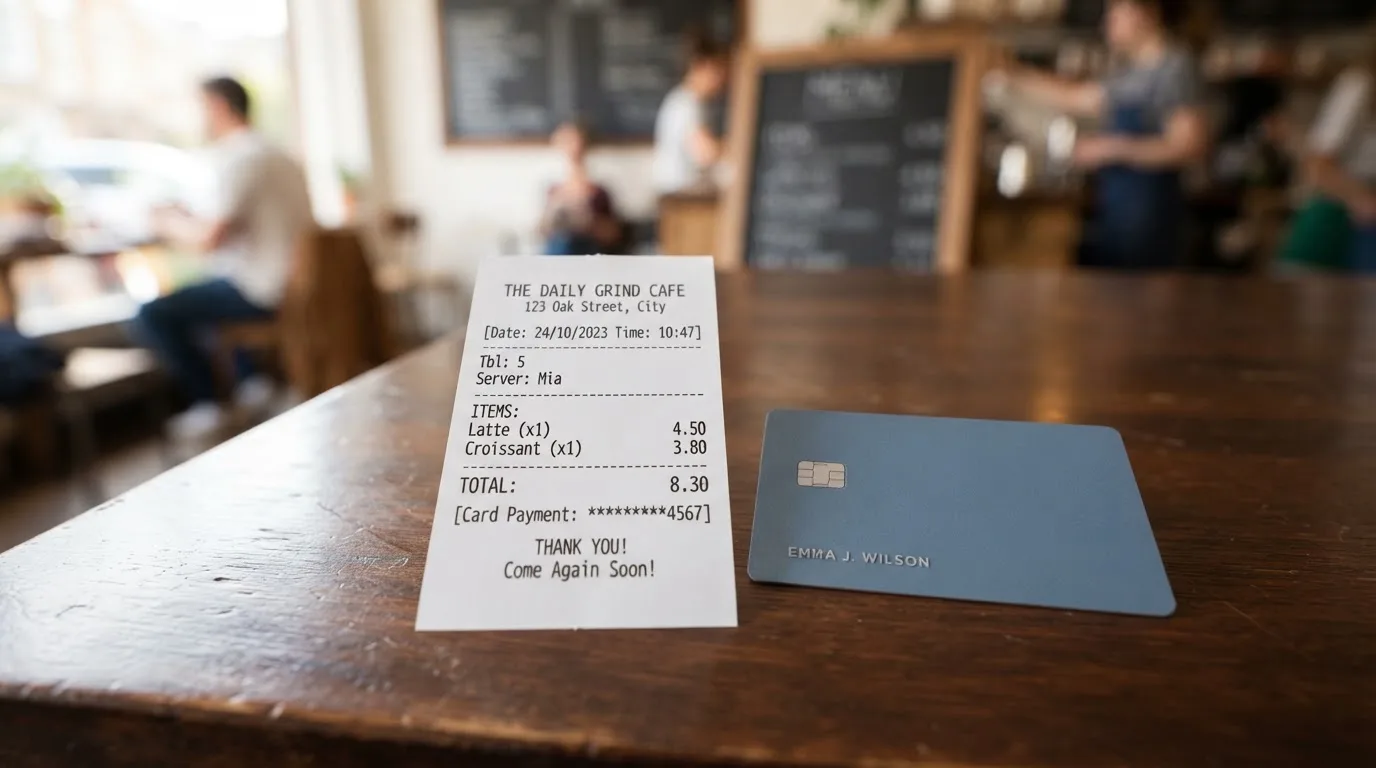
The single line that complicates that picture is a “minimal fee for each transaction” with no amount published on the card pages. The card points to a separate fee table for the actual number, but the page in question (support.metamask.io/manage-crypto/metamask-card/limits-and-fees) returned no figures when the figures for this review were gathered. In other words, you will see a charge on each transaction, and the size of it is opaque until it shows up on a receipt.
Costs at a glance
| Fee or limit | Virtual | Metal |
|---|---|---|
| Card issuance | Free | $199 / year |
| Monthly / annual fee | None | $199 / year |
| Foreign transaction fee | None | None |
| Conversion fee | “Minimal fee for each transaction” (amount not stated); Mastercard rate used | Same; Mastercard rate used |
| ATM withdrawal fee | Not stated; up to $1,200 / month described as “free” (tier unclear) | Not stated; same $1,200 / month free allowance |
| Card spend limit | $15,000 / day | $30,000 / day |
| ATM limit | $1,000 / day | $5,000 / day |
A few of the everyday cases are worth walking through, because “minimal fee” is exactly the kind of phrase that hides the only cost you care about.
Coffee in a local currency. You tap to pay, the network converts your USDC (or mUSD) at the Mastercard rate, and MetaMask adds its small per-transaction fee on top. There is no FX surcharge, so the cost of the conversion is the network rate plus whatever the “minimal fee” turns out to be. For a €4 coffee that is unlikely to be material; the percentage matters more for cheap transactions.
Online purchase in a foreign currency. Same structure: the Mastercard rate is used, no foreign transaction fee is added, and the per-transaction fee is the only MetaMask-side cost. Some merchants trigger 3-D Secure challenges for foreign-issued cards, which is a category issue, not a MetaMask issue, and the card should support the standard Identity Check flow.
ATM cash out. The free allowance is “up to $1,200 a month” (the tier for that number is not entirely clear from the FAQ), and the daily cap is $1,000 on Virtual and $5,000 on Metal. On top of that, the ATM operator’s own surcharge will apply, as it would on any card. An older version of the FAQ restricted ATM use to US cardholders and Metal users, which conflicts with the limits on the card page. The card page is the more current statement of what you can actually do, and the older FAQ should be treated as out of date.
The honest summary on cost is that for a normal spender the dollar amounts are small, the absence of an FX fee is a genuine plus, and the only structural complaint is that the per-transaction fee has no public number. Anyone spending heavily on the card will want to test a small transaction first and see what lands on the receipt, rather than assuming “minimal” means zero.
Top up: how to fund the card
There is no top-up in the usual sense. The MetaMask card does not have a prepaid balance you load; it draws on tokens delegated to it from your connected wallet, and the card “balance” you see in the app is the highest-priority token set under Manage. When you pay, the network converts from those tokens at the point of sale.
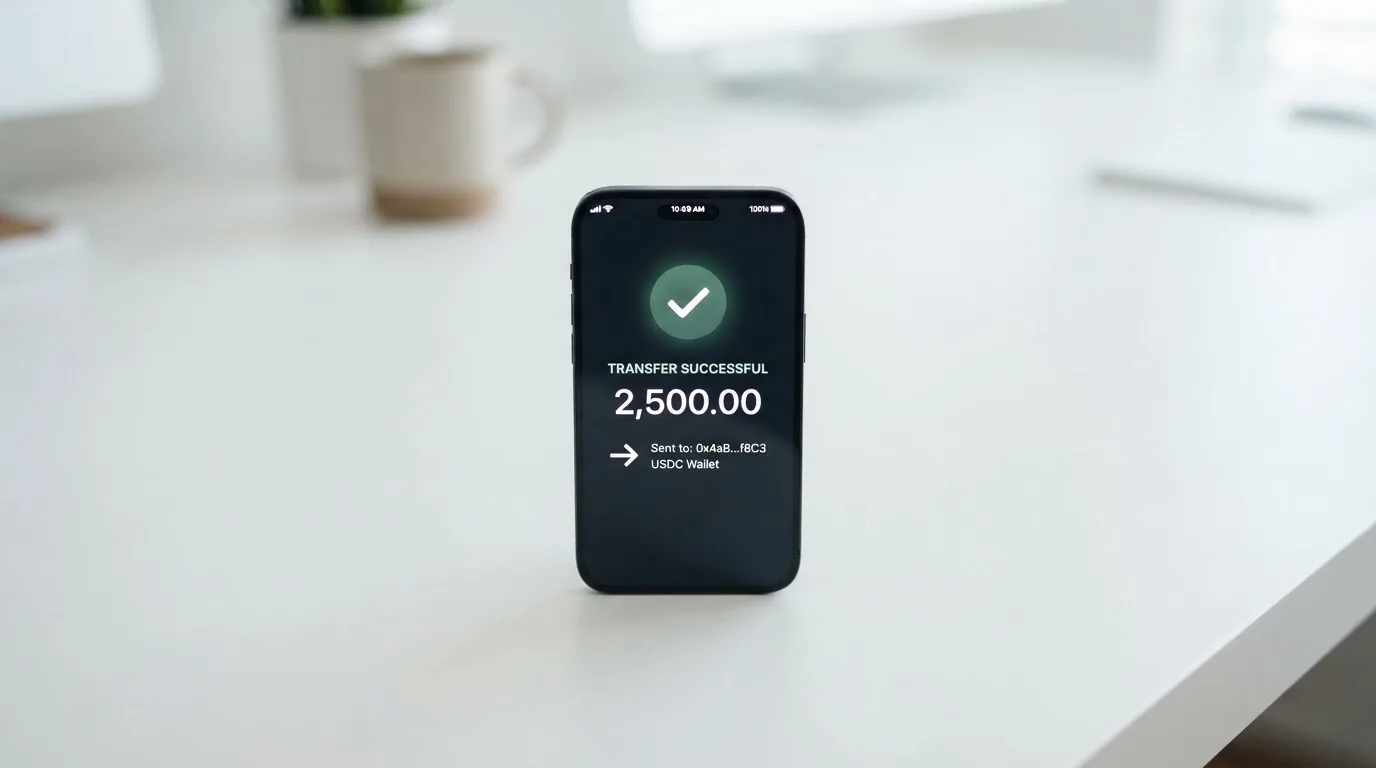
The networks supported are Linea, Base, Monad and Solana. The tokens named on the card page are mUSD, wETH, EURe, GBPe, USDC and USDT, with the page noting that nine are supported in total. A Solana-only wallet cannot withdraw credit, which means the “no balance to load” design breaks down if you only hold assets on Solana: you can spend, but you cannot cash out the credit side of the card.
Because the model is delegation rather than top-up, MetaMask does not state any deposit or top-up fees. On-chain network fees for any movement of tokens in or out of your wallet are charged by the blockchain, not by MetaMask, and they apply to any of the supported networks. Since official fee tables do not publish these network costs, anyone sending tokens in for the first time should budget a small amount of native gas for the chain they are using (ETH on Linea, Base and Monad, SOL on Solana) and not assume it is free.
Withdrawals go out as mUSD. Money Account holders receive the funds in Monad mUSD; everyone else gets priority delivery to a Linea mUSD address. Monad withdrawals have sponsored gas. To close the card you have to contact Crypto Life support directly; freezing or deactivating the card leaves the underlying funds in your own wallet, which is the self-custody guarantee.
One detail that matters in practice: if you top up by sending tokens on a network the card does not support, or to an address on the wrong network, the transfer is irreversible and recovery is manual, if it happens at all. Stablecoins in particular are issued on many networks, and a USDC transfer on a chain outside the four supported here can effectively be lost.
Paying with it every day
The day-to-day mechanics are the strongest part of the product. The virtual card is in the app the moment KYC clears, both Apple Pay and Google Pay are supported, and there is no separate activation step before the card works online. Blocked merchant categories are not stated, so there is no published list of “no gambling” or “no crypto” — but most crypto cards block MCC 7995 (gambling) by policy rather than by law, and the blocked list varies by issuer. Treat any spend on a category the card has not been tested on as a coin flip until proven otherwise.
There are two cashback rails running in parallel. The first is a flat cashback paid in mUSD into the Money Account: 1% on Virtual, headline 3% on Metal but with a footnote limiting the 3% to the first $10,000 spent and stepping down to 1% after that. The second is a bonus paid in $FLY, the Blackbird dining-app token, at 5X on Virtual and 7X on Metal. The two are stackable, in principle, because one is paid in mUSD and the other in $FLY, but each is governed by its own programme rules.
Spending limits sit at $15,000 a day on Virtual and $30,000 a day on Metal, with the option to set your own lower daily, weekly and monthly limits in the app. An older version of the FAQ cited 8,750 EUR or 10,000 USD per day, which conflicts with the card page; treat the card-page numbers as the current ones.
If a payment goes wrong, the procedure is two-step: ask the merchant for a refund first, and if that fails, open a chargeback with Crypto Life support. The refund, when it comes back, lands in a “Credits” balance, not in your underlying token wallet, and that is one of the friction points the user reports flag most often. The timeframes for either step are not stated.
The MetaMask app is the management surface. There is no separate card app, and store ratings for the app on the card page or in the FAQ are not stated, so any signal on app quality has to come from general MetaMask reviews.
What can go wrong
The card is built by Consensys (the company behind MetaMask), with Crypto Life running the card programme and Monavate acting as the issuer. The footer on the FAQ dates the copyright to 2026, but the FAQ does not say Consensys itself provides the card, and the issuer’s registered country and licences are not stated. Unofficial community posts cited by cryptocards.so name Monavate Limited as an FCA-regulated entity for UK complaints, which is unconfirmed.
Self-custody is the structural answer to most “what if the company disappears” questions. The card is non-custodial, which means the private keys for your tokens never leave your wallet; the card cannot drain a balance you have not delegated. You can freeze or replace the card instantly in the app, and freezing the card does not touch the funds. Transaction alerts and activity monitoring are on, you can set user-side daily, weekly and monthly limits, and Virtual stays active for subscriptions if you freeze the physical card. Insurance on the funds is not stated.
The practical risks sit in three places. First, the published information has gaps: KYC document types, age requirements, processing time, Metal delivery time, replacement cost, withdrawal fee, and the actual amount of the per-transaction fee are all not stated. Second, the FAQ contradicts itself in places: the older FAQ restricts ATM access to US cardholders and Metal, while the card page publishes ATM limits for everyone. Third, user reports, while not on MetaMask’s own pages, are consistent in the friction they describe: refunds stuck in a “Credits” balance, support tickets looping through automated replies, and bridging tokens across Linea and Base eroding the cashback.
A community thread cited by cryptocards.so reports cards frozen at “lifetime transaction” limits until a manual upgrade, accounts closed for inactivity, and a physical card promised inside two weeks that arrived after more than a month. Trustpilot gives the MetaMask wallet overall 1.4 out of 5 from 647 reviews (rfp.wiki, read 2026-10-20), with the dominant themes being poor support and slow resolution. These are unofficial data points, not official figures, and they should be read as a pattern rather than a verdict.
Support, when it works, goes through Crypto Life’s email, with MetaMask Card Support reachable 24/7 for assisted replacement. Unofficial reports flag slow responses, copy-paste replies and no live chat. If your use case is high-volume or time-sensitive, that is the part of the experience to plan around.
What to take instead
Three alternatives are worth comparing against the MetaMask card, all of which spend from a crypto balance but differ on geography, custody and fee structure.
| Card | Score | Where it works | What it costs | How it pays back |
|---|---|---|---|---|
| MetaMask | 7.1 / 10 | 45 listed countries; US/UK closed | Virtual free, Metal $199 / year; per-transaction fee not stated | 1% (Virtual) / 3% to $10,000 then 1% (Metal) in mUSD, plus $FLY 5X / 7X |
| KAST | 6.1 / 10 | Country shown at KYC; list not published | Standard $0, Premium $1,000 / year, Private $10,000 / year | 1.5% / 2% / 3% in USD by tier, plus KAST Points |
| Zeal | 6.1 / 10 | 150+ countries for spend; issuance in EU, UK, Brazil, Colombia, Mexico, Japan, Singapore, Philippines, Indonesia, Thailand | Not stated | Up to 4% in GNO on Gnosis Chain; rates can change |
| Rizon | 6.7 / 10 | 122+ countries; targeted at US and LATAM residents | Virtual/physical price in app; Emerald subscription from $5.59 / month | 2.5% back on eligible purchases |
KAST is the closest competitor in spirit: a Visa card programme with a Standard free tier, plus paid Premium and Private tiers. Its differentiators are a published 0% fee on stablecoin top-up and card spend in USD, and a cashback ladder (1.5% / 2% / 3%) that on paper beats MetaMask on the Virtual tier. The trade-off is the annual fee: $1,000 for Premium and $10,000 for Private, billed annually, with a $1-a-month inactivity fee after 12 months. KAST is more restrictive on access: the country list is not published and KYC is the gate, with citizenship/ID checks layered on top of residence. Anyone outside the supported countries cannot complete KYC, even if they create an account. FX fees run 0.5% to 1.75% on non-USD spend depending on residence, transaction country and tier, which is the opposite of MetaMask’s no-FX-fee model.
Zeal is a Visa card that spends from a card Safe denominated in EUR, USD or GBP stablecoin balances, on Gnosis Chain and Celo. The standout number is “up to 4%” cashback paid in GNO, but the cashback requires holding GNO in the card Safe, and rates can change, so the headline is not a guarantee. No fee schedule is published, which is the same transparency problem as MetaMask, and the spend geography is broader than MetaMask (150+ countries) but issuance is narrower, focused on the EU, UK, Brazil, Colombia, Mexico, Japan, Singapore, the Philippines, Indonesia and Thailand. It is the right alternative for someone who wants a self-custody-style flow on Gnosis and is happy to take the GNO exposure.
Rizon is positioned for US and LATAM residents, which makes it the natural alternative to MetaMask in the regions where MetaMask itself is closed. It is a Visa Platinum, available as virtual, physical and (soon) metal, with USD and EUR accounts. The headline 2.5% back on eligible purchases is competitive, the Emerald subscription ($5.59 / month and up) unlocks reduced fees, and RizPoints layer on top. Pricing for virtual, physical, additional and replacement cards is “check the app for the price”, which again is the same transparency problem. Non-USD spend carries 1.7% + $0.10 on the standard tier, reduced to 1.02% (the page is partly garbled) on Emerald. For a US resident shut out of MetaMask, Rizon is the most directly comparable option.
The honest take is that none of these cards is a strict upgrade on MetaMask across the board. KAST is cheaper on FX and pays more cashback, but its tiers are expensive and access is harder to gauge. Zeal offers a higher headline cashback in a volatile token, with less geographic reach. Rizon is the US/LATAM answer but comes with a paid subscription for the best economics. The decision comes down to which axis matters most: geography, fee transparency, cashback, or custody.
Who I would recommend it to
The MetaMask card is a good fit for a self-custody wallet user in Europe or Latin America who already keeps assets on Linea, Base, Monad or Solana, is comfortable managing gas and approvals, and wants to spend stablecoins and a few major tokens without going through a centralised exchange. The free Virtual tier is a low-risk way in, the Metal tier is a reasonable upgrade for someone who will use the card heavily enough to recover the $199 fee, and the self-custody design means your tokens are not exposed to a card-issuer failure in the way they would be on a custodial card.
It is the wrong card for a US or UK resident, where sign-ups are closed and the Metal page still claims US availability in a conflict that has not been resolved publicly. It is also the wrong card for someone who needs a published fee schedule, predictable refunds, or live support: the per-transaction fee has no public number, refunds land in a “Credits” balance that is friction to extract, and the support channel is email with a track record of slow, copy-paste replies. Anyone who spends most of their money in non-listed countries, or who wants to lock in a fixed cashback rate in fiat rather than in mUSD and $FLY, should look at KAST, Zeal or Rizon instead, with the caveat that each of those has its own gaps.
The short version: if MetaMask’s geography, custody model and token list match your situation, the card is a competent, low-fee tool. If any one of those three does not, an alternative will save you time.
Frequently asked questions
What is the MetaMask card?
The MetaMask card is a Mastercard debit product that spends directly from a self-custody crypto wallet, without preloading a fiat balance. It is issued by Monavate, run by Crypto Life, and comes as a free Virtual card or a $199-a-year Metal card.
How does the MetaMask card work?
When you pay, tokens delegated to the card from your connected wallet are converted at the point of sale at the Mastercard rate. The card “balance” shown in the app is the highest-priority token set under Manage, and the network does the conversion on the fly rather than the user topping up in advance.
Is MetaMask a bank?
No. MetaMask is a wallet software company (built by Consensys), and the card is a payment card issued by Monavate and operated by Crypto Life, not a bank account. Funds in the underlying wallet are not deposits and are not covered by deposit guarantee schemes.
Who owns MetaMask?
MetaMask is developed by Consensys. The card programme is run by Crypto Life, with Monavate as the issuer. Consensys’s involvement in the card itself is not stated on the card FAQ.
Is the MetaMask card available in my country?
Sign-up is open in 45 listed countries across Europe, Latin America, Canada and a handful of others. The US and the UK are temporarily closed, and the rest of the world goes to a waitlist. The card is not available in Russia, Belarus or Turkey.
How do I get the MetaMask card?
Install the MetaMask app, complete KYC with Crypto Life (proof of residency is required, no credit check), and the virtual card appears in the app once approved. The Metal tier is pre-orderable inside the app after that.
Does the MetaMask card require KYC?
Yes. The official pages require proof of residency, with KYC handled by Crypto Life. Unofficial write-ups describe a flow asking only for email, phone and ID, but those details are not on MetaMask’s own pages.
How do I top up the MetaMask card?
There is no top-up step. Tokens are delegated from the connected wallet on Linea, Base, Monad or Solana, and the card draws on them at the moment of payment. Supported tokens include mUSD, wETH, EURe, GBPe, USDC and USDT.
How do I add the MetaMask card to Apple Wallet?
The card supports Apple Pay and Google Pay, and tokenisation is managed inside the MetaMask app. Add the card through the standard wallet flow once the virtual card is in the app.
Is the MetaMask card safe?
The card is non-custodial: your private keys stay in your wallet, and freezing the card leaves the funds untouched. Insurance on the funds is not stated, and the user-reported risks are around refund handling and support responsiveness rather than the custody model itself.
Wallet cards – cryptocardsearch.com
Content created by the «cryptocardsearch.com» team