
The Gemini card is a US credit card that pays rewards in crypto
 Available in US
The first thing to understand about the Gemini card is that it is not really a crypto card. It is a Mastercard World Elite credit card issued by WebBank, and the crypto comes in at the reward end: you spend ordinary dollars, and Gemini pays part of the spend back in Bitcoin or in one of more than fifty other cryptocurrencies. There is no stored balance to load, no conversion rate to watch, no network to choose. If you were expecting a card that converts coins at the moment of payment, this is not that card. If you were hoping for a way to spend from a crypto balance in a country where ordinary bank cards are awkward, this will not solve that problem either — it is open only to residents of the 50 US states.

My score for it is 4.9 out of 10. That is not a bad card, exactly. It is a competently built credit card with a genuinely attractive rewards structure, offered on terms that only a subset of people can accept, wrapped in a crypto company’s customer service record that I would not rely on. The low mark comes from fit, not from shoddy work.
The conditions described here are current as of October 28, 2026.
The score, and who this card suits
Here is the whole picture in one table, criterion by criterion, with my reasoning in plain words.
| Criterion | Mark | Why |
|---|---|---|
| Who can get it | 4 / 10 | Residents of all 50 US states; no other country is named |
| Cost | 7 / 10 | No annual fee, no foreign transaction fee, but 16.49% to 34.49% on purchases, $10 or 3% cash advance, $50 for each card replacement after the first free one in 12 months |
| Top-up options | 2 / 10 | A credit card repaid in fiat; crypto only arrives as reward — 4% on gas, EV and transit up to $300 a month, 3% dining, 2% groceries, 1% everything else |
| Reliability and complaints | 3 / 10 | Issuer WebBank, Mastercard World Elite; Trustpilot 1.3 out of 1,513 reviews: frozen accounts, withdrawal delays up to 35 days, disputes refused, no phone line |
| Everyday use | 8 / 10 | Apple Pay, Google Pay and Samsung Pay; cash advance available at ATMs; unofficially, a metal physical card and a virtual card |
| Total | 4.9 / 10 |
So who does this suit? In plain terms, a US resident with a decent credit score who already pays a card off in full each month and who wants a few percent back in crypto rather than cash. The rewards tiers are the strongest argument for it: 4% on gas, EV charging and transit, 3% on restaurants, 2% on groceries, 1% on everything else, and the top tier capped at $300 a month. For someone whose spending genuinely clusters in those categories, that is a very good earn rate, paid in crypto, settled instantly.
And who does it not suit? Anyone outside the United States. Anyone who is carrying a balance — at 16.49% to 34.49% APR this is a cost, not a feature. Anyone who needs a card precisely because they cannot get an ordinary bank card, since this one runs a credit check and a hard credit pull. Anyone whose main attraction to crypto is self-custody, because there is no crypto balance here at all. And anyone who has had a bad experience with a Gemini account freeze: read the risks section before you apply.
Will they give you the card
This is a credit card, so the gate is credit, not identity documents alone. The card page itself does not state who is eligible. Gemini’s support team states that residents in all 50 US states may apply, with terms and restrictions applying.
Third-party review sites and a Gerald write-up say it is US residents only, that applying causes a hard credit pull, and that a valid Social Security Number is listed as a requirement — but that SSN requirement is not in Gemini’s own text that I could find, so treat it as unofficial and unconfirmed by the card.
The practical answer to “will they give me the card”: if you live in the US, you have a credit history, and you can pass a creditworthiness check, the obstacle is not eligibility on paper. It is whether the credit limit they extend is worth having. More on that in the cost and risks sections.
One more thing about the issuer, because it explains the shape of the whole product. The card is issued by WebBank. Visa and Mastercard do not issue crypto cards to consumers themselves; they license issuers and can suspend a programme. Gemini here is essentially the front end and programme manager. When something goes wrong with your account or your card, the party answering is Gemini’s support, but the credit relationship belongs to WebBank.
How to get it
The card page does not lay out the application steps, so the honest answer is that the sequence is not documented where I can quote it. What is documented is what you are applying for: a Mastercard World Elite credit card. Whether there is a metal physical card, a virtual card, or both is not stated on the card page itself. Unofficially, from review sites, a metal physical card is available and arrives about five to seven days after approval, and a virtual card is issued after verification.
The underwriting picture is clearer than the application flow. Gemini describes a credit application with a creditworthiness check. The APR for purchases is set by your creditworthiness at opening, between 16.49% and 34.49%. Cash advances are at 29.49% and penalty APR is 33.49%, all of them variable and moving with the Prime Rate. KYC tiers, processing time and rejection reasons are not stated.
One free card replacement is included per twelve months under the cardholder agreement; each additional replacement is $50. Delivery countries, delivery time and shipping cost are not stated. Since the card is described as a US credit card for US residents, the practical assumption is US delivery, but the agreement text I saw does not spell it out, so I will not pretend otherwise.
Expect a credit check to be part of this. The unofficial reports of a hard pull are consistent with how US credit card applications normally work, and that has a real consequence: an application that is turned down is not invisible to your credit file.
What it really costs: Fees
The headline cost facts are friendly and the headline rate facts are not. There is no annual fee. The issuance fee is not stated. There are no foreign transaction fees, and crypto conversion fees do not apply at all, because the card converts nothing — the crypto is the reward, not the funding.

Here is every number the card’s own pages give, in one place:
| Fee or limit | Value |
|---|---|
| Annual fee | None |
| Issuance fee | not stated |
| Purchase APR | 16.49% to 34.49%, variable with Prime Rate |
| Cash advance APR | 29.49% |
| Penalty APR | 33.49% |
| Cash advance fee | $10 or 3% of each cash advance, whichever is greater |
| Late payment fee | up to $35, first late fee up to $25 |
| Returned payment fee | up to $35 |
| Card replacement | one free per 12 months, then $50 each |
| Foreign transaction fee | None |
| Foreign-currency conversion | to USD by the card network at its exchange rate |
| Crypto conversion | Not applicable — rewards are paid in crypto |
| ATM fee | not stated |
| ATM limit | not published |
| Credit limit | not stated |
| 4% rewards cap | $300 of qualifying spend per month, resets on the 1st, then 1% |
The late and returned payment figures come from the cardholder agreement dated 1 April 2026.
Now let me walk through three ordinary payments, because that is where fee structure either matters or does not.
Buying a $60 grocery shop: no foreign transaction fee, no conversion fee, rewards at the 2% groceries tier. Straightforward, and one of the better rates available on a US card.
Paying for dinner at $45: 3% dining tier, no fees. Again clean.
A purchase while you are abroad for €80: the transaction converts to US dollars at the card network’s exchange rate, and the foreign transaction fee is listed as none. That is genuinely valuable if you travel — but understand that “no foreign transaction fee” is not the same as “the exchange rate is good”. The network’s rate is the rate, and the card page does not offer a better one.
The place your cost actually bites is the cash advance, at $10 or 3% whichever is greater, on top of a 29.49% APR. That is expensive by any measure. Unofficially, an ATM limit exists but is not published, so you would be guessing at your ceiling.
How to Top up
This is where the card’s actual design forces an honest correction to the question. You do not top it up. It is not a prepaid card; it is a credit card, repaid in fiat. Coins and networks are not applicable to funding it, and there is no deposit fee concept, because there is no deposit.
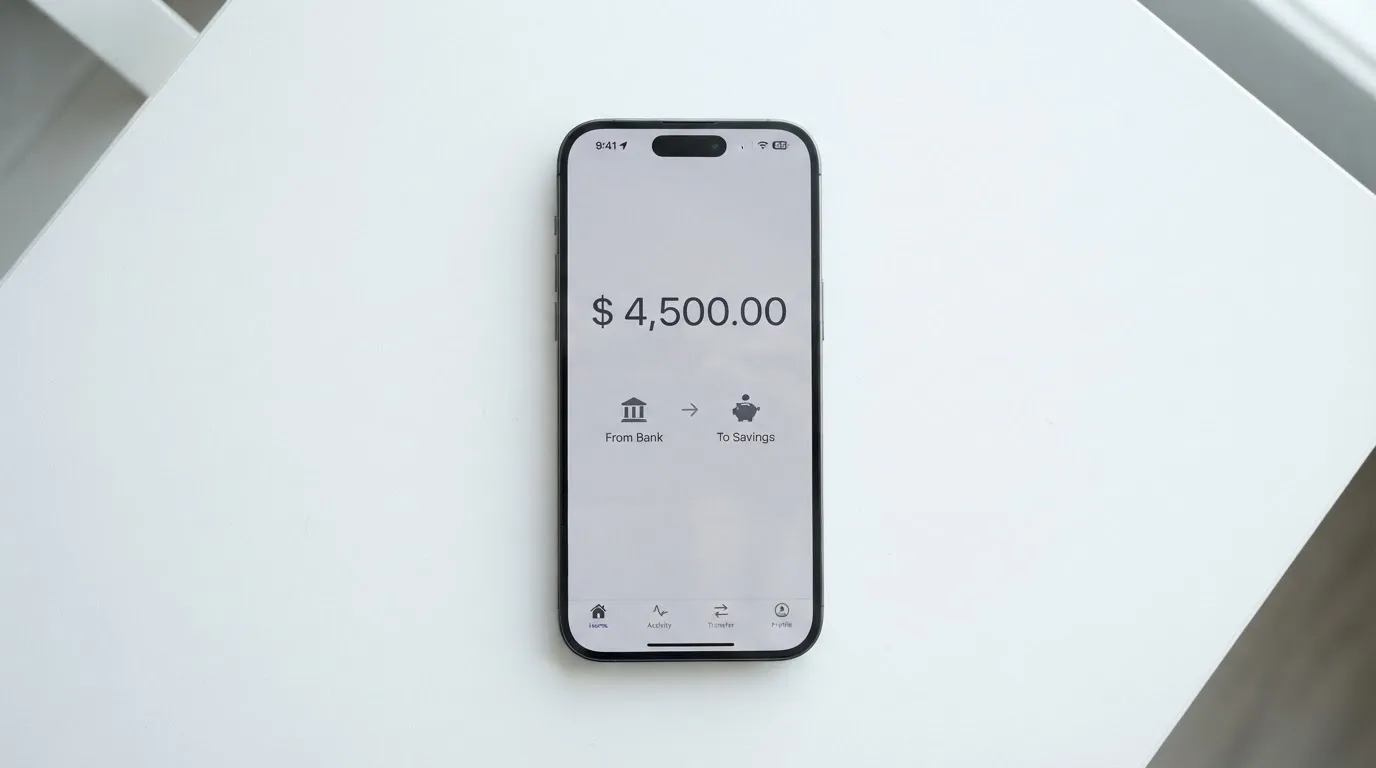
What you do instead is pay the statement balance. The related costs that exist in the agreement are the ones I listed above: $10 or 3% on a cash advance, up to $35 for a late payment with the first late fee up to $25, and up to $35 for a returned payment.
Withdrawing money is not applicable to a credit card, since there is no stored balance. Closure and payoff terms sit in the cardholder agreement and are not summarised on the card page — read them there if you plan to close the account rather than assume.
The thing that does arrive is the reward. Rewards are paid instantly in Bitcoin or in more than fifty other cryptocurrencies on Gemini, and the choice can be changed at any time. There are also 10% Vault Rewards at some merchants, capped and varying by merchant, and referral payments of $50 in crypto for each referral and $250 per five referrals, up to fifty a year.
So if you came here because you want to buy crypto with a card, this card will pay you crypto. That is a different thing, and worth keeping separate in your head.
Paying with it every day
This is the card’s strongest section, and the reason it scores 8 out of 10 on everyday use. Gemini’s support team states the card works with Apple Pay, Google Pay and Samsung Pay. The card page itself does not mention the wallets — that detail comes from support, not from the page — but it is consistent with a World Elite Mastercard.
Rewards in detail: 4% on gas, EV and transit, on the first $300 of that spend each month; 3% dining; 2% groceries; 1% everything else. The 4% tier resets on the 1st, and above $300 in that category the rate drops to 1%. Some instant-reward exclusions apply. Blocked categories are not stated on the page. The page also names Solana Edition, XRP Edition and Bitcoin Credit Card variants with “Same Benefits”, alongside the World Elite Mastercard, so the reward structure is not unique to one product.
The app is where you will actually manage this, and it rates well. The iOS App Store listing for the Gemini app shows 4.8 out of 5 from 110K ratings in the US listing, read on 2026-10-20. It supports iPhone on iOS 17.2 and later, Apple Watch and Apple Vision, in English, French, German, Italian, Portuguese and Spanish — note there is no Russian, which is worth knowing before you download anything. The Google Play listing was not read.
If something goes wrong with a transaction, the cardholder agreement has a “Billing Rights” section covering disputes. The details were not extracted, and I would not take the statutory 60-day window as confirmed from the agreement text I saw. Under US rules, credit card rights come from Regulation Z and debit card reversal rights from Regulation E — the distinction matters if you are ever weighing a dispute.
On mobile wallet mechanics, one thing is generally reassuring: Apple Pay replaces your card number with a device-specific number stored in the phone’s secure hardware, never on Apple’s servers, and each payment uses a one-time dynamic code. Your issuer can also restrict a tokenised number, for example blocking it on phone or website use. And a practical warning: a declined authorisation can leave a hold on funds that stays for several days, typically up to seven. That is a common source of the “where is my money” feeling.
What can go wrong
This is the section I would read twice. The card page states no official incidents. But the user record is bad, and for a card that is your lifeline for spending, that record is not a footnote.
On Trustpilot, read 2026-10-20, Gemini sits at 1.3 out of 5 across 1,513 reviews, 212 of them in the last twelve months, and Gemini replied to 3% of negative reviews. An earlier reading of the same page put it near 1.5 out of 5 from about 1,475 reviews and a 9% reply rate to negative reviews. Either way, the pattern is consistent.
The reported themes, with dates, are specific:
- Frozen accounts and withdrawal holds, August to September 2026, with delays up to 35 days
- Slow or no support, and no phone line, July to September 2026
- Card problems including disputes denied after the card data was compromised, October 2026
- Repeated declines over three months, October 2026
- A card closed without explanation, September 2026
- The app stopped showing balance and payment history after a July payment, July 2026
- Late fees charged after app glitches, July 2026
Individual accounts also reported: an account locked after a third-party fraud email; a card that could not be activated after sitting unopened; poor phone support; slow email-only support; low starting credit limits reported at $1,000 to $3,000; and available credit that updated slowly after payments. A January 2026 review described a fraud freeze still unresolved after more than two months.
Now the connection to the product itself, which I think is the part people miss. A credit card is a rolling monthly obligation. If your account gets frozen or your card gets closed, you are not stuck waiting — you are stuck with a balance coming due. The Trustpilot themes and the credit structure reinforce each other badly.
Two structural risks come from the crypto side, even though the funding is fiat. First, the reward is paid in crypto, so its value moves against you between the moment you spend and the moment you receive. Second, you are exposed to Gemini as a counterparty for that reward even though the card itself is a credit relationship with WebBank. Two parties, two things that can go wrong.
On security specifics: the card is issued by WebBank, and this is a credit account rather than crypto custody. Freeze-in-app, two-factor authentication and spending controls are not stated on the card page. Support is reachable through support.gemini.com and a “Contact Us” request form. The cardholder agreement version I checked is dated 1 April 2026, the issuer is WebBank, and I found no licence or programme-change news in this pass — which is not the same as saying none exists.
The credit limit is not stated on the card page. Unofficially, one review site reports limits generally in the $2,500 to $25,000 range, and Gerald and Reddit posts from 2026 report starting limits as low as $1,000. Unconfirmed, but it matches the low-score feel of the reviews, and it is the number to ask about if you apply.
What to take instead
If what you need is a card that spends crypto directly, a prepaid card rather than a credit card is the right shape, and there are better-known options. Let me walk through three, with their limits spelled out honestly.
Lava
Lava scores 7.1 out of 10 in my comparison. Its card is called the Lava Card and it is accepted at 150 million merchants in 150 or more countries. The network, and whether it is physical or virtual, is not stated. There are no annual fees and no FX fees and no FX spread, and the page claims no exchange fees or spread on buying or selling Bitcoin. You can deposit in local currency or in stablecoins, though coins and networks are not stated. The reward is up to 5% back in bitcoin on every purchase, with conditions not stated. Who can get it is not stated either.
Read that as a cleaner fee story than Gemini’s, a bigger merchant footprint, but a rewards rate whose conditions you would have to confirm for yourself — and it takes money off the table in a way Gemini does not.
| Gemini | Lava | |
|---|---|---|
| Score | 4.9 / 10 | 7.1 / 10 |
| Product | Credit card, repaid in fiat | Debit-style card on a deposited balance |
| Annual fee | None | None |
| FX | No foreign transaction fee | No FX fees and no FX spread |
| Funding | Not applicable | Local currency or stablecoins |
| Rewards | 4% / 3% / 2% / 1% by category, $300 cap on top tier | Up to 5% back in bitcoin, conditions not stated |
| Coverage | US residents | 150+ countries (eligibility not stated) |
Trastra
Trastra scores 4.1 out of 10, below Gemini. It is available in 31 listed countries including Germany, France and the UK, and the page says it will be available for all residents of the European Economic Area. Non-European residents: “Not the moment.” The rule appears residence-based. It is a prepaid debit card accepted at Visa merchants worldwide, currency euro, physical and virtual not specified though ATM use implies a physical card. Costs and fees are not stated. It is topped up using cryptocurrencies in your Mover wallet, with coins and networks not named. No cashback on the page.
If you are in the EEA and want a prepaid crypto-backed card, Trastra is the geographically relevant comparison. On published detail, though, it tells you less than Gemini does.
RedotPay
RedotPay scores 6.9 out of 10, and it is the most transparent of the three on who can use it — which is also where its rules get sharp.
Two official lists word the eligibility rule differently, and you need to know both. The KYC list of unsupported countries and regions says that if you are a citizen of any listed country or region, you cannot complete identity verification or use the services, and that restrictions are based on local regulations and sanction policies, not on individuals. The listed places are Afghanistan, Albania, Belarus, Bosnia and Herzegovina, Bouvet Island, Burkina Faso, Burundi, Central African Republic, Congo (DR), Croatia, Cuba, Eritrea, Ethiopia, Guinea-Bissau, Haiti, Iran, Iraq, Kosovo, Lebanon, Liberia, Libya, Mainland China, Mali, Montenegro, Myanmar, Netherlands Antilles, Nicaragua, North Korea, North Macedonia, Russia, Serbia, Slovenia, Somalia, South Sudan, Sudan, Syria, Ukraine, United States, Venezuela, Yemen and Zimbabwe.
Then a separate card-issuance list, dated 28 August 2026 and covering 47 places, adds India, Indonesia, Morocco, Nepal, Singapore and Turkey: residents of these areas are ineligible for both virtual and physical cards, and they cannot be billing addresses. Citizenship is not mentioned in that second list. Russia, Belarus, Ukraine and Serbia are on both lists. Georgia, Armenia, Kazakhstan and the UAE are on neither.
Fees are published in detail: 1.00% transaction fee as the crypto conversion fee; a waived fee on transactions in the default currency and 1.20% in a non-default currency; small-authorisation transactions of 1.00 USD or less, first five per card per month waived then 0.20 USD; declined transactions, first three per month waived then 0.50 USD. Some merchants carry 1.5% with a 0.50 USD minimum, first three per month waived — the named list includes Gulf Health Counsel, Free Fire, PUBG Mobile, Brawl Stars, eFootball, Facebook Ads and Discord. That table took effect 1 December 2025.
Card application costs money: 10.00 USD for a virtual card, 100.00 USD for a physical card, not cancellable or refundable once paid. Virtual replacement is 5.00 USD first and 10.00 USD each later. Account maintenance is waived, with no monthly or annual fee and no inactivity fee mentioned. The fee is deducted from balance, and the 5 USD welcome reward cannot be used toward the issuance fee. A paid tier, RedotPay Pro, is 12.90 USD monthly or 129.00 USD annually.
Funding is on-chain crypto deposit, or buying crypto with a credit card in the app (ETH, USDC, USDT, depending on region). The minimum USDT-TRC20 deposit is 1 USDT after network fees, each asset is accepted only on the networks shown on the Deposit page, and RedotPay may change them. The deposit fee to card balance is free. Rewards: a 5 USD welcome reward usable only on spending, valid 30 days; the card page lists “Points & Rewards” and “RedotPay Pro” as separate programmes, with no card cashback rate stated.
Cards are virtual and physical, Visa debit in the Singapore terms, and the card page only says “leading card networks”. Card currencies are a USD card and an HKD card.
What the comparison actually comes down to
| Gemini | Lava | Trastra | RedotPay | |
|---|---|---|---|---|
| Score | 4.9 / 10 | 7.1 / 10 | 4.1 / 10 | 6.9 / 10 |
| Type | Credit card | Card on deposited balance | Prepaid debit | Virtual and physical |
| Eligibility | US residents | Not stated | 31 countries, EEA coming | Citizenship list plus residence list |
| Headline cost | 16.49%-34.49% purchase APR | No annual fee | Not stated | 10 USD virtual / 100 USD physical |
| Conversion cost | Not applicable | No FX fees or spread | Not stated | 1.00%, 1.20% non-default currency |
| Crypto role | Reward only | Funding and reward | Funding | Funding |
The pattern is clear. Gemini is the only credit card of the four, which makes it the only one where interest is the main cost and the only one where a support failure hits you mid-cycle. Lava is the cheapest on paper and vaguest on detail. Trastra is the EEA answer and the thinnest on published information. RedotPay is the most expensive to open and the most explicit about everything, including who it turns away.
Who I would recommend it to
I would recommend this card to a specific person, and if you are that person, it is worth having. You are a resident of a US state. You pay your card off in full every month and have no intention of carrying a balance, because you understand what 16.49% to 34.49% does to money. You spend meaningfully on fuel, EV charging, transit, restaurants or groceries, so the 4% / 3% / 2% tiers land where you actually shop. You are comfortable receiving rewards in Bitcoin or one of Gemini’s other assets and can absorb the price move between spend and receipt. You are comfortable that the card runs a hard credit pull and that the issuer is WebBank rather than a bank you have a relationship with. And you will keep a backup card, because the support record is what it is.
I would not recommend it to anyone who needs a card because ordinary banking is closed to them — this one is behind a full credit application. I would not recommend it to anyone in any other country. I would not recommend it to anyone planning to use it as a bridge to crypto spending, because it does not spend crypto. And I would be careful with it if you have had a frozen Gemini account before, or if you rely on a card as your only means of paying.
The honest summary is that Gemini built a solid card with a generous rewards schedule and attached it to a company whose customers do not report being helped. At 4.9 out of 10, the product is not the problem. The access and the support are.
Frequently asked questions
What is the Gemini card?
It is a Mastercard World Elite credit card issued by WebBank, aimed at residents of the 50 US states. Crypto is not the funding source — it is the payout. You spend dollars and Gemini credits part of the spend back to you instantly in Bitcoin or in one of more than fifty other cryptocurrencies, with the coin selectable at any time. Category rates are 4% on gas, EV and transit up to $300 a month, 3% dining, 2% groceries and 1% everything else.
How does the Gemini card work?
Ordinary credit card mechanics. Gemini runs a credit application with a creditworthiness check and sets your purchase APR between 16.49% and 34.49%, variable with the Prime Rate. You are billed monthly and pay in fiat. Cash advances carry 29.49% APR plus $10 or 3%, whichever is greater. There is no stored balance, no coin conversion and no network selection, because none of that applies to a credit card.
Is Gemini a bank?
No. The card page states the card is issued by WebBank. Gemini is the brand and the programme front end, not the depositary of your money. That distinction matters when something goes wrong: your credit relationship is with WebBank, but your support relationship is with Gemini, and the Gemini support record is the weaker of the two. Treat them as two separate counterparties.
Who owns Gemini?
The card page does not state Gemini’s corporate or licence details, so I cannot answer that from what the card publishes. What I can tell you is the structure around the product: WebBank is the issuer, Mastercard is the network, and Gemini runs the programme and the interface. Licences matter here — in the EU, e-money institutions may issue payment cards but may not lend.
Is the Gemini card available outside the United States?
No other country is named. Gemini’s support team says residents in all 50 US states may apply, with terms and restrictions. Third-party sources also describe it as US residents only with a hard credit pull, but that is not confirmed by Gemini’s own card text. If you are outside the US, the realistic comparison is a prepaid crypto card like Lava or RedotPay rather than this one.
Does the Gemini card require KYC?
The card page does not state KYC tiers, and it does not describe the application steps. What is documented is a credit application with a creditworthiness check. Under US rules, the customer identification programme requires name, date of birth, address and an identification number, and electronic systems also check proof of address. Because this is a credit product, expect more than a basic identity check.
How do I activate and add it to my wallet?
The card page does not cover activation steps, and activation is not something to guess at — follow the instructions you get with the card. What Gemini’s support team does state is that the card works with Apple Pay, Google Pay and Samsung Pay. On the technical side, Apple Pay substitutes a device-specific number stored in the phone’s secure hardware for your card number, and each payment carries a one-time code.
Is the Gemini card safe?
Safety splits into two halves, and only one of them looks solid. The card side is a regulated credit product issued by WebBank on Mastercard’s network. The company side is where I have concerns: Gemini’s Trustpilot score was 1.3 out of 5 from 1,513 reviews, with frozen accounts, withdrawal holds up to 35 days, disputes refused, no phone line, and late fees charged after app glitches. App-based two-factor authentication and spending controls are not stated on the card page.
Is the Gemini card free?
There is no annual fee and no foreign transaction fee, and there is no crypto conversion fee because no crypto is converted. But it is not free to hold a balance: purchase APR runs from 16.49% to 34.49%, cash advances cost 29.49% plus $10 or 3%, a late payment is up to $35 with the first up to $25, and card replacements are free once per 12 months then $50 each. The credit limit itself is not stated.
Is the Gemini card worth it?
Worth it if your spending concentrates in the rewarded categories and you clear the balance monthly — the 4%, 3% and 2% tiers are strong. Not worth it if you travel expecting the network exchange rate to be competitive, if you want to spend crypto rather than earn it, or if a slow or email-only support experience would strand you mid-cycle. At 4.9 out of 10, it is a good rewards rate attached to a narrow market and a weak support record.
Credit and cashback cards – cryptocardsearch.com
Content created by the «cryptocardsearch.com» team